Five Reasons to Move to West Sussex
Yes, West Sussex is a good place to live, and these are five reasons why: the South Downs National Park, a coast you can walk end to end, Chichester Harbour, the Weald and Roman mosaics.

In short
Is West Sussex a good place to live?
Yes, West Sussex is a good place to live for open country, the sea and a long history close at hand. It has the chalk hills of the South Downs National Park, a coast path now continuous along its shore, Chichester Harbour, the old woods of the Weald and Roman mosaics still in place. Where to live, house prices and safety are in our guide to the best places to live in West Sussex.
Living in West Sussex, at a glance
- South Downs National Park. Across the middle of the county, sheep on the chalk turf by day and dark skies by night.
- A coast to walk. All along the south, a path unbroken along the shore, and no cliffline.
- Chichester Harbour. On the Hampshire border, winter flocks on the mudflats and summer dinghies at high tide.
- The wooded Weald. In the north, ancient woods and lanes that become tree tunnels.
- History to walk into. Roman mosaics and rescued old buildings.
What is it like to live in the South Downs National Park?
In the South Downs National Park, sheep graze the chalk hills, flint villages sit below them, and after dark it is, in its own words, “one of the best places in the country to view the night sky”. About 113,000 people live and work inside the park, which became the newest of the UK’s 15 National Parks on 31 March 2010.
The Downs by day
- Sheep-grazed turf. Look closely at the chalk grassland and you may find 30 to 40 different species in one square metre. Most of its small wildflowers grow only because sheep graze the longer grasses. The Adonis blue and chalkhill blue butterflies live there too.
- A ridge path. The South Downs Way follows the chalk ridge for 100 miles, from Winchester to Eastbourne. England’s first bridleway National Trail, it is open to walkers, cyclists and riders. The ridge is thought to have been used for more than 6,000 years.
- Springline villages. Below the ridge sit the “springline” villages, settled where springs run out at the foot of the chalk. Natural England calls flint “a particularly distinctive building material of the South Downs”.
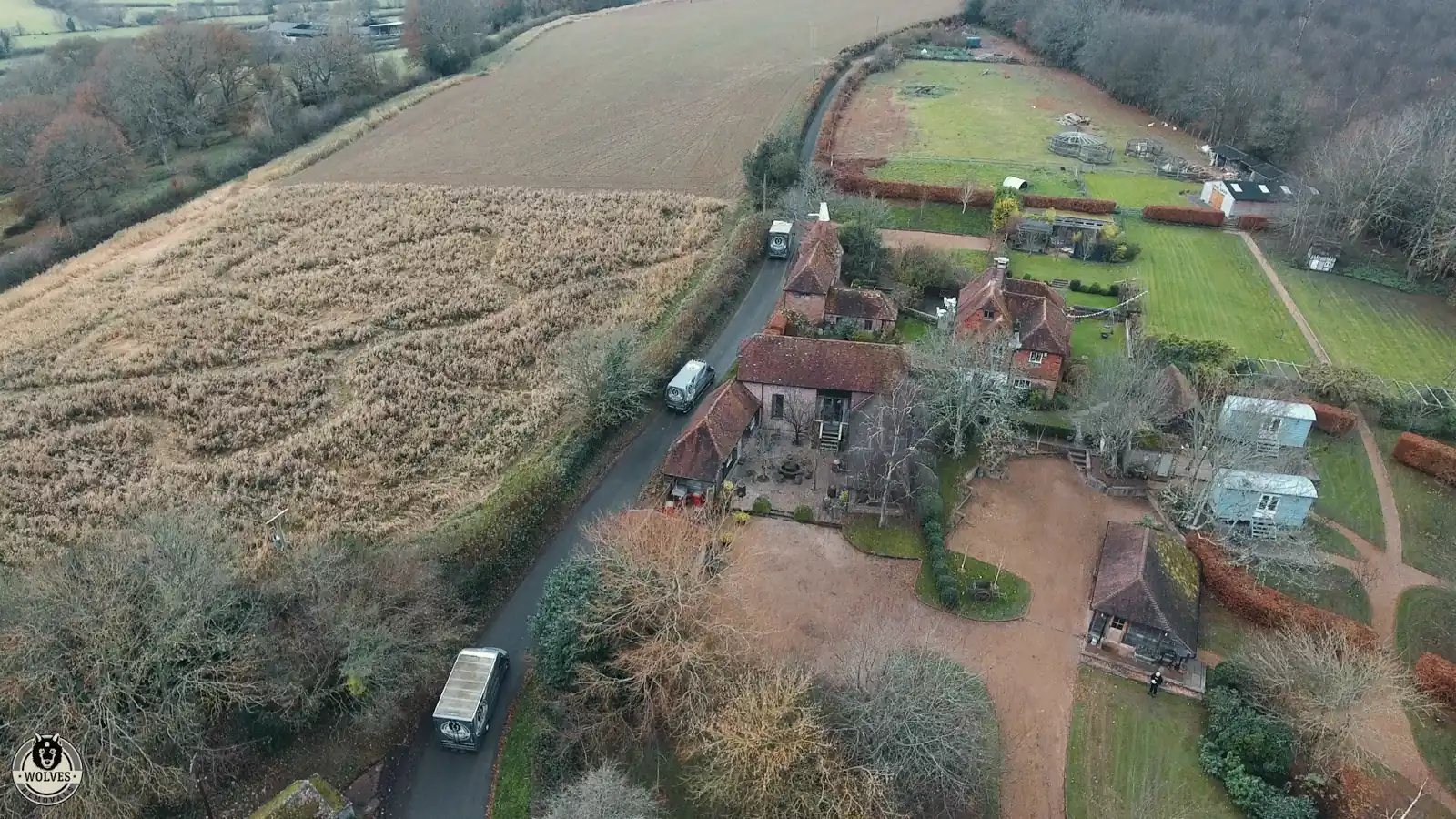
From our crews: our Petworth to Weardale move began at Tillington, “a mile west of Petworth on the A272, inside the South Downs National Park”.
After dark
- A Dark Sky Reserve. Since 2016 the National Park has been an International Dark Sky Reserve.
- The Milky Way. On clear nights the Milky Way can be seen from Bignor Hill, one of the park’s Dark Sky Discovery Sites; Harting Down and Iping Common are others.
- A winter festival. The park’s Dark Skies Festival of stargazing, talks and night walks next runs from 11 to 21 February 2027, with evening events across the National Park.
What is the West Sussex coast like to live by?
Living by the West Sussex coast means “long beaches, seaside resorts and nature reserves teeming with birds”, as Natural England describes the stretch from West Wittering to Shoreham. One coast path now runs its whole length.
Along the shore
- One unbroken path. From the sand dunes at West Wittering, a 44-mile stretch of the King Charles III England Coast Path has run to Shoreham-by-Sea since October 2023. A 35-mile stretch round Chichester Harbour followed in February 2026, from Hayling Island in Hampshire to East Head, through saltmarsh, mudflats and coastal villages. Natural England counts both as part of over 210 continuous miles of coast path.
- Milder winters. The Met Office says winters along the coast are generally milder than inland, except in cold easterly winds, and from late spring through summer sea breezes bring lower top temperatures than further inland.
- No cliffline. The county council says the West Sussex coast has no cliffline, unlike East Sussex next door, where the chalk downs meet the sea as high white cliffs.
From our crews: as we wrote after our storage-while-renting move in Selsey, its residential streets are “wide, flat and quiet”.
For beaches and bathing water, see which towns are by the sea and Bognor Regis’s sunshine.
How does Chichester Harbour change with the tides?
Chichester Harbour is busy with birds in winter and with boats and seal pups in summer, and different at every tide. It is a National Landscape, the name England’s Areas of Outstanding Natural Beauty have used since 2023. Chichester Harbour Conservancy says it holds equal status with National Parks in planning law.
From our crews: as we note on our Chichester removals page, loads at Bosham “are timed against the spring tides that flood the shore road”.
Through the tides
- Winter flocks. Each winter tens of thousands of wading birds and waterfowl arrive, some after flying 3,000 miles, flocking across the skies and making what the Conservancy calls “a dramatic soundscape”.
- Prinsted at both tides. On the shore walk from Prinsted, the Conservancy suggests winter birdwatching on the mudflats at low tide and, in summer, watching the dinghies at high tide.
- Seals off Thorney. Harbour and grey seals haul out at low water on the mudflats, and harbour seals have their pups here in June and July. Look out for them at Marker Point on Thorney Island, which Natural England says has “a quiet eight-mile loop for birdwatching”.
- Terns back. In 2025 little terns fledged in the harbour for the first time in 20 years.
- Stars by the water. Three Dark Sky Discovery Sites were designated in the harbour in 2017, at West Itchenor, Chidham and Thorney Island.
What is the Weald like in the north of West Sussex?
West Sussex’s High Weald means small fields, ancient woods and sunken lanes, in what its National Landscape calls “a medieval landscape of wooded, rolling hills”. The county council puts the High Weald in the county’s top eastern corner, from Horsham and Copsale across to East Grinstead and Haywards Heath. The Low Weald, it adds, is cut through by the Adur and Arun.
In the High Weald
- Ancient woodland. The High Weald has three times the national average of woodland cover, and more than 70% of that woodland is ancient, against about 19% nationally.
- Tree tunnels. In spring and summer its narrow sunken lanes, worn down by centuries of “trotters, feet, hooves – and, later, cartwheels”, become shady “tree tunnels”.
- The forest ridge. Worth Forest is one of four medieval forests on the Weald Forest Ridge, the High Weald’s highest sandstone ridge; St Leonard’s is another.
- A trail from Horsham. The 90-mile High Weald Landscape Trail starts at Horsham and ends in Rye, in East Sussex.
From our crews: barn conversions are “common right across the Horsham district”, we noted on a six-day packing move from Horsham.
Where can you walk into history in West Sussex?
You can walk into history at Fishbourne and Bignor, where Roman mosaics are still in place, at the Weald & Downland Living Museum of rescued buildings and at Arundel Castle on its Norman motte.
Roman mosaics
- Mosaics still in place. Fishbourne Roman Palace says it has the largest collection of Roman mosaics still in place in the UK.
- Earliest gardens. Fishbourne’s recreated Roman gardens are the earliest found anywhere in the country.
- A plough’s find. Under the Downs at Bignor, a Roman villa with mosaic floors has welcomed visitors since 1814, three years after a plough struck part of it.
Buildings with a story
- Rescued and rebuilt. At Singleton, the Weald & Downland Living Museum has more than 50 rescued historic buildings that tell 1,000 years of rural life; most were carefully dismantled, conserved and re-erected there.
- Born of a loss. The museum opened in 1970, prompted by the loss of medieval buildings to Crawley New Town. It says the government has designated its whole collection for its national importance.
- A castle’s paintings. The oldest part of Arundel Castle is the Norman motte. Inside are paintings by Van Dyck, Gainsborough and Canaletto.
From our crews: some of that history is still lived in. Period property around Chichester regularly throws up “timber frames, tight stairs, small openings”, says our guide to a sofa through a window.
St Richard of Chichester is patron saint of Sussex, and his “translated saint’s day of 16 June is celebrated as Sussex Day”, the cathedral says.
What are West Sussex’s towns and villages like?
Most West Sussex places are villages and hamlets, with market mornings in the towns. Of the 119 built-up areas wholly inside the county, 94 are “minor” places of hamlet or village size, the county council’s summary of the 2021 Census shows.
Our town guides cover market days in Chichester, Horsham and Steyning, and village life in Billingshurst. For later life see retiring by the coast; our best places guide shows which place suits you.
From our crews: as we wrote after a Bracknell to Storrington move, we are “in and out of Storrington, Thakeham, West Chiltington, Sullington and Washington on a regular basis rather than occasionally”.
Village and town
- Protected streets. Arun District Council says conservation areas protect “the character and appearance of a whole area, not just its buildings”, and its district alone has 29.
- Saturday markets. Arundel’s town council runs a farmers’ market one Saturday a month. Shoreham-by-Sea has farmers’ and artisans’ markets on the second and fourth Saturdays of most months; Adur & Worthing Councils call the artisans’ one “a wonderful place for a browse on a Saturday morning”.
- Every Wednesday. Worthing town centre has a market every Wednesday of the year.
How easy is it to get around West Sussex?
Five rail lines serve West Sussex, and Gatwick Airport is in the county’s north. Journey times depend on where you live: train times by town are in our best places table, times to Gatwick and London in our Horsham guide, and roads on our West Sussex removals page.
Lines and stations
- Along the coast. The county council’s transport plan lists the West Coastway along the coast, with branches to Littlehampton and Bognor Regis.
- The other lines. The others are the Brighton Main Line, the Arun Valley line, the Horsham–Dorking line and the East Grinstead branch; the county has 38 stations in all, the transport plan says.
- Village stations. The transport plan says village stations such as Hassocks and Barnham “play an important role in serving their surrounding rural communities”.
What is worth weighing up before moving to West Sussex?
Before moving to West Sussex, check everyday things for your own town: what homes cost, country buses that run less often and traffic on the A27. The most popular places also get busy, so timing helps.
Before the crowds
- Busy shore paths. Some of Chichester Harbour’s more popular footpaths get very busy at different times of the year, the Conservancy says.
- Summer weekends. National Trails says the South Downs Way gets busier in school holidays, with larger organised events on weekends from May to September.
- Go early. First thing, or out of season, you’ll have more of it to yourself.
How do you plan a move to West Sussex from London or further away?
From London or further away, settle the town, then the dates, with storage ready if completions don’t line up. The planning section of our best places guide covers parking, and storage in our warehouse in Sussex. Our Sussex guide explains London collection charges, and the county council’s site covers applying for school places.
Moving in from further away
- Your parking bay. If either street needs a parking bay suspension, you apply to the council; at the survey we tell you whether one is needed.
- A gap between homes. Belongings for one household arriving from the United States went into our warehouse in Sussex until its Storrington house was ready.
- A new council. On our Angmering to Shoreham move, just twelve miles east, “the council tax account, the bins and the electoral roll all changed, even though the commute did not”.
About this guide. Sources, read 18 November 2026: the South Downs National Park Authority, National Trails, Natural England, Chichester Harbour Conservancy, the High Weald National Landscape, local councils, the ONS, the Met Office, legislation.gov.uk and the historic sites. Where a fact covers the whole National Park, harbour or High Weald rather than West Sussex alone, the text says so.
Your next steps
- Book a free survey.
- Compare towns in our best places guide.
- Read our Sussex moving guide.
Jack Wolfe
Director, Wolves Removals · Ashington, West Sussex
Jack runs Wolves Removals, which has moved families and businesses across West and East Sussex, Surrey, Hampshire and Kent since 2016 from its Ashington base. The firm is fully insured, Checkatrade-verified and a LAPADA Approved Service Provider for antiques and fine art. More about us, or read our reviews.
Five Reasons to Move to West Sussex — FAQs
West Sussex is a county on England’s south coast, between Hampshire and East Sussex, and the county council says it shares its wooded north-western hills with Surrey. Chichester, Crawley, Horsham and Worthing are all in it.
No. Brighton and Hove is in East Sussex, as our Hove removals page says, and the Lieutenancies Act 1997 places it there “for the purposes of the lieutenancies”.
West Sussex is known for the dark skies of the South Downs National Park, a coast with no cliffline, the seals and winter birds of Chichester Harbour, the High Weald’s sunken lanes and Arundel Castle.