One Day, Twelve Miles, and a Wait for Keys
A one-day move is two half-days with a phone call in between.

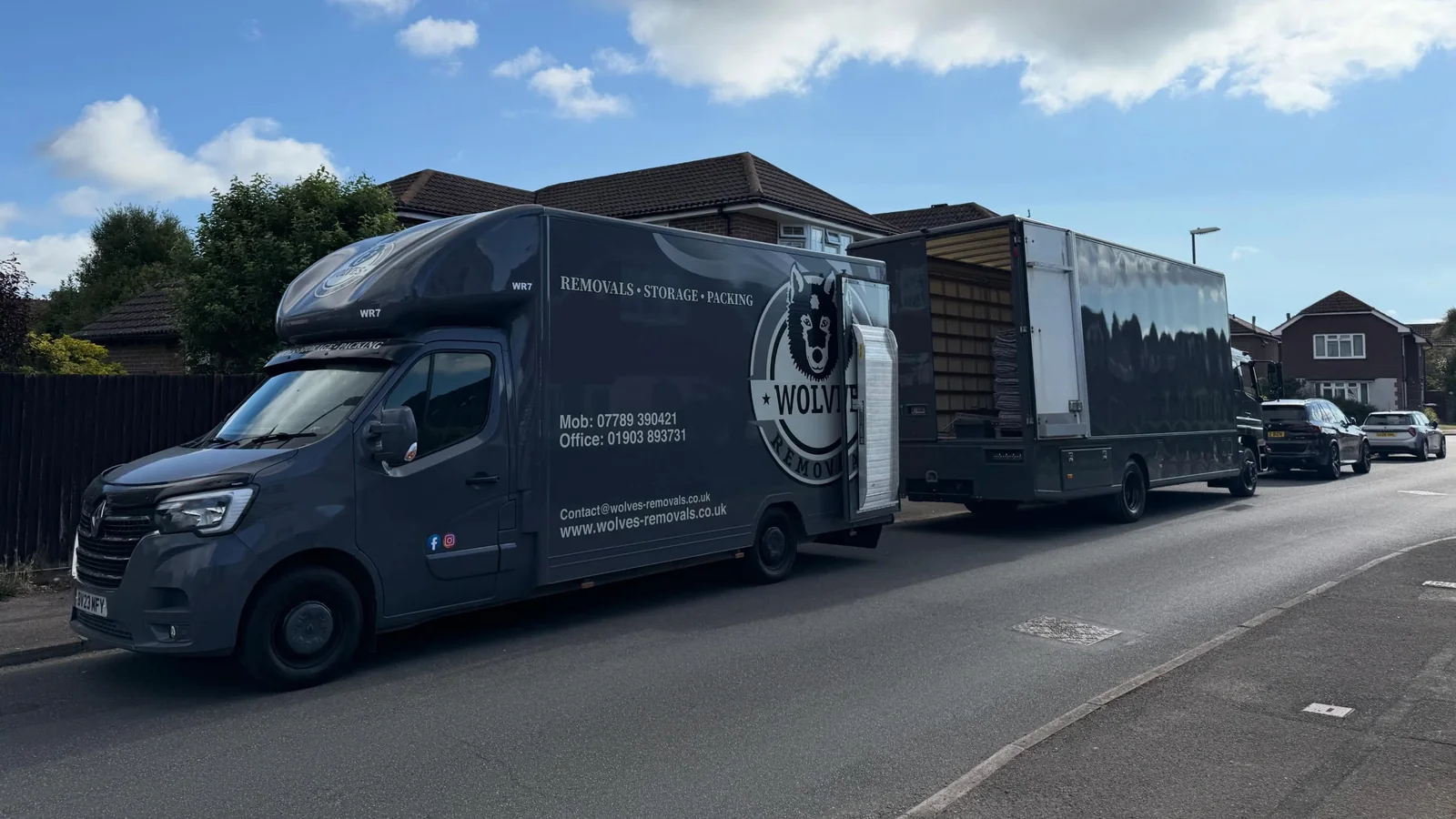
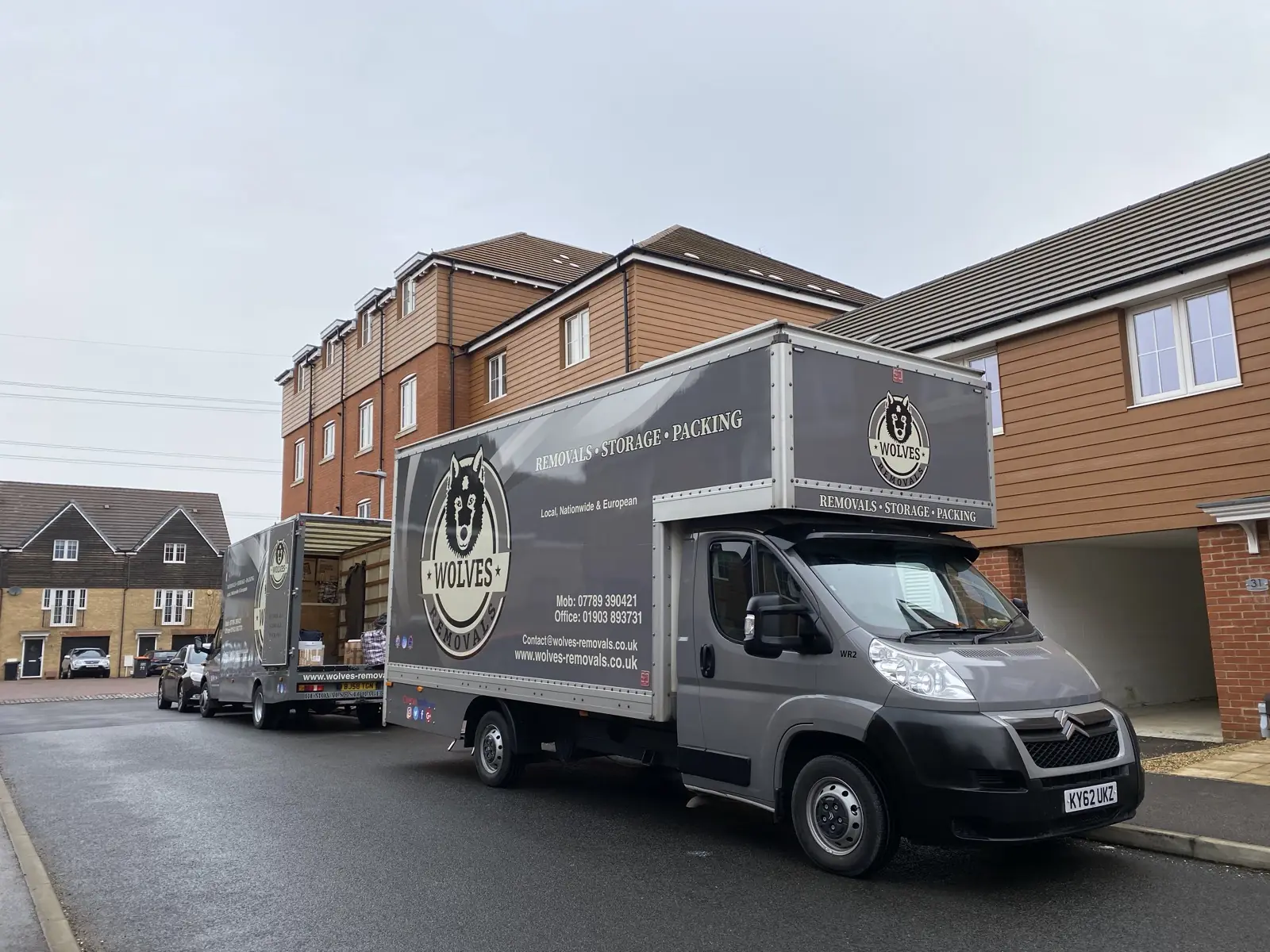
The morning is ours: empty the house, load the lorries, be ready. The afternoon belongs to whoever is moving the money, because until it lands there are no keys and nothing comes off the lorry. Wolves Removals ran this one twelve miles, from Angmering to Shoreham-by-Sea.
A One-Day Move Is Really Two Half-Days
Everything about a same-day move is decided by something nobody on the crew controls. You can load a house without owning anywhere to put it. You cannot unload one. So the morning belongs to us and the afternoon belongs to a solicitor, and the join between them is a phone call saying the money has landed and the keys are released.

That is why this one started early and why there were two vehicles on a twelve-mile job. Sixteen hundred cubic feet will not go into a single Luton, but more to the point, a one-day move cannot afford to shuttle. Whatever is going to Shoreham has to be on wheels and ready before the call comes, because the clock that matters starts when it does.
Angmering, and a Wednesday Chosen on Purpose
The collection was Angmering, the village and civil parish inland of Rustington where the A280 comes down off the A27. Settled, mostly post-war, the sort of estate road where two lorries fit on the kerb without blocking a neighbour’s drive — ordinary house removals territory, and the ordinariness is the point, because nothing at the Angmering end made this job unusual. Twelve miles east, Shoreham is a different district — Arun to Adur — so the council tax account, the bins and the electoral roll all changed, even though the commute did not.
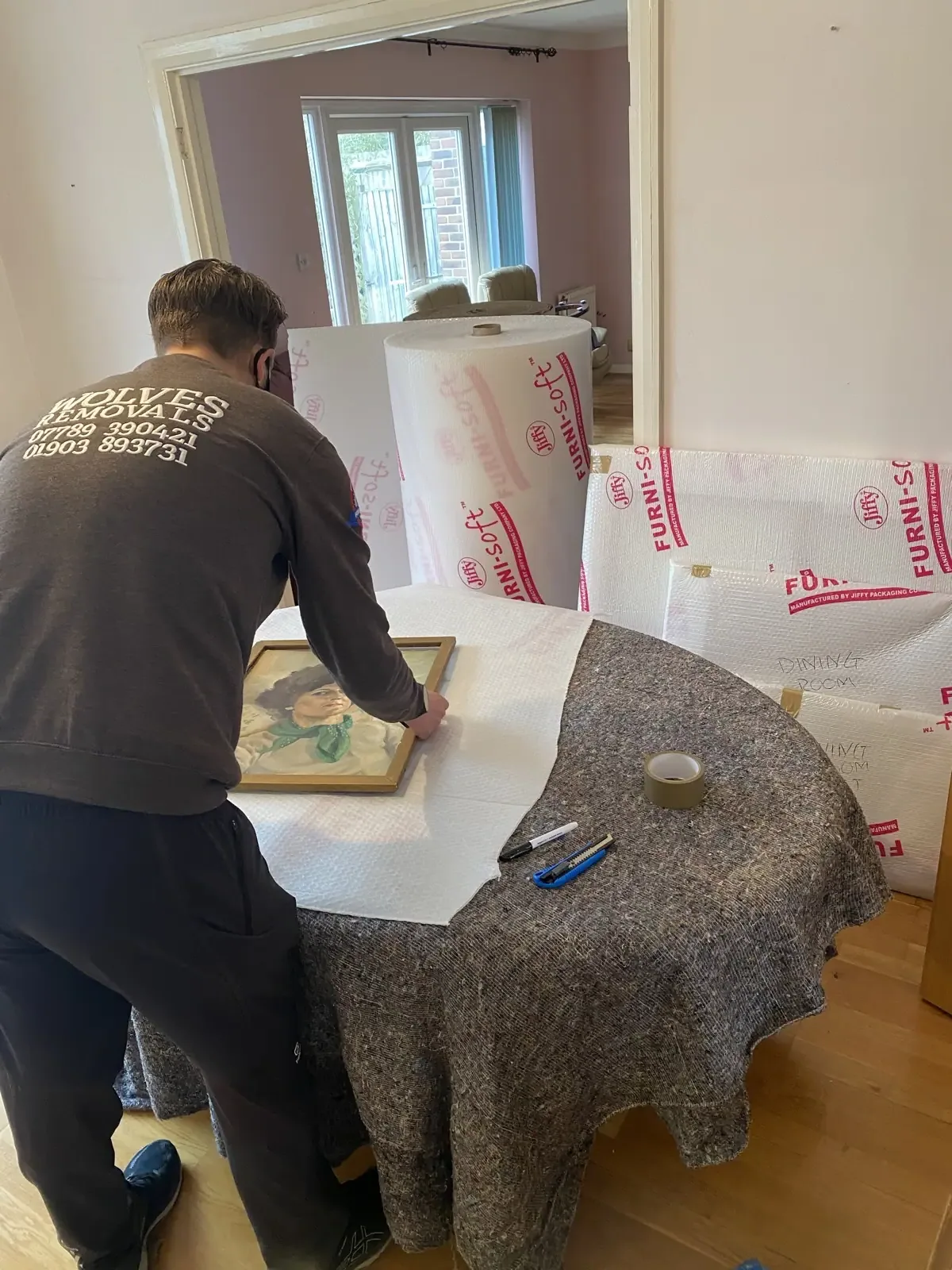
The house had been packed by the family, box by box, before anyone arrived — which matters more on a one-day move than on any other kind, because there is no slack in the timetable to finish it for them. The crew’s job was the furniture: taken apart where it had to be, wrapped, and loaded in the order it would be wanted at the other end. Had they wanted the cartons done as well, that is a full packing service and a different quote; here it was theirs to do, and they had done it.
The date was a Wednesday, and that was deliberate. Nearly a third of all UK moves happen on a Friday, and the busiest single day of 2026 saw close to 23,000 households move at once — four times a normal day. Midweek is quieter for everyone in the chain, including the solicitors.
Angmering to Shoreham-by-Sea, twelve miles along the A27. Sixteen hundred cubic feet, moved on Wednesday 1 July 2026 — a midweek date, chosen on purpose.
The family packed the house; we did the furniture, the driving and the stairs, with two vehicles and a single day to do it in. Total £1,440 including VAT.
What Actually Delays a Completion Day
Ask removal firms what goes wrong on completion day and the answers are strikingly consistent. Almost none of it is the household’s doing.
The solicitors and the banks88%
The estate agent or the seller69%
Everyone else in the chain67%
The seller41%
You — the only one on this list14%
Read the bottom row again. Of the five things that most often derail a completion day, exactly one is inside the customer’s control, and it is the smallest by a distance. Our client had already dealt with it: the house was packed and ready before we arrived, so the only risk they owned was off the table before the day began. Everything above that line belonged to somebody else.
The Wait
By late morning the house was empty and both vehicles were loaded. Then comes the part of moving day nobody photographs: waiting. The money moves through the chain one solicitor at a time, and the keys are not released until it lands.
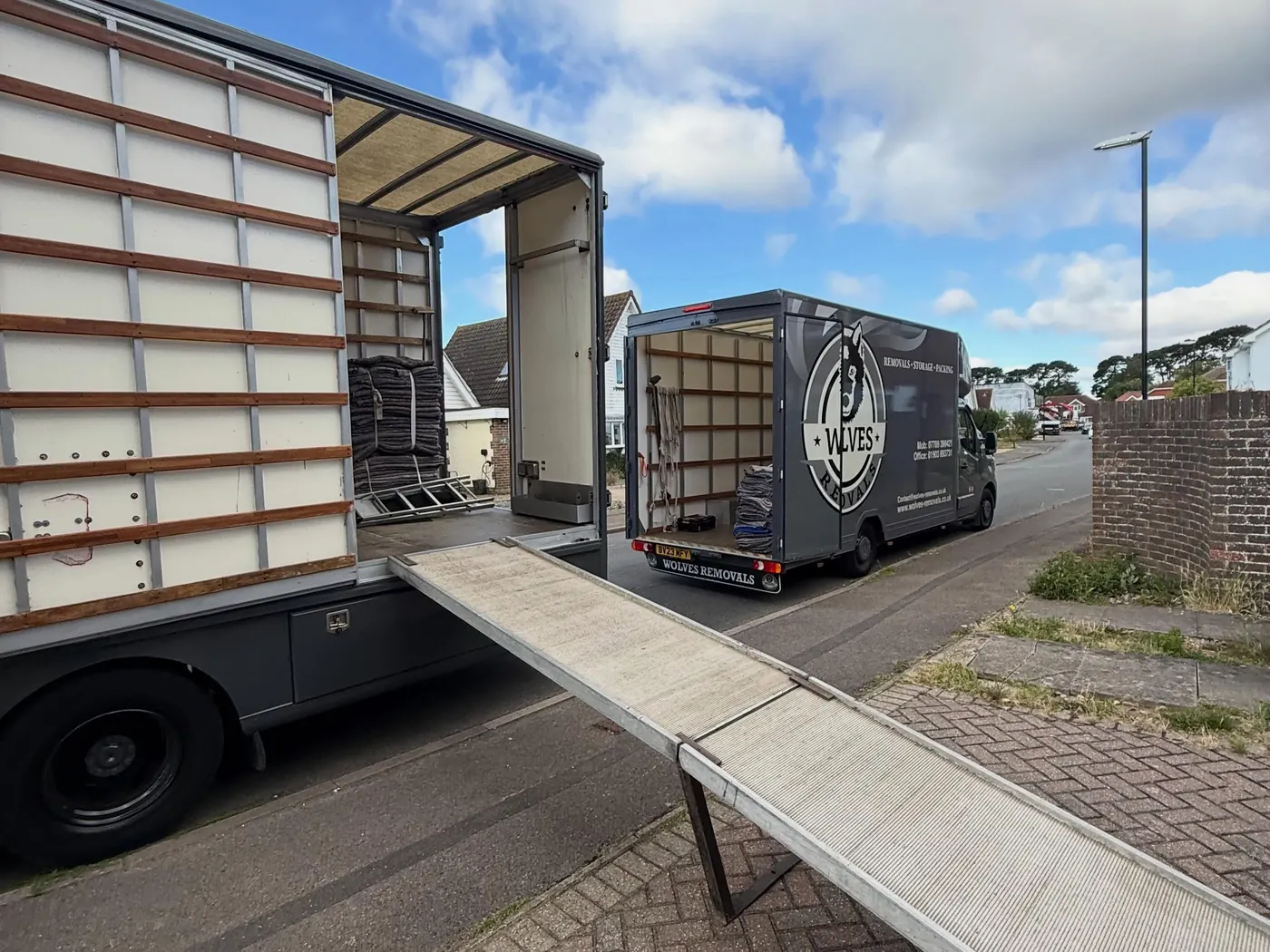
We plan for it rather than hope about it. On this one the crew ate while they waited, the load was checked and strapped again, and one of them stayed on the phone.
It is common enough to have been measured. In research for the HomeOwners Alliance, around one in five people who had bought in the previous two years had hit a moving-day delay caused by funds arriving late or a seller leaving late. Of those who ended up out of pocket, the single most common cost was an hourly waiting charge from their removal firm. That survey was carried out by YouGov in October 2018, on a subsample of just 324 people who had bought within two years, and nobody has repeated it since. Treat it as a dated, small-sample estimate rather than a current statistic — but the shape of it matches what any crew will tell you.
Waiting time is chargeable right across this industry. One answer is a key wait waiver, bought at booking rather than on the day, before anyone knows whether it will be needed. How a firm handles a late key is one of the questions worth asking before you sign, alongside everything else on the checklist — not something to discover on the day.
Everything Went Up a Flight of Stairs
The new house was on a riverside development beside the Adur in Shoreham-by-Sea — a hundred and twenty homes put up on a former light-industrial site, brick townhouses round a courtyard.
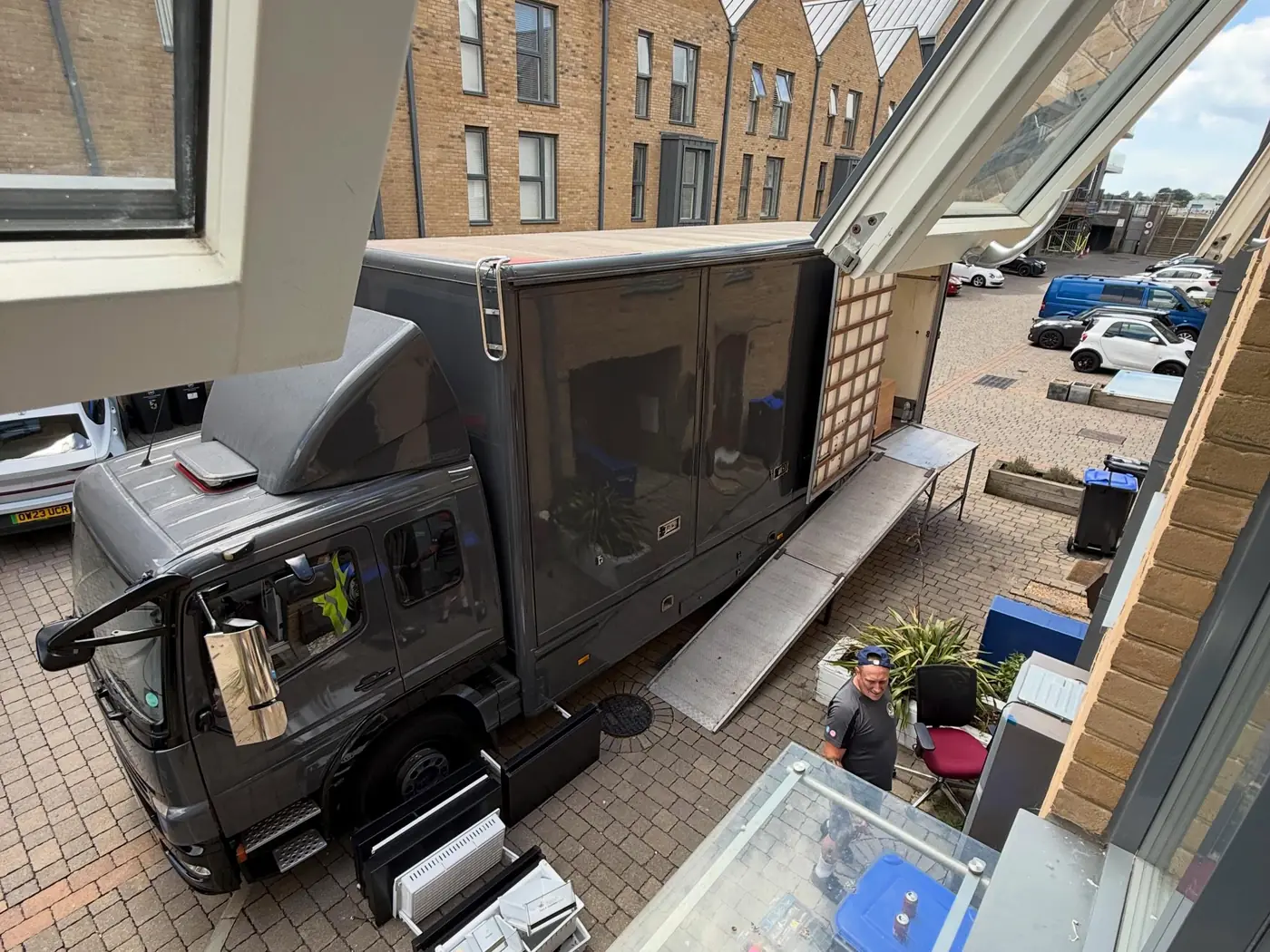
Here is the thing about it that changes a move, and it is by design rather than accident. A riverside site, in the architects’ own words, carries a certain level of flood risk, so every home was designed for resilience: habitable rooms on the first floor, the ground floor left as ancillary space. Sound planning, and completely invisible from a floor plan — until you are the one carrying a sofa.
In practice the townhouses run to four storeys with the garage taking up the ground floor, so there is no such thing as a ground-floor drop here. Every carton, every wardrobe and every appliance goes up at least one flight before it reaches the room it lives in, and the furniture that came apart in Angmering has to go back together up there.
Nor is there much to be done about where you stand. It is a shared courtyard, and by the time you arrive every resident’s car is already in it. On a job with a whole day, all of that is a detail. On a job that spent the middle of it waiting for keys, it is the difference between finishing and not.
What It Came To
Sixteen hundred cubic feet, two vehicles and a crew for the day, twelve miles, the furniture dismantled at one end and rebuilt at the other up a flight of stairs, and the whole of it done between one morning and one evening: £1,200 plus VAT — £1,440 including VAT. That is the figure for this one job, not a price list.
Wolves Removals prices every move on its own facts, and this one was set by five things: the volume moved, the distance, the access at both ends, how much packing was needed, and how much furniture had to be dismantled and rebuilt. Wolves Removals
That is the ordinary end of this trade, and it is worth saying out loud, because the jobs that get written up tend to be the odd ones. A local move on a weekday is what most households are actually booking.
There is no price list on this site and there never will be one. What a day like this comes to depends on what is in the house and what the two ends look like — which is what a survey is for, and how we work a figure out. If you want yours, tell us about the move and we will come and see it. The reviews are where customers say how it went.
The Wolves Removals Team
Family-run removals · Ashington, West Sussex
We have moved families and businesses across West and East Sussex, Surrey, Hampshire and Kent since 2016, from our Ashington base. We are fully insured, Checkatrade-verified and a LAPADA Approved Service Provider for antiques and fine art. More about us, or read our reviews.
One Day, Twelve Miles, and a Wait for Keys — FAQs
There is no fixed time for keys to be handed over on a completion day, and no clock anyone can point to in advance. Keys are released only once the money has reached the seller’s solicitor, and that depends on every transfer above the buyer in the property chain clearing first. Late morning to mid-afternoon is the most common window, though an early release is possible when there is no chain, and a later one happens more often than most households would like. On a Wolves Removals job that carried 1,600 cubic feet twelve miles from Angmering to Shoreham-by-Sea, using two vehicles on a single day, this was exactly the pattern: the house was emptied and loaded by late morning, then everyone waited for the phone call confirming funds had landed before a single box could come off the lorry. Until that call comes, nothing moves, however ready the crew and the vehicles are standing outside.
Yes, and most local moves are completed within a single day. Wolves Removals carried 1,600 cubic feet of furniture twelve miles from Angmering to Shoreham-by-Sea on Wednesday 1 July 2026, using two vehicles, and had it finished between one morning and one evening. Three things made that possible. First, the family had packed every box themselves before the crew arrived, leaving the furniture — taken apart, wrapped and loaded in the order it would be needed — as the only job left to do. Second, two vehicles were on site rather than one, so nothing had to wait for a second trip once the keys came through. Third, everything was loaded and ready on the kerb before the call releasing the keys arrived, so the only delay was the wait itself, not the packing or the loading. At the Shoreham end, every item then had to go up at least one flight of stairs, since the living floor there was on the first floor rather than the ground floor.
The crew waits with the load still on the lorry, because nothing can be carried into a house until access is actually granted. On the Angmering to Shoreham-by-Sea job — 1,600 cubic feet moved twelve miles by two vehicles in a single day — that is exactly what happened: by late morning both lorries were loaded with nowhere to go, so the crew ate while they waited, checked and re-strapped the load, and kept one person on the phone for news. Waiting time is chargeable across the removals industry generally, not something unique to one firm, so it is worth asking any company how they handle a late key before you book rather than finding out on the day. Wolves Removals offers a key wait waiver for exactly this situation, but it has to be taken out at the time of booking rather than added once the wait has already started, so it is a decision to make in advance, not on the day itself.
Removal firms name the transfer of funds by the conveyancer or banking system as the single biggest cause, cited by 88 per cent, ahead of keys not released in time by the estate agent or seller at 69 per cent. A knock-on delay somewhere else in the property chain follows at 67 per cent, then the seller not being out on time at 41 per cent. The household not fully packed comes last, named by only 14 per cent, and it is the one cause that sits inside the customer’s own control. These figures come from a HomeOwners Alliance survey of removal firms, updated August 2026, and firms could name more than one cause, so the numbers do not add up to 100. On the Angmering to Shoreham-by-Sea job, the family had already dealt with the one factor they controlled — the house was fully packed before Wolves Removals arrived — so everything left that could delay the day belonged to someone else in the chain.
Generally, yes, because midweek days carry far less pressure through the whole property chain than a Friday does. Close to a third of all UK house moves happen on a Friday, which concentrates solicitors, estate agents and removal firms all trying to complete on the same handful of days each month. The busiest single day of 2026 saw close to 23,000 households move house at once, around four times an ordinary day’s volume, and that kind of surge makes every link in the chain slower, from funds clearing to keys being released. Wolves Removals moved a household’s 1,600 cubic feet twelve miles from Angmering to Shoreham-by-Sea on Wednesday 1 July 2026, and the midweek date was chosen deliberately rather than by chance, on the reasoning that a quieter day for solicitors is a quieter day for everyone waiting on them. A Wednesday does not guarantee an early key release, but it removes one obvious source of unnecessary system-wide congestion.
Stairs are not charged as a separate line item, but access is one of the core things a quote is built around: it changes how long a job takes and how many people it needs. On the Angmering to Shoreham-by-Sea move, the new home was a riverside townhouse with its living floor on the first floor rather than the ground floor, so every carton, item of furniture and appliance had to go up at least one flight before reaching the room it belonged in. Wolves Removals priced that job — 1,600 cubic feet, twelve miles, two vehicles, furniture dismantled at Angmering and rebuilt at Shoreham — at £1,200 plus VAT, which comes to £1,440 including VAT; that figure is for this one job alone, not a price list, since access, volume, distance, how much packing was needed and how much furniture had to be dismantled and rebuilt all fed into it. Stairs like these are worth mentioning at survey stage, before a figure is set.