We Took a Window Out to Get the Sofa In
Eighty miles, two days, and a front door that was no use at either end.

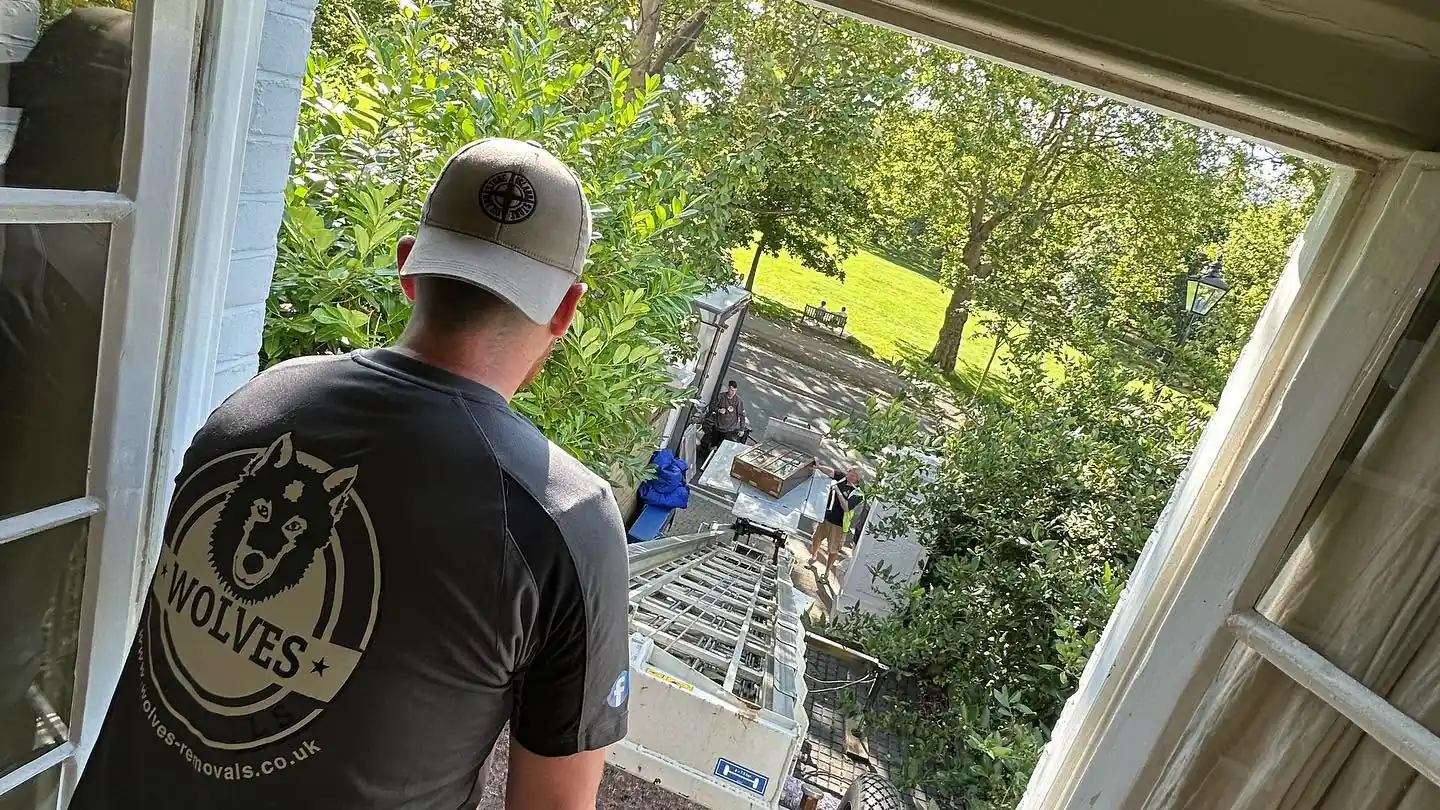
Wolves Removals took the furniture out of London through a top-floor window on a hoist, and into a timber-framed Chichester house through an opening where a window had been. Here is when that is the right answer, and what it needs.
Two Days, Two Buildings, and No Usable Front Door
Eighty miles from London to Chichester, which is a shade under two hours with an empty vehicle. The driving was the straightforward half.
What made this a two-day job was that neither end could be loaded or unloaded the ordinary way, and the question at both was the same one: how do you get a sofa through a window when the door will not do it. On day one the furniture left a London house through a top-floor window. On day two it went into a Chichester house through an opening where a window used to be.
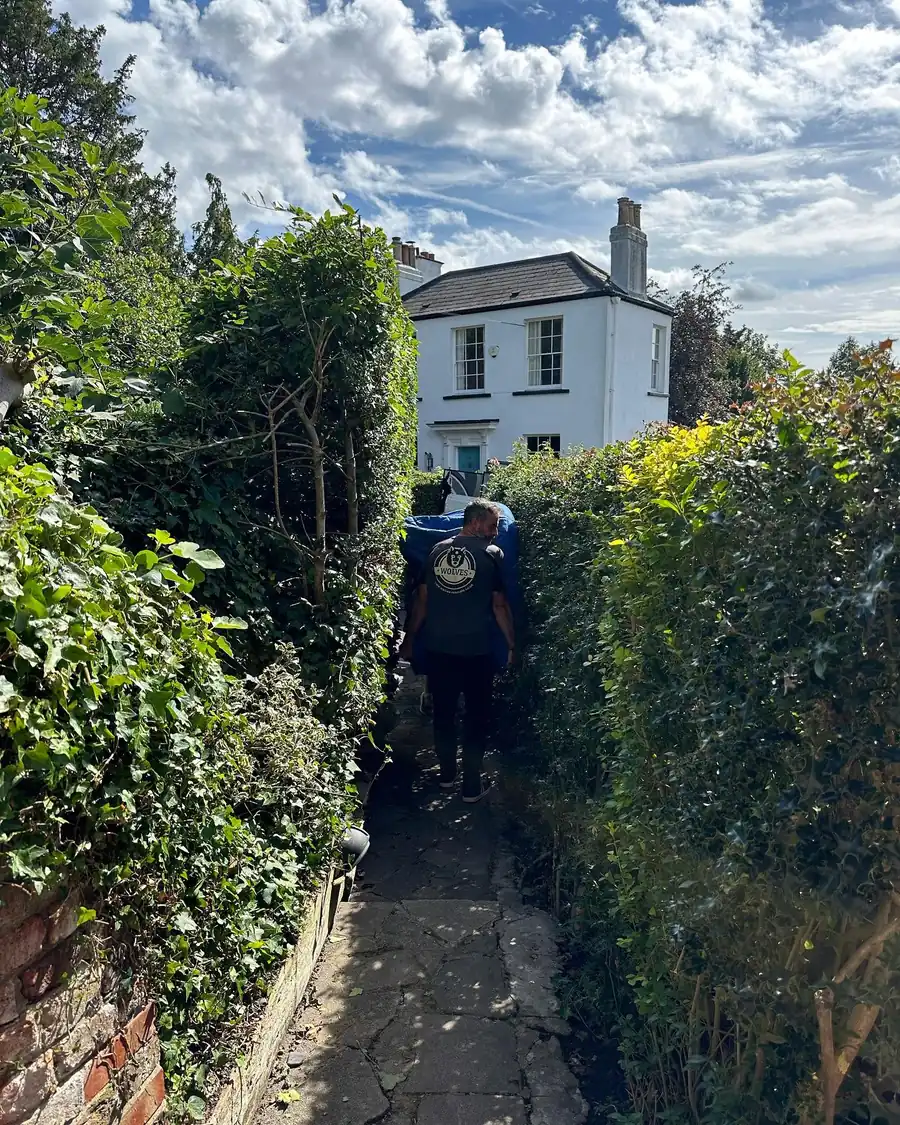
You can see the first problem in that photograph. A path with a hedge either side has a fixed width and no give in it, and it is a poor place to discover that the thing you are carrying needs to be turned.
Day One: Out Through a Top-Floor Window
The photograph at the top of this page is that view: a crew member leaning out of the sash, looking down the ladder track at the platform waiting below.
When an item will not come down a staircase, the window is often the only remaining route, and an external hoist is how you use it. Wolves Removals stands the rig — an inclined ladder track with a powered platform that runs up it — on the ground and leans it against the elevation, with the platform arriving level with the opening.
Roofers use much the same rig to get tiles up. The removals version is the same idea with a bigger platform, and on a job like this one it does something no amount of strength can: it takes the staircase out of the equation entirely.
What a Furniture Hoist Needs Before It Earns Its Keep
A hoist is not a decision you can take on the morning. Three things have to be true, and all three want checking on a survey.
Somewhere to stand it. The rig needs firm, level ground at the foot and a clear line up the face of the building. Railings, a lightwell, a bay, a porch or a mature tree in the wrong place can all rule it out.
An opening that actually opens far enough. A sash that lifts, a casement that swings clear, or a window that can come out. A modern unit with a restrictor and a small opening light is no use however good the hoist is.
Permission, sometimes. If the machine has to stand on the public footway or the road, that can need clearing with the local authority in advance. It is rarely difficult and it is frequently forgotten.
Day Two in Chichester: the Window Came Out
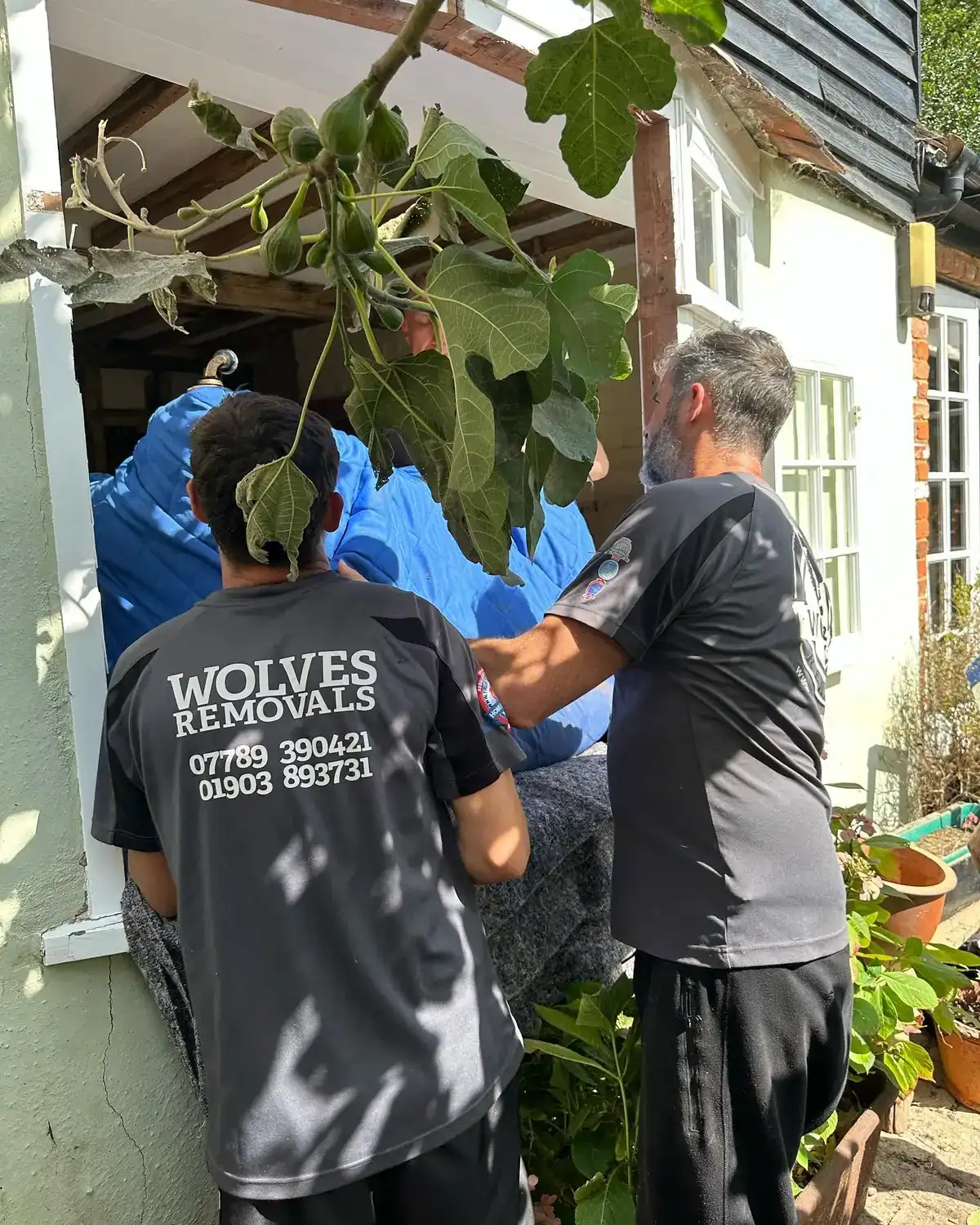
The delivery house is timber-framed and old, and it had a sofa to receive that was never going to make it through a door. So the window came out.
That sounds drastic and it is routine. On a period property it is often the least invasive option available, because the alternative is taking a door frame apart in a wall that has been moving for as long as it has stood, and may not go back together the way it came.
A window unit is designed to be removable. A structural opening in a timber-framed wall is not. That is the whole reason the window is the answer and the door frame is not.
Done properly it is a short job: the glazed unit is taken out, the reveal is padded, the item goes through a clear opening touching nothing, and the unit goes back the same day. What it needs is somebody competent to remove and refit it, and that arranged in advance — not a crew standing in a garden at four o’clock wondering whether to try.
What Decides What Taking a Window Out Costs
People ask this before they ask anything else, and there is no useful single figure — it depends on the building rather than on the sofa. What moves it is fairly predictable, though.
Which trade it needs. A modern sealed unit in a plastic frame is a glazier’s half hour. A painted timber casement in an old frame is joinery, and slower, because it has to come out without splitting and go back without gaps.
Whether it goes back the same day. Out and back inside one visit is much the cheaper shape. If the opening has to stay boarded overnight it becomes two visits and a security problem in between.
Whether anything else has to be hired or licensed. A hoist is equipment, and if it stands on the public footway there may be a licence fee attached to that.
What the building is. If it is listed or in a conservation area, ask before anybody touches a window — not because a temporary removal is necessarily a problem, but because that is a question for the conservation officer and not for a removals crew on the day.
We do not quote window removal as a line item with a set price, because a price set without seeing the window would be a guess. It gets priced at survey, alongside everything else the access needs.
Which Way Does It Actually Go In?
Most people think about this as a yes or no question. It is really a ladder, and almost every large item that seems impossible is simply further up it than the last one.
The reason to think of it this way is that the rungs are not interchangeable. Doors off hinges is ten minutes and a screwdriver. A window out is a trade and a return visit. A hoist is a machine, a footprint and occasionally a permission. Each step up costs more in arrangement than in effort, and arrangement is the thing that cannot be improvised.
If you know before the day which rung you need, all of them are straightforward. Find out on the day and only the top two are.
A Spiral Stair, and a Hatch in the Floor
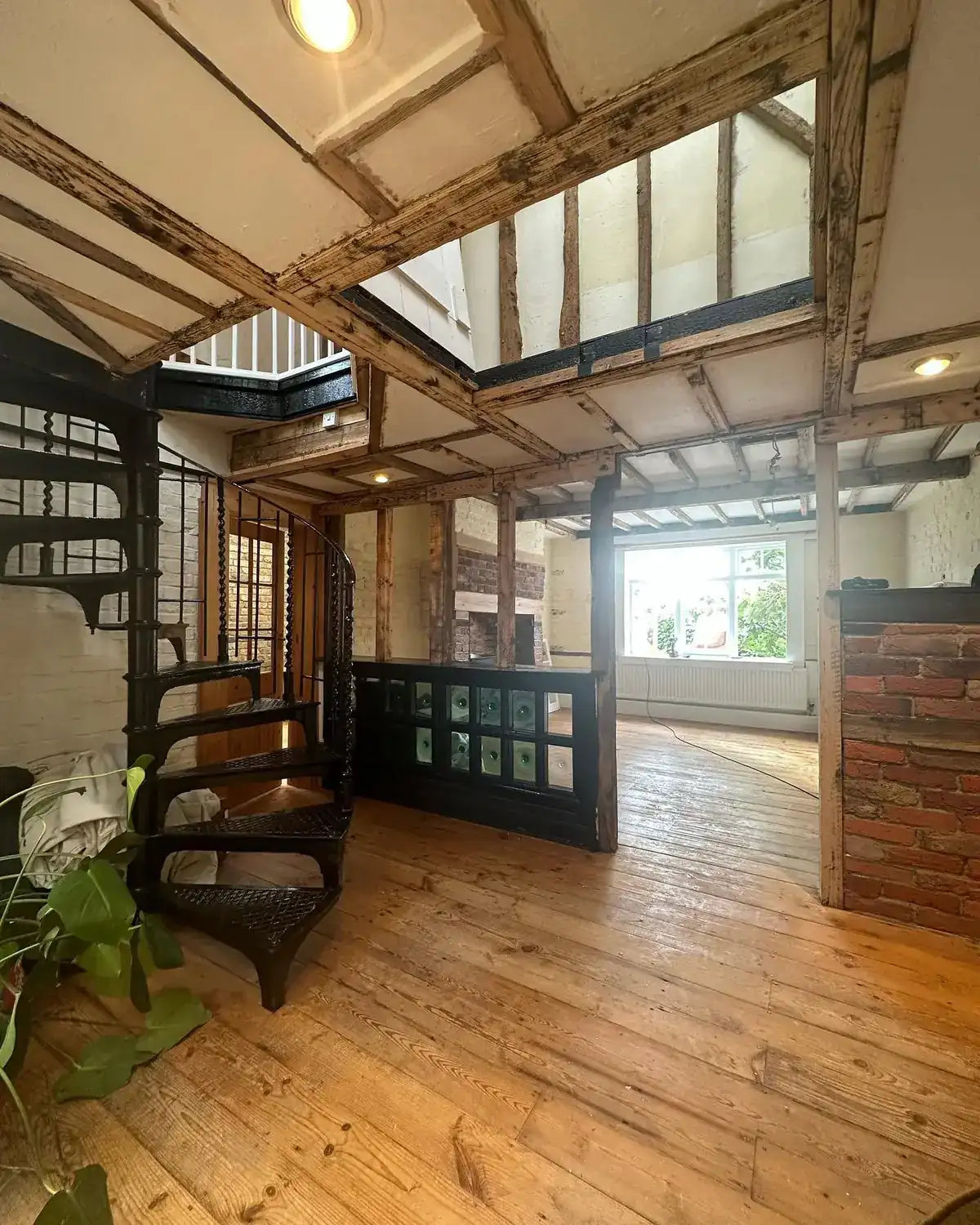
Once through the opening there was still the rest of the house, and it had two more things in it worth knowing about.
The first was a cast-iron spiral staircase. Anything that will not make that turn is not going upstairs by that route, and cast iron is unforgiving in a way a timber stair is not — there is almost no give in it. We have written separately about what a curved staircase actually constrains, and all of it applies here with the margins tightened.
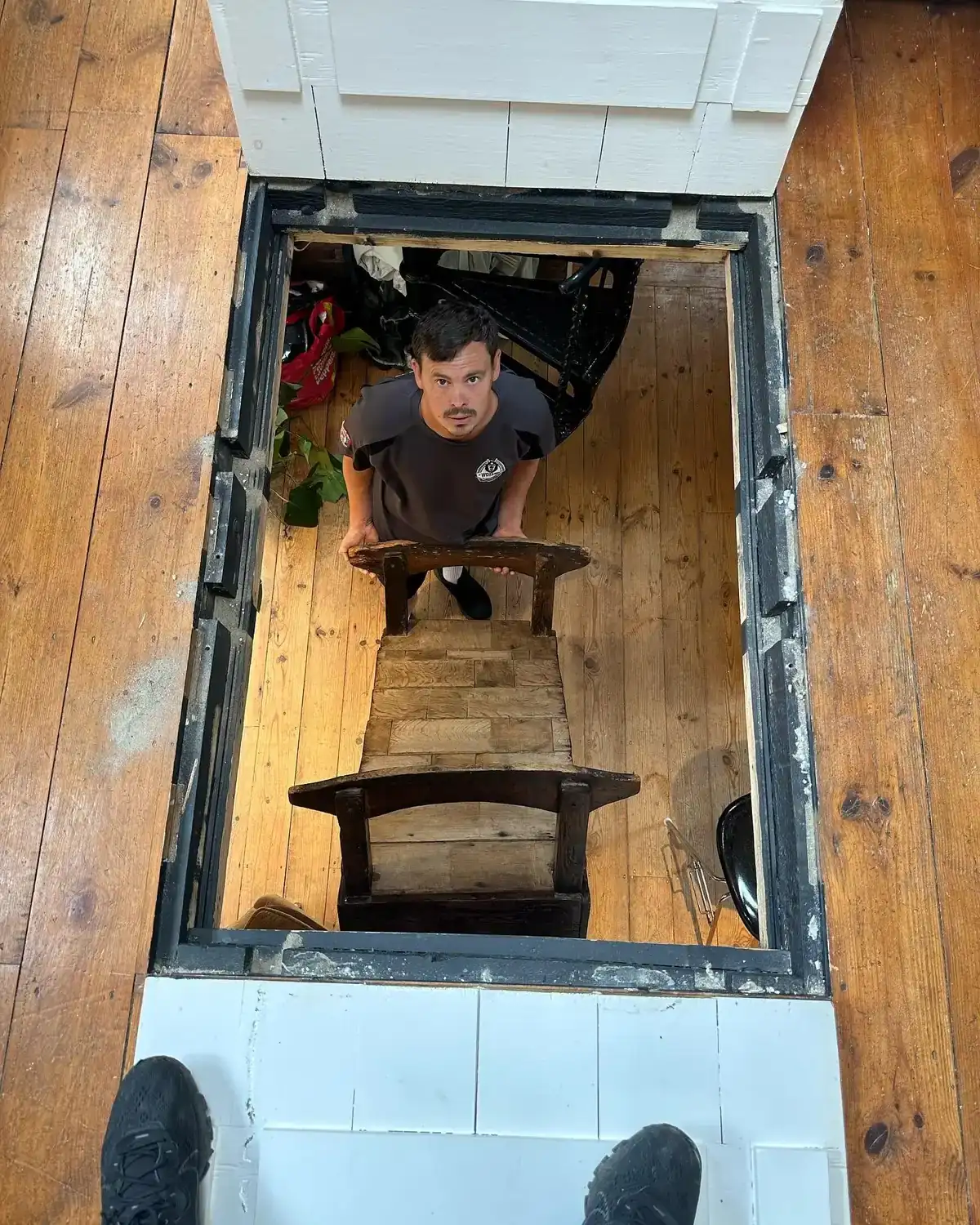
The second was a lift hatch: a rectangular opening in the boarded floor with the boards lifting out. In a building like this it is the sensible way to get between levels with something long, because it is a straight vertical route rather than a turning one.
What it is not is generous. A hatch is sized for the joists around it, and the usable opening is smaller than the hole looks from above once you allow for getting hands and a strap around whatever is going through it.
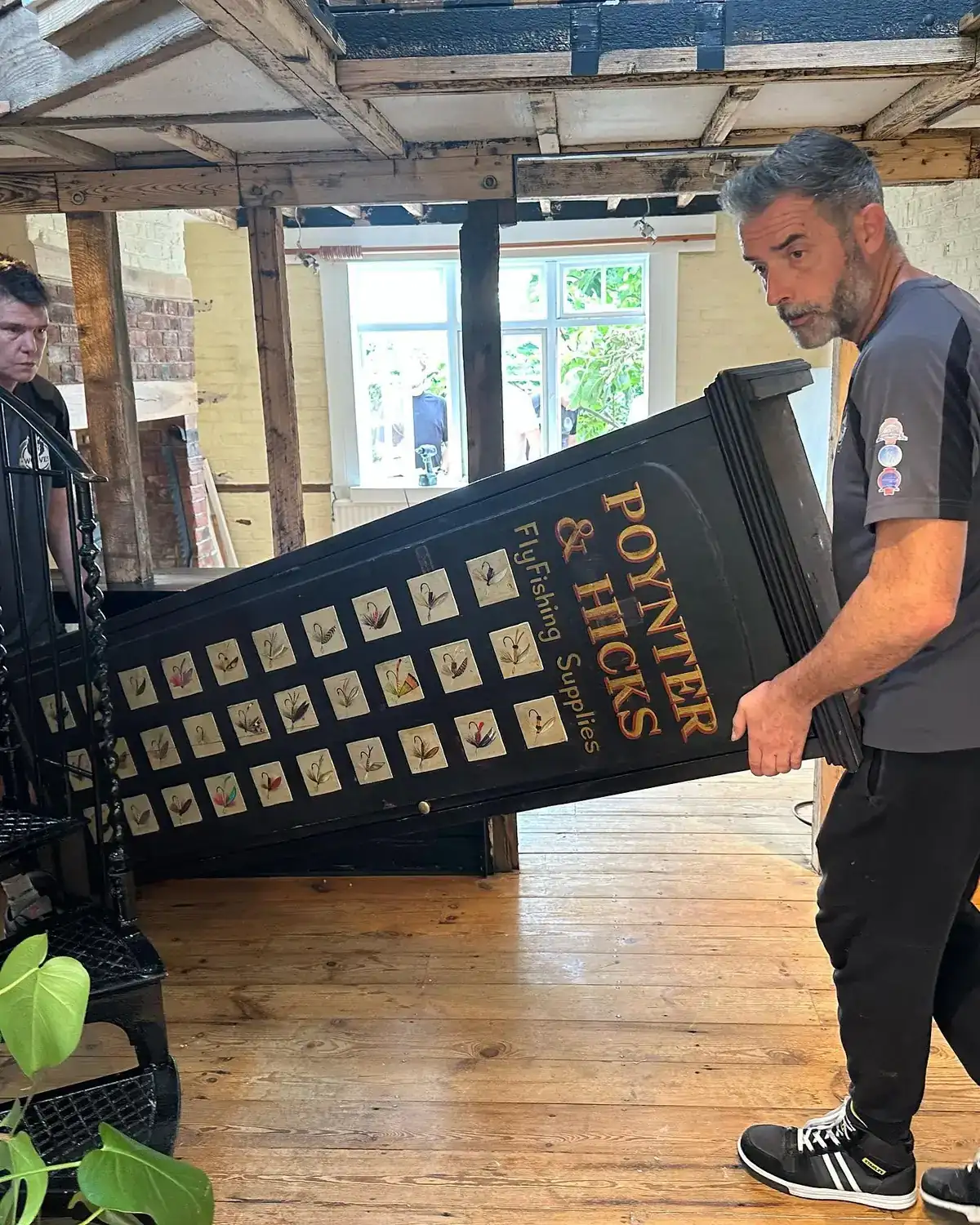
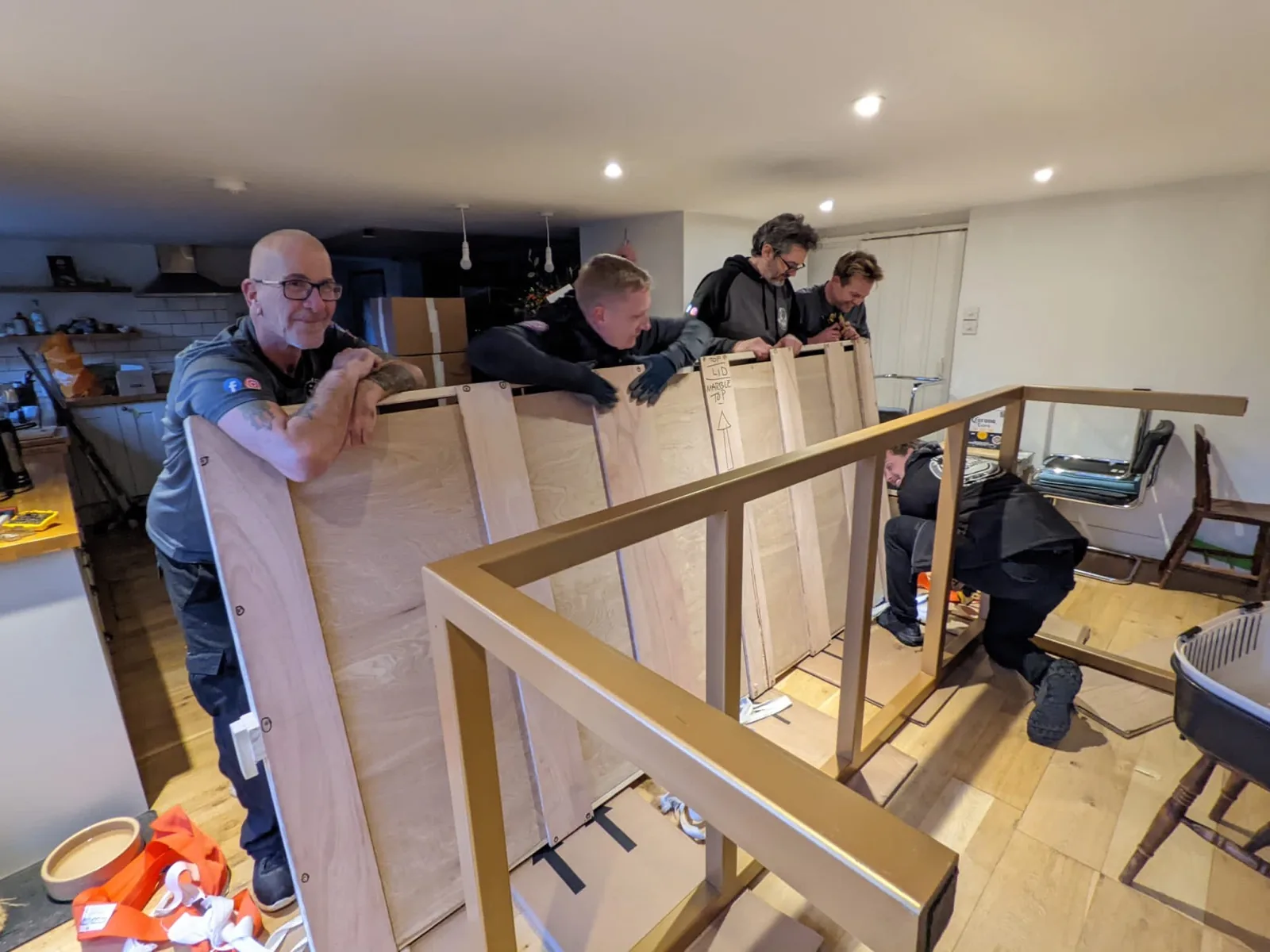
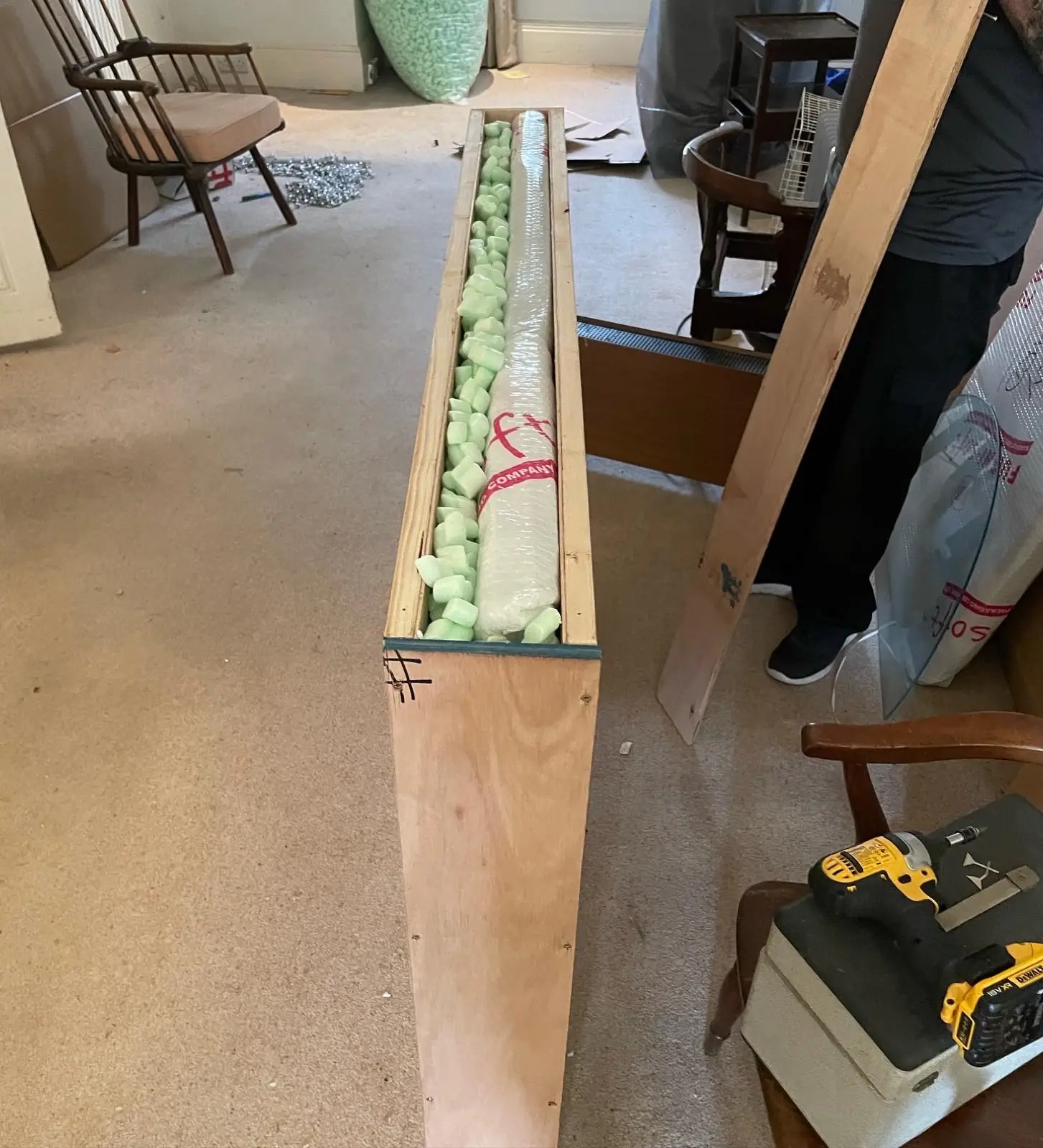
That board is a good example of the category that catches people out. It weighs very little and it is the hardest shape in the house: rigid, flat, wider than a person, and with a painted face that cannot be leaned against anything. Large flat items are why crews carry more blankets than the weight of a load would ever justify.
London to Chichester, and Why It Took Two Days
Eighty miles is a comfortable single run. This still took two days, and the reason is worth stating because it comes up on nearly every long-distance quote we write.
A move gets split across days when the WORK will not fit into one, not when the distance will not. Here both ends needed setting up before anything could be carried: a hoist put up and taken down in London, a window out and back in Chichester. Neither of those is quick, and neither can be rushed with an audience of a loaded van.
Period property in and around Chichester throws up this shape of job regularly — timber frames, tight stairs, small openings, and rooms that were furnished when furniture was made in the room or carried in flat. There is more on how we work in the city and the villages around it on our Chichester removals page, and our house removals page covers what a survey looks at before a day like this is quoted.
The Wolves Removals Team
Family-run removals · Ashington, West Sussex
We have moved families and businesses across West and East Sussex, Surrey, Hampshire and Kent since 2016, from our Ashington base. We are fully insured, Checkatrade-verified and a LAPADA Approved Service Provider for antiques and fine art. More about us, or read our reviews.
We Took a Window Out to Get the Sofa In — FAQs
Either through an opening that is already wide enough, or through one made wider by taking the glazed unit out. For a window removal, the unit comes out, the reveal is padded so nothing touches the frame, the sofa passes through the clear opening, and the window goes back in the same day. Above ground floor level, the sofa is usually brought up outside on an external hoist rather than carried through the house: an inclined ladder track with a powered platform is stood on firm, level ground and leant against the elevation, so the platform arrives level with the opening. On one move, a top-floor London window took a sofa out on a hoist, and a removed window brought it into a timber-framed Chichester house at the other end. Neither is a decision made on the day; both need arranging in advance.
Yes, and on period properties it is often the least invasive option, because a window unit is designed to be removable while a structural opening in an old timber-framed wall is not — that is the whole reason the window is the answer and the door frame is not. Done properly it is a short job: the glazed unit is taken out, the reveal is padded, the item passes through a clear opening touching nothing, and the unit goes back the same day. Which trade it needs depends on the window: a modern sealed unit in a plastic frame is a glazier’s job, while a painted timber casement in an old frame is joinery, because it has to come out without splitting and go back without gaps. If the building is listed or in a conservation area, that is worth checking. It needs arranging in advance.
An inclined ladder track with a powered platform that runs up it, stood on the ground and leant against the building so the platform arrives level with an upper-floor opening. You need one when an item will not come down the stairs and the window is the only remaining route, because a hoist takes the staircase out of the equation. Three things have to be true, and all are worth checking at survey. Somewhere to stand it: firm, level ground at the foot and a clear line up the face of the building, since railings, a lightwell, a bay, a porch or a mature tree can rule it out. An opening that actually opens wide enough: a sash that lifts, a casement that swings clear, or a window that can come out. And sometimes permission, if the machine has to stand on public footway.
In order of how much arranging each takes: through the door as it is; doors off their hinges, which is ten minutes with a screwdriver and typically buys you 40 to 50 millimetres; the sofa dismantled, if it was built to come apart; a handrail or banister removed; the window unit taken out, which needs a trade and a return visit; or an external hoist to an upper opening, which needs a machine, a footprint, and occasionally a permission. Almost nothing is genuinely impossible — it is a question of how far up the list you have to go. Each step up costs more in arrangement than in effort, and arrangement is the thing that cannot be improvised. Know before the day which rung you need and all of them are straightforward; find out on the day, and only the top two options still are.
Yes, and it is a route run often — eighty miles from London to Chichester is a comfortable single run, a shade under two hours with an empty vehicle, and the driving itself is the straightforward half of a job like this. A move gets split across two days when the work will not fit into one, not when the distance will not. Here both ends needed setting up before anything could be carried: a hoist put up and taken down in London, and a window taken out and refitted in Chichester, neither of which can be rushed with a loaded van waiting outside. Period property in and around Chichester throws up this shape of job regularly: timber frames, tight stairs, small openings, and rooms that were furnished when the furniture was made in the room or carried in flat.