How to Pack Boxes for Moving House: The Complete Practical Guide
How to pack boxes for moving house: materials, taping, box sizes and weight, packing and labelling, room by room, what not to pack, when to start and how many boxes you need.

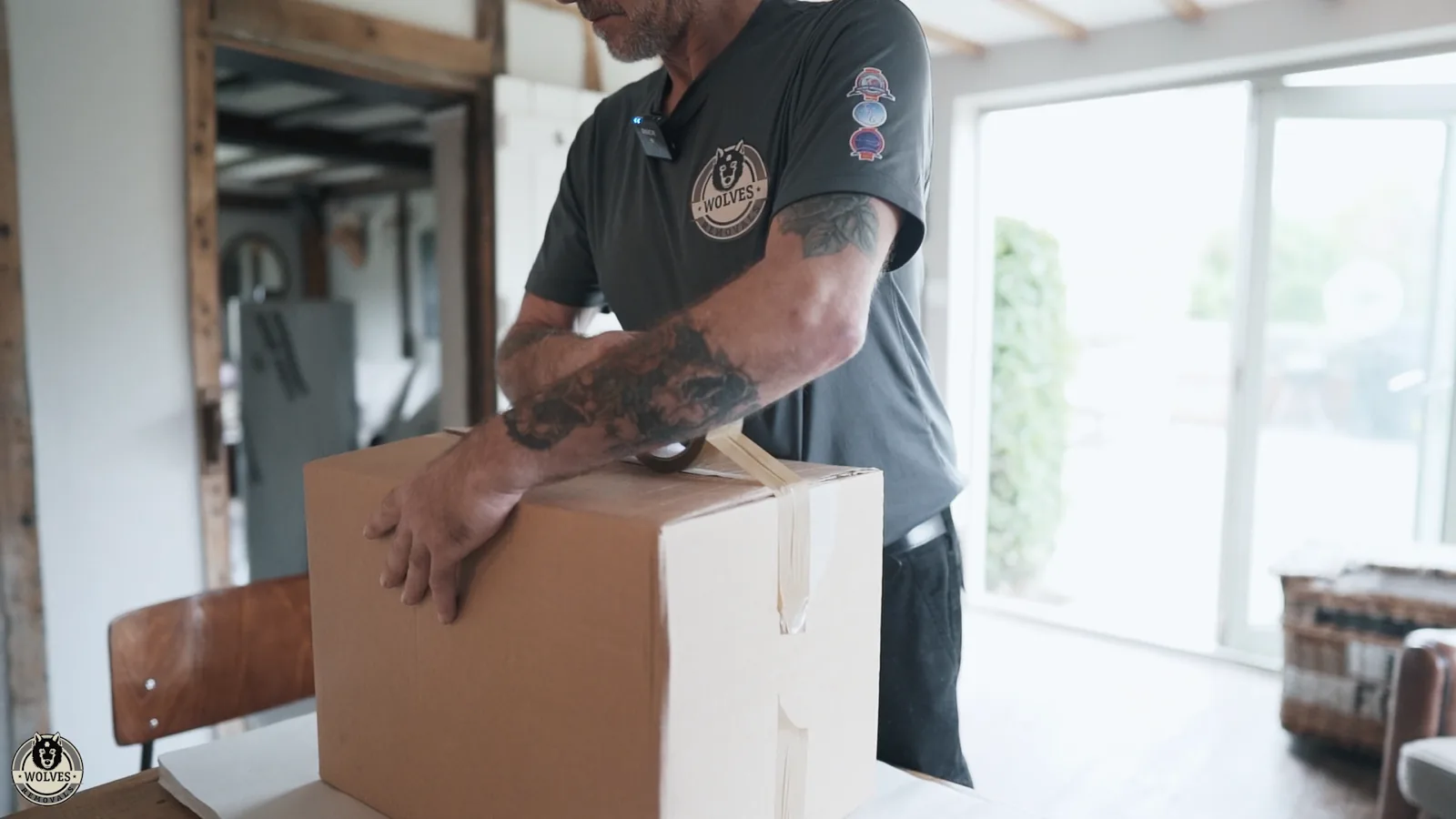
To pack boxes for a move, put heavy things in small boxes and light things in large ones, tape every base in an H, fill each box so it closes flat with nothing able to move, and label the side with the room and what’s inside. Short on time? See whether to pack yourself or use packers.
The quick answer
Box size: Small for heavy, large boxes only for light, bulky things
Weight: Light enough to lift, HSE: 10 kg men, 7 kg women from the floor
Filling: Full, not bulging, paper in every gap, closes flat
Labels: Room and contents, on the side, with arrows pointing up
When to Start Packing
Start with the things you use least, at least two weeks before moving day, and leave the kitchen, bathroom and a box of essentials until the last days.
-
Two weeks or more before: sort out the loft, spare rooms and outbuildings, then start packing the non-essentials (Which?).
-
The week before: the rooms you use least, and the ornaments and pictures you can do without, labelled FRAGILE.
-
The last days: the kitchen, the bathroom and an essentials box marked OPEN FIRST that travels with you: a change of clothes, toiletries, medication, chargers, the kettle and a few mugs.
If we’re packing for you, we do it one or two days before moving day, so you aren’t living out of boxes for a week. Our house move timeline covers everything else to do in the weeks before.
How Many Boxes Do You Need to Move House?
As a starting point, Wolves Removals moving kits hold 15 boxes for a one-bedroom move, 25 for two bedrooms, 38 for three and 51 for a four-bedroom house, but two homes the same size can hold very different amounts.
How many boxes our moving kits hold
Source: our box shop moving kits.
The three-bedroom kit, for example, is 20 small, 15 large, 2 extra-large and 1 wardrobe box.
Buy in stages: a starter batch for the rooms you pack first, then top up once you see how fast they fill. If you buy from our box shop, we collect the flattened empties next time a van is in your area. Otherwise, flattened moving boxes, cut or torn to fit the bin, go in the kerbside recycling, but bubble wrap can’t, at least in Adur and Worthing.
What You Need to Pack Boxes
To pack a house you need double-walled boxes in two or three sizes, strong tape, packing paper, bubble wrap for fragile things, and a thick marker.
Materials, in the order you’ll use them
Double-walled boxes: small, large and extra large
Strong packing tape: for every base and every top
Packing paper: to wrap and to fill every gap
Bubble wrap: over the paper, for anything fragile
A thick marker: for the room, contents and arrows
Sources: our packing materials page and box shop.
Our box sizes, and what goes in each
-
Small, 18 × 13 × 13 inches: books, tools, tins, crockery, anything heavy and dense.
-
Large, 18 × 18 × 20 inches: the general-purpose size for lighter, bulkier things.
-
Extra large, 18 × 18 × 30 inches: bedding, pillows, cushions and other light, bulky things.
-
Wardrobe box, 20 × 18 × 48 inches: hanging clothes, straight off the rail, with a rail inside.
Source: our box shop, double-walled throughout.
Match the box to the weight
-
Small boxes for heavy things: books, tools, tins, crockery.
-
Large and extra-large boxes for light, bulky things: clothes, bedding, cushions.
-
Never a large box of heavy things. It can’t be lifted safely, and it bursts at the seams.
Sources: our packing materials page and Which?, which says to spread heavy items out between boxes.
A used double-walled box in good condition is fine for linen and the garage. We wouldn’t put china in one that has already done a move, because the corners are where boxes fail. Our box shop sells the same boxes and materials our crews use.
How to Tape a Moving Box
Tape a moving box along the centre seam and across both ends, so the tape makes an H, and add more strips under anything heavy. A base taped along one seam only is the one most likely to split as the box is lifted.
Taping a box so the base holds
-
Fold the base flaps in, short flaps first.
-
Run tape along the centre seam, overlapping onto the sides.
-
Tape across each end as well, so the tape makes an H.
-
For books or anything heavy, add more strips across the base.
-
Once the box is packed, tape the top the same way.
How to Pack a Box Step by Step
Line the base with crumpled paper, put the heaviest things at the bottom and lighter things on top, fill every gap, and close the box flat.
Packing a box, bottom to top
-
Wrap anything fragile on its own in packing paper first.
-
Crumpled packing paper in the base.
-
The heaviest things at the bottom, low and central.
-
Lighter things on top.
-
Paper in every gap and over the top, so nothing can move.
-
It closes flat: not bulging, not half empty.
-
Before you tape the top, lift the box and give it a gentle jolt. If anything shifts, add more paper; museum packers do the same check.
Sources: Which? (crumpled paper between items), the US National Park Service museum handbook (the jolt check) and our full packing page.
Use packing paper to fill the gaps. A half-empty box is what breaks things, and an overfilled one bulges, won’t stack and splits. On our full packing service, every box is packed to the top so nothing shifts.
How Heavy Should a Moving Box Be?
A moving box should be light enough to lift from the floor without straining. For a box lifted from the floor and held close to the body, the Health and Safety Executive (HSE) guideline is 10 kg for men and 7 kg for women.
HSE guideline weights, load held close to the body
-
Held at waist height, between knuckle and elbow, the guideline is 25 kg for men and 16 kg for women; at shoulder height it is 10 kg and 7 kg.
-
A box picked up off the floor falls in the bottom band: 10 kg for men and 7 kg for women.
-
With arms stretched out at that height, it drops to 5 kg and 3 kg.
-
They are guidelines, not legal limits, and HSE says they are not “safe limits” either.
Source: Health and Safety Executive, Manual handling at work (INDG143), Figure 1.
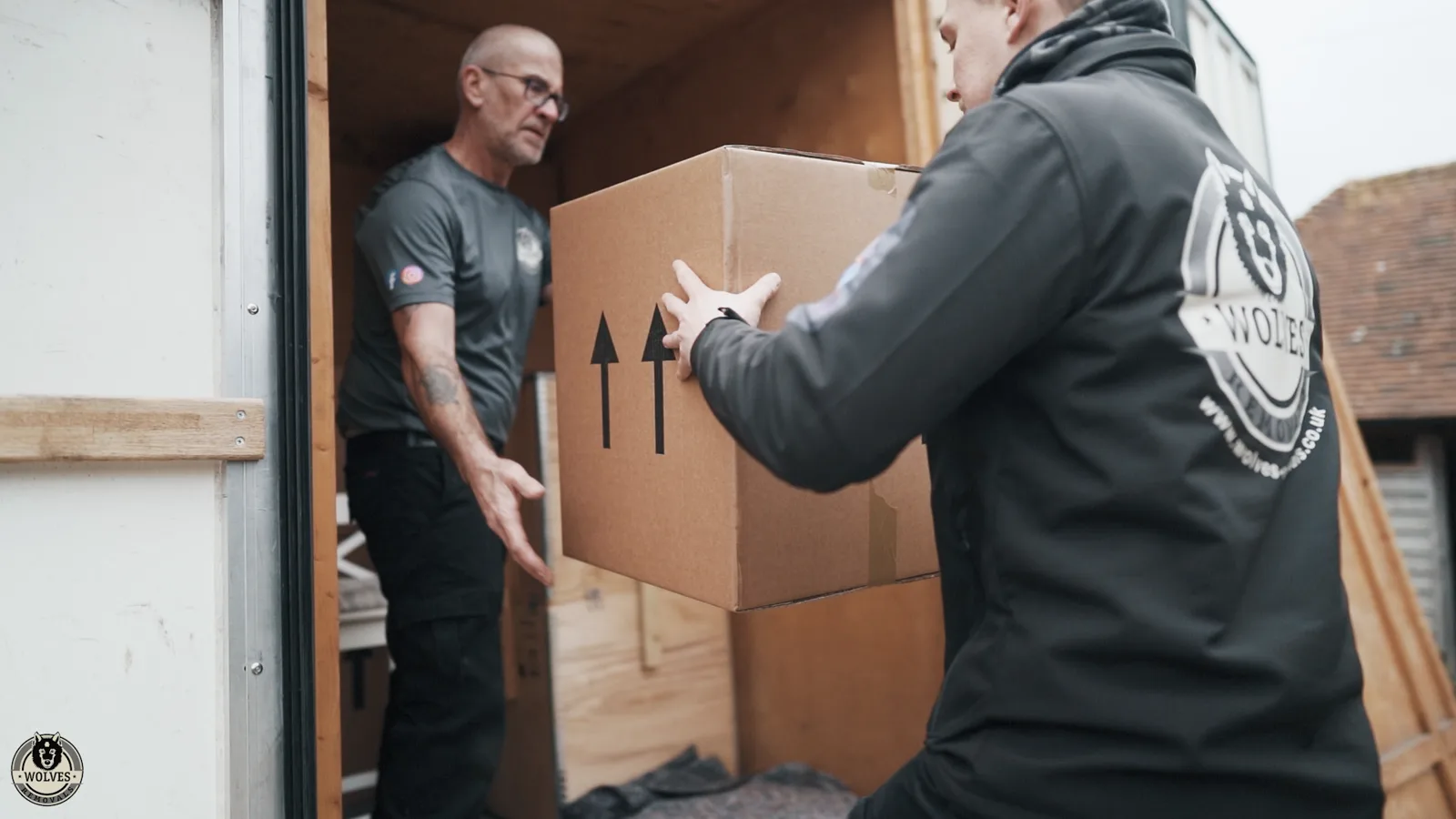
Lift close to your waist, with the heaviest side of the box next to your body (HSE). If a box is too heavy, get help or repack it into two; HSE says not to lift more than you can easily manage. Our guide to lifting safely has more.
How to Label Moving Boxes
Label each box on the side with the room it’s going to, what’s inside and a box number, and draw arrows pointing up. Keep a numbered list so you know how many boxes there are.
What goes on every box
-
The room it’s going to in the new house.
-
What’s inside, in a few words.
-
A box number, so you can tick them off a list.
-
Write it on the side, not just the top, so you can read it when boxes are stacked.
-
Arrows on the sides pointing up, and FRAGILE where it’s needed.
-
Stack heavy boxes at the bottom and fragile ones on top. In the van we load fragile boxes last and highest, never under heavier furniture.
Sources: Which? (contents, room and which way up), the US National Park Service (arrows on the sides) and our fragile packing page.
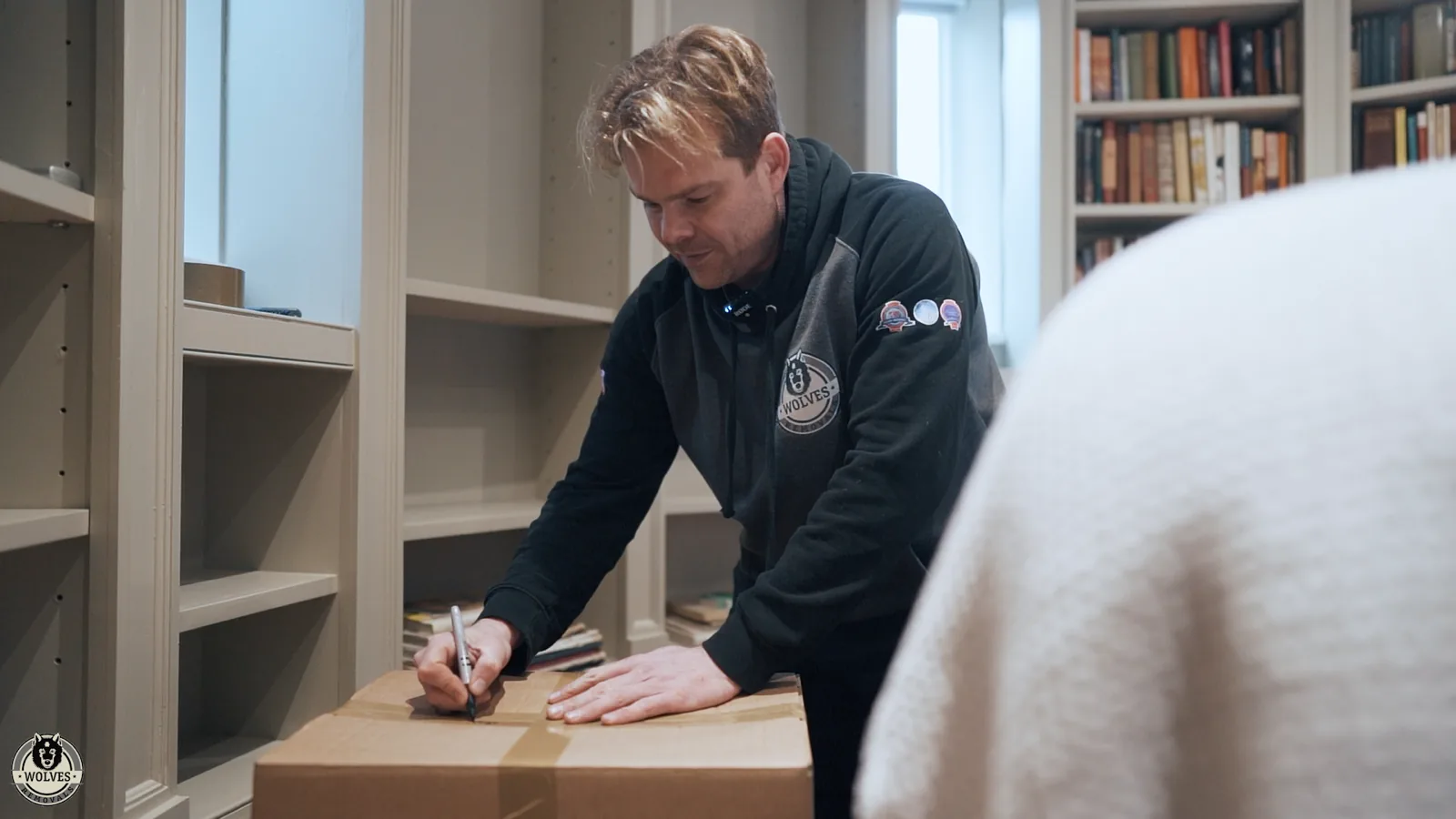
We label every carton with its room and a short summary of what’s inside, so it goes straight to the right room at the other end.
Packing Room by Room
Pack one room at a time and keep each box to one room. Crockery and books go in small boxes; plates, pictures and mirrors stand on their edge.
-
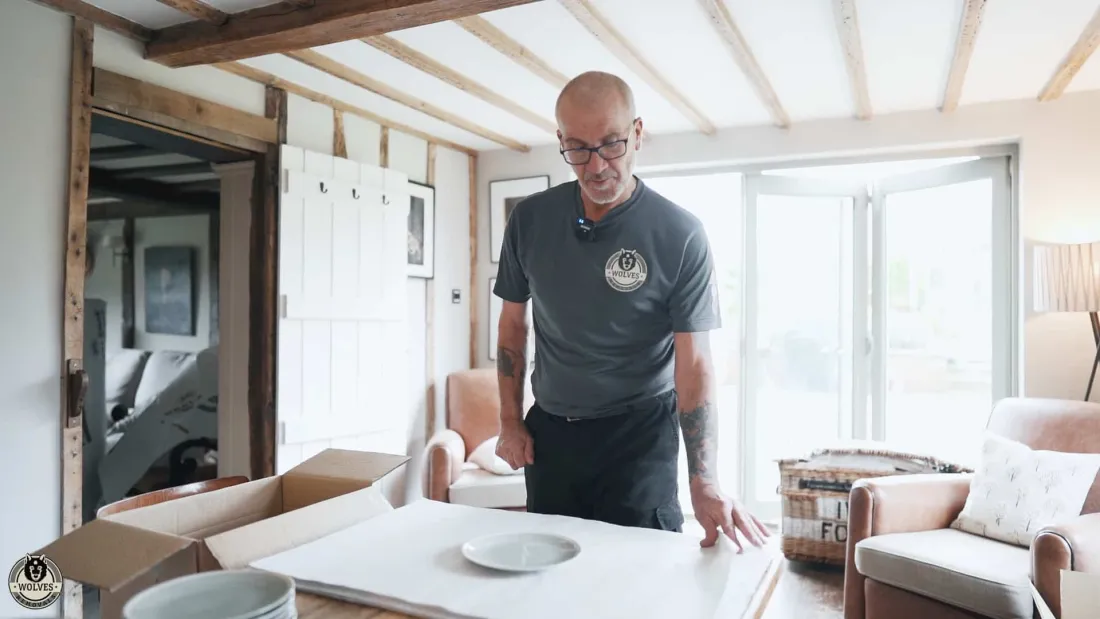
Kitchen: crockery and glass in small boxes, each piece wrapped in paper and plates on their edge. Our guide to packing glasses and plates covers it step by step.
-
Books: small boxes only, upright or laid flat, never with the spine facing up; the Library of Congress warns that spine-up storage loosens the binding.
-
Bedrooms: hanging clothes go straight into wardrobe boxes. For the furniture, see moving a wardrobe and moving a mattress.
-
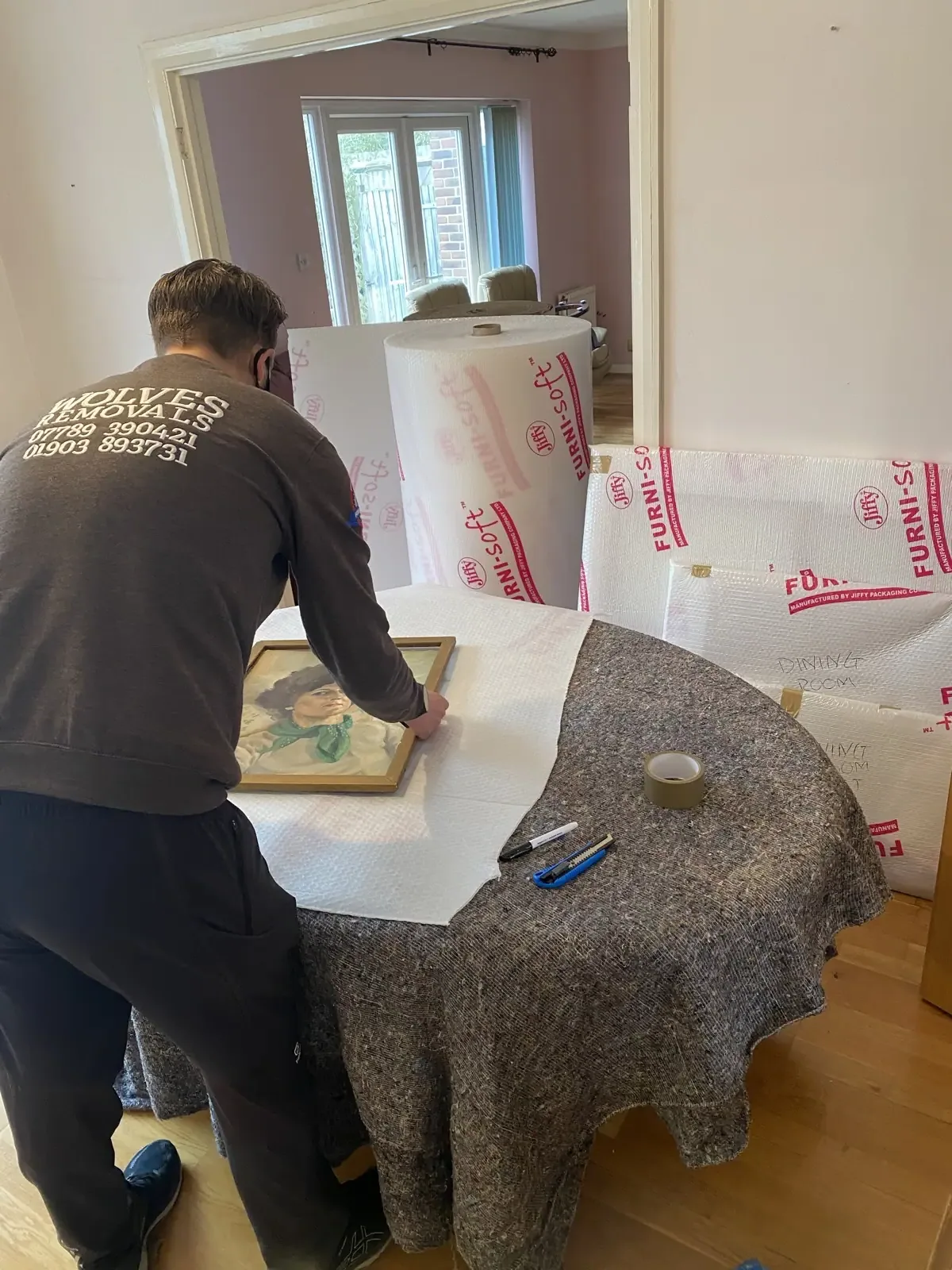
Pictures and mirrors: on their edge, never flat, in a carton sized to the frame. If you tape the glass, cover the whole pane, never just a cross; our picture packing guide explains why.
-
Electronics: in their original boxes if you still have them, otherwise wrapped with the screen and corners protected, in a carton with crumpled paper in the gaps.
What Not to Pack When Moving
Don’t pack paint, oil, fuel, flammable liquids, gas bottles or aerosols: Wolves Removals can’t carry them, and a leak ruins everything packed around it. Eat, give away or clear perishable food before the move.
Leave these out of your boxes
-
Paint, oil, fuel and flammable liquids.
-
Gas bottles.
-
Aerosols.
-
Perishable food: eat it, give it away or clear it before the move.
-
Lithium batteries can catch fire if damaged; take old or damaged ones to a recycling point rather than packing them (gov.uk).
Source: our full packing and part packing pages: what we can’t carry, and clearing perishable food.
Keep the things you’d never hand to anyone with you, not in a box: passports, keys, medication, jewellery, chargers and the paperwork for the move. Small amounts of household hazardous waste, such as old paint, can go to the tip, as Adur & Worthing Councils advise.
Should You Pack Yourself or Use Packers?
Pack yourself if you have the time and it’s mostly books, clothes and everyday things. Hand over the kitchen, the breakables, or the whole house if time is short.
Our full packing service packs the whole house with our own materials. Our part packing takes the heavy, everyday boxes, and our fragile packing does just the china, glass and pictures. Our unpacking service unpacks it all at the other end, and can put it away too.
Which? warns that a removal firm’s insurance usually won’t cover items you’ve packed yourself, so ask what’s covered before you decide.
Want a hand with the packing?
Tell us about your move at a free survey and we’ll quote for as much or as little packing as you want.
Jack Wolfe
Director, Wolves Removals · Ashington, West Sussex
Jack runs Wolves Removals, which has moved families and businesses across West and East Sussex, Surrey, Hampshire and Kent since 2016 from its Ashington base. The firm is fully insured, Checkatrade-verified and a LAPADA Approved Service Provider for antiques and fine art. More about us, or read our reviews.
Frequently Asked Questions
Small boxes for heavy things such as books, tools, tins and crockery; large and extra-large boxes for light, bulky things such as bedding and cushions; and wardrobe boxes for hanging clothes. Our small box is 18 by 13 by 13 inches. A large box of heavy things can’t be lifted safely and splits at the seams.
Light enough to lift from the floor without straining. HSE’s guideline for a load lifted from the floor and held close to the body is 10 kg for men and 7 kg for women. These are guidelines, not legal or “safe” limits. If a box is too heavy, repack it into two.
Wrap fragile things one at a time in packing paper, put crumpled paper in the base and in every gap, keep heavy things at the bottom, and close the box flat. Give it a gentle jolt before you tape the top: if anything shifts, add more paper. Mark it FRAGILE with arrows pointing up.
At least two weeks before moving day for non-essentials, after a thorough sort-out of the loft, spare rooms and outbuildings. Leave the kitchen, bathroom and an essentials box marked OPEN FIRST until the last days.
As a starting point, our moving kits hold 15 boxes for a one-bedroom move, 25 for two bedrooms, 38 for three and 51 for four. Two homes the same size can hold very different amounts, so buy in stages and top up.
Paint, oil, fuel, flammable liquids, gas bottles and aerosols, which we can’t carry, and perishable food, which is best cleared before the move. Keep passports, keys, medication, jewellery, chargers and your moving paperwork with you rather than in a box.