Six Months in Storage, Then the Keys to Selsey
Not every move goes house to house.

This one went house, to a warehouse, to a rented place, and then — six months later — into a home of her own in Selsey. It was also the third time this client has handed us her whole house.
The Third Time She Has Handed Us Her House
Wolves Removals has now moved this client three times. That is worth saying out loud because of what it changes on the day: nobody had to explain anything. We already knew how she labels things, which pieces she cares about, and roughly what she wants dealt with first.
It also meant the middle part of this move — six months of her belongings sitting in our warehouse while she lived in a rented house — was a decision taken by someone who had already watched us pack and load the same furniture twice before.
A returning client — her third move with us. Most of her house had been in our store for six months while she lived in a rental; the rest was in the rental with her.
Two days. Day one packed the rental. Day two brought both halves together into her new home in Selsey.
Why Storage Sits in the Middle of So Many Moves
The version of moving house everyone pictures is one van, one day, old house to new house. A great many real moves are not that. A sale completes before a purchase does, a chain breaks, a renovation runs long, or — as here — somebody sells, rents for a while, and buys when the right house appears rather than when the calendar says so.
When that happens you have a problem of volume rather than of distance. A rental is almost always smaller than the house you left and the house you are heading for, and it is furnished often enough that your own furniture has nowhere to go. So most of the house goes into storage and you live with the fraction you actually need.
Six months is not unusual for that gap, and it is comfortably into long-term storage territory. What matters at that length is not the building — it is knowing precisely what is in there.

Deciding What You Live With for Six Months
This is the question clients actually ask, and it is worth answering properly because getting it wrong costs money twice. Everything you put into store and then need has to be retrieved. Everything you keep out and do not need has to be moved into the rental and out of it again.
The rule that works is to pack for the season you are about to have, not the year. Six months over a summer means you will not want the Christmas boxes or the spare duvets and you will want the garden furniture; over a winter it is the other way round.
It also helps to be honest about the rental: if it is furnished, your own sofa, beds, wardrobes and dining table are all going into store whether you like it or not, and the decision is only about the smaller things. Wolves Removals
Two categories are worth keeping out even when they seem storable. Documents and anything you might need at short notice — passports, paperwork, guarantees — because retrieving one folder from a warehouse is an appointment rather than a rummage. And whatever makes a house feel like yours, because six months in a rented place with none of your own things in it is longer than it sounds.
The Piece of Paper That Makes Storage Work
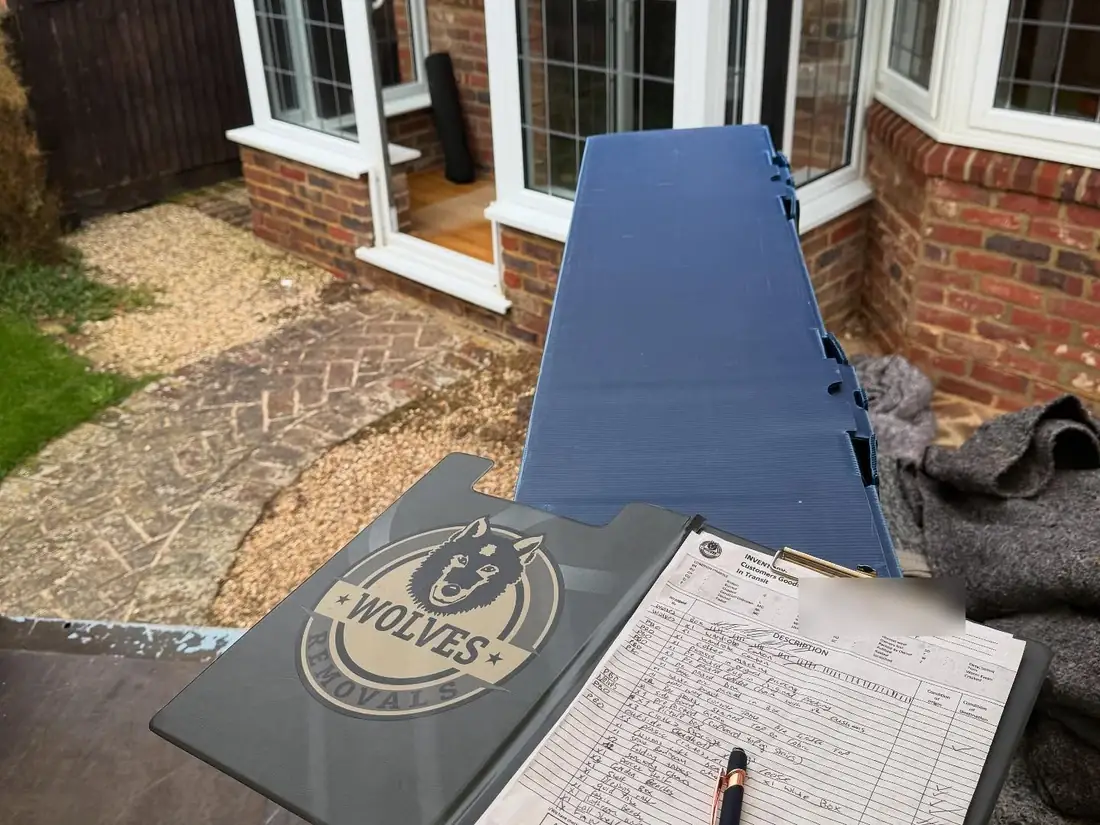
This is the least glamorous photograph on the site and it is the one that matters most for a storage move. Wolves Removals writes down every item as it leaves the house, numbered, with its condition recorded before it is wrapped. It is the same document that gets ticked as things come back out six months later.
Two things follow from that. The first is retrieval: you can ask for one specific item out of a warehouse without anybody opening six containers to find it. The second is the honest one — a condition note taken at the point of collection is the only fair way to settle a question about a mark on a table six months afterwards. Without it, everybody is guessing, and the person who loses that argument is usually the customer.
Day One: Packing the Rental
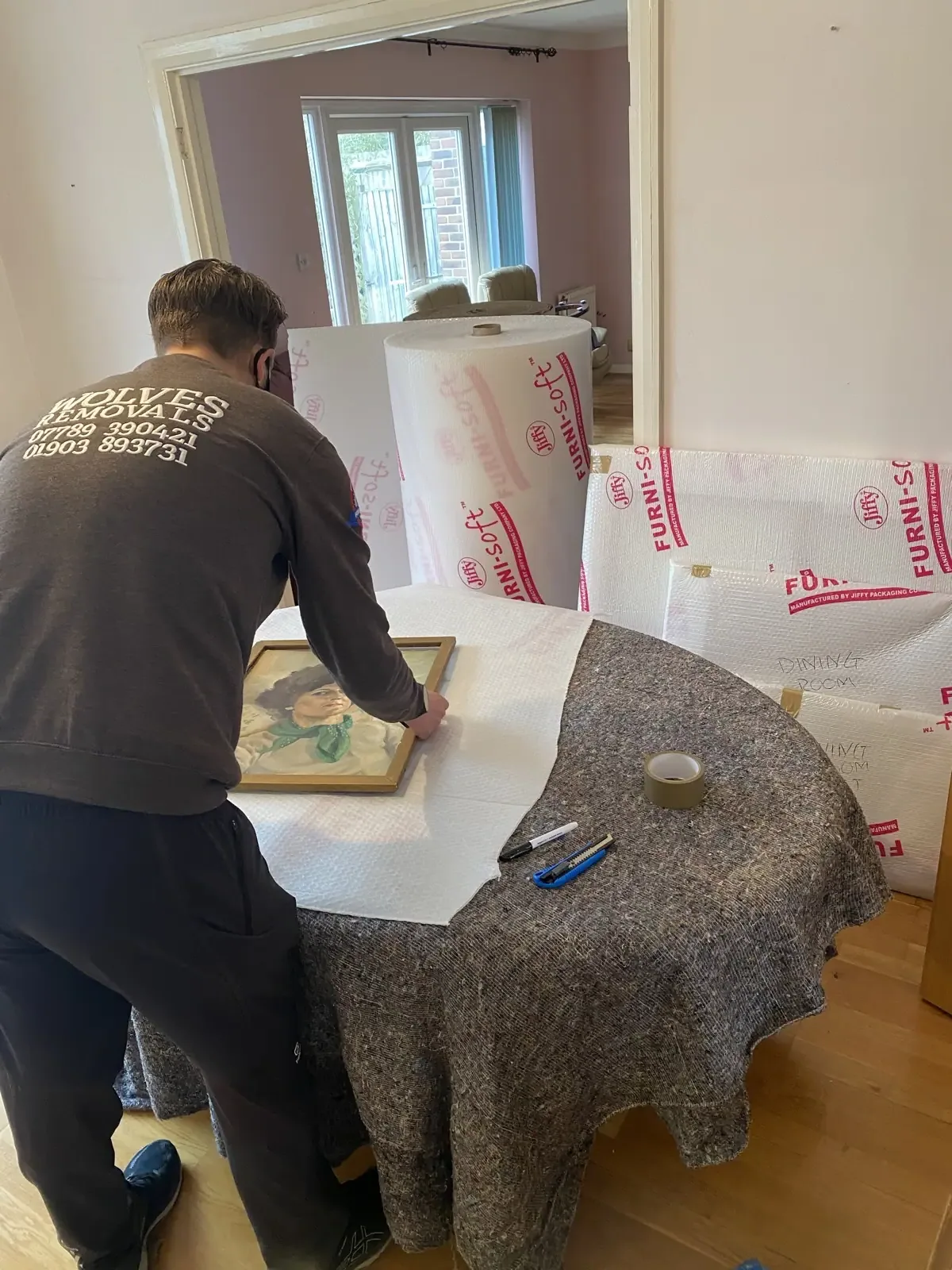
The whole of day one went on the rental property. It sounds like the easy half, and it is the half people most often underestimate, because six months in a rented house is long enough to unpack properly, buy things, and spread out.

Packing a rental has one wrinkle a normal house does not. You are handing the keys back to a landlord or an agent, so the property has to come out clean and undamaged, and any mark made on the way out is a deposit conversation. Floor protection goes down for the same reason it does in a client’s own house, except here the person who pays for a scuff is the person moving out.
Day Two: Bringing Both Halves Together
Day two is the interesting one, and it is the part a storage-bridged move gets wrong if nobody plans it.
The stored half is the one you generally want loaded first, because that is usually where the big furniture is — and furniture has to be in a room and positioned before anything else can be put down in it. The load packed at the rental is the everyday half, and most of it wants to arrive after there is somewhere to put it.
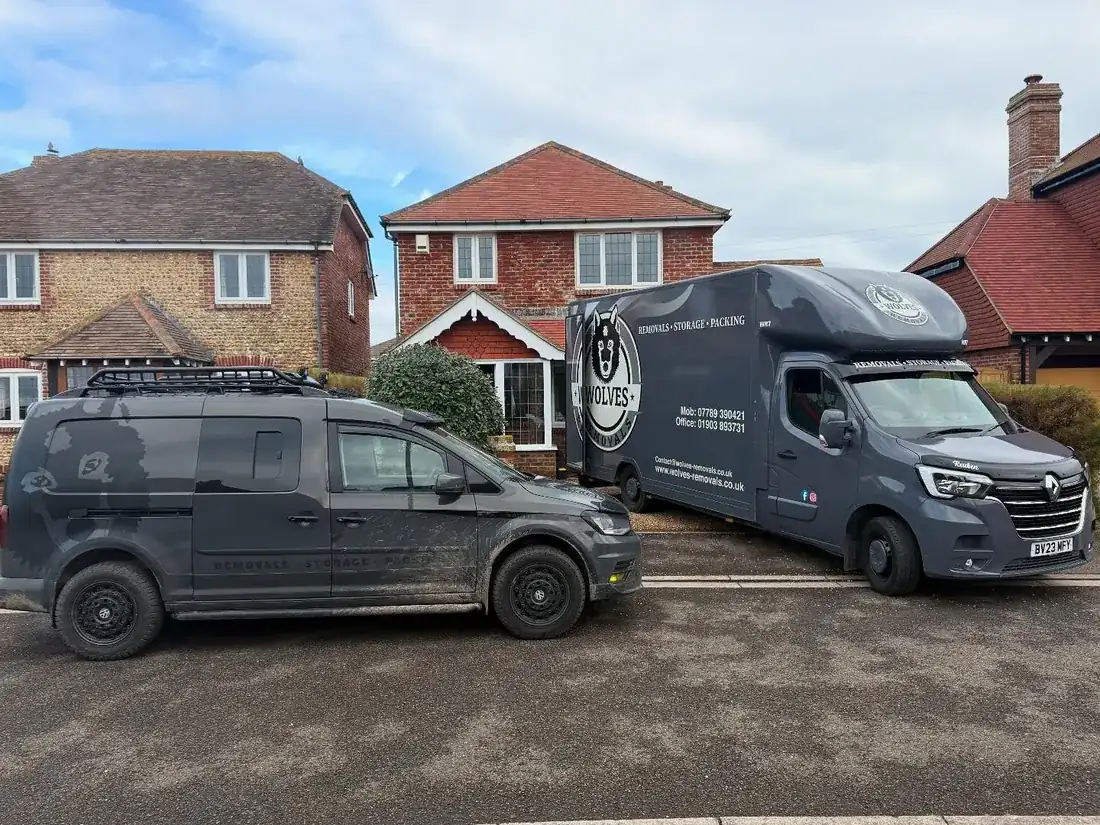
Get that order wrong and you spend the afternoon shifting boxes to reach a bed frame.
Get it right and the house assembles itself: furniture in and positioned, then the boxes that belong to each room, then the handful of things she needed working that evening. Wolves Removals
Selsey at the End of It
Selsey is about as far south as West Sussex goes — a peninsula with the sea on three sides and, in practical terms, one road in and out: the B2145, which arrives from Chichester and becomes Chichester Road and then the High Street. It is the only classified road serving the town, so everything a removals crew does in Selsey hangs off it. The compensation is that the residential streets running off it are wide, flat and quiet, which makes them easier to work than the lanes further inland.
The move finished on the second afternoon. Her furniture had been in a warehouse for half a year, and by the evening it was in a house she owns, in the rooms she chose, with the kettle somewhere findable. Three moves in, that is roughly the whole job description.
The Wolves Removals Team
Family-run removals · Ashington, West Sussex
We have moved families and businesses across West and East Sussex, Surrey, Hampshire and Kent since 2016, from our Ashington base. We are fully insured, Checkatrade-verified and a LAPADA Approved Service Provider for antiques and fine art. More about us, or read our reviews.
Six Months in Storage, Then the Keys to Selsey — FAQs
Yes — that is what happened on a Wolves Removals job into Selsey. A returning client — her third move with us — sold her house, rented for six months while she looked for the right property, and put most of her furniture into our storage for that period rather than fitting it into the rental. When she completed on a house in Selsey, everything came out of storage and was delivered alongside the rental contents in a single two-day move: day one packed the rental, day two brought both loads together. The split is usually lopsided rather than even, because a rental is almost always smaller than the house either side of it and is often part-furnished. That means most of what you own goes into storage, and you live with a surprisingly small fraction of your own things until you buy again.
As long as you need — there is no fixed limit. On a recent job, a returning client’s furniture spent six months in our storage while she rented between selling one house and buying another in Selsey, then it was delivered alongside her rental contents in a two-day move once she completed. Six months is a common length for that kind of gap, and anything past around three months is treated as long-term storage rather than a short interim hold. What matters most at that length is what happens before the goods go in: every item needs to be written down and numbered, with its condition recorded, so it can be found and checked back out correctly however many months later. Without that record, retrieving one item, or settling a question about its condition, becomes guesswork rather than a check against a list.
A removals inventory is a numbered list of every item, with its condition recorded, written as the goods are collected, before anything is wrapped. On a job where a returning client’s furniture spent six months in our storage while she rented between houses, this document let one item be retrieved from the warehouse without unpacking everything else around it, and the same list was ticked off as things came back out six months later. It matters for two reasons: without a numbered record, finding one item in a warehouse means opening containers rather than checking a list; and a condition note taken at collection is the only honest way to settle a question about a mark found months afterwards. Without it, there is nothing to check the item against, and the customer is usually the one who loses that argument.
Yes, and on a job like this it needs planning rather than improvising. On one move into Selsey, a returning client’s furniture had been in our storage for six months while she rented; the rental property was packed on day one, the stored half loaded at our warehouse on day two, and both loads arrived at her new house that same morning, from two different places. Getting the order right matters: the stored half is usually where the big furniture is, and furniture needs to be positioned before anything else can be put down around it, so it generally goes in first. The load from the rental, packed most recently, tends to be the everyday things, and mostly wants to arrive once there is somewhere to put it. Get the sequencing wrong and you spend the afternoon shifting boxes to reach a bed frame.
Yes. Wolves Removals works across Selsey, East and West Wittering, Bracklesham, Sidlesham, Birdham and the rest of the Manhood peninsula from its base at Ashington. Selsey sits about as far south as West Sussex goes, a peninsula with the sea on three sides and, in practical terms, one road in and out: the B2145, which arrives from Chichester and becomes Chichester Road and then the High Street. It is the only classified road serving the town, so everything a removals crew does there hangs off it. The residential streets running off it are wide, flat and quiet, which makes them easier to work than the lanes further inland. On a recent job we delivered a returning client’s furniture there after six months in our storage, alongside the contents of the rental property she had been living in, over a two-day move.
Often, and it makes a practical difference rather than just a pleasant one. On a recent job into Selsey, we moved a returning client for the third time — her furniture had already been packed and loaded by the same crew twice before, this time after six months in our storage while she rented between selling one house and buying another. Because it was a repeat job, nobody had to explain how she labels things, which pieces she cares about, or what she wants dealt with first; that groundwork was already done from the previous two moves. It also meant the decision to put most of her belongings into storage for six months, rather than squeezing them into a smaller rented house, was made by someone who already knew exactly how the crew would pack, store and return them.