Six Days, a Horsham Bungalow and a Spiral Staircase
Most moves are booked as a day; this one was booked as six, and that was the point.

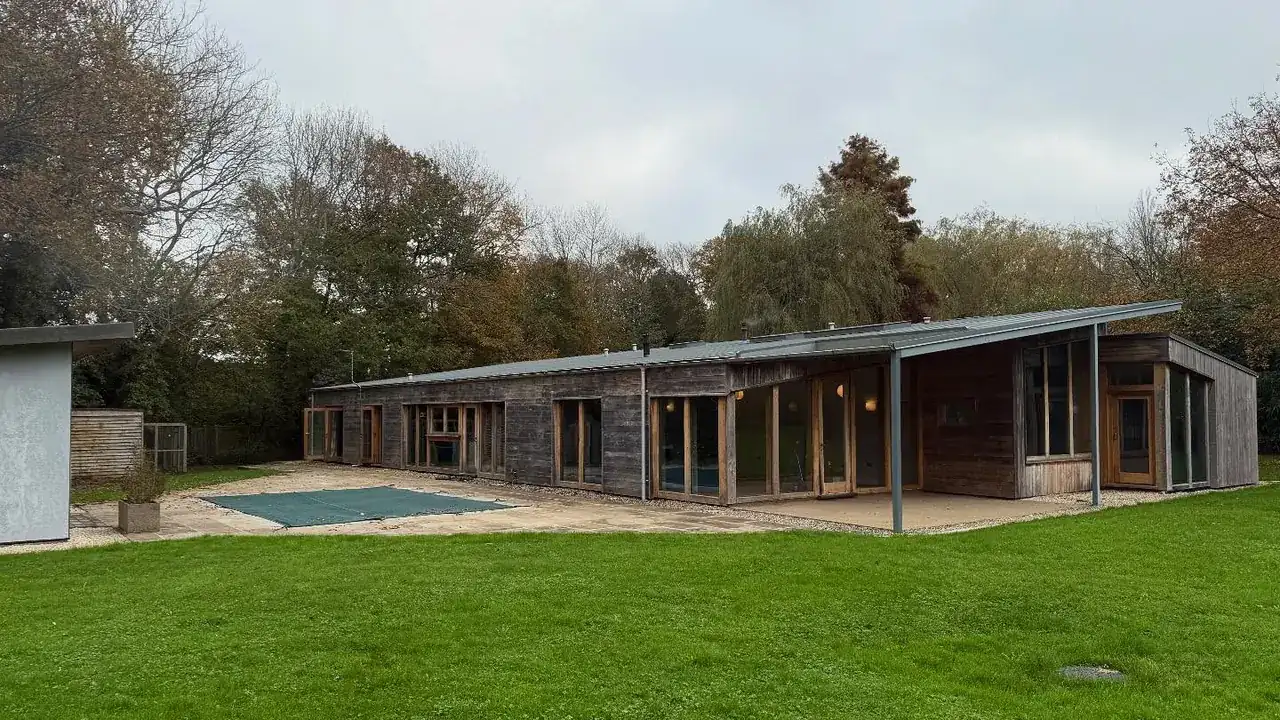
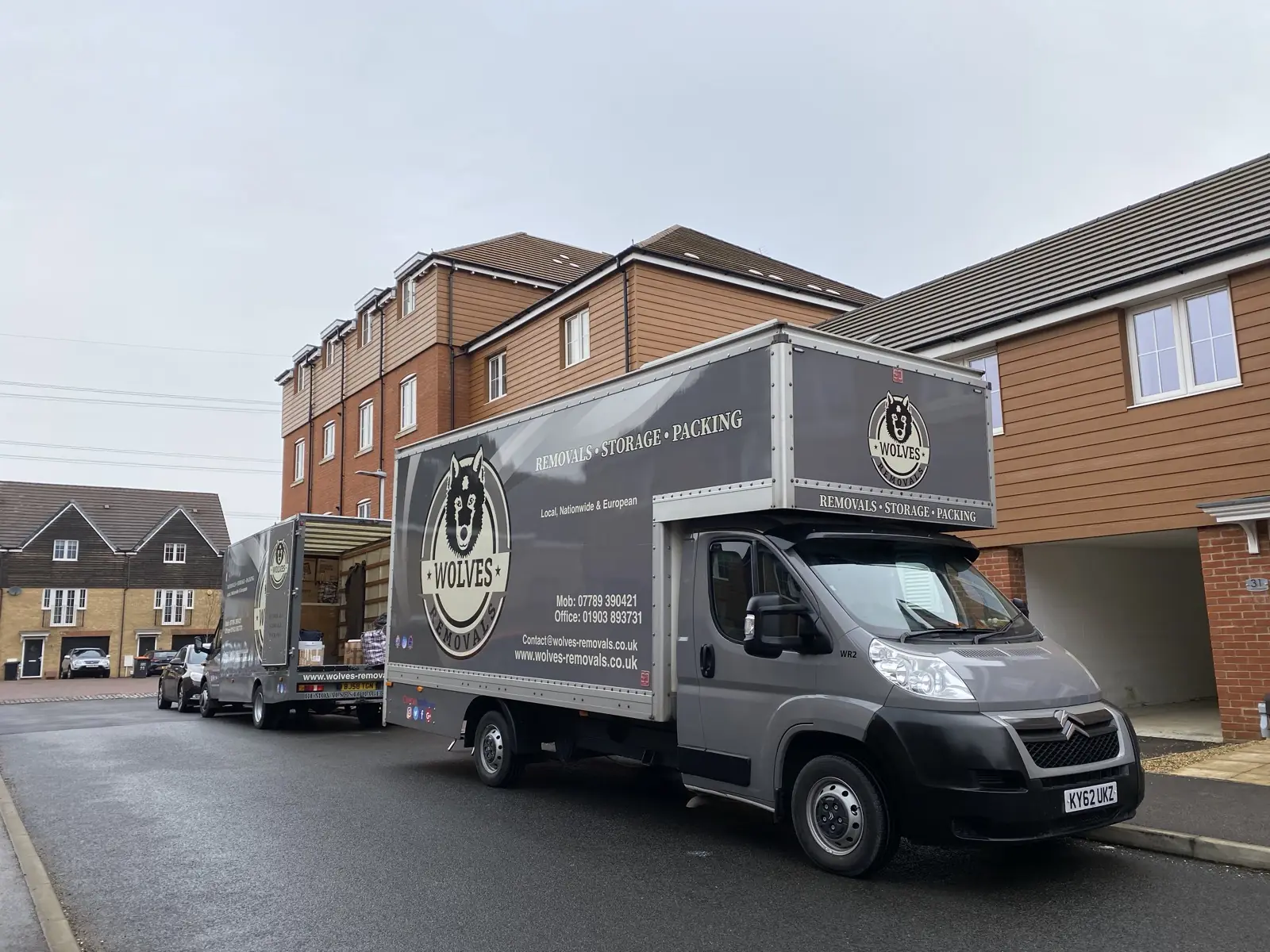
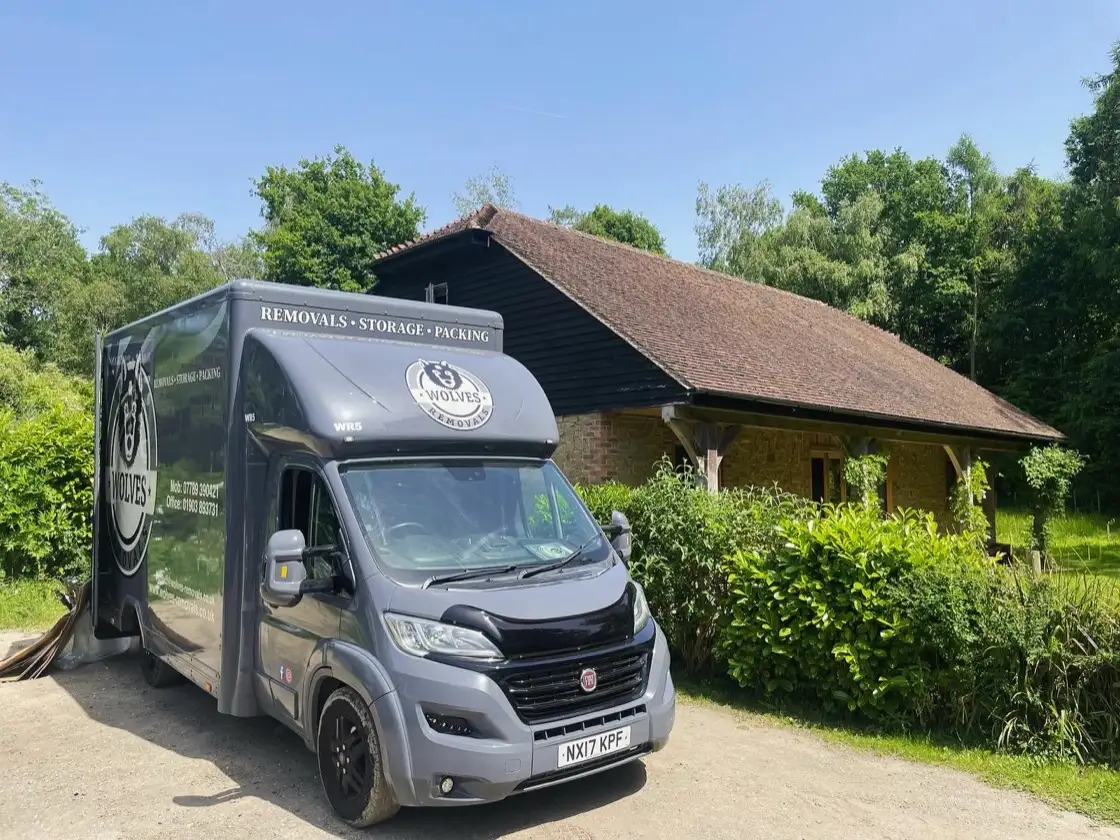
A full pack, a country bungalow on the edge of Horsham, three lorries, the Wolves Removals store used as a holding bay in the middle, and a barn conversion with a spiral staircase waiting at the other end.
A Six-Day Move Out of Horsham
Most house moves are booked as a day. This one was booked as six, and the six days are the reason it went well rather than a sign that something went wrong. The clients were leaving a long, low, timber-clad country house on the edge of Horsham for a period barn conversion at Itchingfield, about three miles west, and they were not packing a single box themselves.
Wed 30Day 2
Thu 31Day 3
Fri 1Day 4
Sat 2Day 5
Mon 4Day 6
Tue 5
A modern single-storey country house on the edge of Horsham, moving to a period barn conversion at Itchingfield, about three miles west. Full packing by our crew — the clients packed nothing.
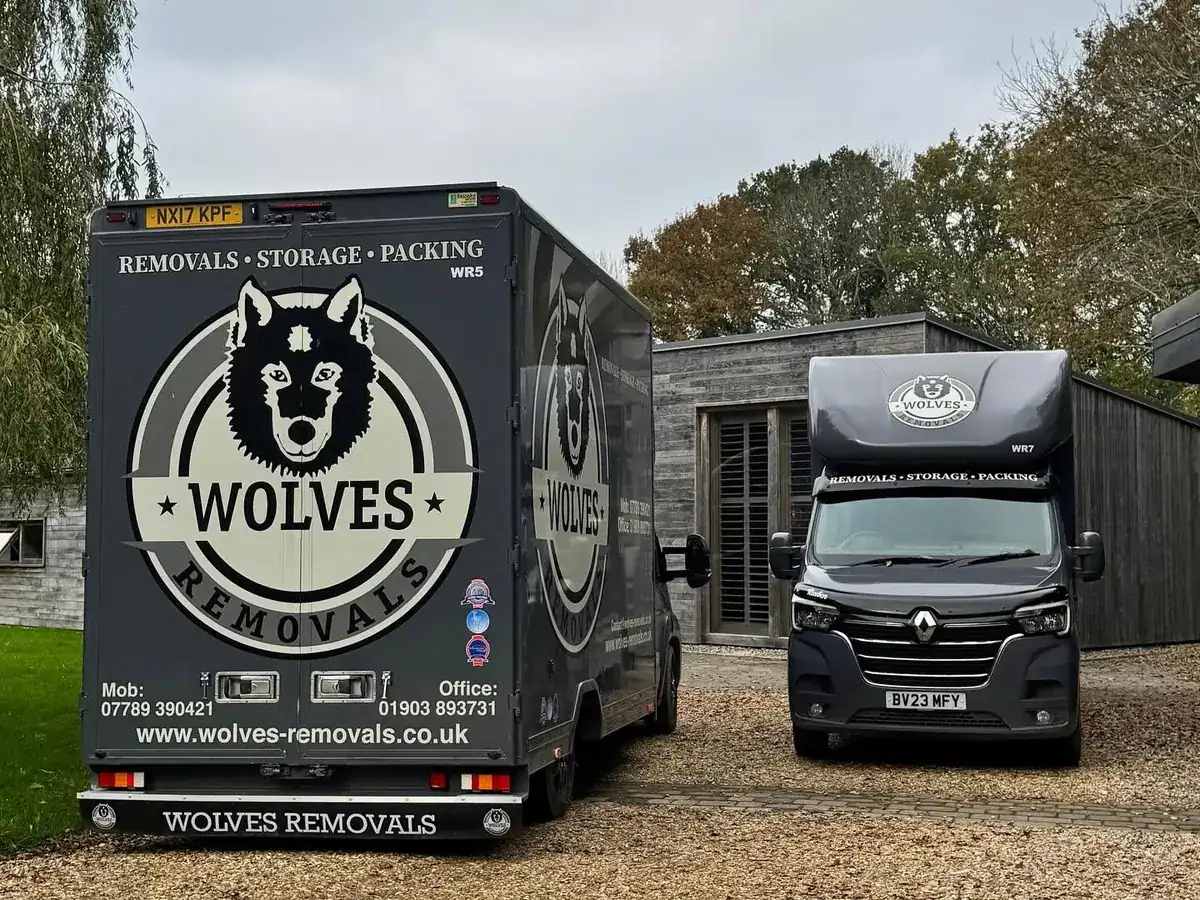
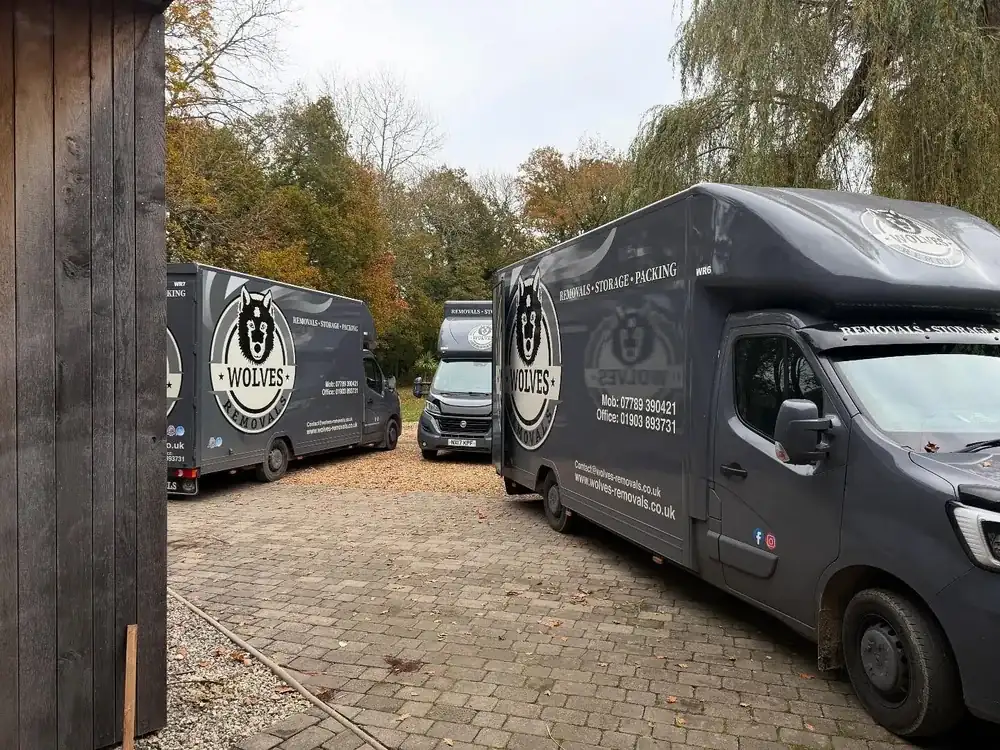
Six working days, Wednesday to the following Tuesday with the Sunday off. Three lorries. Part of the load went into our store mid-move and came back out at the end.
If you are looking at removals in Horsham and wondering why one firm quotes a day and another quotes most of a week, this is the difference. A day covers carrying a house that is already packed. Six days is what it takes to pack a Horsham family home, take it apart, move it in the right order, and put it back together at the other end.
What a Full Packing Service in Horsham Actually Involves
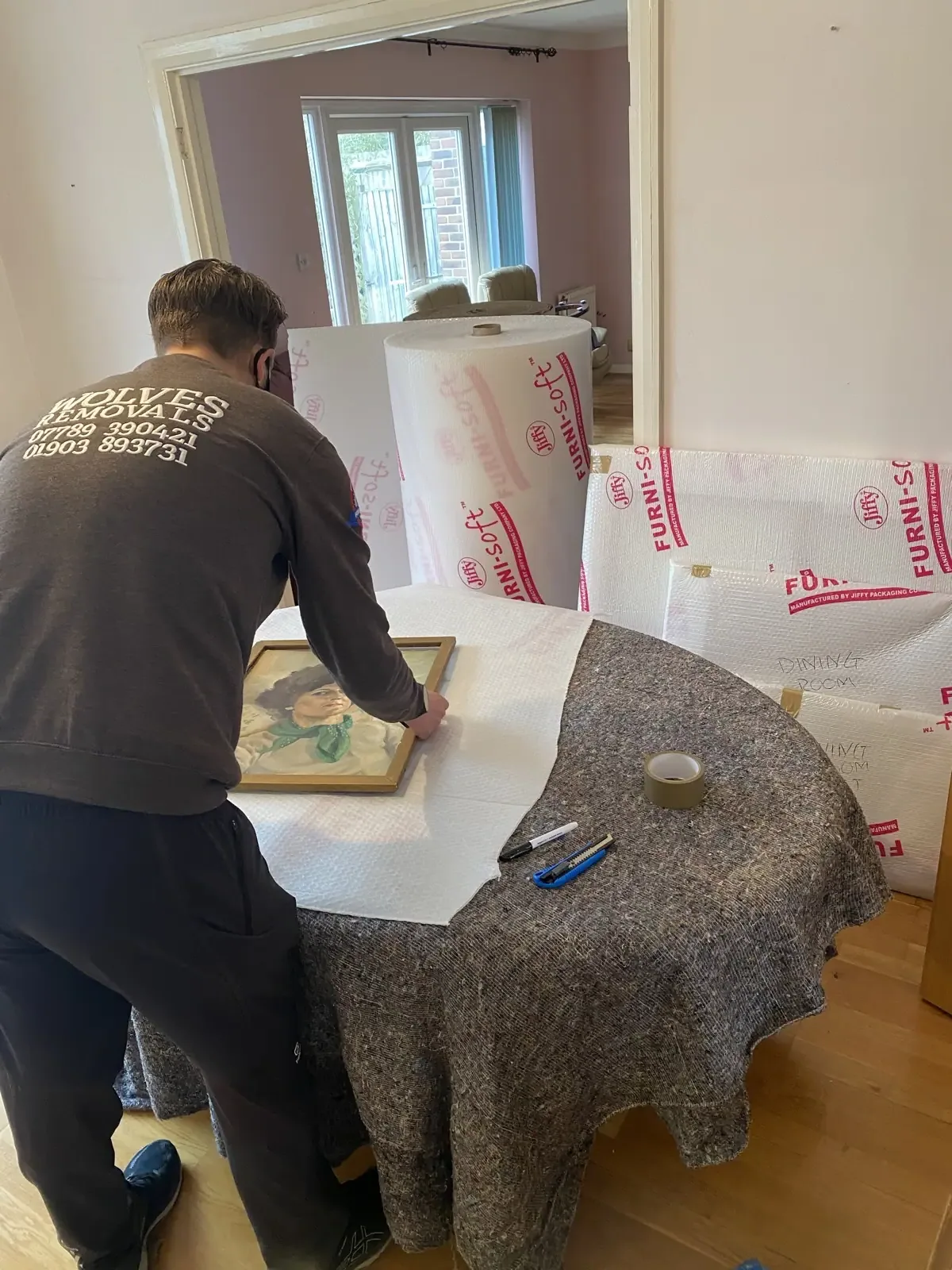
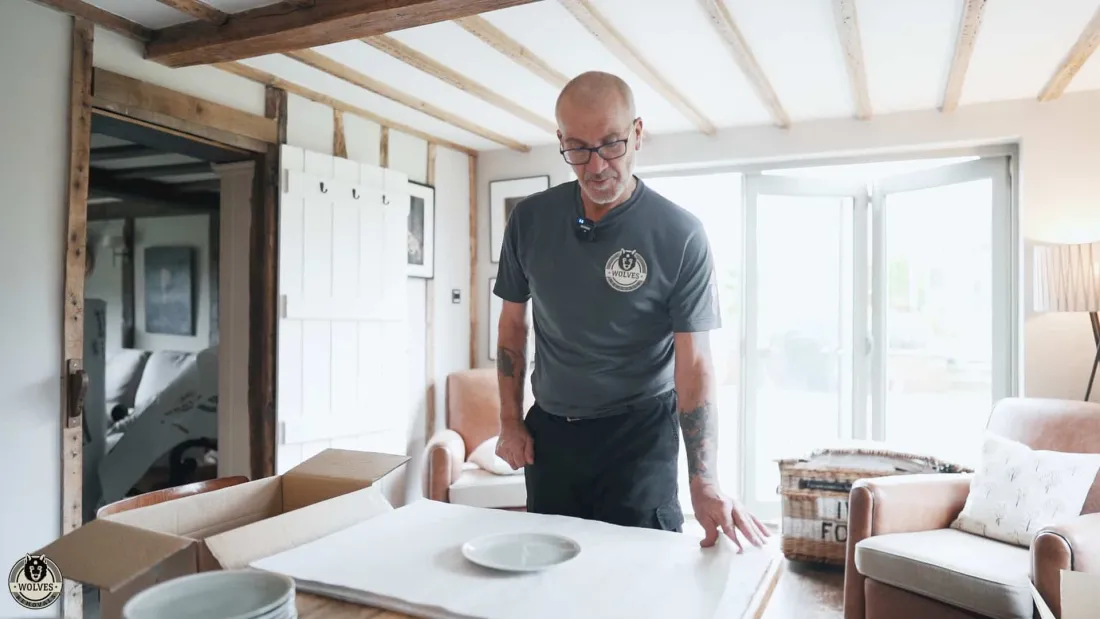
Two full days went on packing before a single item of furniture left the house. That is what a full packing service means in practice: our crew bring every carton, roll and reel with them, and every cupboard, shelf and drawer in the house is emptied into cartons by us, labelled by us, and loaded by us.
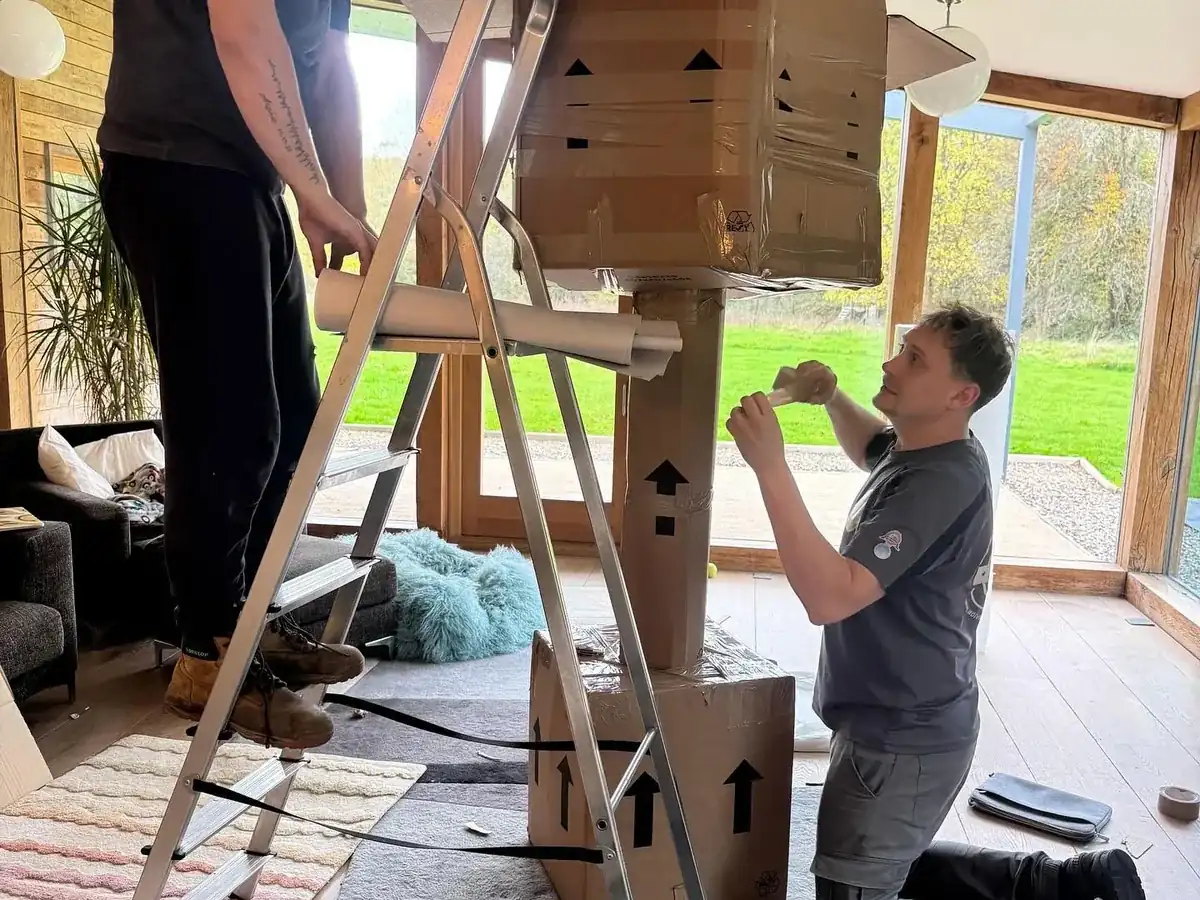
People underestimate how much of a house is small. Beds, sofas and wardrobes are the things you picture, and they are the quick part. It is the loft, the garage, the kitchen cupboards and the shelf of things nobody has looked at since the last move that eat the hours. Two packers working solidly for two days is not slow. It is what a family house holds.
Day two added the dismantling. Beds, wardrobes and anything that would not come down a stair or through a door in one piece came apart, with the fixings bagged and taped to the frame they belong to — which is the difference between rebuilding a bed in ten minutes and hunting for a bolt in a box of forty.
Why Half of It Went Into Store First
Here is the part of the schedule that looks odd on paper and is the single most useful thing we did. On days three and four, the crew loaded the non-essential half of the house and took it to our store rather than to the new address.
The reason is simple. If you deliver an entire house into a barn conversion on one afternoon, the clients spend the next fortnight climbing over boxes in every room, and every box has to be moved twice because the furniture it is standing in front of has not been positioned yet.
By holding back everything that was not needed in the first week, the barn got its furniture, its beds and its kitchen first, and the rest arrived on day six into a house that had somewhere to put it. Wolves Removals
The garden went the other way. On day one, before the packing was even finished, garden items were taken straight over to the new address, because garden things do not care about being first and they take up an enormous amount of lorry.
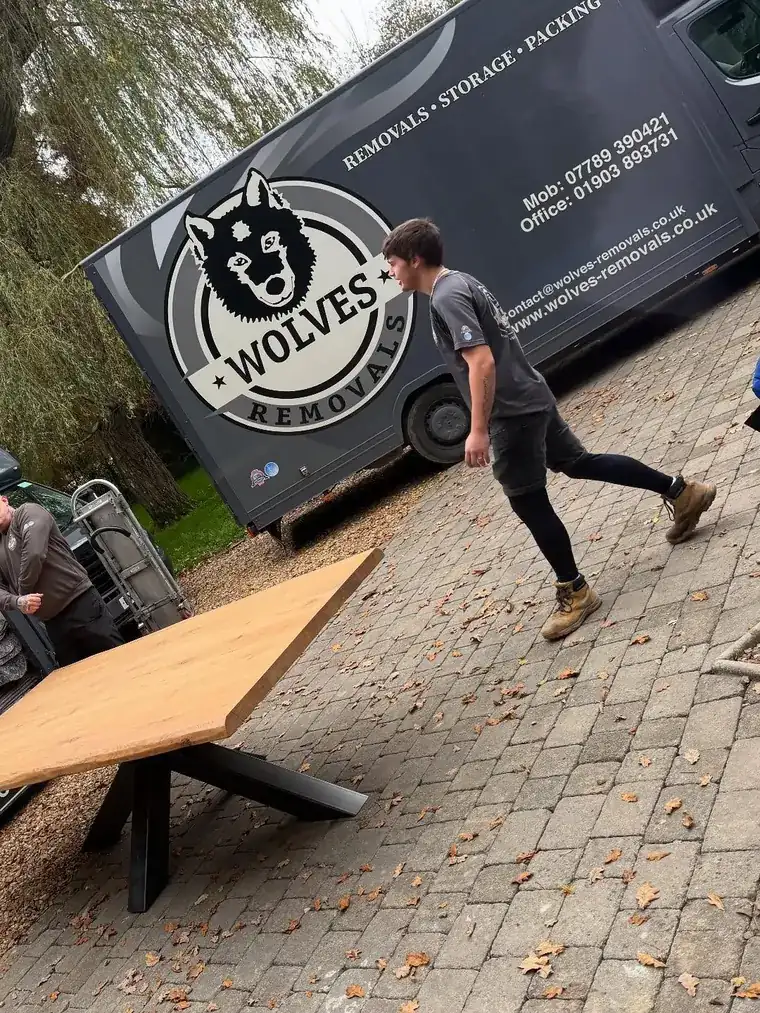
Town to Village: the Move Horsham Does Most
This is one of the commonest shapes of move we do in the Horsham district, and it is worth describing because it catches people out. A family sells a comfortable, well-serviced house on the edge of Horsham and buys something older, larger and more awkward in one of the villages around it — Itchingfield, Slinfold, Barns Green, Rudgwick, Southwater, Broadbridge Heath. The house they leave was built for furniture. The house they arrive at was not.
Almost everything that makes a Horsham village move harder happens at the new address rather than the old one. Lanes narrow, so a lorry that parked on a drive in Horsham parks on a verge in the village and the carry gets longer. Doorways shrink and stop being square. Floors are older and less forgiving. Ceilings drop under beams, and stairs stop being straight.
None of that is a problem if it is known in advance, which is the argument for a survey at both ends rather than a phone call about the one you are leaving. On this job the difficult building was always going to be the barn, and the schedule was built around it. It is also why our Horsham page lists the villages as well as the town — most of the work is out in them.
The Barn, and the Spiral Staircase
The new house was the interesting half. A period barn conversion is the opposite of the bungalow they left: oak frame, exposed trusses, a galleried bedroom under the roof, and a floor plan that was never drawn with a three-seater sofa in mind. Barn conversions are common right across the Horsham district, and they are the buildings that most often turn a one-day move into a three-day one.
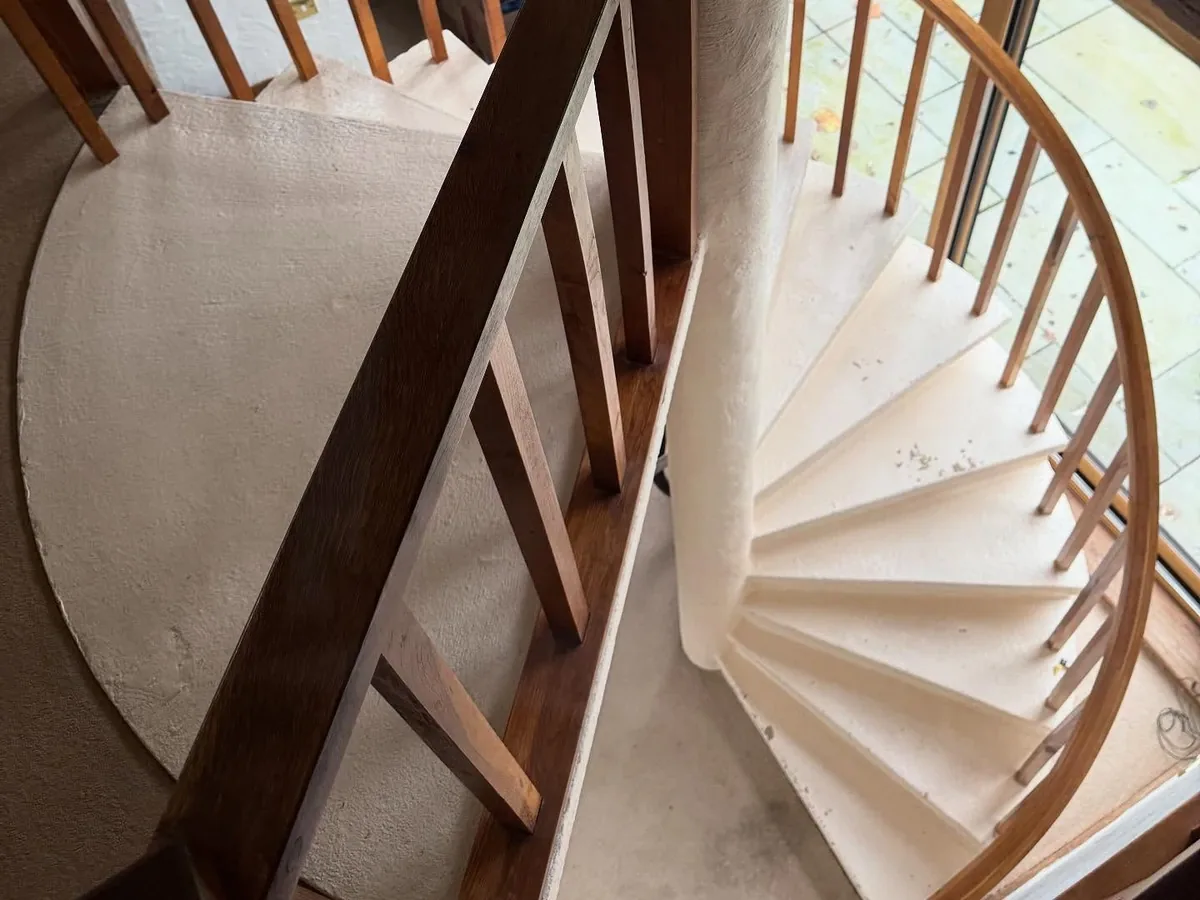
There is a fuller account of what a curved staircase actually constrains in a later job. The difficulty with a spiral is not the width on its own — it is that the width keeps turning, so nothing can be tipped or slid — a long item has to be lifted, rotated around the newel post and lowered again, and the person walking backwards is doing it blind. What governs whether something goes up is the clear diagonal at the tightest tread and the headroom under the turn, and you measure both before you commit rather than finding out with a wardrobe wedged at head height.
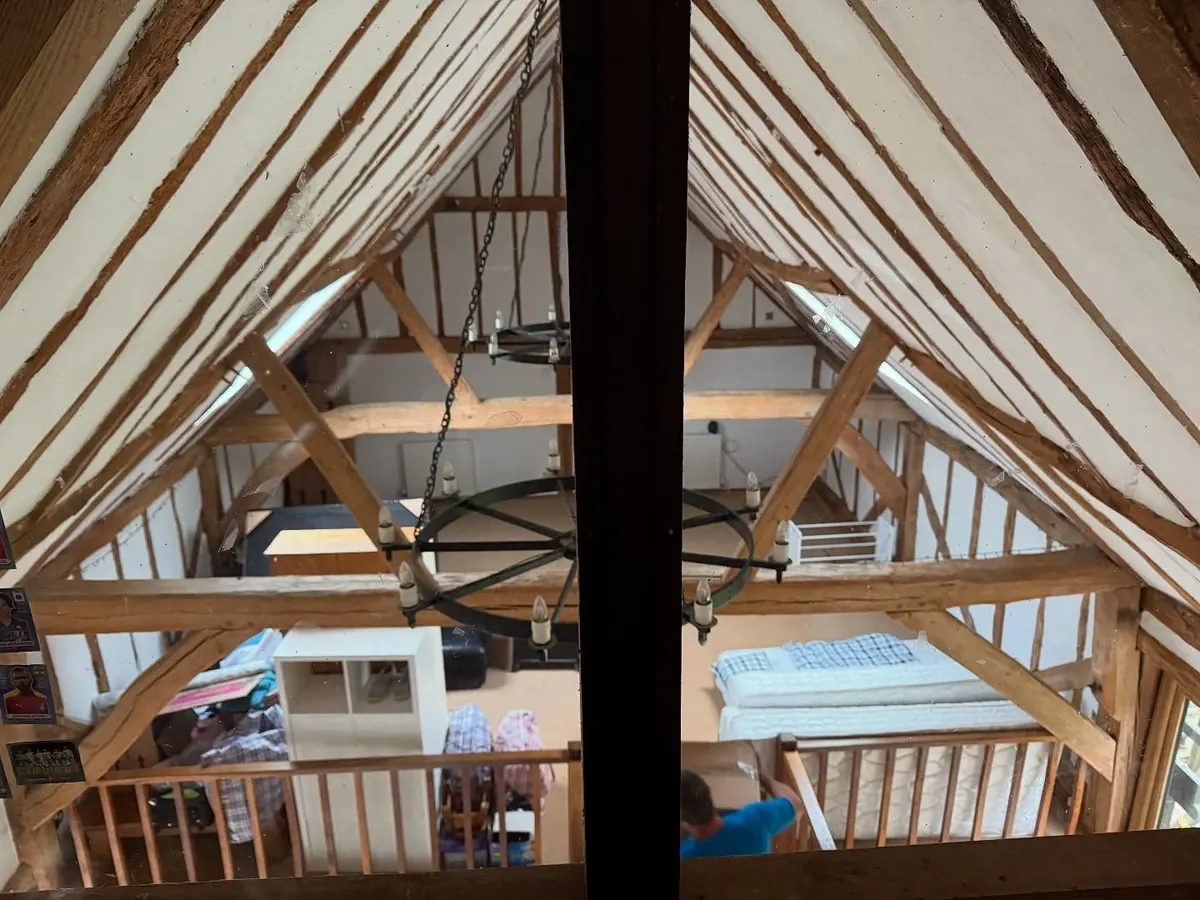
Anything that would not make the turn came apart downstairs and went back together upstairs. That is a straightforward decision when the furniture was dismantled by the same crew four days earlier and every fixing is still taped to its own frame. It is the practical argument for having the same Horsham crew at both ends rather than a pack team and a separate delivery team.
Protecting Two Houses, Not One
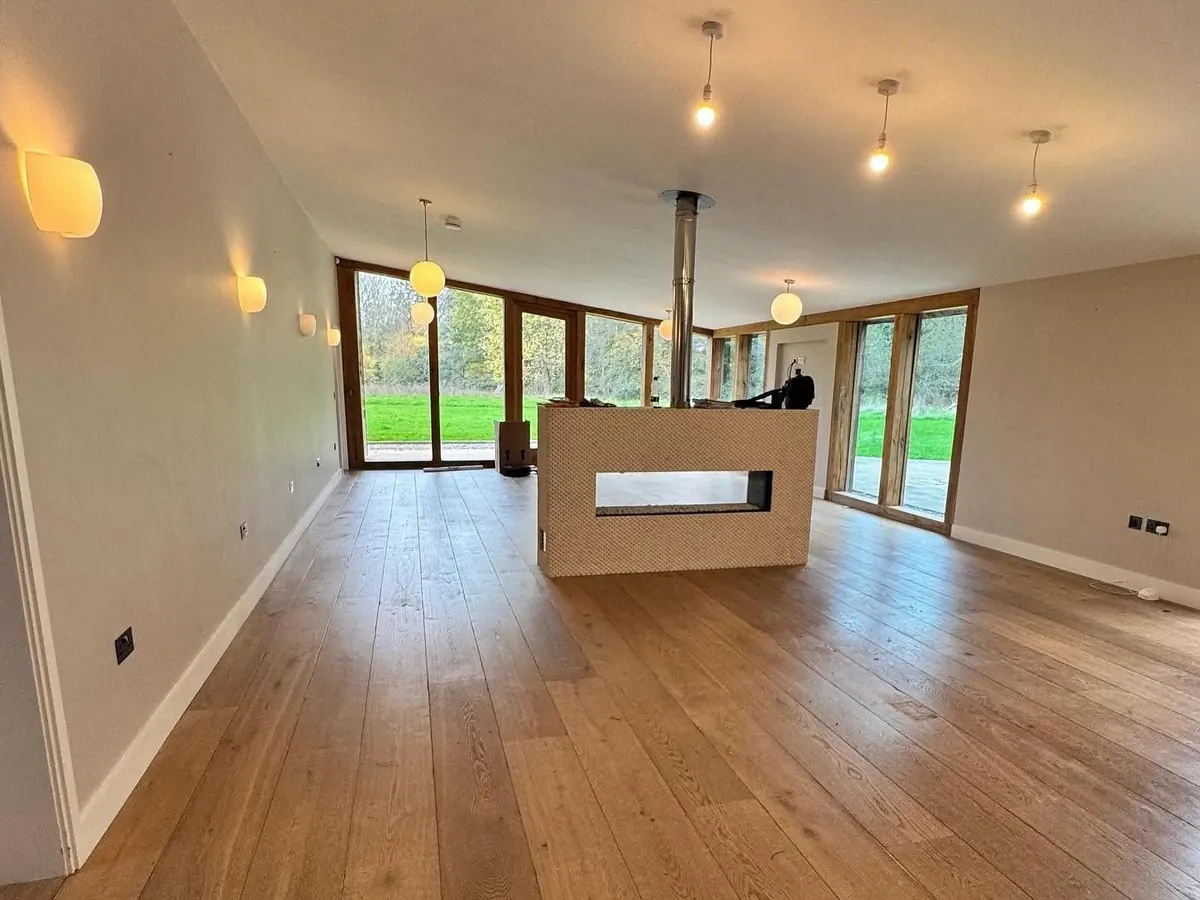
On a move like this the crew are working in a house someone is leaving and a house someone is arriving at, and the second one has just been finished.
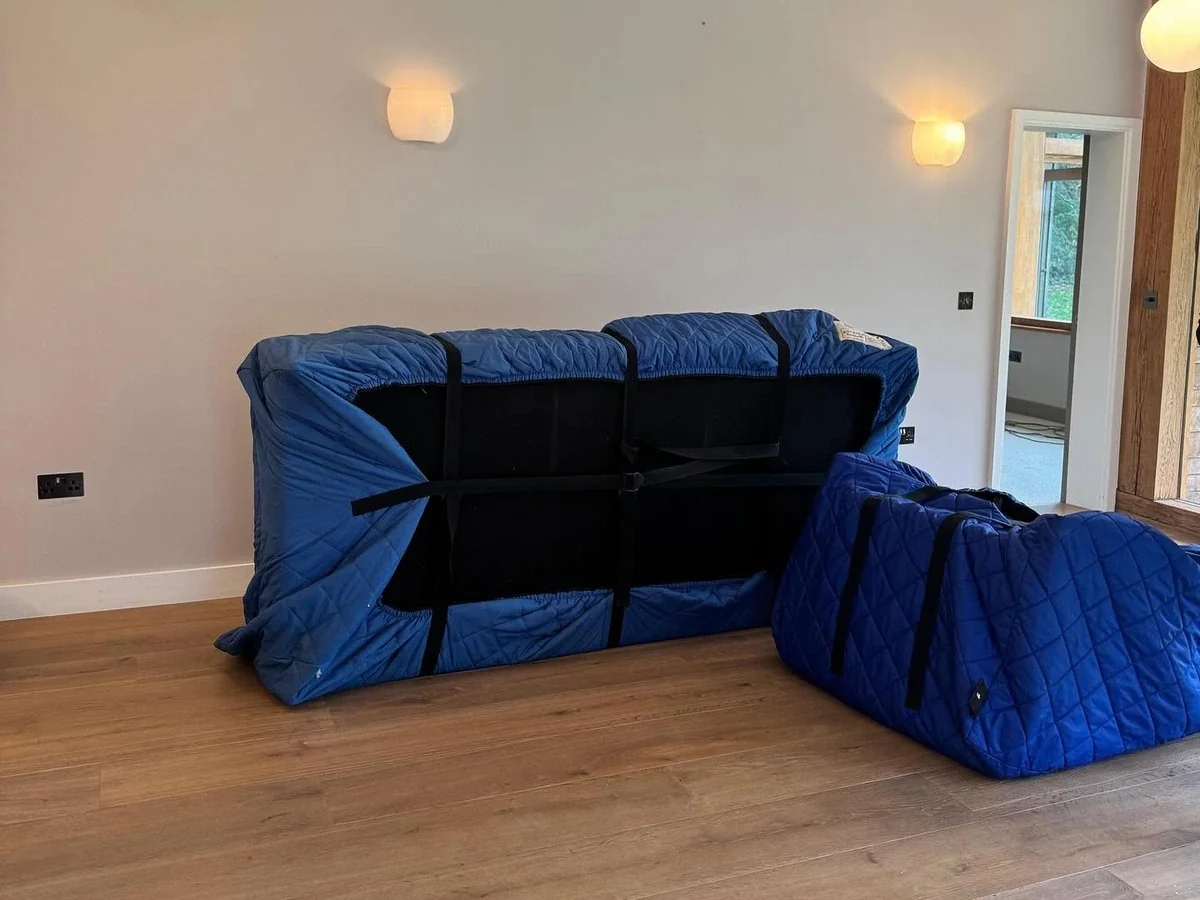
New oak floors, fresh plaster and a staircase with no marks on it are the easiest things in the world to damage on day five when everyone is tired. Wolves Removals
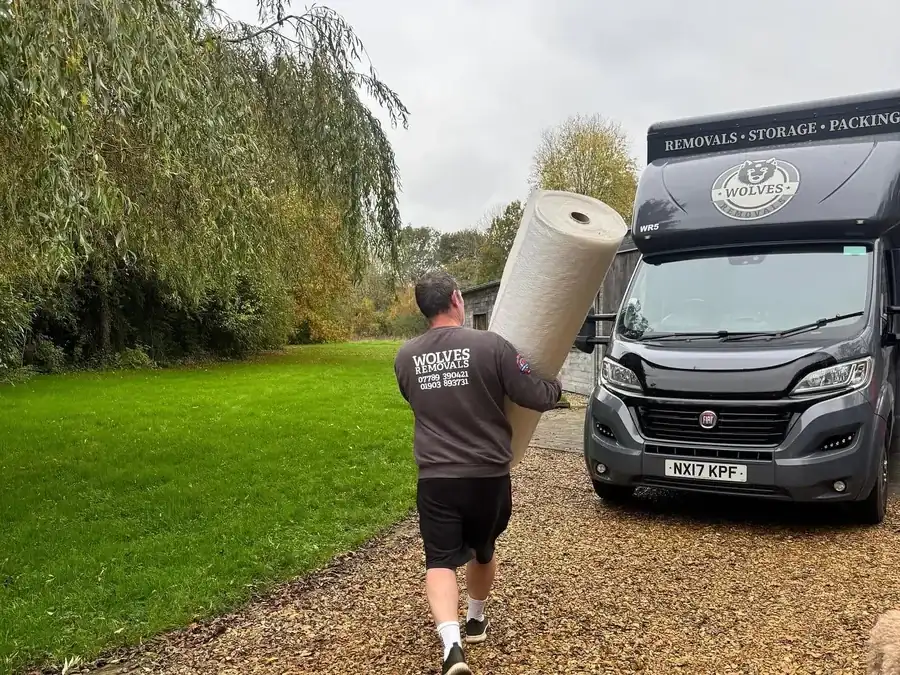
So protection goes down before anything moves, in both properties, and the run gets extended as the route changes. It is the least interesting thing we do and the thing most likely to be noticed if we skip it.
What It Cost
The whole thing — six days, full packing and materials, dismantling and reassembly, three lorries, and the storage in the middle — came to £5,676 including VAT. Wolves Removals arranged insurance cover for the goods as part of the job and confirmed it in writing beforehand.
That is one number for one job, not a price list, and it is worth saying why. A six-day move is priced from a survey: the volume of the house, the distance between the two addresses, the access at both ends, how much of it we are packing, what has to come apart and go back together, and whether anything needs holding back. Two houses with the same number of bedrooms can be a day apart in the answer. If you want a number for yours, that is what the survey is for.
The clients moved into a finished barn with beds built, furniture placed and the boxes arriving in an order that made sense. That is what the six days bought. Not a longer move — a shorter unpacking.
The Wolves Removals Team
Family-run removals · Ashington, West Sussex
We have moved families and businesses across West and East Sussex, Surrey, Hampshire and Kent since 2016, from our Ashington base. We are fully insured, Checkatrade-verified and a LAPADA Approved Service Provider for antiques and fine art. More about us, or read our reviews.
Six Days, a Horsham Bungalow and a Spiral Staircase — FAQs
Yes. Wolves Removals offers a full packing service in Horsham, and on a six-day move from a country bungalow on the edge of Horsham to a barn conversion at Itchingfield, three miles west, packing filled the first two of those six days before any furniture was loaded. Wolves Removals brought every carton, roll of wrap and reel of tape to the house, and packed, labelled and loaded every cupboard, shelf and drawer, so the clients packed nothing themselves. Two packers working two full days is not slow; it is what a family house that size holds, particularly the loft, garage and kitchen cupboards, which take far longer than the furniture people picture first. A full pack like this suits most family houses, and it matters even more when part of the load is going into storage partway through the move, as happened on this job.
A big house move out of Horsham can take six working days when it includes a full pack and part of the load has to be split. On this move, from a country bungalow on the edge of Horsham to a barn conversion at Itchingfield, the six days ran Wednesday to the following Tuesday, with the Sunday off: two days packing and dismantling, two days loading the non-essential half of the house into the Wolves Removals store, one day delivering the essentials, and one day bringing the stored items back out using three lorries in total. A smaller house that the owners have packed themselves can still move in a single day. The length comes from how much packing is involved and whether the load needs holding back in store, not from the distance between the two addresses.
Yes, Wolves Removals can store part of a move while the new house is settled, and on a large move it is often the best way to run the schedule. On a six-day move from a country bungalow on the edge of Horsham to a barn conversion at Itchingfield, the non-essential half of the house was loaded on days three and four and taken into the Wolves Removals store rather than the new address, while the garden went straight over on day one because it did not need to be first. The barn took delivery of its furniture, beds and kitchen items first, on day five, and the stored half followed on day six, once there was somewhere sensible to put it. Splitting a move this way stops a new house filling up with boxes before there is furniture in place to put them by.
Furniture that will not fit the new house is measured before the move, not discovered on the day. At the barn conversion in Itchingfield that a Horsham family moved into over six days, the difficult building was the spiral staircase: a tight turn with a curved wooden balustrade, where the clear diagonal at the tightest tread and the headroom under the turn decide what can go up whole. Anything that would not make that turn was dismantled downstairs on day two and rebuilt upstairs once delivered, which is straightforward when the same crew took the piece apart and taped its fixings to its own frame, rather than a separate pack team and delivery team. Beds went up the staircase in pieces; there was never a version of this move where they went up assembled.
Things you still need while a move is happening are separated out and delivered last, not packed away with everything else. On a six-day move from a country bungalow on the edge of Horsham to a barn conversion at Itchingfield, Wolves Removals split the house into essentials and non-essentials once packing and dismantling were finished: the non-essential half went into the Wolves Removals store on days three and four, the essentials were delivered to the barn on day five, and the stored items followed on day six. Garden items, which nobody needs urgently, went straight to the new address on day one instead. That order meant the clients kept living normally in the old house for most of the week, then moved into a barn that already had its beds, furniture and kitchen items in place before the rest of the boxes arrived.
No, clients do not need to be present for every day of a six-day move. On the Horsham move that ran from a country bungalow to a barn conversion at Itchingfield over six days, Wolves Removals had the clients there on day one, the first packing day, so they could point out anything needing special handling or anything that should not be packed at all, and again on days five and six, the delivery days, to say where furniture should go in the new barn. The middle days, when the crew packed, dismantled furniture, and loaded the non-essential half of the house into the Wolves Removals store, did not need anyone on site. That pattern let the clients carry on with ordinary life for most of the week and only be involved at the two ends of the schedule, where decisions actually had to be made.