From the USA to Storrington: A Container, a Gap, and a Warehouse
Some moves start with a van outside a house.

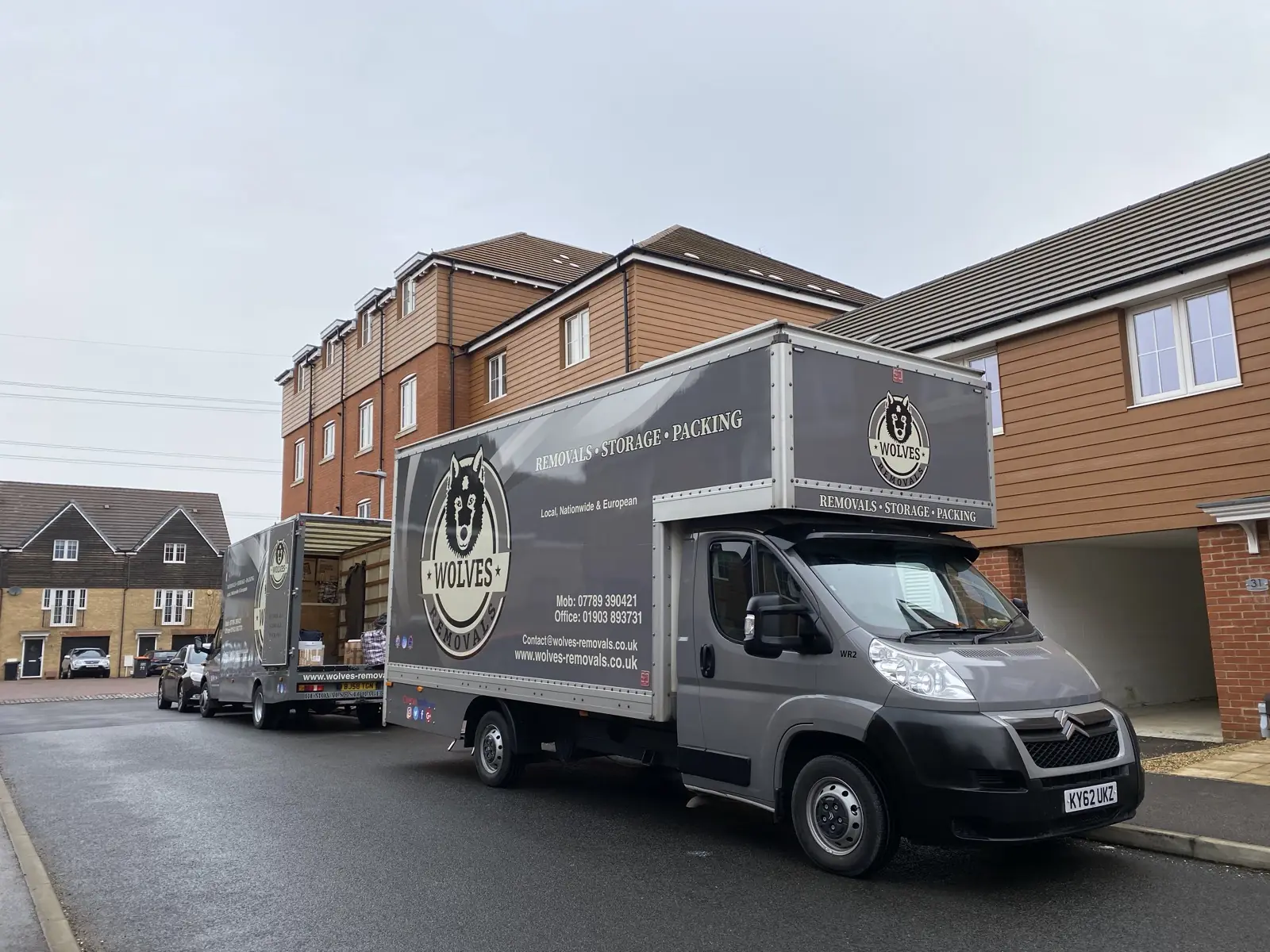
This one started several thousand miles away and arrived at Southampton this morning, in a steel box that had been at sea for weeks. Our client is relocating from the United States to West Sussex, and her house in Storrington is not ready yet - so today Wolves Removals took in her whole household instead. This is what that day actually looks like.
A client relocating from the United States to West Sussex. Her household goods travelled by sea, and the container landed at Southampton this morning.
It came straight to our yard. The contents are now in our storage containers and will stay there until she completes on her new house in Storrington.
The Brief
Not every move starts with a van outside a house. This one started on the other side of the Atlantic, several weeks ago, with a household packed into a shipping container and handed to a sea freight line.
Our client is relocating from the United States to West Sussex. Her furniture and belongings were shipped by sea, and the timing question that shapes every move like this one had already appeared: the container was going to arrive in England before she could get the keys to her house in Storrington.
That gap is the whole job. A container does not wait politely at the dockside while a property chain sorts itself out, and demurrage charges start whether or not your completion date has moved. Somewhere between the port and the new house, the contents need a home.
This Morning at Southampton
The container landed at Southampton this morning and came on to our yard by road.
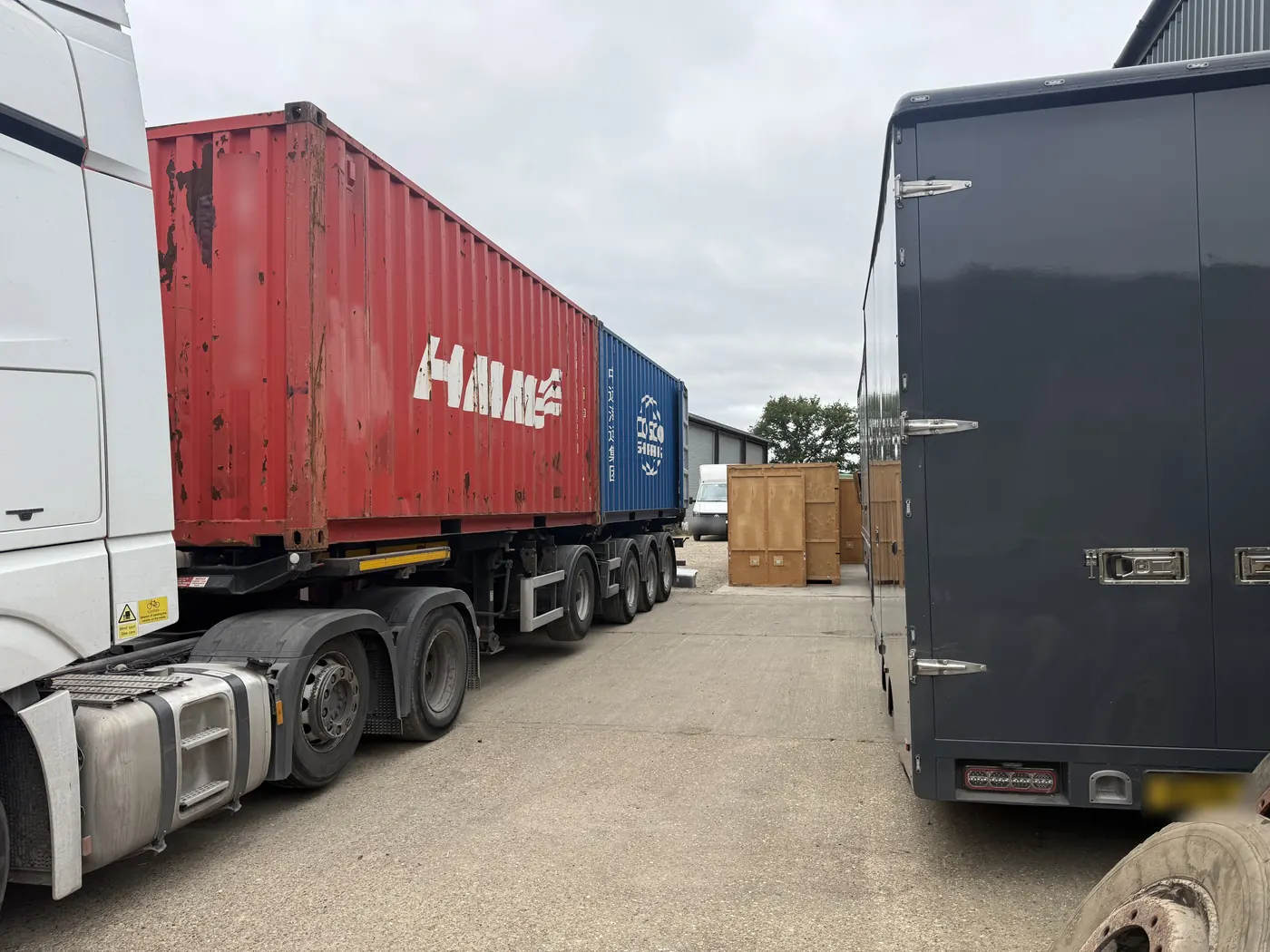
Behind it in the yard stood the timber storage containers its contents were about to move into.
This is the point in an international move that customers almost never see, and it is the point where the handover actually happens. Up to here, a household has been in the shipping line's hands. From here it is in ours, and everything that follows is a removals job rather than a freight job.
The Seal Comes Off First
Nothing is opened until the seal has been checked. Every container that crosses an ocean carries a high-security seal through the locking bar, and it is not a padlock or a formality. Seals for international freight are built to ISO 17712, the international standard that grades container seals as indicative, security or high-security, and the usual type on a household shipment is a bolt seal from the high-security class: a steel pin driven through a barrel, designed so it cannot be released without being destroyed.
The important part is the number stamped into it. That serial number is recorded on the shipping paperwork when the container is closed at origin, and it travels with the documents rather than with the box. So the first job on arrival is not unloading, it is reading the number off the seal and checking it against the paperwork in your hand.
If the two match, the container has not been opened since the day it was packed, several thousand miles ago. If they do not match, or the seal has already been cut and replaced, that is recorded before anything is touched.
Once you have opened a container you can no longer prove what state it arrived in, which is exactly why the check happens first and gets written down. Wolves Removals
Only then does the seal get cut. It goes off with bolt croppers, on site, and it is a one-way job: a bolt seal cannot be cut and put back, which is the entire point of using one.
Opening the Doors
Opening a container that was packed by someone else, on another continent, several weeks ago, is a particular kind of moment. You are looking at a wall of cartons that somebody loaded to survive a sea crossing, and you have to take it apart in the right order.
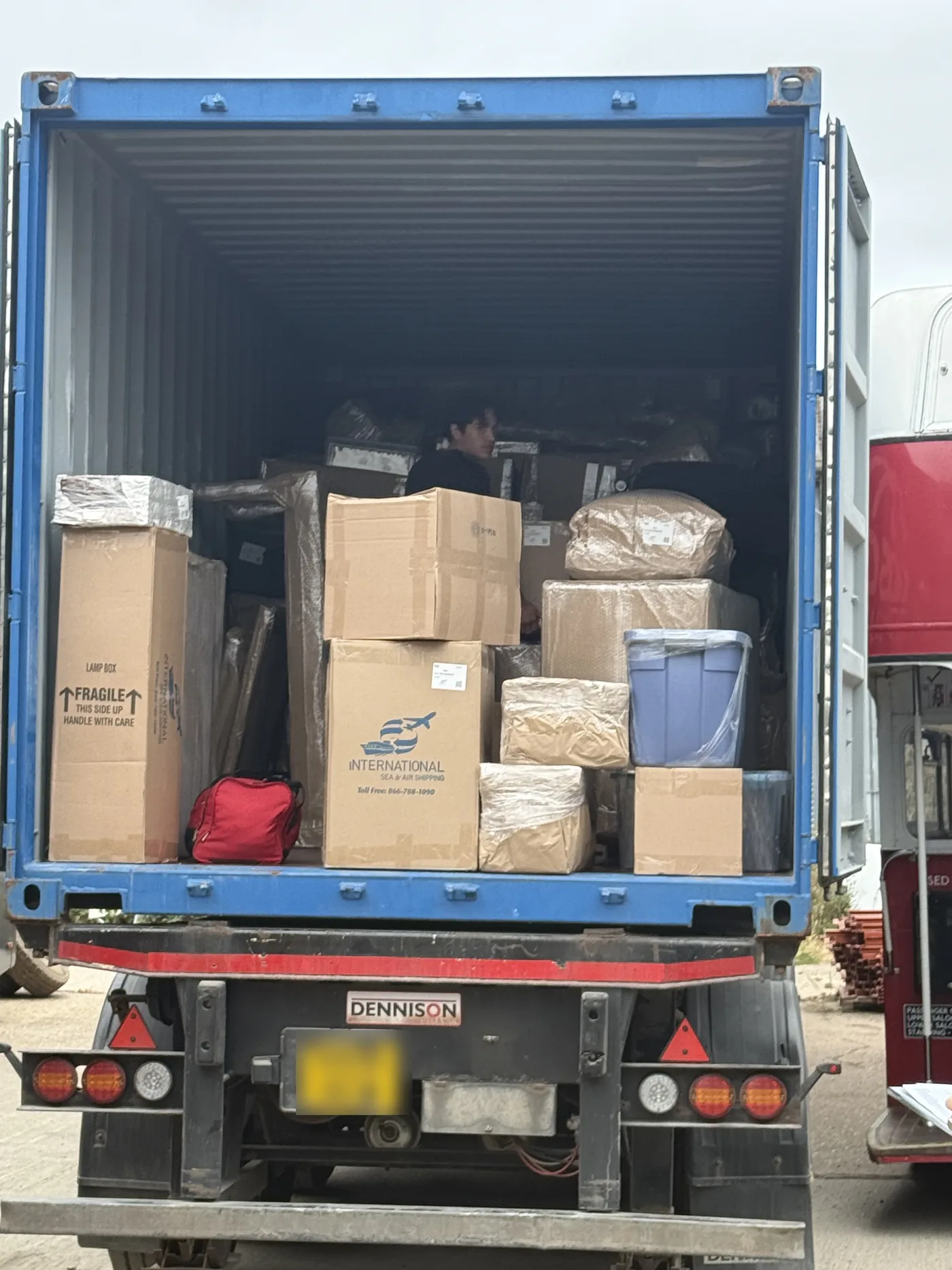
You can read a shipment from how it was packed. This one was loaded properly: cases stacked in courses rather than dropped in, soft items filling the voids, and the fragile cartons kept where they would not take weight. That matters more on a sea crossing than on any road move, because the load is on its own for weeks and the only thing holding it still is the way it was stacked.
Checking Every Number
A shipment like this does not arrive as a pile of anonymous boxes. It arrives with a packing list written by the agent who packed it at origin, and on an international move almost every item on that list carries its own number. The numbers are the shipment: they are what customs clears against, and they are what tells you whether everything that was loaded has actually turned up.
So the container is not simply emptied. Every carton and every piece of furniture is called off as it comes down, its number read aloud, and ticked against the list. It is slower than just unloading, and it is the only way to know you have a complete consignment rather than to assume it.
The value shows up in the gaps. A number that never gets called is a missing item, and you know that on the day rather than six weeks later when your client unpacks in her new house and cannot find something. It is also the only version of events that is any use afterwards: a numbered inventory checked off at delivery is evidence, whereas a memory of roughly what came off a lorry is not.
The same list does a second job. It is what the shipment was declared on, so keeping it intact and marked up matters well beyond moving day.

How Long a Household Spends at Sea
People are usually surprised by how much of an international move is waiting rather than travelling. The Atlantic crossing itself is the short part.
A sailing from the US East Coast to Southampton runs roughly ten to seventeen days at sea, with vessels leaving once or twice a week. A container coming off the West Coast is a different proposition: it routes through the Panama Canal and sits at the longer end of the scale, and the transit restrictions imposed during the 2023-24 Panama Canal drought pushed sailings later still.
We plan the warehouse space around the later date rather than the earlier one, because a sailing that slips is a great deal more common than one that arrives ahead of schedule. Wolves Removals
The rest of the time goes on the parts nobody pictures - export handling before it sails, clearance and release at the arrival port, then road haulage to wherever it is being delivered. That is why door to door is measured in weeks while the crossing is measured in days.
Air freight collapses the timeline to a matter of days, and for a handful of essential items that is worth doing. For a whole household it rarely is: air freight is priced on weight and volume in a way that makes a full household load far dearer than the same shipment by sea, and on a full container that gap is the difference between a sensible relocation budget and an eye-watering one. The usual answer is both - a small air shipment of what you cannot live without, and the house itself by sea.
Into Storage, Not Into Limbo
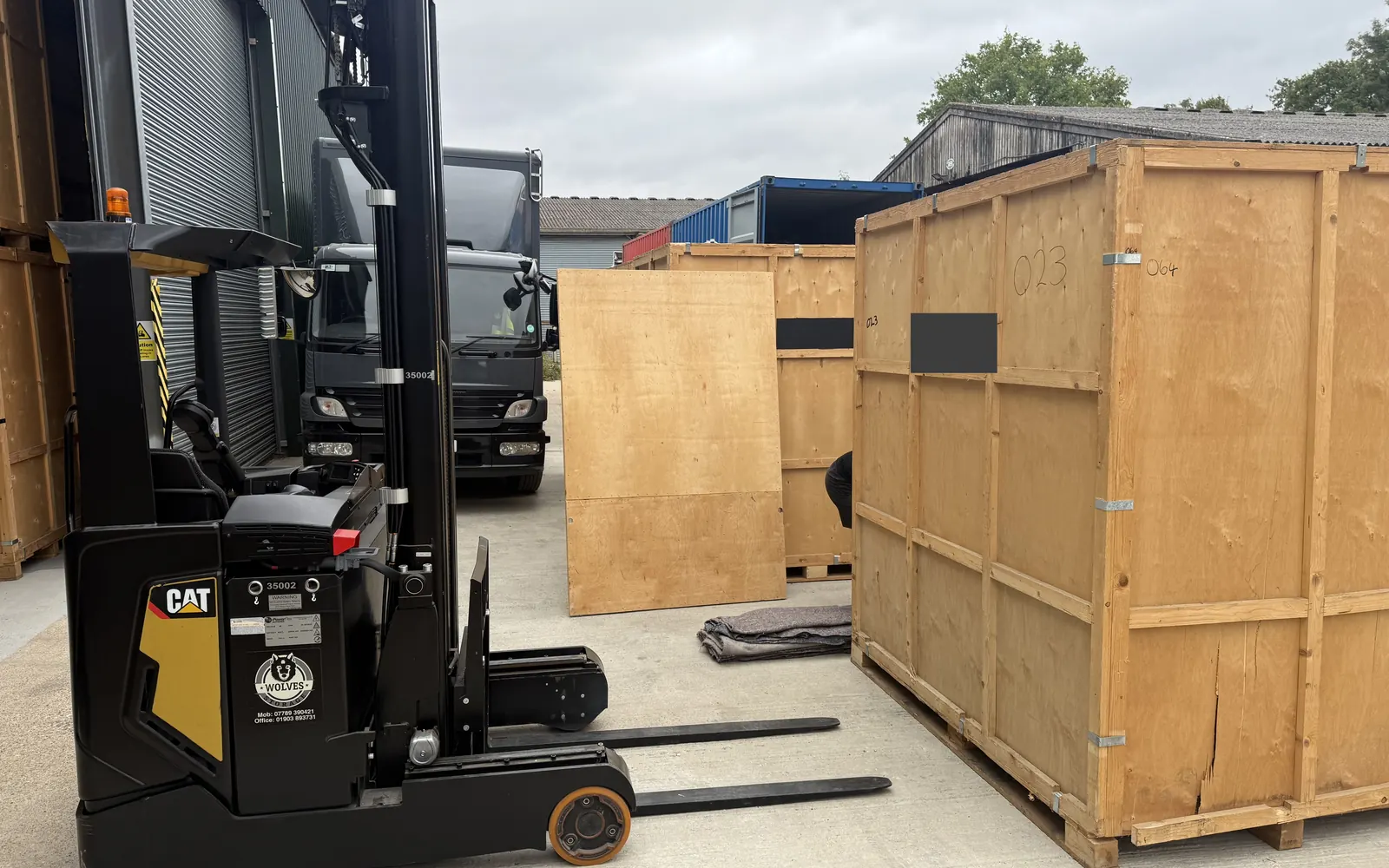
The contents did not go into a room or onto a pallet. They went into Wolves Removals' timber storage containers, which is a different thing and the reason this kind of gap is manageable at all.
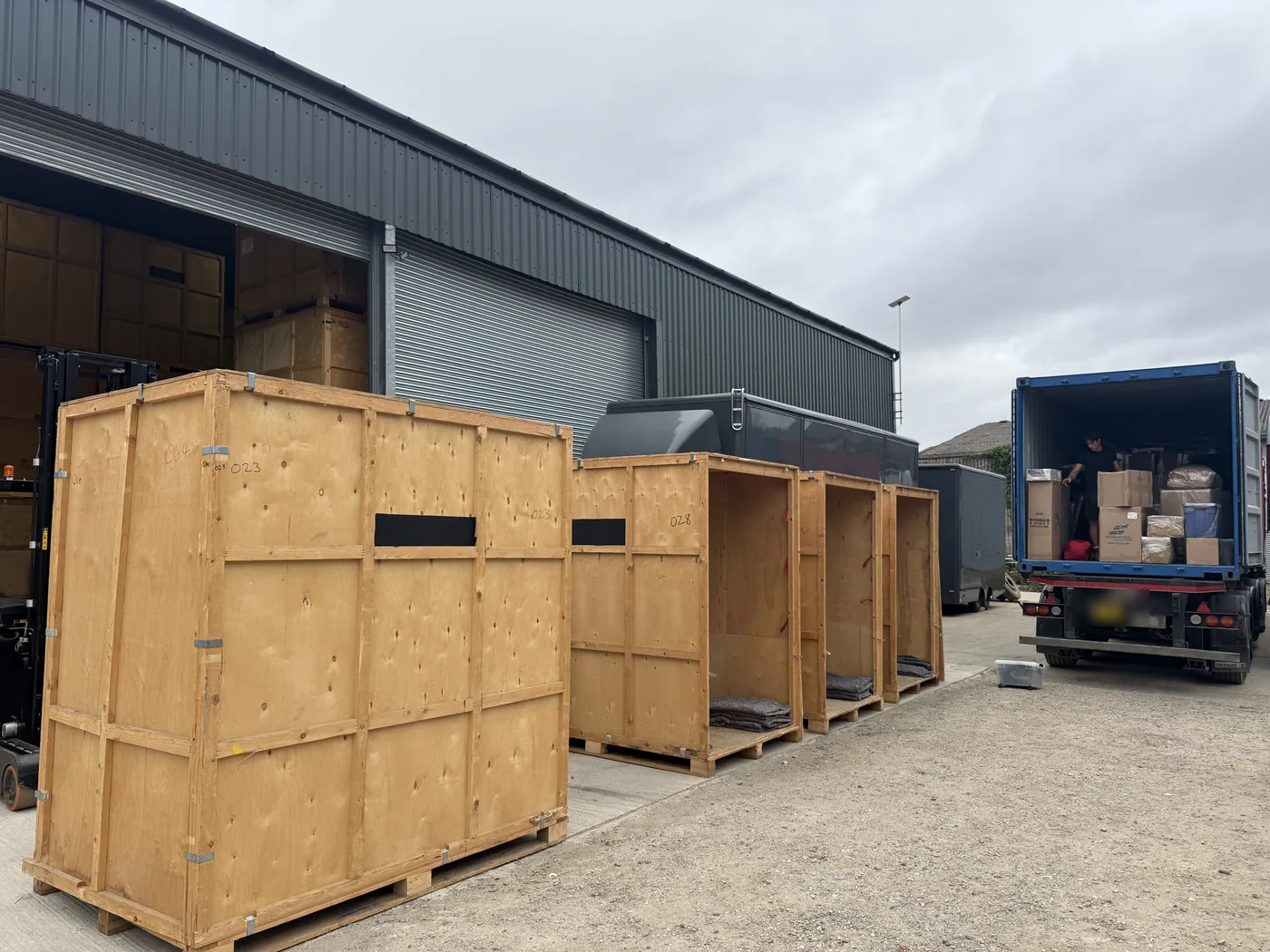
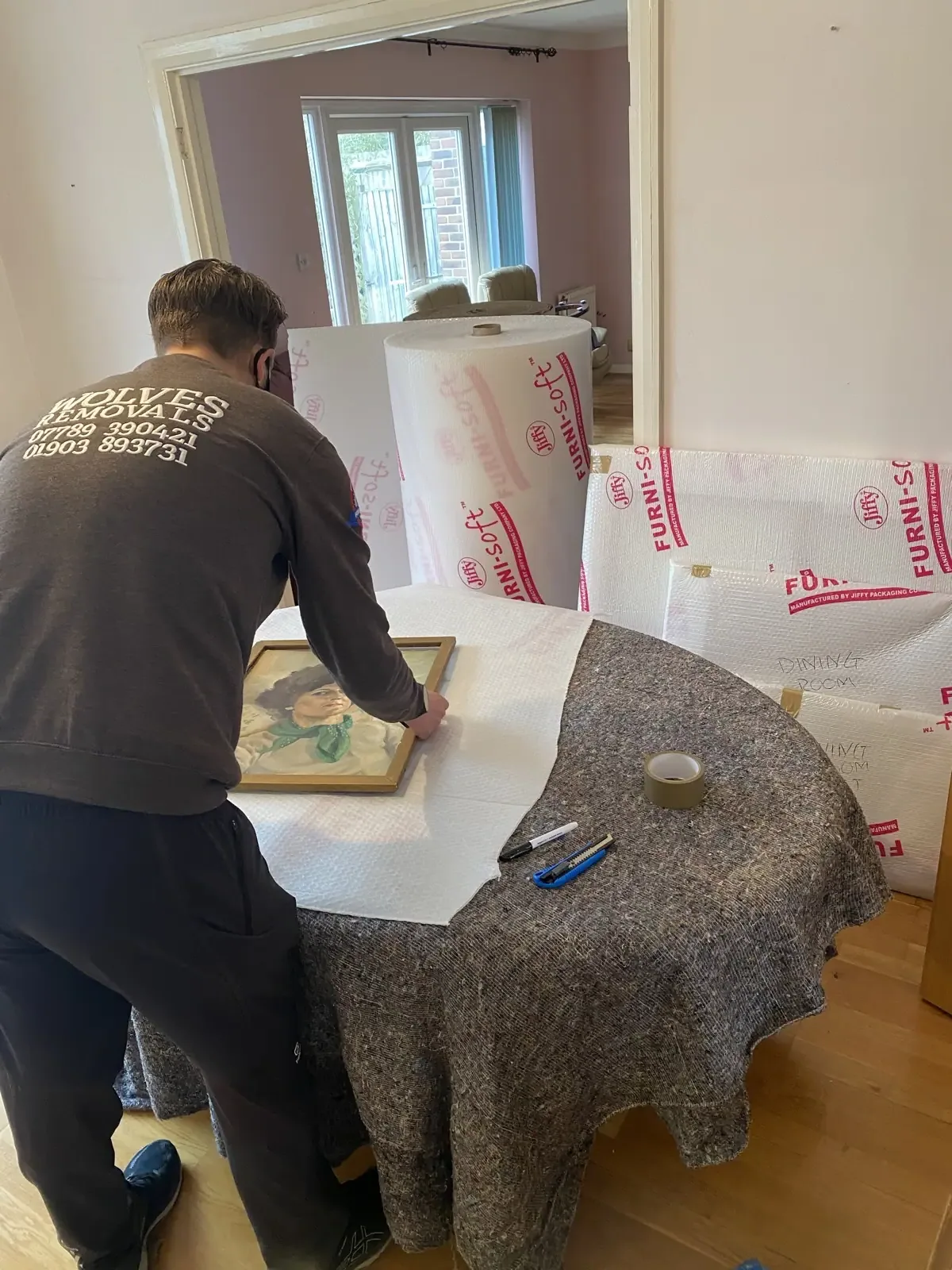
Each container is packed, its contents recorded, and then sealed. From that point it is moved as one object rather than as a hundred separate items, which is the whole point: the fewer times a household is handled, the less can happen to it. Blanket-wrapped furniture goes in padded and upright, and the cartons go in around it.
Containers are moved by forklift rather than carried, so a full one can be lifted into the warehouse and stacked without anything inside being unpacked again.
Once they are in the building, they stack. That is what makes storage between two houses affordable rather than eye-watering: you are paying for the volume your goods actually occupy, in a building, rather than for a room with air in it.
The Crew on the Ground
A day like this is not one job, it is three overlapping ones. Someone has to receive and unload the container while the haulier waits, someone has to check the contents against the inventory as they come off, and someone has to load and place the storage containers so they can be stacked and later retrieved without unpacking anything.
The forklift work is the part people underestimate. Moving a loaded timber container is not a matter of picking it up; it is knowing how it is packed, where the weight sits, and how it needs to land so the next one can go beside it. That judgement is why the same people do it every time.
What Happens Next
The containers stay with us until our client completes on the house in Storrington.
When the date is confirmed we load them out, and the household is delivered and unpacked into the new house in the order she wants to live in it rather than the order it came off the ship. Wolves Removals
Storrington is about twenty minutes from our yard, which makes the final leg the easiest part of a journey that started several thousand miles away. If you are moving into the area yourself, our Storrington removals page covers what we do locally.
If You Are Shipping a Home to the UK
Three things are worth knowing before you book anything, and all three are about timing rather than packing.
Assume the container will arrive before the house is ready. Sea freight timings move, property chains move, and the two are not coordinated. Plan for a gap and you will usually have one; plan for a perfect handover and you will be arranging storage in a hurry from another country.
Decide who receives it in the UK before it sails. Someone has to take the container, unload it and be responsible for the contents from that moment. Sorting that out while the shipment is already at sea is the most stressful version of this job.
Keep the origin inventory. It is the document everything else is checked against, and it is far harder to reconstruct after the container is empty than to work from while it is being emptied.
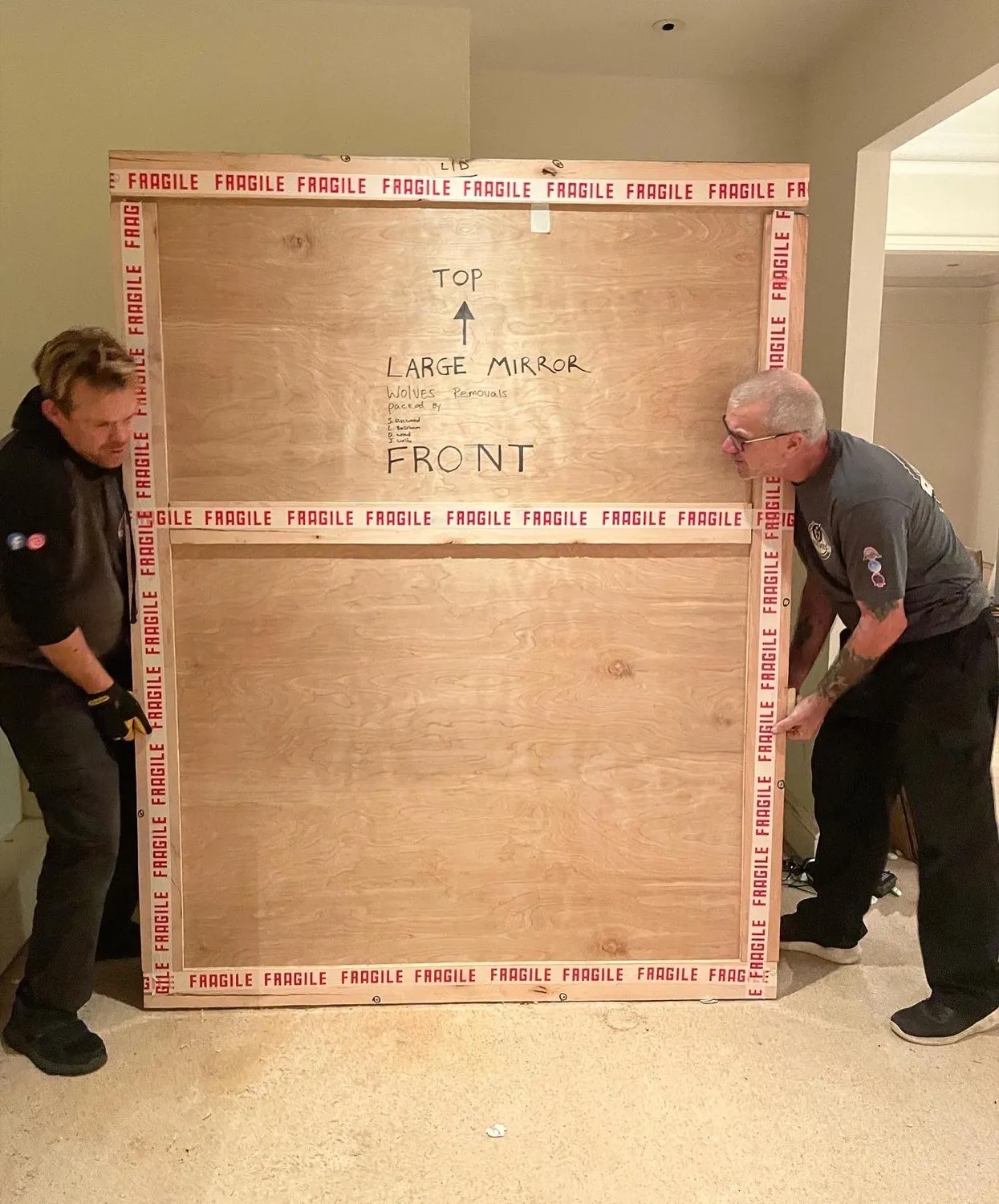
Our international removals service covers the UK end of moves like this one, and our containerised storage is what bridges the gap when the dates do not line up. If the shipment includes anything that needs building around rather than wrapping, our guide to when an item needs a bespoke crate covers that, and moving long distance covers the same timing problem on a domestic scale.
The Wolves Removals Team
Family-run removals · Ashington, West Sussex
We have moved families and businesses across West and East Sussex, Surrey, Hampshire and Kent since 2016, from our Ashington base. We are fully insured, Checkatrade-verified and a LAPADA Approved Service Provider for antiques and fine art. More about us, or read our reviews.
From the USA to Storrington: A Container, a Gap, and a Warehouse — FAQs
It goes into storage rather than sitting at the port. Once a container lands it needs collecting promptly, because charges accrue at the dockside regardless of whether your completion date has moved. We take delivery, unload it into our own storage containers and hold everything until your date is confirmed.
It proves the container has not been opened in transit. A high-security bolt seal is fitted when the container is closed at origin and its serial number is recorded on the shipping paperwork. On arrival that number is checked against the documents before anything is opened - if they match, the load is as it was packed. Seals for international freight are made to ISO 17712, the standard that grades container seals as indicative, security or high-security; a bolt seal sits in the high-security class.
It is recorded before the container is opened, with the discrepancy noted and the seal photographed. Once a container has been opened you can no longer demonstrate the state it arrived in, so the check and the record both have to come first. A seal that has been cut and replaced in transit is treated the same way.
By number, not by eye. An international shipment comes with a packing list from the agent who packed it, and almost every item on it is numbered. Each carton and piece of furniture is called off as it comes out of the container and ticked against that list, so a missing number is spotted on the day rather than weeks later when the last box is unpacked.
Yes. Southampton is the usual arrival port for household shipments coming into this part of the country, and a container can be brought to our warehouse by road on the day it is released.
In timber storage containers, packed and listed and then sealed. Each one is handled as a single unit and stacked inside the building, so your belongings are touched once going in and once coming out rather than repeatedly moved around a room.
Yes, and it is worth doing as the container empties rather than afterwards. An international shipment arrives with an inventory prepared by the origin agent, and working against that list while items are coming off is far more reliable than trying to reconstruct it later.
As long as the gap needs. Some clients need a fortnight while a chain completes, others need several months while a purchase goes through or a renovation finishes. The arrangement is the same either way.
Yes. When the completion date is confirmed the containers are loaded out and the household is delivered, and it can be unpacked and placed room by room rather than left as a stack of cartons in a hallway.
The crossing from the US East Coast to Southampton is usually ten to seventeen days at sea, with sailings once or twice a week. Door to door is longer - published ranges run from about fifteen to fifty days once export handling, customs clearance and onward delivery are counted. A container leaving the US West Coast routes via the Panama Canal and sits at the longer end.