Questions to Ask Before You Book a Removal Firm — A Chichester Buyer's Guide
Ask a removal company these 13 questions before you book, each at the point it matters, from the first call to after the move. Get every answer in writing, so you can prove what you were promised.


We’re a removal firm ourselves, so every check on this page is one you can run on us too: our own answers are at the end.
The 13 questions, in the order you’ll need them
Short on time? Ask 6, 8 and 10 first: the price, your cover, and what happens if you cancel or postpone.
On the first call
At the survey
- Will you survey my home before you quote?
- Who will actually do the move, and who is my contact?
- How will you protect my furniture and my home?
When the quote arrives
- Is it a fixed quote or an estimate, and what could be added?
- What’s included, and what won’t you carry?
Before you pay
- What does your cover include?
- How much is the deposit, and how can I pay?
- What if I cancel or postpone, or you do?
The week before
Afterwards
Questions to ask a removal company on the first call
1. Who are you, and can I check that?
A genuine firm will give you a street address and, if it’s a limited company, a company number. Citizens Advice lists no postal address, nothing in writing and pressure to pay quickly as warning signs. A sole trader won’t be on Companies House, and that’s normal: check the address and the written terms instead.
Four checks you can run yourself
- Companies HouseFree to search. It shows the registered address, when the company was set up, its directors and its filed accounts.
- HMRC VAT number checkIf the quote adds VAT, the number should match the firm’s name and address.
- Operator licenceA lorry over 3,500 kg carrying other people’s goods needs a standard operator licence. Search by name on GOV.UK.
- A street addressOne you could visit, not just a PO box or a mobile number.
Sources: Companies House, HMRC VAT check, GOV.UK operator licences and Find lorry or bus operators (Great Britain), Citizens Advice.
2. Can I check your memberships and reviews?
Any membership a firm claims should show up on the body’s own website, so check it there (Citizens Advice). Since 6 April 2025, a firm showing a badge it has no right to, or claiming a code of conduct it hasn’t signed up to, is banned (Digital Markets, Competition and Consumers Act 2024).
For reviews, read more than one independent site. The Competition and Markets Authority says 3 and 4-star reviews are unlikely to be fake, so read those closely. Fake reviews have been banned since April 2025.
Questions to ask at the home survey
3. Will you survey my home before you quote?
Which? recommends at least three quotes, preferably from firms that visit rather than price over the phone. It says a visit matters most when restricted access or tight stairways will affect the job.
What a survey should cover
-
The loft, garage and shed, which are easy to forget in a phone quote.
-
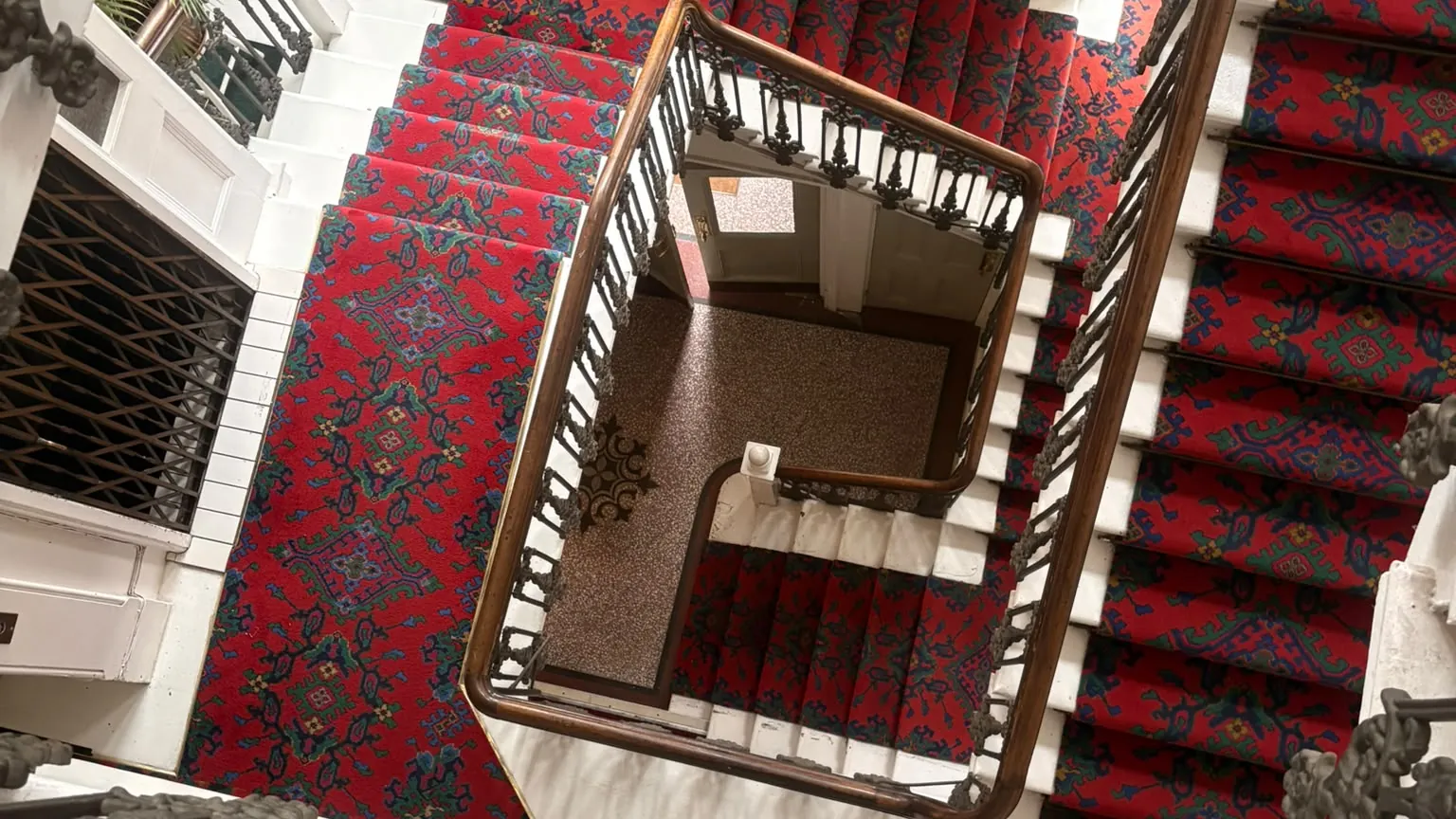
Stairs, landings and tight turns, at both addresses.
-
Large, heavy or fragile pieces: pianos, antiques, pictures, mirrors.
-
How far it is from your door to where the lorry can stop.
-
The street: parking, yellow lines and the size of lorry that fits.
Based on Which?’s advice on surveys and access, and what we check on our own surveys.
Flats need the most thought. At the 2021 Census, a third of households in Chichester city lived in a flat, and two in three in the central ward. Ask about the floor, the lift and how far the carry is. Downsizing? Ask the surveyor to check what will fit in the new rooms.
4. Who will actually do the move, and who is my contact?
Ask whether the crew on the day are the firm’s own staff, and for one named contact you can call if plans change. If any part of the job will be handed to another firm, ask for that in writing too.
5. How will you protect my furniture and my home?
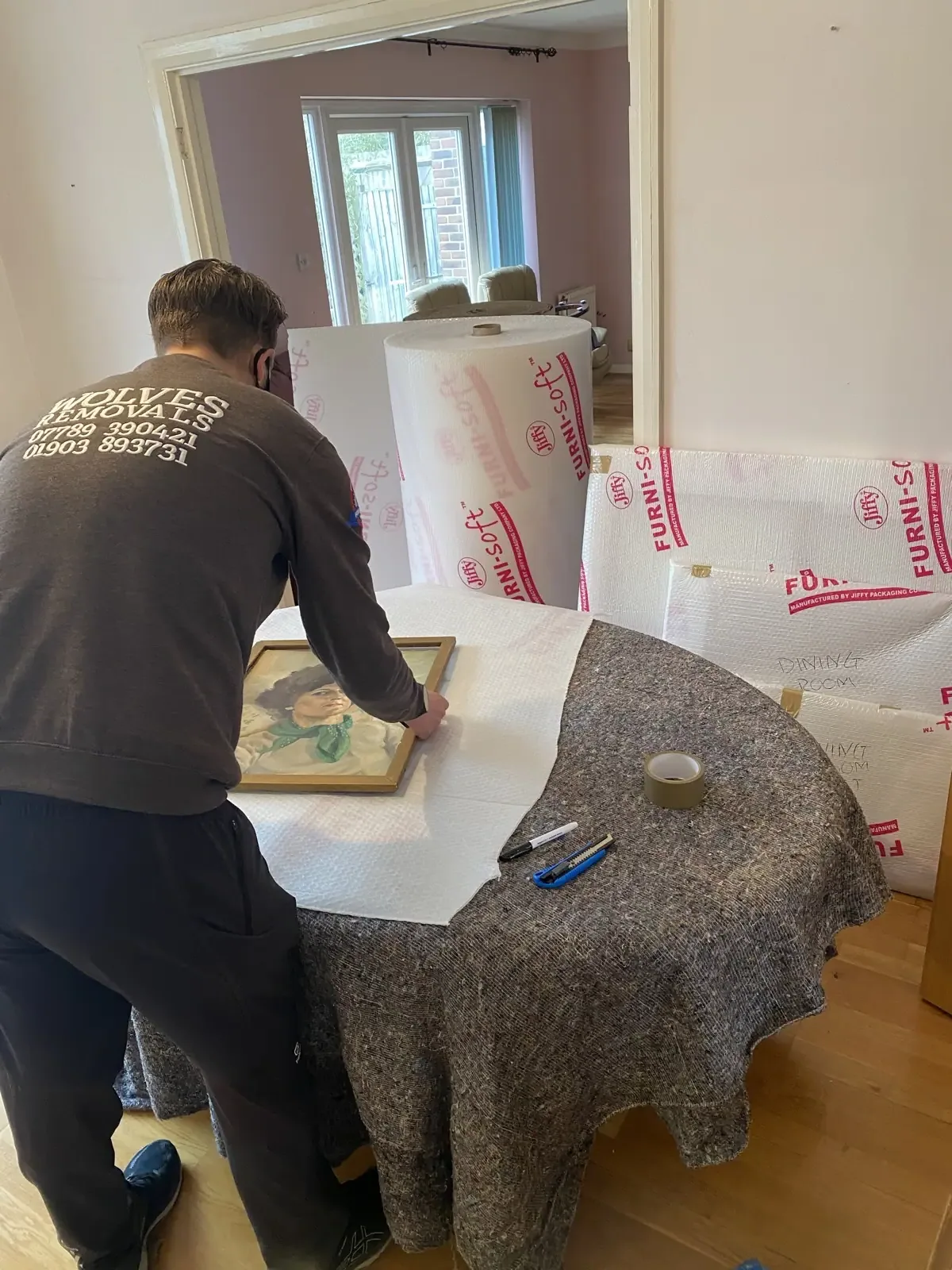
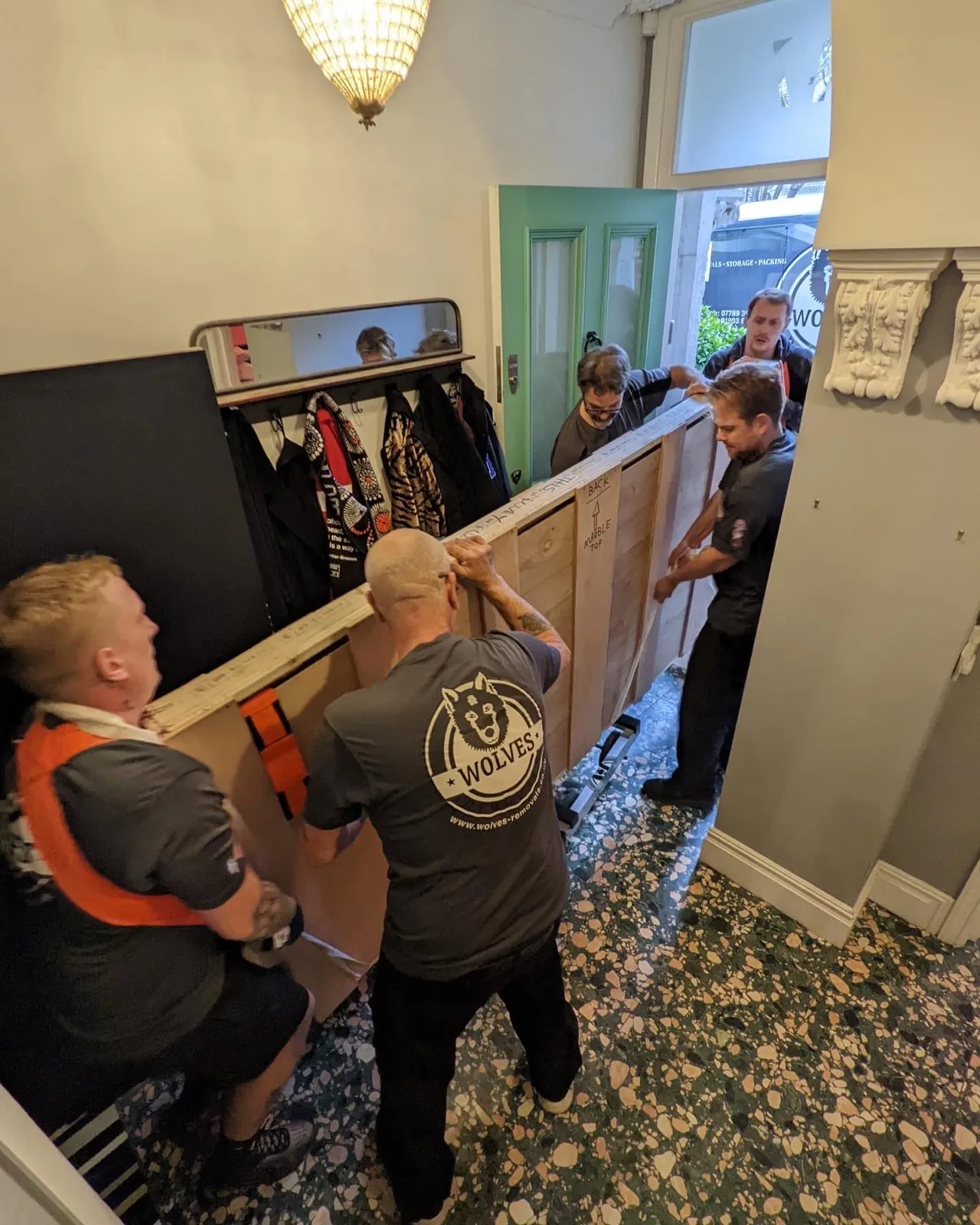
Which? suggests telling the firm about anything that needs special packing, such as pictures, antiques and valuable objects, and about hard-to-move items like a piano. Ask how each will be wrapped, whether anything needs a crate, and how doorways and floors are protected on the way out. Glass and china should go in packing paper, never towels.
For the detail, see our guides to moving antique furniture and piano moving.
Questions to ask about the quote and price
6. Is it a fixed quote or an estimate, and what could be added?
Citizens Advice puts it simply in its advice on getting building work done: a quote is a fixed price, but an estimate is a rough guess and you might pay more.
Which? suggests asking for the price to be broken down into insurance, packing, the hourly rate, mileage and any storage, and whether and when overtime starts. GOV.UK says to check the small print for additional charges: a professional company will explain them to you.
Ask what could be added on the day: overtime, stairs, a long carry from the lorry to your door, or waiting time.
A good answer:
“It’s a fixed price for everything we saw at the survey, itemised line by line, and this is what would change it.”
A warning sign:
“We’ll see on the day. It depends how long it takes.”
7. What’s included, and what won’t you carry?
Ask which of these are in the price: packing, materials, taking apart and rebuilding furniture, and unpacking. Then ask what the firm won’t carry. GOV.UK classes butane gas, petrol and lighter fluid as dangerous goods, with rules on packing and carrying them. Ask for the firm’s list, and get rid of them before the day. Our own terms also exclude paint and oil.
If the firm offers to take away rubbish or unwanted furniture, check it on the Environment Agency’s register of waste carriers. By law, you must take reasonable steps to make sure your household waste goes only to someone authorised to take it (Environmental Protection Act 1990, section 34), so the check protects you too.
Questions to ask about insurance, deposits and cancelling
Before you pay a deposit, get these three answers in writing. This is general information on consumer rights in England, not legal advice; your contract’s terms matter.
8. What does your cover include?
Which? says a firm may cap what it pays out at a set amount per box unless you tell it what the contents are worth, which may raise the quote. It also warns that the firm’s insurance won’t cover items you’ve packed yourself, so check this firm’s terms. Check how long you have to claim after the move, and whether there’s an excess: the first amount of any claim that you pay yourself.
A good answer:
“Our written terms show the limit per item, how to declare high-value pieces and how long you have to claim.”
A warning sign:
“You won’t need to read the terms. It’s all covered.”
Ask your own home insurer what’s covered during the move too, as Which? suggests.
9. How much is the deposit, and how can I pay?
Pay at least part by credit card if you can. Section 75 of the Consumer Credit Act 1974 can let you claim from the card company as well as the firm (Citizens Advice).
Paying by card
-
Credit card, even just the deposit: Section 75 can cover the whole job if it costs over £100 and up to £30,000.
-
Debit card: if the move doesn’t happen, ask your bank to reverse the payment, called a chargeback.
-
Pressure to transfer money quickly: a warning sign, says Citizens Advice.
Sources: Citizens Advice on card payments and Citizens Advice on scams.
A good answer:
“A deposit to secure the date, the balance on these terms, and you can pay by card.”
A warning sign:
“Full payment today by bank transfer, or we can’t hold the date.”
10. What if I cancel or postpone, or you do?
A removal booked for a set date doesn’t get the usual 14-day cooling-off period (Consumer Contracts Regulations 2013). Citizens Advice says if you cancel, a business may keep some or all of a deposit to cover its financial loss. A cancellation charge that is disproportionately high compared with that loss may be unfair under the Consumer Rights Act 2015. Ask what happens if the firm cancels on you, too. Our removals checklist covers deposits and cancelling in more detail.
Questions to ask about the moving day
11. Who sorts parking and access at both addresses?
Agree who checks both streets, and who applies to have parking bays kept free for the lorry (a bay suspension). Which? points out that heavy or tall lorries can’t always cope with steep gradients, tight bends, height or width restrictions or uneven roads, and that you may need permission to unload at the other end.
A good answer:
“We’ve looked at both streets. You’ll need a bay suspension here, it takes this long, and this is who applies.”
A warning sign:
“We’ll find somewhere to park on the day.”
In Chichester’s permit zones a suspension needs at least six working days’ notice: see Chichester below.
12. What if completion is late? Can you store my things?
Ask this before you exchange. GOV.UK says keys are often handed over around lunchtime on completion day, but if the money is delayed you may not get in on time, and your removal firm may charge extra. Ask now whether late keys mean waiting time, the load staying on the lorry, or a move into storage, and what each costs.
Questions to ask about complaints
13. How do I complain, and is there an independent scheme?
By law, a removal service must be carried out with reasonable care and skill (Consumer Rights Act 2015, section 49). What a firm tells you about its service can become part of the contract if you rely on it when you book (section 50). Having it in writing means you can prove it. If the service falls short, you can ask for it to be put right, or for a price reduction (section 54).
If something goes wrong
-
Tell the firm in writing what went wrong and what you’d like done.
-
Since 6 April 2026, when a firm tells you the outcome of a complaint, it must also tell you about any dispute scheme it’s obliged to use. Not every firm has one.
-
Ask for the work to be put right, or for a price reduction.
-
For free advice, call the Citizens Advice consumer helpline on 0808 223 1133, Monday to Friday, 9am to 5pm.
Sources: Digital Markets, Competition and Consumers Act 2024, section 308, Consumer Rights Act 2015 and Citizens Advice.
See how we answer these questions.
Chichester: extra questions for a city move
Chichester adds a few questions, mostly about parking.
Parking for removal day in Chichester
-
The city has 13 permit zones. Apply to Chichester District Council, which acts for West Sussex County Council, at least six working days ahead.
-
A suspension costs a £45 flat fee plus £10 a day per charged bay, under the county’s charges from 1 October 2026.
-
Move your own car out first: anyone parked in a suspended bay can get a parking ticket, even the householder who arranged it.
-
A van can load on yellow lines only where no loading ban is shown and the loading is continuous. There’s no right to park.
-
Check the lines and bays outside both addresses on the county’s online restrictions map.
Sources: Chichester District Council, West Sussex on-street charges 2026-27, West Sussex parking policy and restrictions map, checked October 2026.
Parts of East Street, North Street and Crane Street are pedestrianised (Chichester District Council), and we found no published hours for vehicle access, so ask how a city-centre address will be reached. The council’s Local Plan names congestion at the A27 bypass junctions as a concern, so ask about start times.
See our removals in Chichester page.
How Wolves Removals answers these
- The survey and the quoteA free video or in-home survey, then a fixed written quote, typically within 24 hours of the survey.
- Who we areWolves Removals Limited, company number 10474120, at Dorlyn House, London Road, Ashington. Check us on Companies House.
- Our operator licenceWe hold a goods vehicle operator’s licence, so you can look us up on GOV.UK.
- What we won’t carryFlammable liquids or gases, paint or oil. Full terms come with your written quote.
- PayingCredit or debit card, BACS, or cash on completion (no cheques).
- Cover and membershipsWe’re fully insured; the cover for your move is set out in the written terms with your quote. We’re a LAPADA Approved Service Provider and Checkatrade-verified.
Book a free survey, or read our terms and conditions. See also how to choose a removal company and the warning signs when vetting a mover.
Jack Wolfe
Director, Wolves Removals · Ashington, West Sussex
Jack runs Wolves Removals, which has moved families and businesses across West and East Sussex, Surrey, Hampshire and Kent since 2016 from its Ashington base. The firm is fully insured, Checkatrade-verified and a LAPADA Approved Service Provider for antiques and fine art. More about us, or read our reviews.
Frequently Asked Questions
Book as soon as you have a likely date. GOV.UK says completion is often 2 to 4 weeks after exchange and advises giving removal firms as much notice as possible. It also notes that Fridays and the first and last days of the month are often very busy.
There’s no rule: it’s up to you. It’s more useful to ask what’s included before you book, so there are no surprises on the day.