A House That Spent the Winter in a Container
Some moves take a day; this one took seven months.

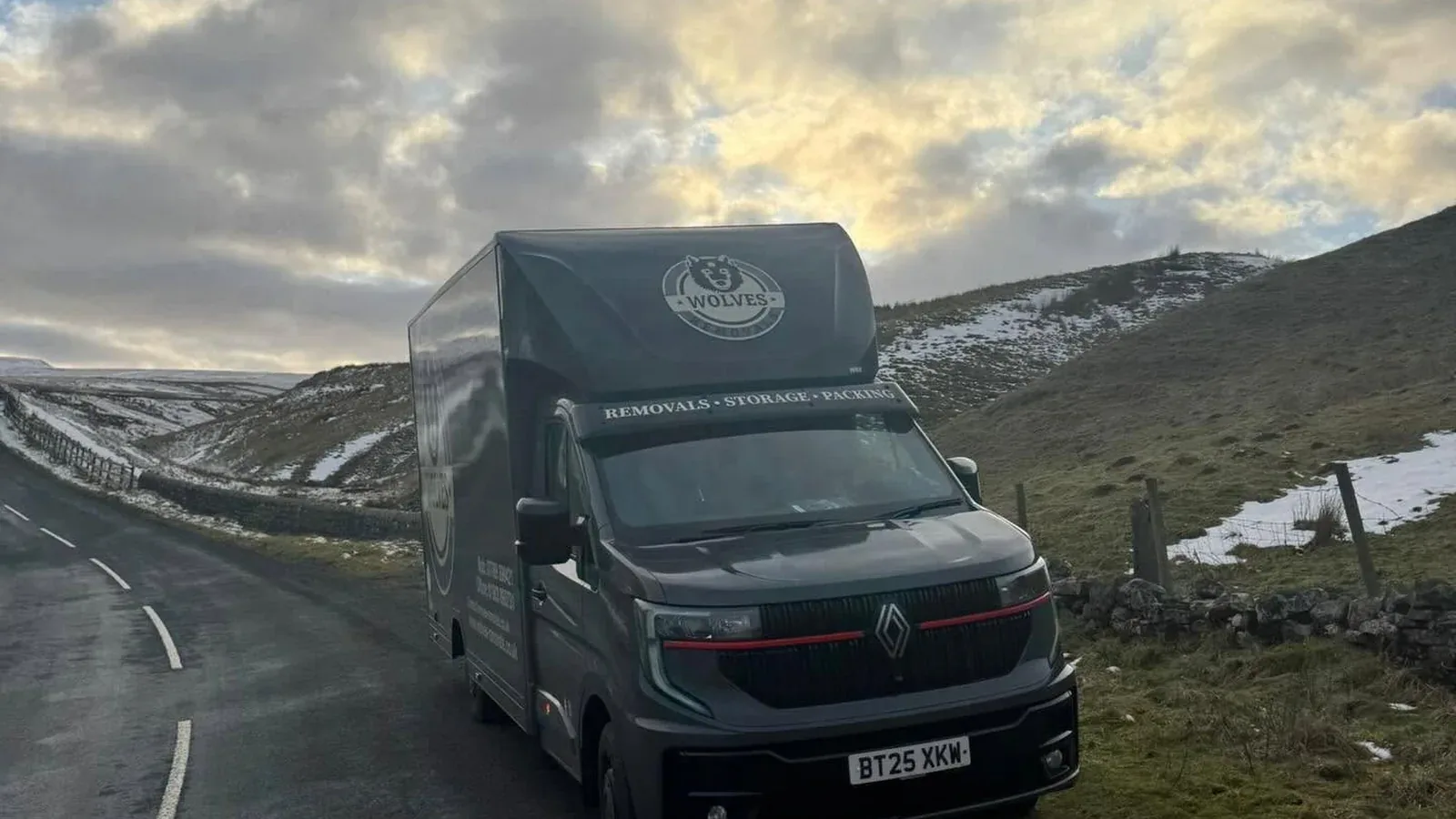
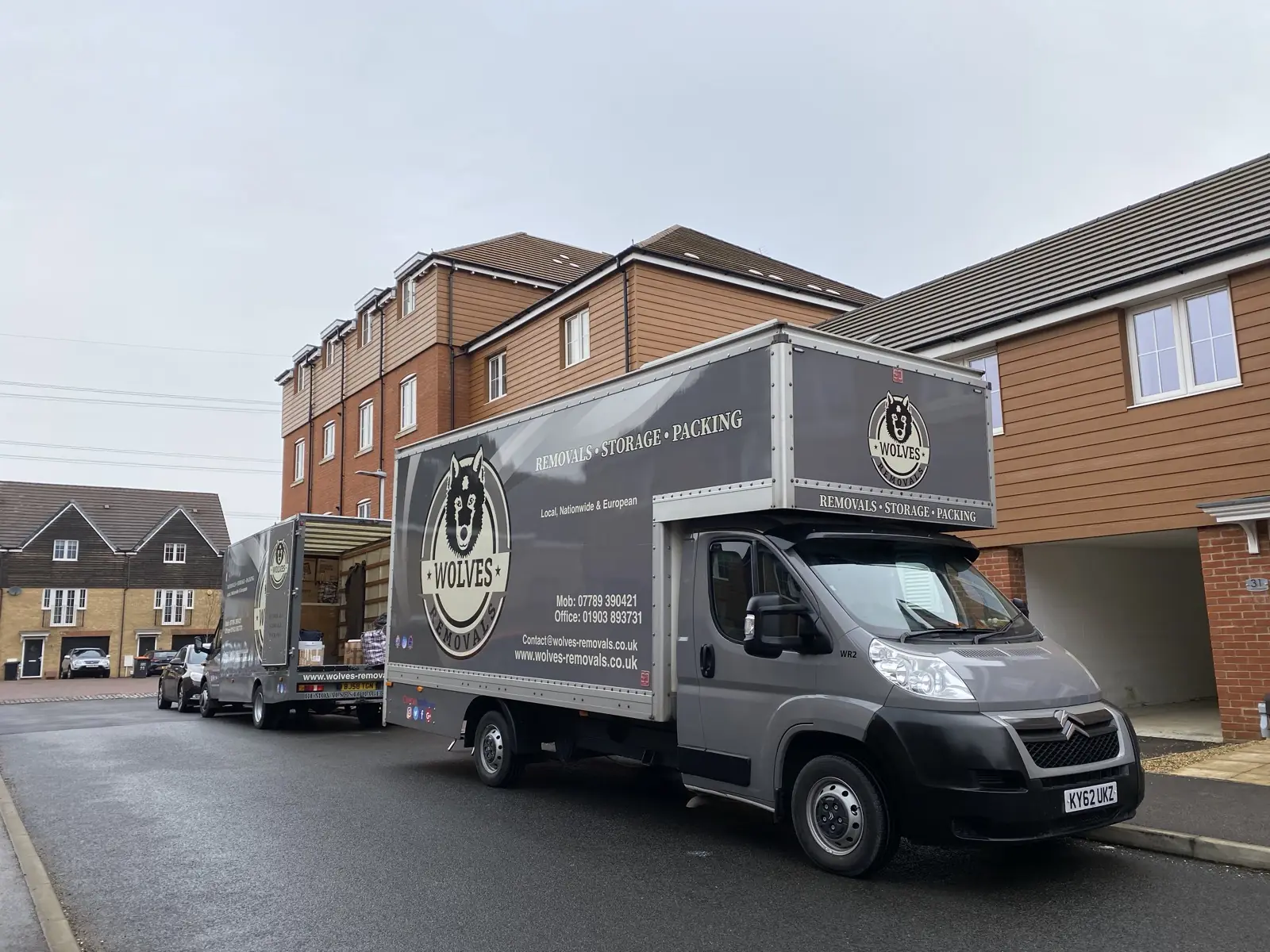
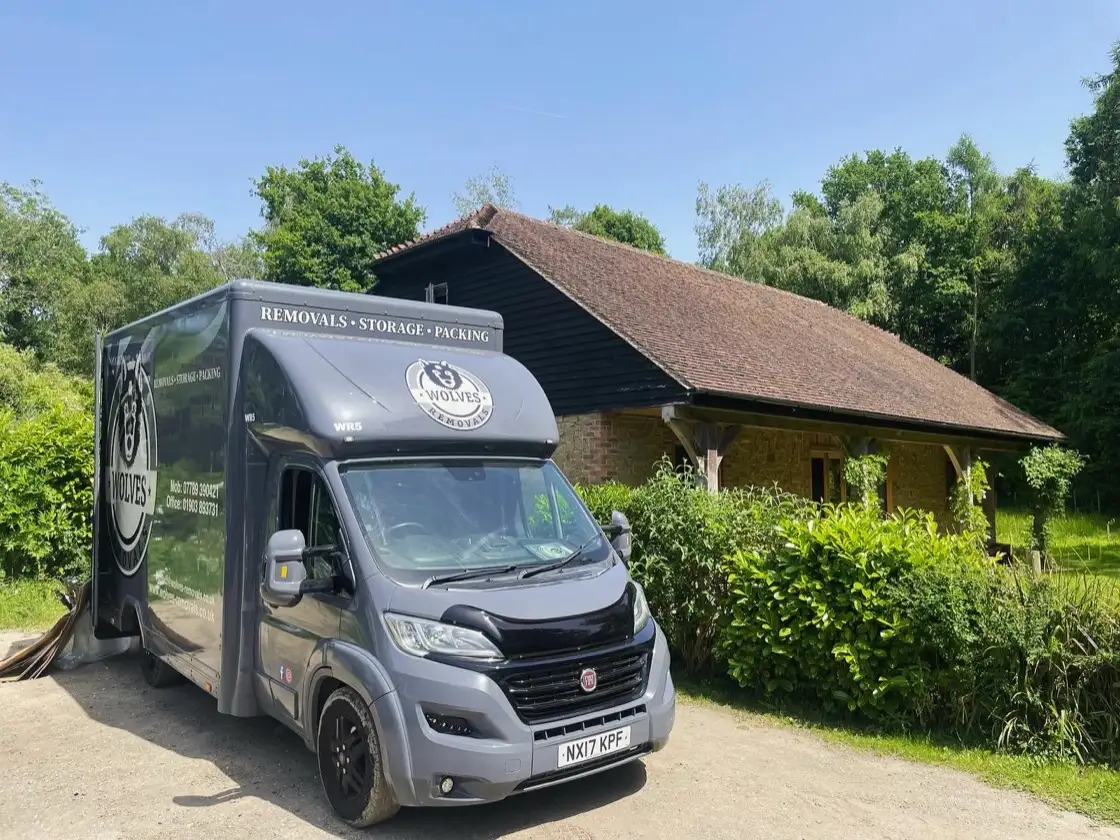
Wolves Removals packed a house outside Petworth and took it into store in October, held it there through the winter in containers, and brought it out the other side in February for a 321-mile run to the top of Weardale — arriving, as it turned out, in snow.
Seven Months From the Quote to the Last Box
Most jobs on this site happen inside a week. This one was quoted on a July afternoon, packed in October, sat through a winter, and finished on a snow-lined road in County Durham. The house that went into our store in West Sussex came out of it into a completely different season.
9 July 2025Jul
20 October 2025, over two daysOct
about fifteen weeksOct–Feb
three days on the roadFeb
Nothing went wrong to make it take that long. A storage-bridged move is simply what you book when the leaving date and the arriving date are not the same date, and the gap is measured in months rather than days.
Packed and collected at Tillington, just outside Petworth in West Sussex, on 20 October. Held in our containerised store through the winter. Delivered to Cornriggs, in Upper Weardale, County Durham — 321 miles north.
Two thousand two hundred and eighty-five cubic feet. A full pack by our crew, furniture dismantled and rebuilt, and three days on the road at the far end.
Packing a House You Will Not Open Again Until Winter
The collection was at Tillington, a village of about five hundred people a mile west of Petworth on the A272, inside the South Downs National Park. Turner painted the church twice from across Petworth Park, and both works are in the Tate. It is, in other words, exactly the sort of Sussex address people picture when they picture Sussex — which is worth holding in mind for where the load ended up.
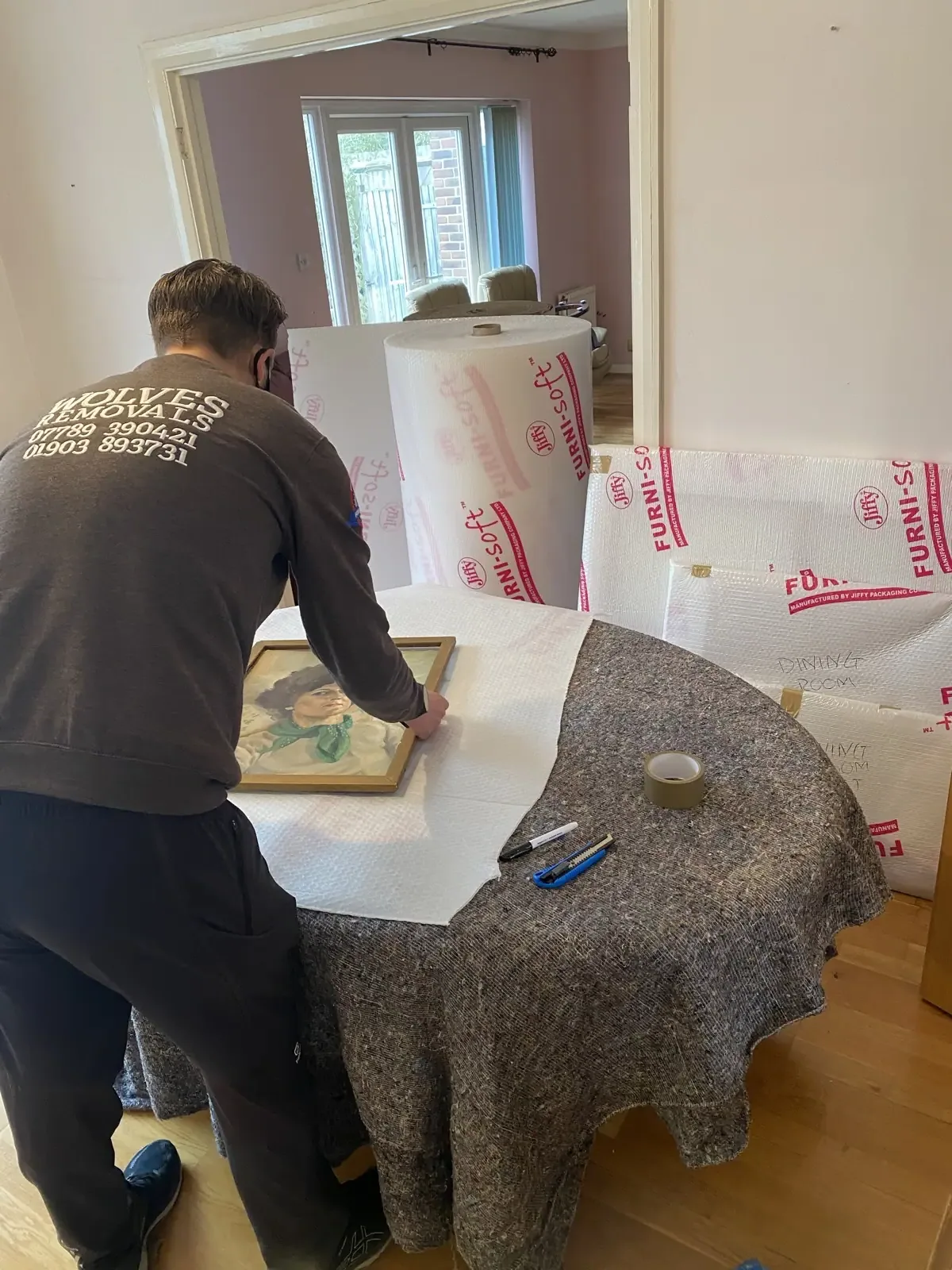
This was a full pack, which is the right call whenever a load is going into store. Our crew brought the materials and did the lot — every carton, plus the furniture taken apart where it needed to be. Day one was the pack and the load, with the essentials left out; day two collected those and took everything into the store.
What changes when the destination is a warehouse rather than a house is the labelling. On a same-week move you can get away with knowing roughly what is in a box, because you will open it on Thursday. On a move like this, the person opening the carton is a version of you fifteen weeks older, in a different county, in the dark at four in the afternoon. Anything vague written on a lid in October is useless by February.
The one item type that gets its own answer here is artwork and screens. Both are flat, both are rigid, and both fail from pressure rather than from being dropped — so they travelled in armoured cases rather than in board and blanket. Armoured cases are standard on a full packing service and it matters more when the case has to hold its shape in a container for a season rather than for an afternoon.
What Containerised Storage Actually Is
The phrase does not tell you much, so here is the mechanic. Containerised storage means your belongings are loaded once, at our end, into timber containers of two hundred and fifty cubic feet each. The containers are closed, and then the containers are what gets moved and stacked — not your furniture. Nothing is re-stacked around your sideboard while it is in there, because nobody opens it.
You are charged by the container rather than by the square foot of a room, and insurance is part of it.
That has one honest consequence worth knowing: until a house is actually loaded, nobody can tell you exactly how many containers it will take. Wolves Removals
2,285 cu ft on the survey9.1
adds a fifth for packing and access11
signed in July10
counted on the day12
The quote said in writing that the charge would follow the number actually used. It is the only fair way to write it, and the sort of line worth looking for in anybody’s storage quote — because the alternative, a fixed container count agreed before anyone has lifted anything, is a number that can only ever be wrong in one direction.
Three Hundred and Twenty-One Miles North
Cornriggs is a hamlet in Upper Weardale, a little over half a mile from Cowshill and about four road miles from the Cumbrian border. The Office for National Statistics files Tillington as a rural village. It files Cornriggs as a rural hamlet and isolated dwellings in a sparse setting, which is the sparsest category the ONS has. The load went from one to the other.
It sits inside the North Pennines National Landscape — still designated in law as an Area of Outstanding Natural Beauty, and the second largest of England’s thirty-four after the Cotswolds. And the road our lorry came in on is not an ordinary road.
Braemar – Spittal of Glenshee, Scotland668m
2,192ft
Tomintoul – Cock Bridge, Scotland643m
2,110ft
Coylumbridge – Cairngorm, Scotland635m
2,084ft
Tornapress – Applecross, Scotland630m
2,067ft
St John’s Chapel – Langdon Beck630m
2,067ft
Cowshill – Nenthead626m
2,054ft
Thornley Gate – A689 east of Nenthead609m
1,998ft
Westgate – Newbiggin, Durham607m
1,992ft
Garrigill – Langdon Beck599m
1,965ft
Nenthead – Garrigill599m
1,965ft
That is the geography a delivery address like this one hides behind a postcode. Nobody tells you at the survey stage that the last stretch of your route is the highest A-road in England. You find out by looking it up, which is what we did before we quoted the job.
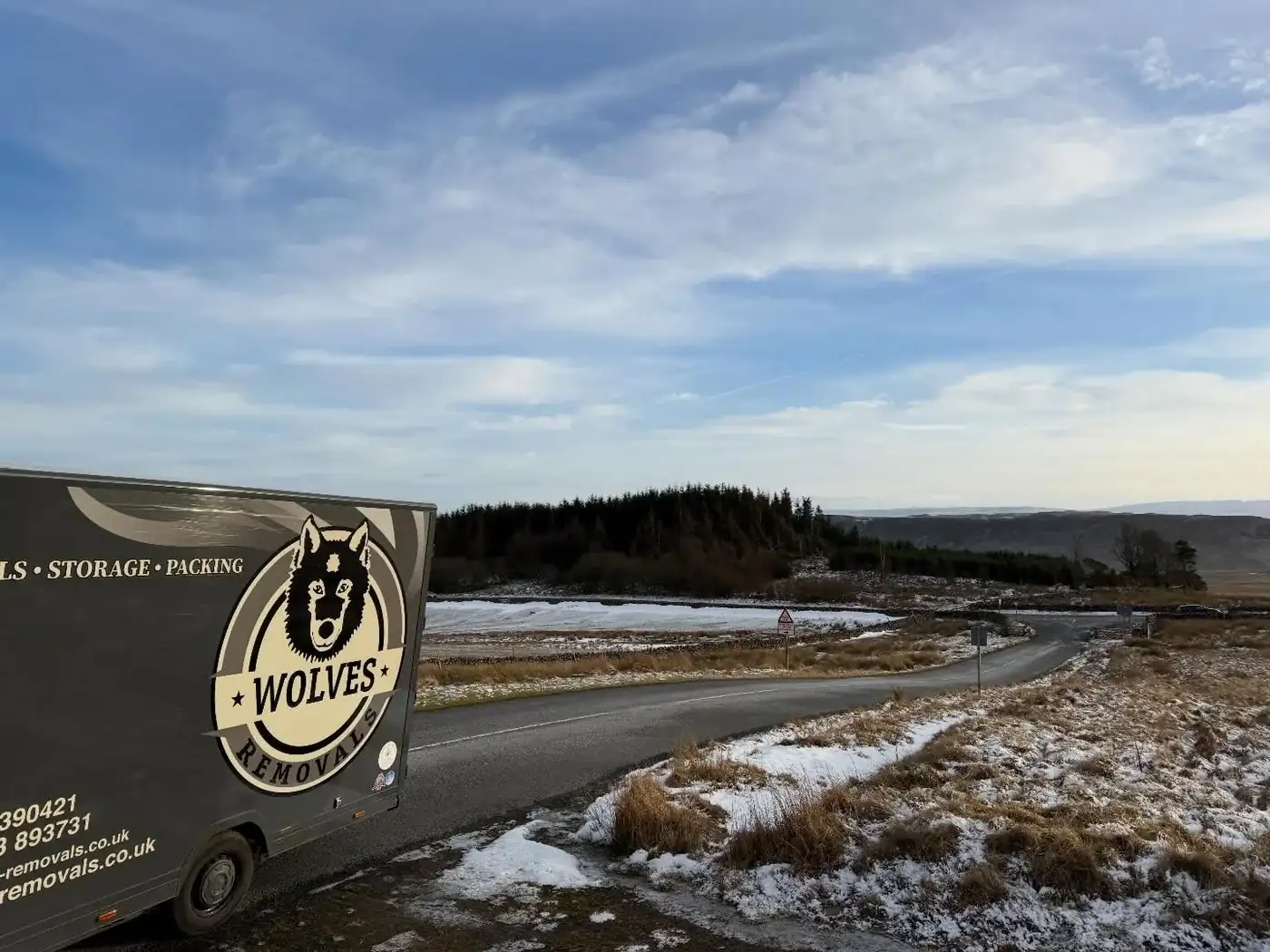
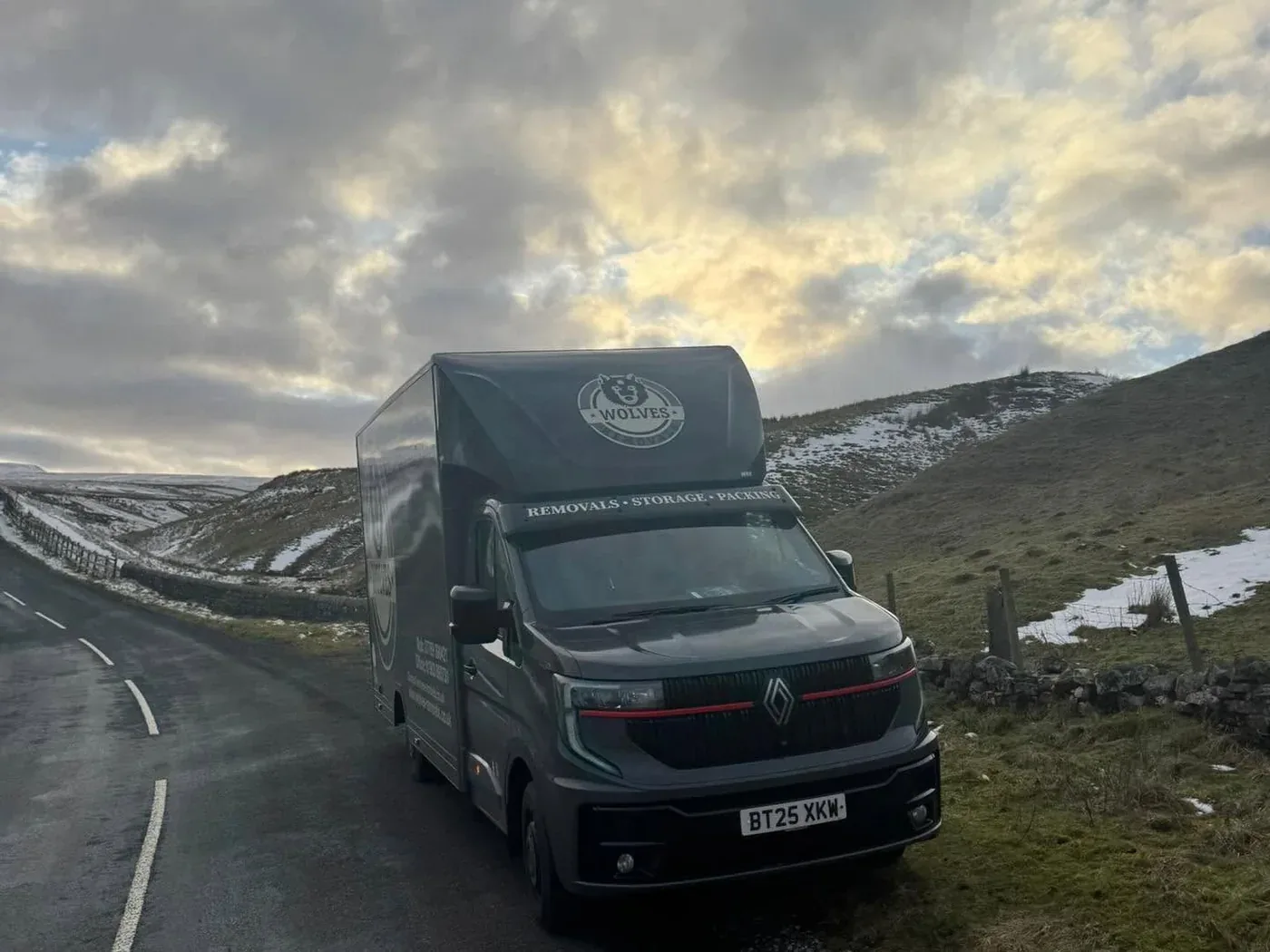
The delivery ran over three days, and the shape of it was set by the distance rather than the volume. Day one loaded out of the store. Day two drove north and started unloading, with the crew staying locally overnight. Day three finished the unload, put the furniture back together, and turned round for Sussex. If you want the general version of what changes on a run like this, that is written up separately.
Where the Council Thinks Winter Lasts Seven Months
Here is the thing we did not know before this job, and now plan around. Durham County Council does not run one winter. It runs two, and the upland one is a month longer at each end. From its Winter Service Policy, dated September 2025 — the version in force for the exact months of this move:
“High Pennines and Low Pennines — From the beginning of October until the end of April in the following year; Central and Coastal — From mid-October until mid-April in the following year; and The core winter period runs from mid-November until mid-February in the following year.”
Durham County Council, Winter Service Policy, §1.4
Read that against this job’s dates. The load went into store on 20 October, three weeks after the High Pennines winter season had already opened. It came off the lorry in Weardale in February, inside the core winter period with about a week of it left to run. The council’s own calendar brackets the whole storage period almost exactly.
The same policy is candid about what does and does not get treated. Priority 1 routes are “45% or 1,738 km of the carriageway network”, which the council notes is one of the highest proportions in the UK. Priority 2 is another 10%. Everything else falls under a sentence worth quoting in full: “The Council undertakes precautionary salting on only a proportion of the adopted highway network and many minor roads are not treated.” On the council’s own published gritting map the dale road is Priority 1. A good many of the lanes running off it are on neither list.
None of which is a warning. It is just the planning. It is why a February delivery to Weardale gets an overnight stop written into the quote in July rather than improvised on the day, and why the crew leaves with the lorry loaded to come off in a particular order. The council itself puts the honest limit on all of it: “there are no guarantees that routes will always be free of snow and ice”. When Storm Arwen came through in November 2021, the A689 from Killhope to the Cumbria boundary was on the county’s impassable list. That was 2021, and nothing like it happened on this job — but it is the reason you plan a winter upland delivery with a day of slack in it.
Two Invoices, Four Months Apart
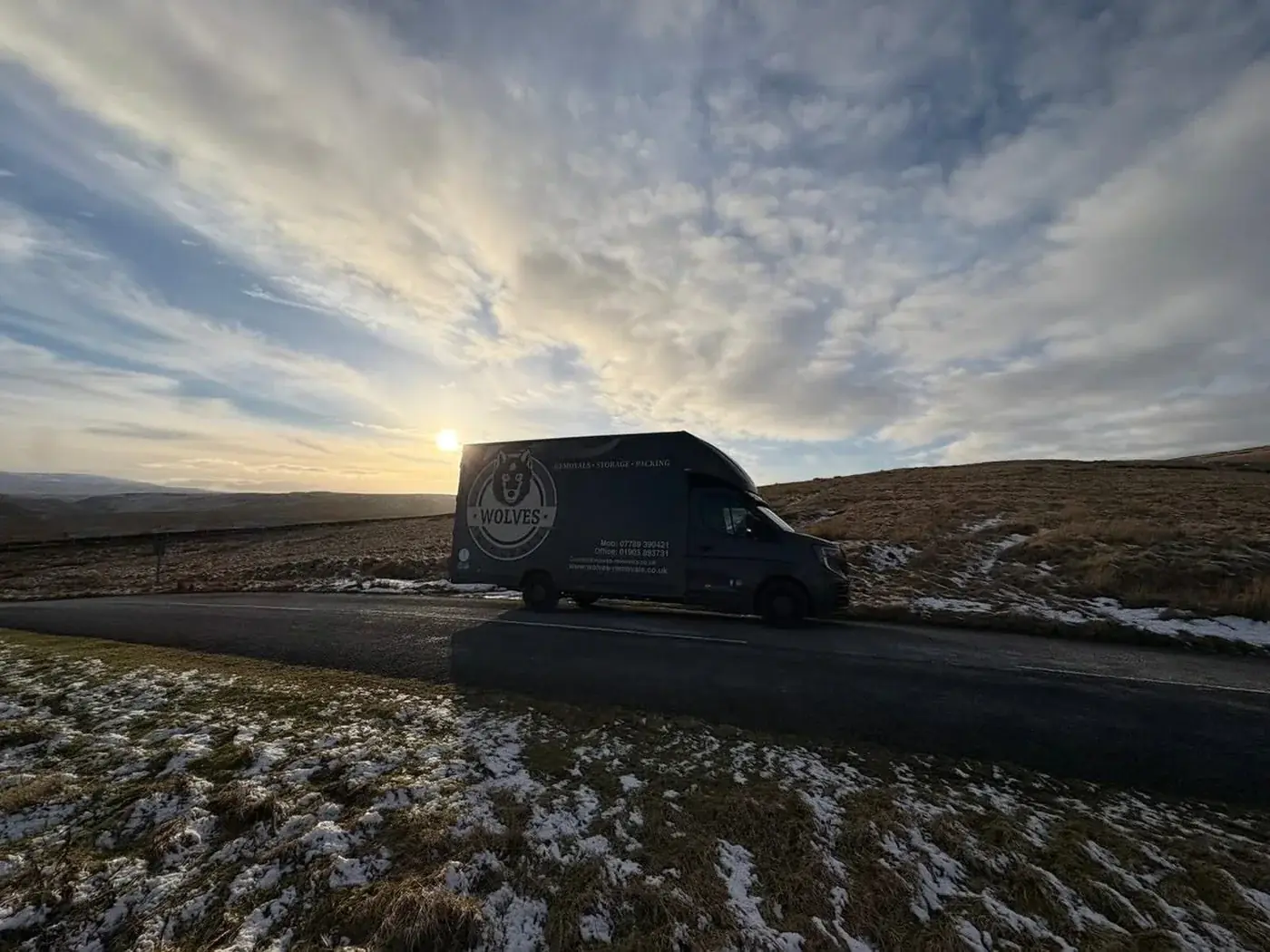
A move like this is not one price, because it is not one job. Wolves Removals prices a job like this on volume, distance, access at both ends, packing, and dismantling and reassembly of furniture. The pack and the run into store came to £2,430 including VAT in October. The move out — three days, a crew away overnight, 321 miles each way and the furniture rebuilt at the far end — came to £5,340 including VAT. The storage in between was billed by the container while the containers were full, and stopped when they emptied.
Splitting it that way is the point rather than an accident of paperwork. You are not paying for a single event; you are paying to hold a house still while something else in your life catches up. If you are somewhere in that gap now, living between two houses is its own small skill and we have written about it.
The crew finished in Weardale on the third afternoon, closed the lorry, and drove three hundred and twenty-one miles back to Sussex with it empty. That is the part that never makes the photographs, and it is most of what a move this shape actually is.
The Wolves Removals Team
Family-run removals · Ashington, West Sussex
We have moved families and businesses across West and East Sussex, Surrey, Hampshire and Kent since 2016, from our Ashington base. We are fully insured, Checkatrade-verified and a LAPADA Approved Service Provider for antiques and fine art. More about us, or read our reviews.
A House That Spent the Winter in a Container — FAQs
Yes, and it is one of the most common reasons people book storage. This job was packed in West Sussex in October, held in our containerised store through the winter, and delivered to County Durham the following February. The same crew handled both ends, so nothing was subbed out or handed over in between.
Your belongings are loaded once into timber containers of 250 cubic feet each, at the storage facility. The containers are then closed and stacked, so what gets moved around the warehouse is the container rather than your furniture. It is charged per container rather than by floor area, and nobody opens it while it is in store.
There is no upper limit in practice. This household’s belongings were in store about fifteen weeks, which is fairly typical when a sale and a purchase are months apart rather than days. Storage is billed while the containers are in use and stops when they are emptied, so a longer gap costs more but does not change how the job works.
A full pack is usually the better answer for a storage move. Cartons packed for a warehouse have to survive months rather than an afternoon, and the labelling has to make sense to you a season later in a different house. Artwork and televisions in particular travel in armoured cases rather than board and blanket.
Yes. This load went 321 miles from our West Sussex store to Upper Weardale in County Durham, over three days: load out, drive north and part unload with the crew staying locally, then finish and return. Distance sets the shape of the job more than volume does once you are past a few hours’ driving.
Not usually, but it changes the planning rather than the price. Daylight is short, upland roads take longer, and an overnight stop stops being optional on a long run. On this delivery the snow was off the carriageway rather than on it, which is the difference between a slow day and a postponed one.