Living in Chichester: Pros, Cons and Best Areas
Chichester’s pros, cons and best areas, from official figures.

Is Chichester a nice place to live? On the official figures it has a lower recorded crime rate than England and Wales and sits in the less deprived half of England’s districts. It has an Outstanding state secondary, the harbour and the South Downs on its doorstep, and Excellent-rated beaches about 10 km away. The catch is cost: the district’s average house price is about £58,300 above the West Sussex average, and homes cost 11.8 times residents’ median full-time pay.
Many official statistics cover Chichester district, which also takes in Midhurst, Selsey and the Witterings, so where we could we give the city (its five wards) separately. Figures are from official or published sources, or our own calculations from official data where stated, checked in October 2026.
Who lives in Chichester?
The city had 29,407 residents at the 2021 Census, about 9.7% more than in 2011, and ONS small-area estimates put it at about 32,100 by mid-2024. The whole district had an estimated 130,224 residents in mid-2025.
Age of residents, 2021 Census (% of population)
| Age band | Chichester city | England | |
|---|---|---|---|
| Under 20 | 20.3% | 23.1% | |
| 20 to 39 | 27.5% | 26.3% | |
| 40 to 64 | 28.6% | 32.1% | |
| 65 and over | 23.6% | 18.4% |
Source: ONS Census 2021. City = its five wards; age bands grouped by us.
The city is younger than its district and has a large student population: 13.2% of residents aged 16 and over were full-time students. More than a third of city households (37.4%) were one person living alone, rising to 54.7% in the city-centre ward.
| 2021 Census unless stated | City | District | England |
|---|---|---|---|
| Median age | about 41* | 48 | 40 |
| Households of one person living alone | 37.4% | 31.1% | 30.1% |
| Residents aged 16+ who are retired | 26.1% | 29.7% | 21.5% |
| Full-time students (aged 16+) | 13.2% | 6.7% | 7.9% |
| Level 4 qualification or above (degree, HND or similar) | 38.5% | 37.2% | 33.9% |
| Households with no car or van | 25.0% | 14.1% | 23.5% |
| Born in the UK | 86.4% | 89.9% | 82.6% |
| Gigabit-capable broadband (premises, Jan 2026) | about 86%* | 67.3% | 88.4% |
Sources: ONS Census 2021 (city = its five wards); Ofcom Connected Nations, January 2026. *Our calculation from official data.
House prices: what does it cost to buy in Chichester?
According to the UK House Price Index, the average house price in Chichester district was £432,078 in July 2026, 1.4% lower than a year earlier: about £58,300 above West Sussex (£373,740) and £138,600 above England (£293,479). The first-time buyer average was £338,948.
Average house price, January 2023 to July 2026
Source: UK House Price Index (HM Land Registry and ONS), monthly averages. July 2026: Chichester district £432,078, West Sussex £373,740, England £293,479.
By type, the district’s July 2026 averages were £686,523 detached, £426,369 semi-detached, £345,877 terraced and £217,163 for a flat. The district has a far higher share of detached homes than the city (35.6% of households against 16.7%). In the city itself, our calculation from Land Registry sales puts the median price paid at £350,000 for July 2025 to June 2026 (385 sales): £415,000 for houses and £231,000 for flats.
Homes are expensive against local pay. In 2025 the district’s median house price was 11.77 times its residents’ median full-time earnings, against 9.67 in West Sussex and 7.64 in England.
The best areas to live in and around Chichester
No area leads on every measure, and neighbourhood names do not follow official boundaries. Using Ordnance Survey’s gazetteer, Summersdale falls in Chichester North ward, Whyke in South and the cathedral close in Central, while Parklands is on the city’s west side. Fishbourne, Bosham and Donnington are separate villages in Harbour Villages ward; Tangmere and Hunston are in North Mundham & Tangmere.
| Ward | Median price paid | Owner-occupied | Aged 0-15 | Level 4+ |
|---|---|---|---|---|
| City: North | £402,500 | 63.2% | 13.5% | 44.7% |
| City: West | £422,500 | 62.3% | 15.3% | 39.7% |
| City: South | £320,000 | 52.2% | 15.9% | 35.0% |
| City: East | £322,500 | 37.7% | 14.5% | 34.5% |
| City: Central | £265,000 | 45.5% | 7.1% | 38.3% |
| Harbour Villages | £515,000 | 74.0% | 17.0% | 44.1% |
| Lavant | £517,500† | 69.5% | 15.5% | 42.2% |
| The Witterings | £485,000 | 72.5% | 14.7% | 34.1% |
| Goodwood | £475,000 | 57.3% | 16.1% | 39.1% |
| North Mundham & Tangmere | £360,000 | 59.9% | 19.6% | 33.9% |
Prices: our calculation of the median price paid from HM Land Registry standard sales, July 2025 to June 2026 (38 to 141 sales per ward; not adjusted for the type of home). †Lavant: July 2024 to June 2026, as it had too few recent sales. Homes, ages and Level 4 qualifications (degree, HND or similar): ONS Census 2021.
Chichester North and West: the most owner-occupiers in the city and the highest share of Level 4 qualifications; each has one neighbourhood in England’s least deprived 10%, and Bishop Luffa is in West ward.
Chichester Central: two-thirds of households in flats (66.3%), with the station, and the fewest children.
In short: for families, North Mundham & Tangmere has the most children and the lowest prices outside the city; for life without a car, Central has the station; for the lowest prices in the city, Central, then South and East; and for harbour and village life, Harbour Villages, with stations at Fishbourne and Bosham.
Around the city: Harbour Villages has the highest owner-occupation and the highest median price (Lavant had too few recent sales to compare); North Mundham & Tangmere has the most children (19.6% under 16) and the lowest prices of the surrounding wards. None of the 37 neighbourhoods in these ten wards is in England’s most deprived 20%.
Renting, council tax and pay
ONS figures put the district’s average private rent at £1,333 a month in August 2026, up 2.9% on a year earlier; two-bedroom homes averaged £1,222 and three-bedroom £1,507.
Average private rent per month, August 2026
| Area | Value | |
|---|---|---|
| England | £1,459 | |
| South East | £1,426 | |
| Portsmouth | £1,368 | |
| Chichester | £1,333 | |
| Worthing | £1,297 | |
| Arun | £1,231 | |
| Havant | £1,151 |
Source: ONS Price Index of Private Rents, August 2026. Chichester = the district.
A Band D home in the city pays £2,492.15 council tax for 2026/27, the seventh highest of the district’s 67 parish areas. The city council’s own part of the bill rose 57.42%, from £77.55 to £122.08 (£44.53 a year at Band D); the district’s part rose 2.99%, the county’s 4.99% and the police’s 5.62%. Bands run from £1,661.44 (A) to £4,984.30 (H).
Median full-time pay for district residents was £35,264 in 2025, against £39,243 in England, though this is a survey estimate with a margin of error. At the 2021 Census, 52.7% of city households owned their home and 2.0% were in shared ownership; 23.6% rented privately and 21.6% rented socially. A third (32.5%) lived in flats, double the district share.
How safe is Chichester? Crime in context
ONS figures show police recorded 60.5 crimes per 1,000 residents in Chichester district in the year to March 2026, excluding fraud: well below England and Wales (84.7) and the Sussex Police area (74.0), though the fourth highest of West Sussex’s seven districts, after Crawley, Worthing and Arun. Recorded crime counts only offences reported to and recorded by the police, so it is a guide, not a direct measure of safety.
Recorded crimes per 1,000 residents, years to March
| Year to March | Chichester | England and Wales | |
|---|---|---|---|
| 2021 | 53.3 | 77.6 | |
| 2022 | 64.2 | 89.3 | |
| 2023 | 65.7 | 93.6 | |
| 2024 | 64.5 | 89.7 | |
| 2025 | 62.8 | 87.2 | |
| 2026 | 60.5 | 84.7 |
Source: ONS police recorded crime tables, years ending March 2021 to 2026. Excludes fraud. The year to March 2021 covers the Covid lockdowns.
Recorded crime fell 1.5% on the year before, to 7,799 offences. Per resident, the district recorded less violence, theft, shoplifting, vehicle crime and residential burglary than England and Wales.
Crime by type per 1,000 residents, year to March 2026
| Crime type | Chichester | England and Wales | |
|---|---|---|---|
| Violence | 21.4 | 31.8 | |
| All theft | 18.6 | 26.5 | |
| Shoplifting | 7.5 | 8.2 | |
| Vehicle crime | 2.4 | 5.1 | |
| Home burglary | 1.53 | 2.49 |
Source: ONS police recorded crime tables, year ending March 2026. All theft includes shoplifting, vehicle offences and burglary.
Police street-level data for September 2025 to August 2026 shows recorded crime in the city is concentrated in the city centre and the east of the city, where shoplifting, violence and sexual offences, and anti-social behaviour make up much of the total. These are counts, not rates: busy areas draw shoppers, workers and visitors, so higher counts do not mean residents there are at higher risk.
Is Chichester posh? Wealth and deprivation
Partly. Harbour Villages, just west of the city, had a median price paid of £515,000 over the last year, while the city itself is more mixed. In the English Indices of Deprivation 2025, Chichester district ranks 177th most deprived of 296 districts, in the less deprived half; none of its 75 neighbourhood areas is in England’s most deprived 20%, and five are in the least deprived 10%. The main exception is access to housing and services (distance and affordability). There the district ranks 55th, and about a quarter of its neighbourhoods are in England’s most deprived 10%.
The city is mixed: its 17 neighbourhood areas include the district’s four most deprived and two in England’s least deprived 10%. ONS model-based estimates put average household income in the two areas wholly inside the city at about £50,600 and £54,000 in 2022-23, close to the middle of all neighbourhood areas in England and Wales (about £52,700), with wide margins of error. After housing costs, the first is the lowest in the district.
Getting around: trains, the A27 and walking
Commuting to London is possible: direct trains reach Victoria in about 1h 36m, twice an hour off-peak and in the morning peak. Chichester station, the district’s busiest (about 2.69 million entries and exits in 2024-25), has step-free access to all platforms. Fishbourne, Bosham, Nutbourne and Southbourne stations serve the villages to the west.
| From Chichester to | Fastest journey | Direct trains an hour (off-peak) |
|---|---|---|
| London Victoria | about 1h 36m | 2 |
| London Waterloo | 1h 43m, one change at Havant | None |
| Gatwick Airport | about 1 hour | usually 2 |
| Brighton | 51 minutes | 4 |
| Worthing | 27 minutes | 4 |
| Portsmouth & Southsea | 24 minutes | 3 |
| Southampton Central | about 58 minutes | 2 |
Source: National Rail journey planner, timetabled weekdays in November 2026, checked October 2026. Times may change at the 13 December 2026 timetable change.
Congestion on the A27 bypass is a long-standing problem. The adopted Local Plan says congestion around its junctions is a major concern for residents and businesses and spills onto local roads, and costs junction improvements at about £90 to £135 million. A national bypass upgrade was pushed back in 2023 to the 2030-35 road period with no guaranteed funding, and the 2026-31 road strategy published in March 2026 does not include it.
At the 2021 Census, taken during a lockdown, 18.7% of employed city residents walked to work and 5.1% cycled, about double the district rates. Traffic fumes put part of St Pancras in an Air Quality Management Area, but in 2024 every monitoring site in the district met the annual objective for nitrogen dioxide, St Pancras included (33.7 against 40 micrograms per cubic metre).
Schools and the university
The city’s state schools are rated well: of its two state secondaries, Bishop Luffa is Outstanding and Chichester High Good, with an Outstanding sixth form, and seven of its eight mainstream primary-phase schools were last judged or confirmed Good. The latest Ofsted outcomes for the secondaries, and the all-through free school just south of the city:
- Bishop Luffa School (Church of England, 11-18): Outstanding in every area, including its sixth form (late 2022). It is over its listed capacity, with 1,600 pupils against 1,520.
- Chichester High School (11-18): Good for each key judgement and Outstanding for its sixth form (November 2024); no overall grade is now given.
- Chichester Free School (4-19): Good, with personal development Outstanding (May 2024).
“Behaviour is exemplary. Any rare acts of unkindness, bullying or inappropriate language are tackled immediately by caring staff.”
Ofsted, Bishop Luffa School report (inspected November–December 2022)
Ofsted set Bishop Luffa no improvement points. For Chichester High it wants more consistent teaching of the curriculum, more pupils taking the EBacc subject mix including a language, and better relationships with parents; it said some Chichester Free School pupils do not achieve as well as they could in a small number of subjects.
Seven of the eight primary-phase schools were last judged or confirmed Good, and none is currently graded Outstanding, Requires improvement or Inadequate. Portfield Primary Academy’s January 2026 report card graded four areas ‘needs attention’, and an ungraded inspection said St Joseph’s Infant School’s grade ‘might not be as high’ if a graded inspection were carried out now.
Chichester city’s 8 mainstream state primary-phase schools: latest Ofsted outcome
| Latest outcome | Value | |
|---|---|---|
| Good at a graded inspection | 3 | |
| Good, confirmed at an ungraded inspection | 4 | |
| New-style report card | 1 |
Source: Ofsted and the Department for Education school register, checked October 2026. One graded Good is the predecessor school.
The University of Chichester had 6,375 higher education students in 2024/25. Chichester College is inspected as part of a seven-college group, judged Good in February 2025.
Health: St Richard’s Hospital and GPs
The Care Quality Commission rates St Richard’s Hospital “Requires improvement” overall (as at October 2026): Requires improvement for safe, responsive and well-led, Good for effective and Outstanding for caring. That rating combines service ratings from 2016 to 2026; it fell to Requires improvement after a 2023 inspection rated surgery Inadequate for responsiveness. A maternity assessment published in July 2026 found women “did not receive a midwifery review within 15 minutes of arrival”.
The city’s four GP practices are all rated Good, though their overall ratings were published between 2017 and 2020. In the 2026 GP Patient Survey, 69% to 88% of their patients described their overall experience as good (England 77%).
The harbour, the Downs and the beaches
Chichester Harbour, west of the city, was designated an Area of Outstanding Natural Beauty in 1964 and is now a National Landscape of about 73 square kilometres. Its conservancy says “Harbour waters are heavily impacted by human activity”, with storm overflows in heavy rain and summer weed from farm nitrates; the harbour is not a designated bathing water.
About 69% of the district’s land lies in the South Downs National Park (our measurement from official boundaries), though the city itself is outside it. Kingley Vale National Nature Reserve is about 5 km from the station:
“is known for its twisted ancient yews, including a grove of veteran trees, some over 500 years old”
Natural England, on Kingley Vale National Nature Reserve
The Centurion Way, a 9 km path along the old railway line, runs from the city through Lavant to West Dean. On the coast, the district’s three official bathing waters were all rated Excellent for 2025:
| Bathing water | 2025 rating | From the Environment Agency’s profile |
|---|---|---|
| West Wittering | Excellent | Gently shelving sandy beach; a storm overflow 3 km to the east |
| Bracklesham Bay | Excellent | Shingle at high tide, sand at low water; a storm overflow enters a culverted stream just inland, and water quality can dip near outfalls after rain |
| Selsey | Excellent | Groyned shingle beach; a storm overflow to the south, not known to affect compliance |
Sources: Environment Agency bathing water classifications for 2025 and 2026 bathing water profiles.
West Wittering, a privately run beach, held the district’s only Blue Flag in 2025. The nearest bathing waters to the city are in Arun district: Pagham (Good, about 8 km) and Bognor Regis (Aldwick) (Poor, about 8.7 km), where the Environment Agency notes heavy rain affects water quality. At Bognor Regis, the nearest Met Office climate station, the 1991-2020 averages are 734 mm of rain and 1,919 hours of sunshine a year.
The city: cathedral, Roman walls and culture
Chichester Cathedral is Grade I listed; Historic England dates Bishop Ralph de Luffa’s pillars and arches of the nave and choir to 1091-1123, and notes the tower and spire were rebuilt after they fell in 1861. The city walls are both a scheduled monument and Grade I listed:
“Erected probably before end of C2 AD. Bastions added by mid C4 AD. Traces of Roman work remain both at base of existing wall and in earth ramparts.”
Historic England, list entry for the city walls
The Festival Theatre, which held its first season in 1962, is Grade II* listed and run by a registered charity. Pallant House Gallery, also a charity, opened in 1982, and the council’s Novium Museum, with free general admission, is built over the remains of the Roman bath house. The council lists six city parks, including Priory Park inside the walls; none was on the 2026 Green Flag Award list for the South East.
The River Lavant normally flows only in winter and runs through two culverts under the city. The Environment Agency warns: “In extreme conditions, when the capacity of the culverts is exceeded, serious flooding can occur”, and runs a flood warning area for the river in the city centre.
Jobs and work in Chichester
About 63,000 employee jobs were based in the district in 2024, according to provisional ONS figures, and there were 1.06 jobs for every resident aged 16 to 64, against 0.86 in England. Health and social care is the biggest sector, with 15.9% of employee jobs; manufacturing, education, retail and hospitality each account for roughly 9.5%.
Share of employee jobs, selected sectors, 2024 (%)
| Sector | Chichester | England | |
|---|---|---|---|
| Health and care | 15.9% | 13.8% | |
| Property | 3.6% | 1.9% | |
| Agriculture | 3.2% | 0.5% | |
| Transport, storage | 1.6% | 5.1% | |
| Finance | 1.4% | 3.4% |
Source: ONS Business Register and Employment Survey, provisional 2024. Chichester = jobs based in the district; agriculture includes forestry and fishing.
In August 2026, 2,365 district residents were claiming unemployment-related benefits, equal to 3.2% of residents aged 16 to 64: close to West Sussex (3.1%) and below England (4.0%).
What is changing in and around the city?
The Chichester Local Plan 2021-2039, adopted in August 2025, requires at least 11,484 homes, stepped from 575 a year to 701 a year from 2030/31. The council had proposed about 90% of assessed need, citing the A27; the planning inspectors were not persuaded and required the full figure. Official figures show 620 net additional homes in 2024-25 and 3,629 over the five years to then.
Land West of Chichester is allocated for at least 1,600 homes on the city’s western edge, and Land West of Tangmere for 1,300. The council calls the Southern Gateway, around the bus and rail stations, “the biggest regeneration project that the city has seen for decades”, though we found no construction timetable. Work on a replacement Local Plan 2045 has begun.
Moving to Chichester: parking and permits
Chichester has 13 controlled parking zones. A first resident permit costs £68 a year in most full-day zones, £49 in the part-day zones and £209 in the City Centre zone, and some properties, including multiple-occupancy developments, cannot get permits. You apply online with your council tax account number, proof of residency and proof the vehicle is yours at that address.
To keep kerb space free for a removal van, apply for a parking bay suspension at least six working days ahead: £45 plus £10 a day for each bay of about 10 metres inside the zones, or £45 per bay outside them. On yellow lines a van may load only where no loading ban is shown and the loading is continuous; there is no right to park. Our guide to moving with us in Chichester explains how we plan access.
The Wolves Removals Team
Family-run removals · Ashington, West Sussex
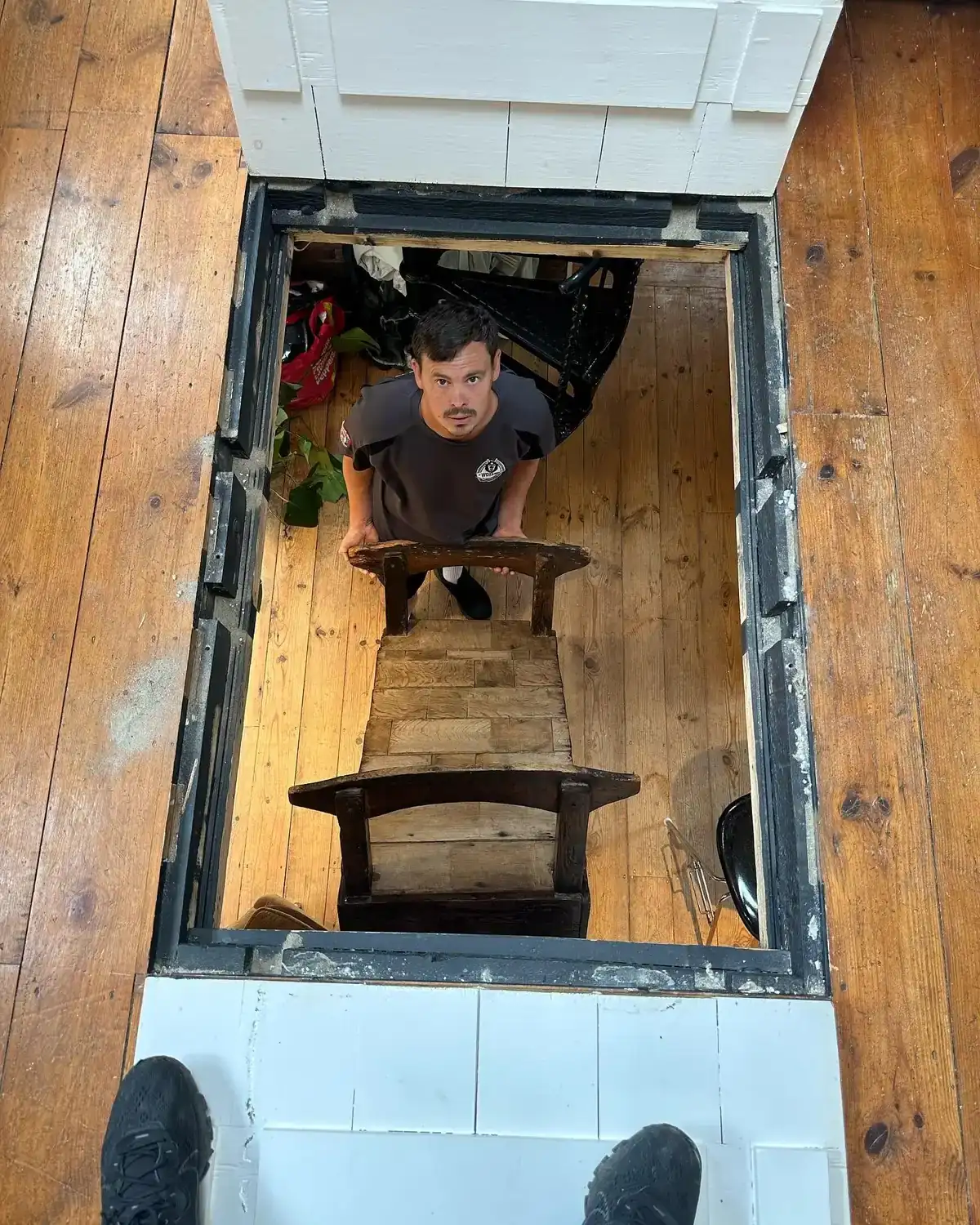
We have moved families and businesses across West and East Sussex, Surrey, Hampshire and Kent since 2016, from our Ashington base. We are fully insured, Checkatrade-verified and a LAPADA Approved Service Provider for antiques and fine art. More about us, or read our reviews.
Living in Chichester: Pros, Cons and Best Areas — FAQs
On the official figures Chichester scores well on several measures: recorded crime well below the England and Wales rate, no neighbourhood in England’s most deprived 20%, an Outstanding state secondary and Excellent-rated beaches nearby. The main drawbacks are cost, with homes at 11.8 times local full-time pay, and congestion on the A27 bypass.
For buyers, yes. The average house price in Chichester district was £432,078 in July 2026, about £58,300 above the West Sussex average; in the city itself, our calculation of the median price paid was £350,000. The district’s average private rent, £1,333 a month, is below the South East (£1,426) and England (£1,459) averages.
Chichester district recorded 60.5 crimes per 1,000 residents in the year to March 2026, excluding fraud, well below England and Wales (84.7) and the Sussex Police area (74.0). In the city, recorded crime is concentrated in the city centre and the east; these are counts, not rates, and busy areas draw shoppers, workers and visitors.