Moving Long Distance: What Changes and What Does Not
A long distance move from Sussex is not simply a bigger version of a local one.

The packing barely changes; what changes is the shape of the day, what happens if a completion date slips, and whether your things need somewhere to be in between. Here is what actually differs, and the four questions worth putting to any long distance removal company before you book.
Distance does not change how your things are packed. It changes timing, access and what happens in the gap between the two houses.
The three things that decide whether a long distance move goes smoothly are whether the load can be done in one day, whether completion dates line up at both ends, and whether anything needs to be stored in between.
What Actually Changes Over Distance
People expect a long distance move to be a bigger version of a local one. In practice the packing is much the same; what changes is the shape of the day and what happens if anything slips.
On a local move, a delay is an inconvenience. On a move of three or four hundred miles, a delay means a vehicle and a crew are somewhere they cannot usefully be, and the recovery options are limited. That is why long distance removals are planned around the timings rather than around the volume.
The One-Day Question
The first thing worth establishing is whether the job is a one-day move at all. That is decided by drivers hours and by the loading time at each end, not just by the mileage. A full house that takes five hours to load, followed by a long drive, will not be unloaded the same evening.
When it cannot be done in a day, there are two honest answers: the load stays securely on the vehicle overnight and is delivered the following morning, or it goes into store and is delivered on an agreed date. Neither is a problem. What causes problems is a firm implying it can all happen in one day when it cannot.
| Factor | Why it matters | What to tell your remover |
|---|---|---|
| Loading time | Sets whether same-day delivery is possible at all | Rough volume, floors, parking, lift access |
| Completion dates | Two chains rarely line up perfectly | Your dates, and how firm they are |
| Access at the far end | A lorry that cannot get close changes the crew and the time | Road width, restrictions, distance from door |
| Storage gap | Decides whether the load is handled once or twice | How many days between the two houses |
When the Dates Do Not Line Up
This is the most common reason a long distance move becomes complicated, and it has nothing to do with the distance.
Completion on the sale and completion on the purchase are frequently days or weeks apart, which leaves the contents of a house needing somewhere to be. Wolves Removals
The practical answer is usually storage between the two moves. Everything is loaded, stored, and delivered on the agreed date, which also removes the pressure of trying to make two chains meet on a single afternoon. Our storage is set up for exactly this gap.
Moving Abroad Rather Than Across the Country
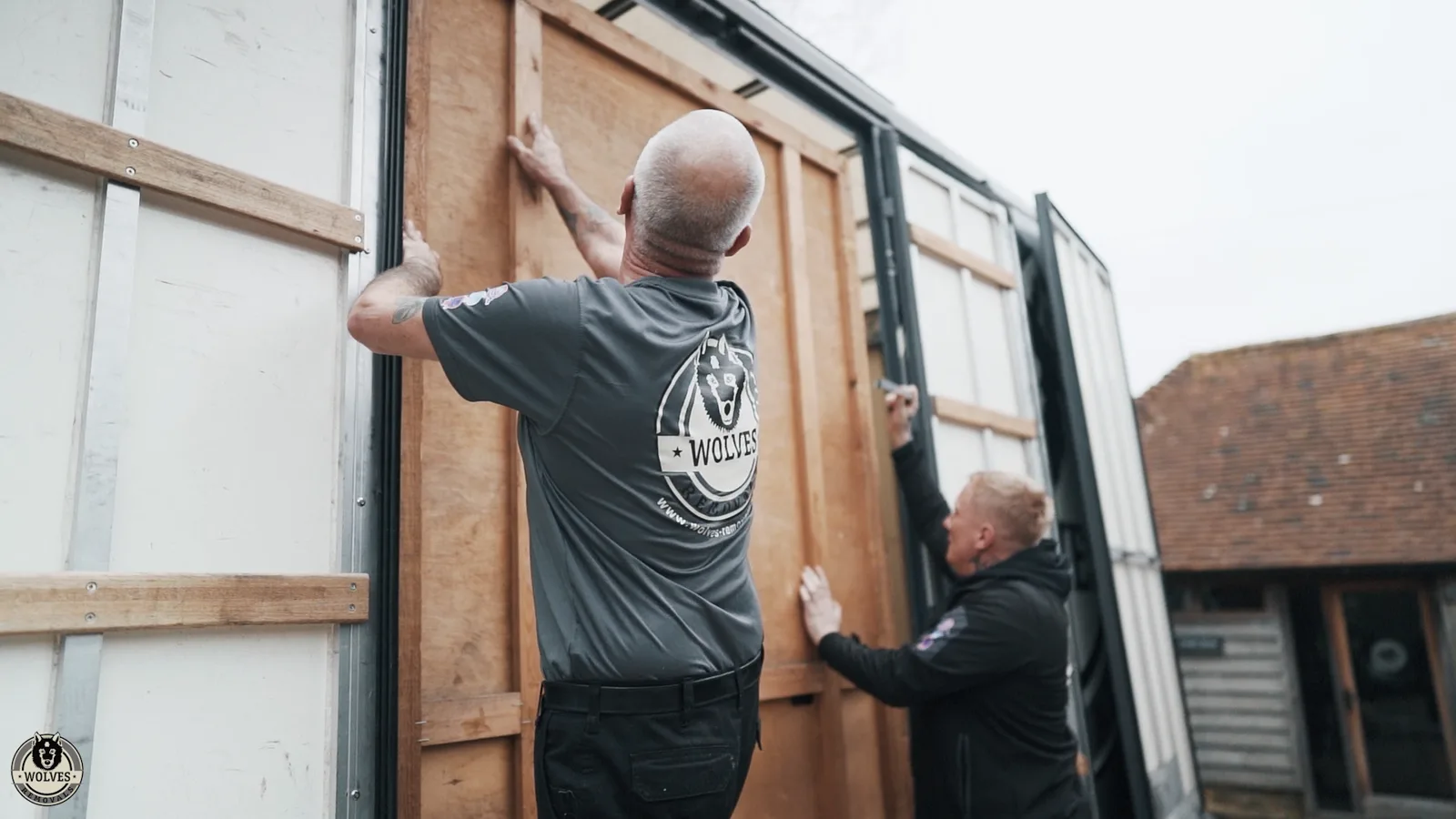
An overseas move adds paperwork and a different packing standard rather than a different principle. Anything travelling in a container or by sea is subject to movement, humidity and handling that a road move never involves, so items are packed to a higher specification and fragile or valuable pieces are usually crated rather than blanket wrapped.
Our international removals and European removals cover that side, and where individual pieces need building around, export packing is the part that matters most.
What to Ask Before You Book
Long distance removal companies vary more than local ones, because the failure modes are more expensive. Four questions separate them: is this a one-day move or two, is my load being moved on its own or shared with other consignments, who is my point of contact while the vehicle is in transit, and what happens if my completion date moves?
That last one matters more than people expect. Dates move. What you are really buying on a long distance move is how well a firm copes when they do.
We are fully insured, with goods-in-transit and public liability cover in place, and optional full damage insurance is available for an extra 10% of your invoice total. It is worth asking any long distance removal company to confirm their position before you book.

What to Keep With You
On a local move, something left in the van is an inconvenience you fix that evening. Over a long distance it can mean days without it, so the box that travels in your own car matters more than people expect.
That means documents, medication, chargers, valuables, anything irreplaceable, and enough to get through the first night without opening a box: bedding, towels, a kettle, and whatever the children or the dog need. If the load arrives the following day, that list is the difference between a manageable evening and a miserable one.
It is worth photographing the back of your television and any other cabling before it comes apart, and keeping fixings from dismantled furniture in a labelled bag that travels with you rather than loose in the van.
What Does Not Change
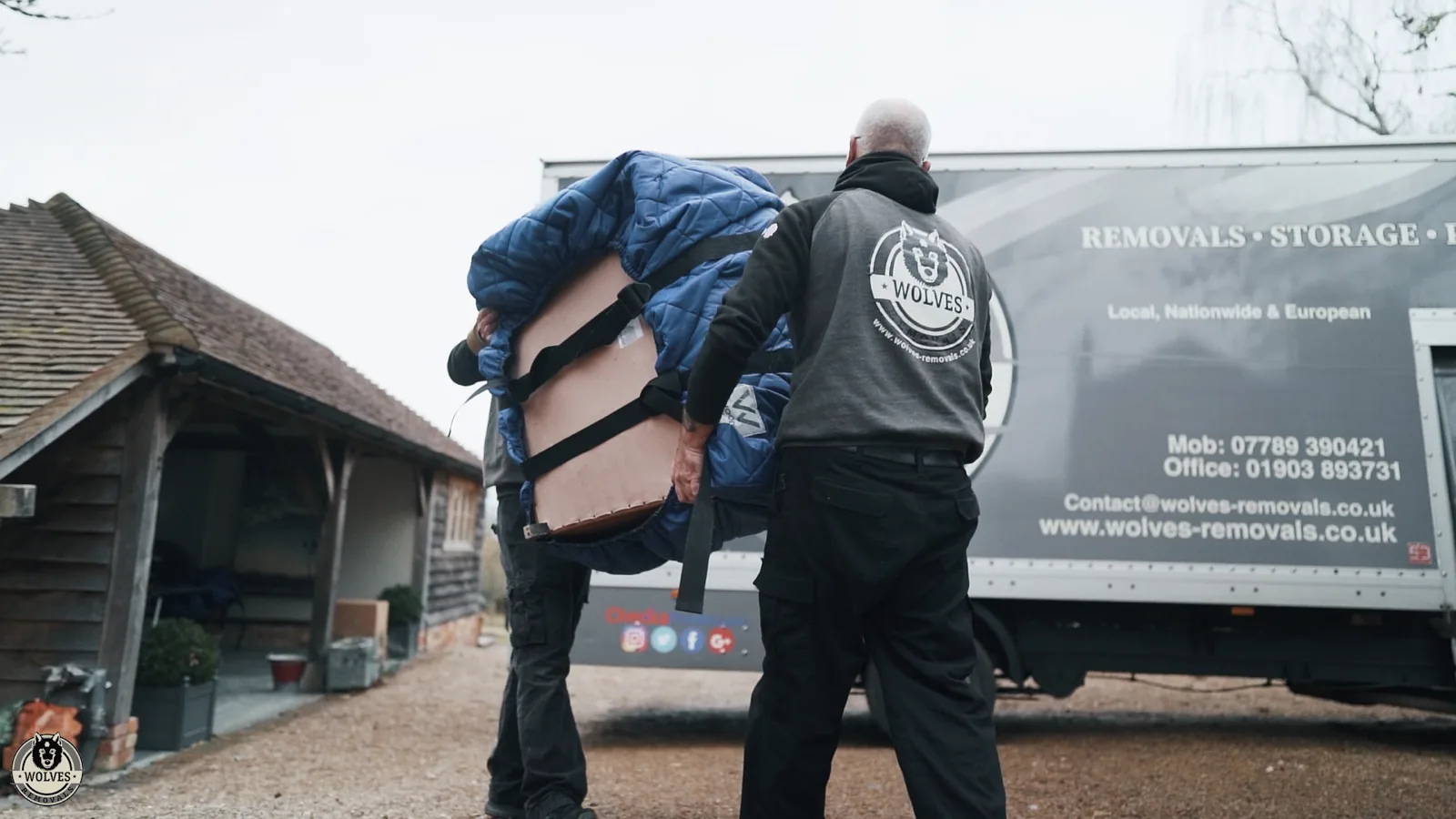
The packing standards should be identical whether you are going ten miles or four hundred. Furniture is still dismantled by hand rather than forced, polished surfaces still travel in blankets rather than plastic, and anything fragile still needs the same protection it would have needed locally. If anything, a long journey is the argument for doing it properly rather than the excuse for cutting corners, because the load spends far longer in motion.
The Wolves Removals Team
Family-run removals · Ashington, West Sussex
We have moved families and businesses across West and East Sussex, Surrey, Hampshire and Kent since 2016, from our Ashington base. We are fully insured, Checkatrade-verified and a LAPADA Approved Service Provider for antiques and fine art. More about us, or read our reviews.
Moving Long Distance: What Changes and What Does Not — FAQs
Sometimes, and it depends on loading time and drivers hours rather than mileage alone. A full house that takes five hours to load followed by a long drive will not be unloaded the same evening. The honest alternatives are delivery the following morning, or storage and delivery on an agreed date.
The contents go into storage between the two moves. Everything is loaded, stored securely and delivered on the date you agree, which also removes the pressure of forcing two property chains to meet on the same afternoon. It is the most common reason a long distance move needs storage at all.
The standards should be the same, but a long journey is more time in motion, so anything marginal gets more protection rather than less. Moves involving a container or sea freight are packed to a higher specification again, and fragile or valuable items are usually crated instead of blanket wrapped.
Ask, because it varies between firms and it changes your timings. A dedicated load goes directly; a shared or part load may wait for other consignments going the same way. Neither is wrong, but only one of them gives you a fixed delivery date.
Yes. Long distance removals from Sussex are a regular part of what we do, alongside European and international moves. The planning is the same either way: establish whether it is a one-day job, confirm access at both ends, and agree what happens if a date moves.
Whether it is a one-day move or two, whether your load travels alone or shared, who your point of contact is while the vehicle is in transit, and what happens if your completion date changes. That last answer tells you the most, because dates move on most chains.