When Does an Item Actually Need a Bespoke Crate?
Crating is one of the few things in removals where the expensive option is genuinely the right one sometimes and genuinely unnecessary the rest of the time.

The difference is not how valuable something is, it is whether it can survive being leaned against. Here is what a crate actually does, which items justify one, and what sits in between wrapping and a full timber box.
A crate is not extra care, it is a different kind of protection. Blankets stop things rubbing. A crate stops anything touching the item at all, and stops the item taking any load.
It is worth it when an item cannot take weight against its side, when its shape leaves it unstable in a loaded vehicle, or when it is going into a container where it will be stacked around.
What a Crate Actually Does
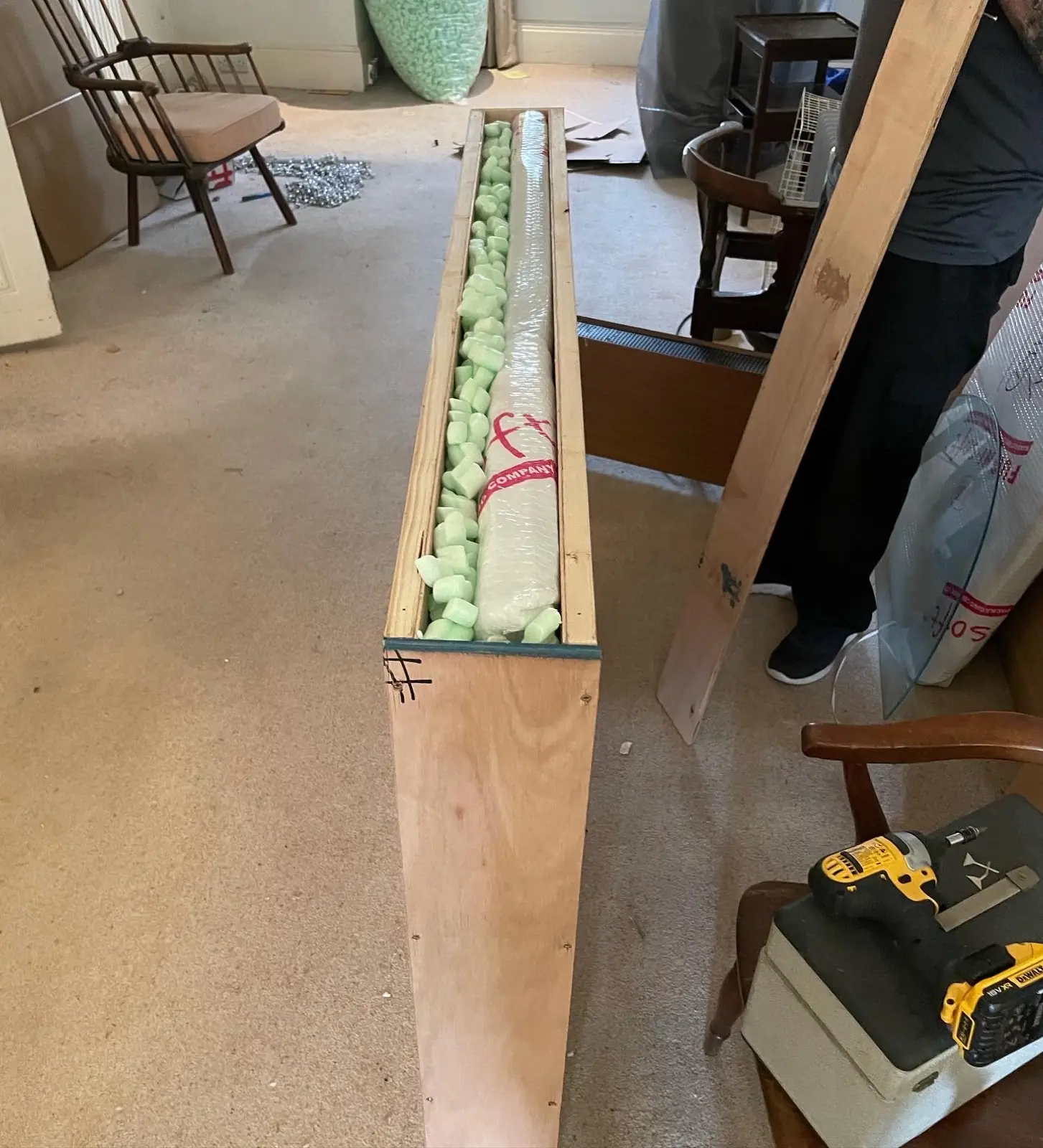
Wrapping and crating solve different problems, and the distinction is worth understanding before paying for either. Blanket wrapping protects a surface from rubbing and knocks while the item is held in place by straps and by the things around it. A crate takes the item out of that system entirely: nothing rests against it, nothing is stacked on it, and the load path goes through the timber frame instead of through the object.
That matters for anything where the surface is the value, or where the shape means it cannot be strapped safely without pressing on something delicate.
When a Crate Is Justified
Most furniture does not need one. The cases where it earns its cost are fairly specific, and a firm that recommends crating everything is not being careful, it is being lazy about the survey.
| Item | Crate? | Why |
|---|---|---|
| Gilded frames and mirrors | Usually yes | The surface cannot be touched at all, and the shape will not sit flat |
| Marble and stone tops | Often | Must travel on edge, fully supported, with nothing leaning on it |
| Marquetry and inlaid tops | Often | Point loading risks lifting or cracking the veneer layer, which is exactly what a strap does at its pressure point |
| Sculpture and irregular shapes | Yes | Nothing about the shape lets it be strapped or stacked safely |
| Solid oak chest or plain table | No | Robust, flat, and blanket wrapping does the job properly |
| Anything going into a container | Usually | It will be stacked around, and you will not be there to see how |
How One Is Actually Built
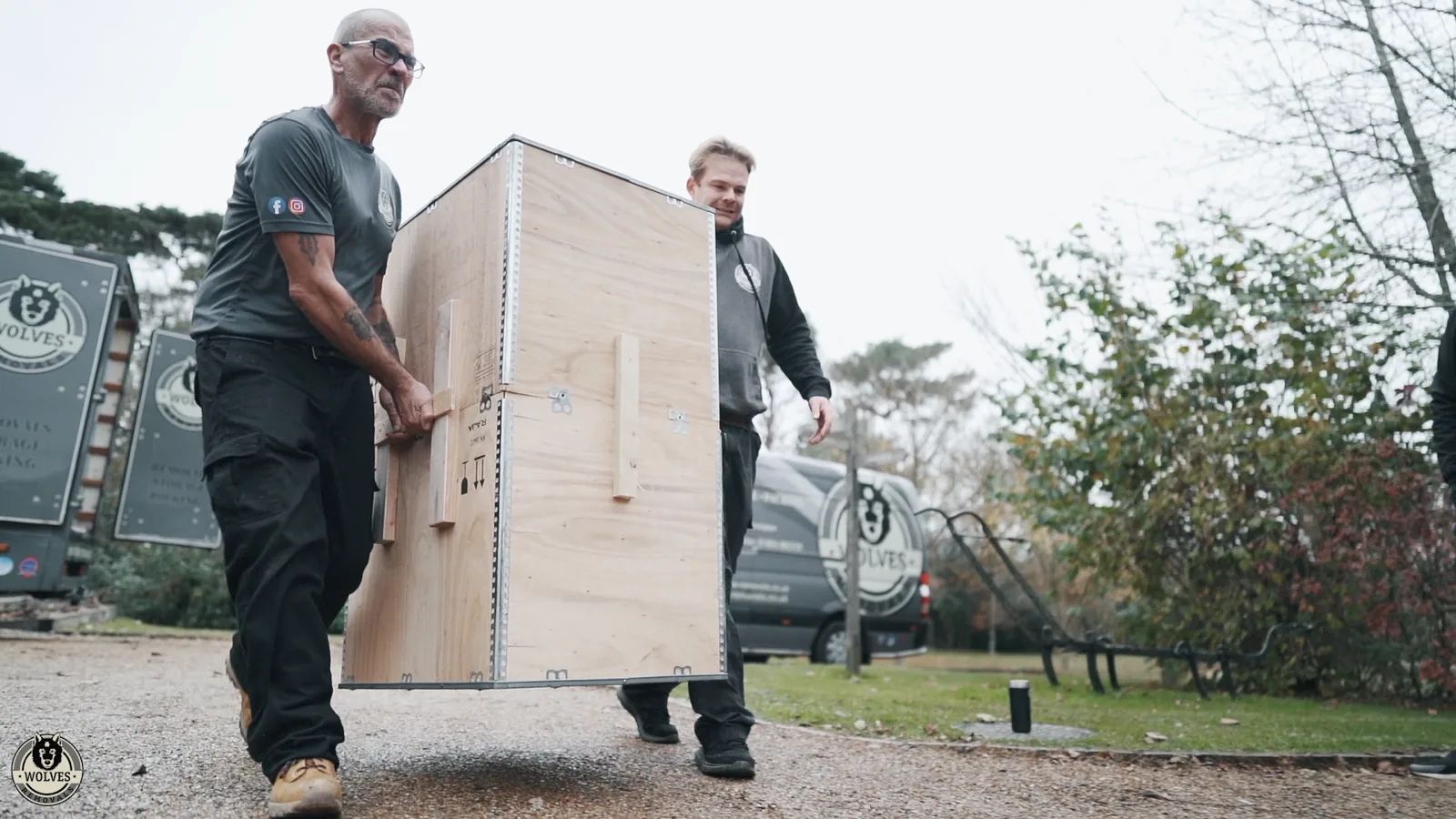
A bespoke crate is measured to the item rather than chosen from a shelf. The piece is measured, a timber frame is built around those dimensions with clearance for the internal padding, and the interior is lined so the item sits suspended rather than resting on bare wood.
Fixings go into the frame, not through anything near the object, and the lid is designed to come off without tools passing over the contents. Wolves Removals
For anything leaving the country the timber itself matters as well as the build, because packaging made of solid wood has to meet ISPM 15, the international standard requiring heat treatment and certification, before it can cross a border. That is a question to ask specifically if the crate is going overseas.
Crating Versus Simply Packing Well
There is a middle ground that gets overlooked. Plenty of items that will not survive being stacked against do not need a full crate either: a made-to-size corner-protected case, edge boarding, or a purpose-built pallet base with a soft-wrapped body is often the right answer for a single journey by road.
The question to put to your remover is not whether crating is available, but which of your items they think needs it and why those. A specific answer naming pieces is a sign they have looked. A blanket answer either way is a sign they have not.
What Crating Costs You Besides Money
A crate has two costs that are easy to overlook when comparing quotes. The first is time: it has to be measured and built before moving day, so it is decided at the survey rather than added on the morning. The second is space. A crated item takes up considerably more room in a vehicle or container than the same piece blanket wrapped, which can change the size of the van or the number of trips.
Neither is a reason to avoid crating. They are reasons to decide early, because a crate agreed well in advance is straightforward and one requested on the day is not possible at all.
How to Tell Whether a Firm Really Builds Them
Ask where the crate is made and how long it takes. A firm that builds in-house will talk about measuring, timber and lead time without hesitating. One that subcontracts may still do a perfectly good job, but the lead time is longer and the survey needs to happen sooner.
Ask too what happens to the crate afterwards. For a one-way domestic move it is usually dismantled and taken away.
For a piece that will move again, or anything going into long-term storage, keeping the crate is often worth more than reclaiming the space. Wolves Removals
A crate is the first line of protection rather than a substitute for cover. We are fully insured, with goods-in-transit and public liability cover in place, and optional full damage insurance is available for an extra 10% of your invoice total.
Where This Sits With Everything Else
Our custom crate service builds to the item, and it usually sits alongside rather than instead of other protection: fragile packing for the things that need wrapping rather than boxing, and export packing where a move is leaving the country. Where the contents are antiques or fine art, it runs as part of our specialised antiques moving work, and the reasons a piece needs a box around it are covered in more detail in our guide to what actually damages antique furniture.
The Wolves Removals Team
Family-run removals · Ashington, West Sussex
We have moved families and businesses across West and East Sussex, Surrey, Hampshire and Kent since 2016, from our Ashington base. We are fully insured, Checkatrade-verified and a LAPADA Approved Service Provider for antiques and fine art. More about us, or read our reviews.
When Does an Item Actually Need a Bespoke Crate? — FAQs
Wrapping protects a surface from rubbing while the item is held by straps and by the things around it. A crate removes the item from that system: nothing rests against it and nothing is stacked on it, because the load goes through the timber frame instead of through the object.
No, and a firm that says it does has not looked properly. Robust, flat pieces travel perfectly well blanket wrapped. Crating earns its cost on gilded frames, marble tops, marquetry, irregular shapes and anything going into a container where it will be stacked around.
The item is measured, a timber frame is built to those dimensions with clearance for internal padding, and the inside is lined so the piece sits suspended rather than resting on bare wood. Fixings go into the frame rather than through anything near the object, and the lid comes off without tools passing over the contents.
Usually not. Crating protects against being stacked around and against point loading over time, which is a container and long-haul problem more than a ten-mile one. The exception is an item whose shape means it cannot be strapped safely at all, which is true at any distance.
Yes. Packaging made of solid wood has to meet ISPM 15, the international treatment and certification standard, before it crosses a border, so it is worth asking specifically whether a crate is built to that standard if the move is leaving the country.
Yes, and it is often the right answer. A made-to-size corner-protected case, edge boarding, or a purpose-built pallet base with a soft-wrapped body will protect a piece properly for a single road journey without the cost of a full bespoke crate.