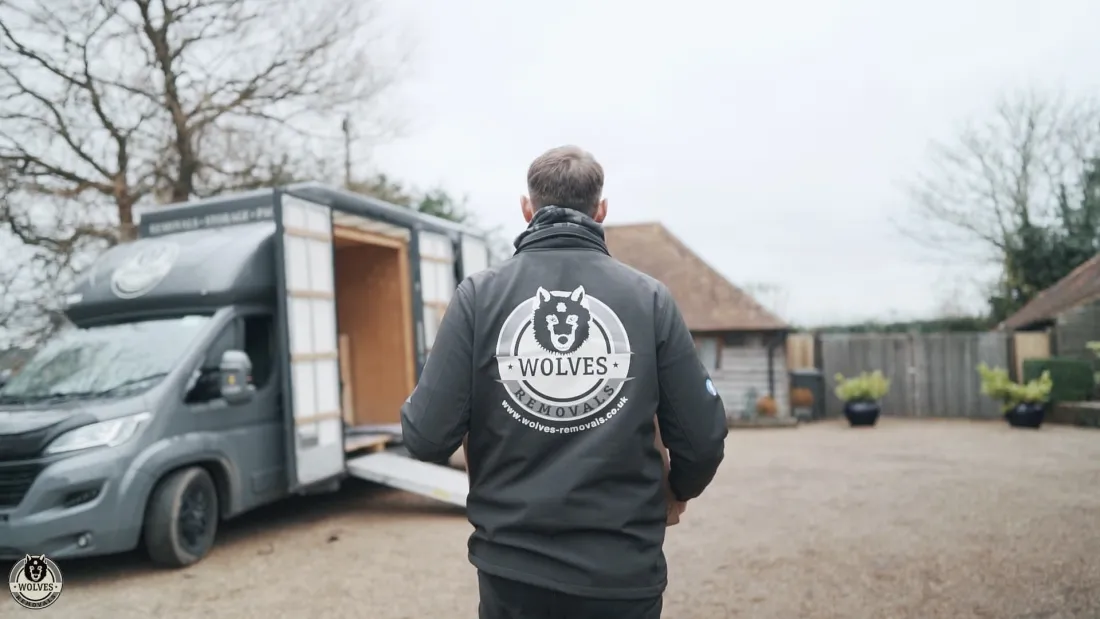
The Cottage Decided How We Loaded in Chichester
Sixty-one miles is far enough that you only get one go at it.

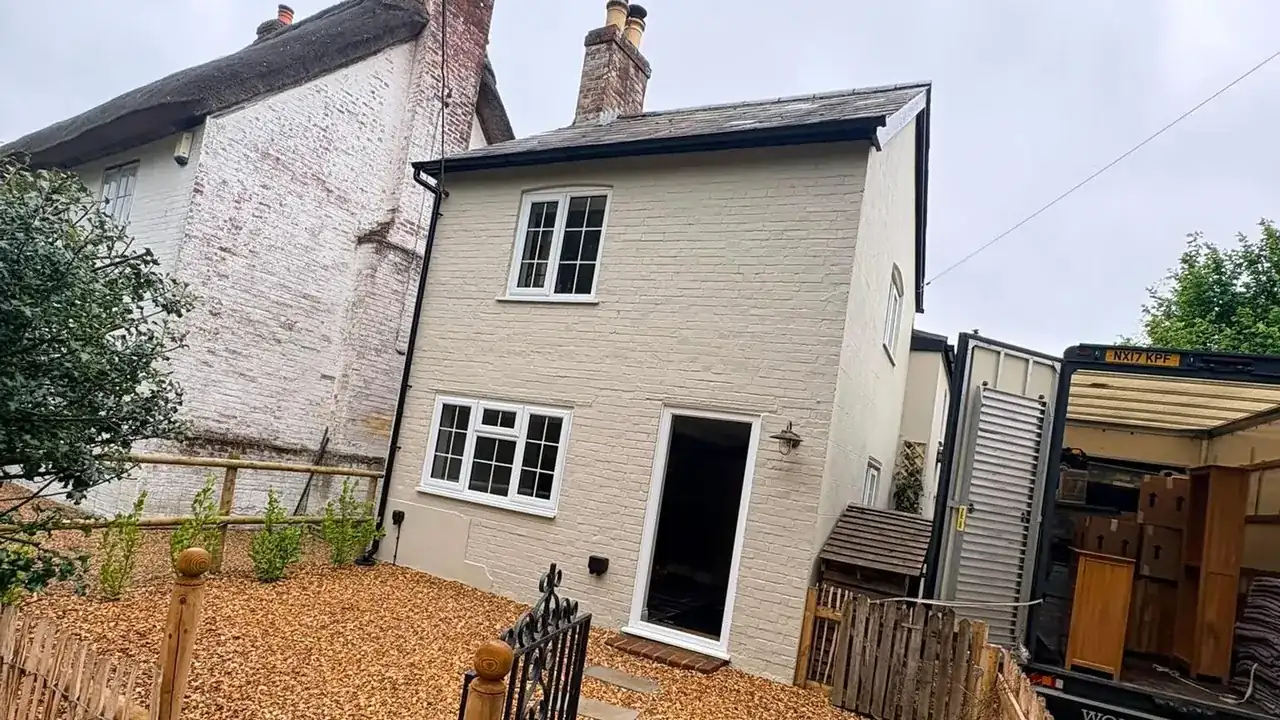
Everything difficult about this move was waiting at the far end — a turning staircase and doorways you duck through — which meant Wolves Removals had to solve every one of those problems before the lorry left Chichester.
All the Difficulty Was at the Other End
Most of what makes a move difficult is at one end or the other. On this one it was all at the far end, and the far end was sixty-one miles away.
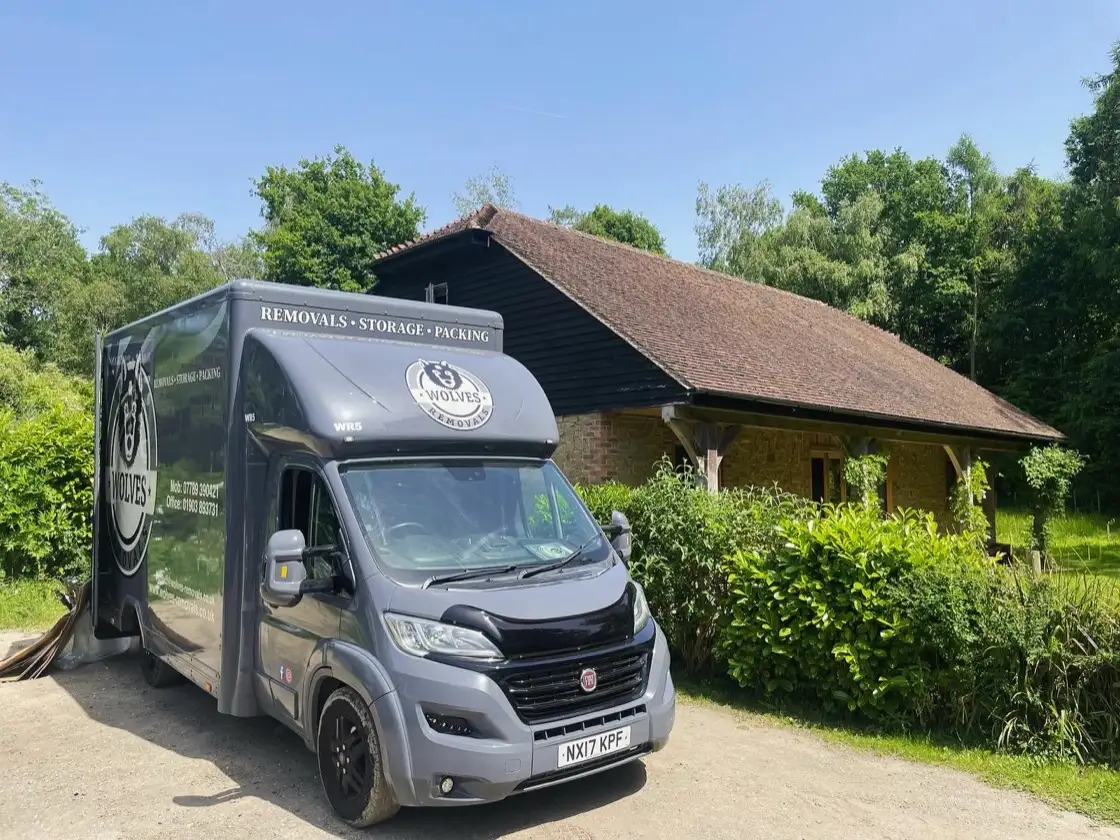
The collection was an ordinary house in Chichester. The delivery was a period cottage at Martin, a village near Fordingbridge and eight miles south of Salisbury, with a staircase that turns and doorways you duck through. Those two facts sound unrelated. They are not, and the connection is the whole point of this job: at that distance you cannot come back. Anything that would not fit had to be known about while the lorry was still standing in Chichester.
A house in Chichester to a period cottage at Martin — a village near Fordingbridge, eight miles south of Salisbury. Sixty-one miles by road.
One thousand and seventy cubic feet over two days: the crew packed the whole house on day one and moved it on day two. Low doorways and a staircase with a turn at the far end.
What the Cottage Actually Constrained
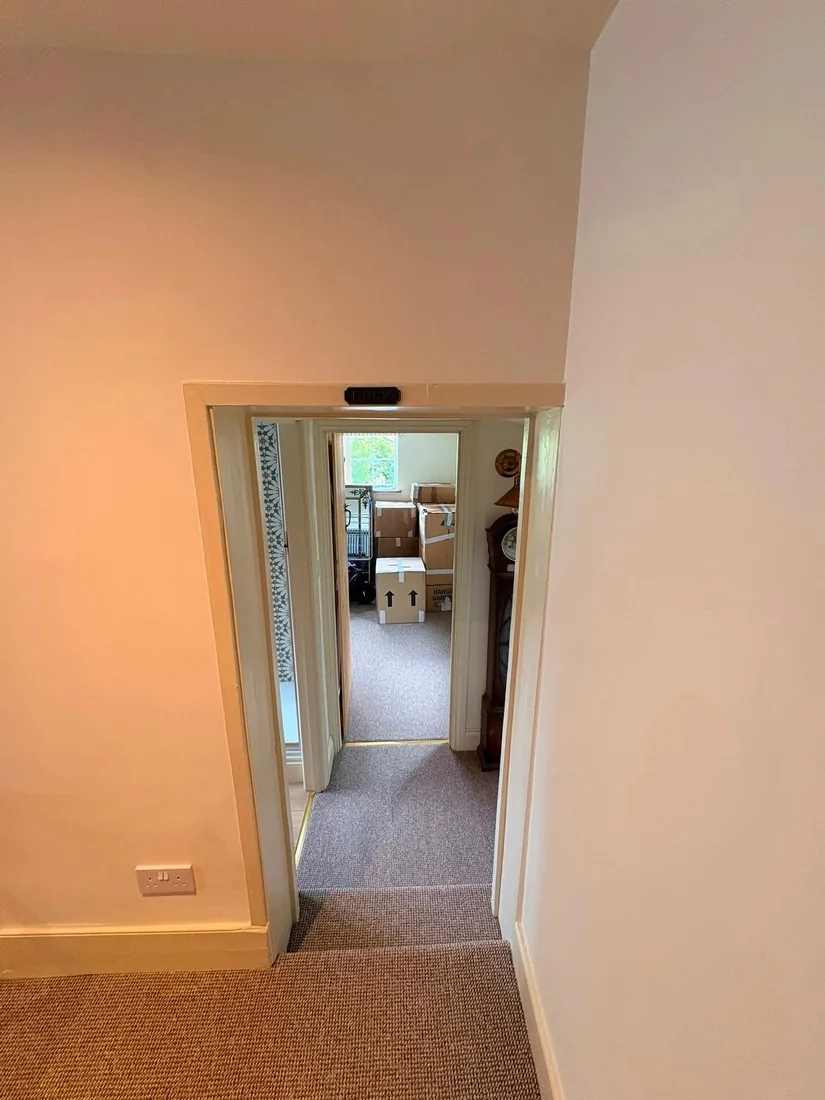
The first constraint is head height. A modern doorway is something you walk through without thinking; this one is something a tall person ducks under. That matters far less for a person than for a wardrobe, and the reason is geometry rather than inches: the moment a tall item has to be tilted to clear a low beam, the measurement that decides it stops being the height of the item and becomes its diagonal. A diagonal is always longer than the side it spans, so tilting something to get it under a beam can make it too long for the space beyond.
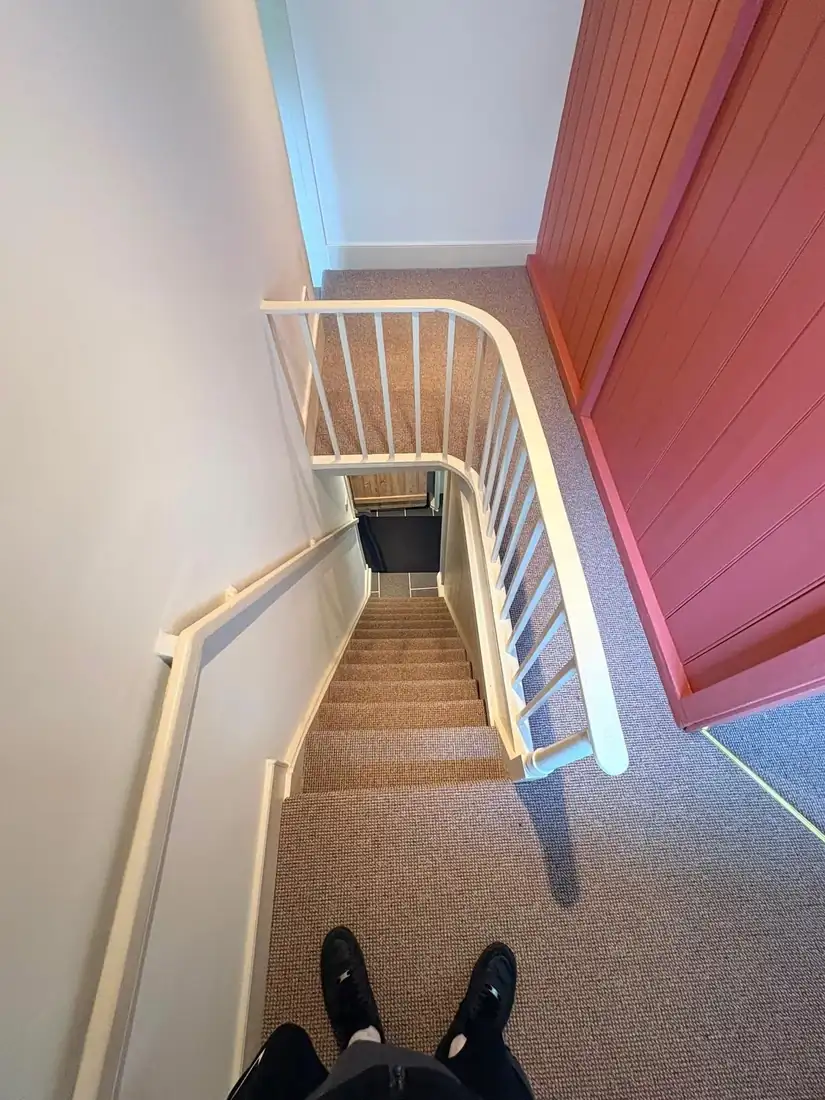
The second is the turn. A narrow straight stair is workable, because a long item can be carried up at an angle. A narrow stair with a turn in it is a different problem, because getting round a corner means rotating the item, and rotating it needs vertical room — which, in a cottage with low ceilings, is the one thing already in short supply. The two constraints do not sit side by side. Each one makes the other worse.
Which Is Why the Load Was Decided in Chichester
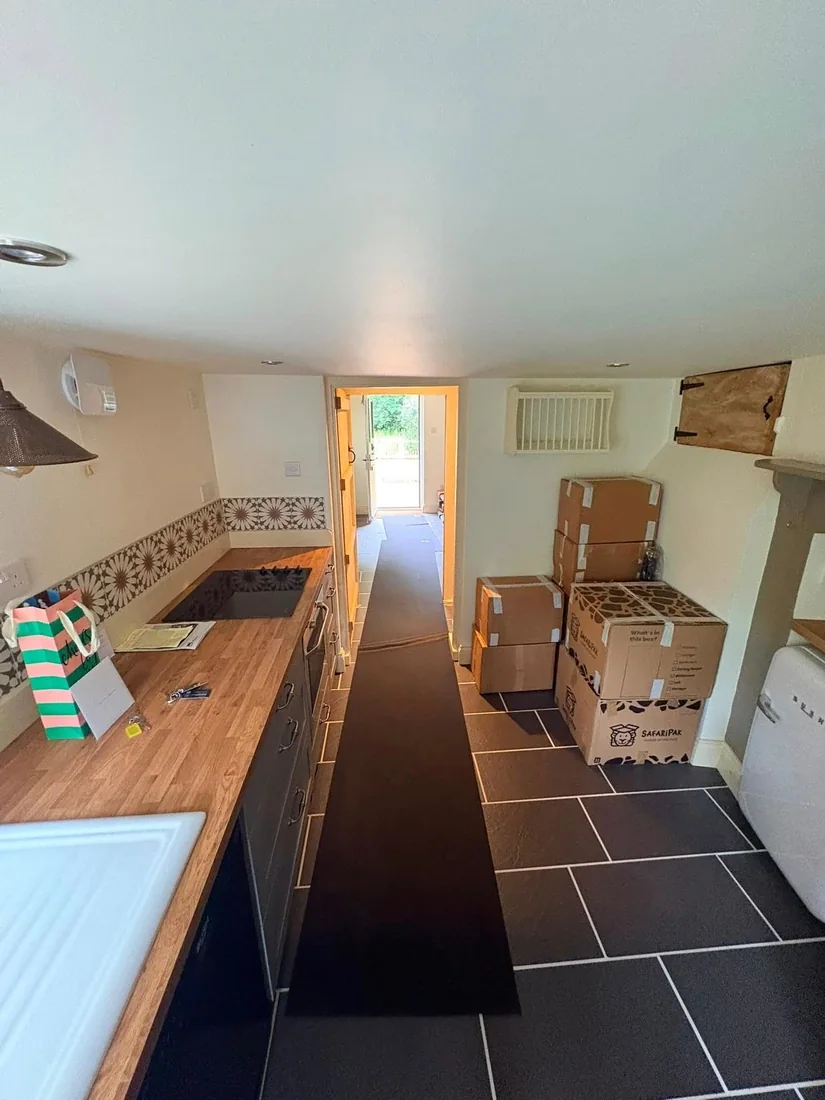
Here is the part that is easy to miss. Everything in the previous section is a problem in Hampshire, and every one of those problems has to be solved in West Sussex.
A piece that will not make the turn has to come apart, and the sensible place to take it apart is in the house it is leaving, where there is room to work and somewhere to put the fixings. A piece that will not go in at all should not be on the lorry.
And the order things are loaded has to match the order the cottage can accept them, because a narrow lane and a tight hallway give you nowhere to stage a load while you rearrange it. Wolves Removals
None of that is difficult. It is simply work that belongs at the beginning of the day rather than the end of it, and it is the argument for measuring both properties before a date is agreed rather than after.
They Changed Their Mind About the Packing
One more thing shaped the two days, and it is worth being straight about because plenty of people face the same decision.
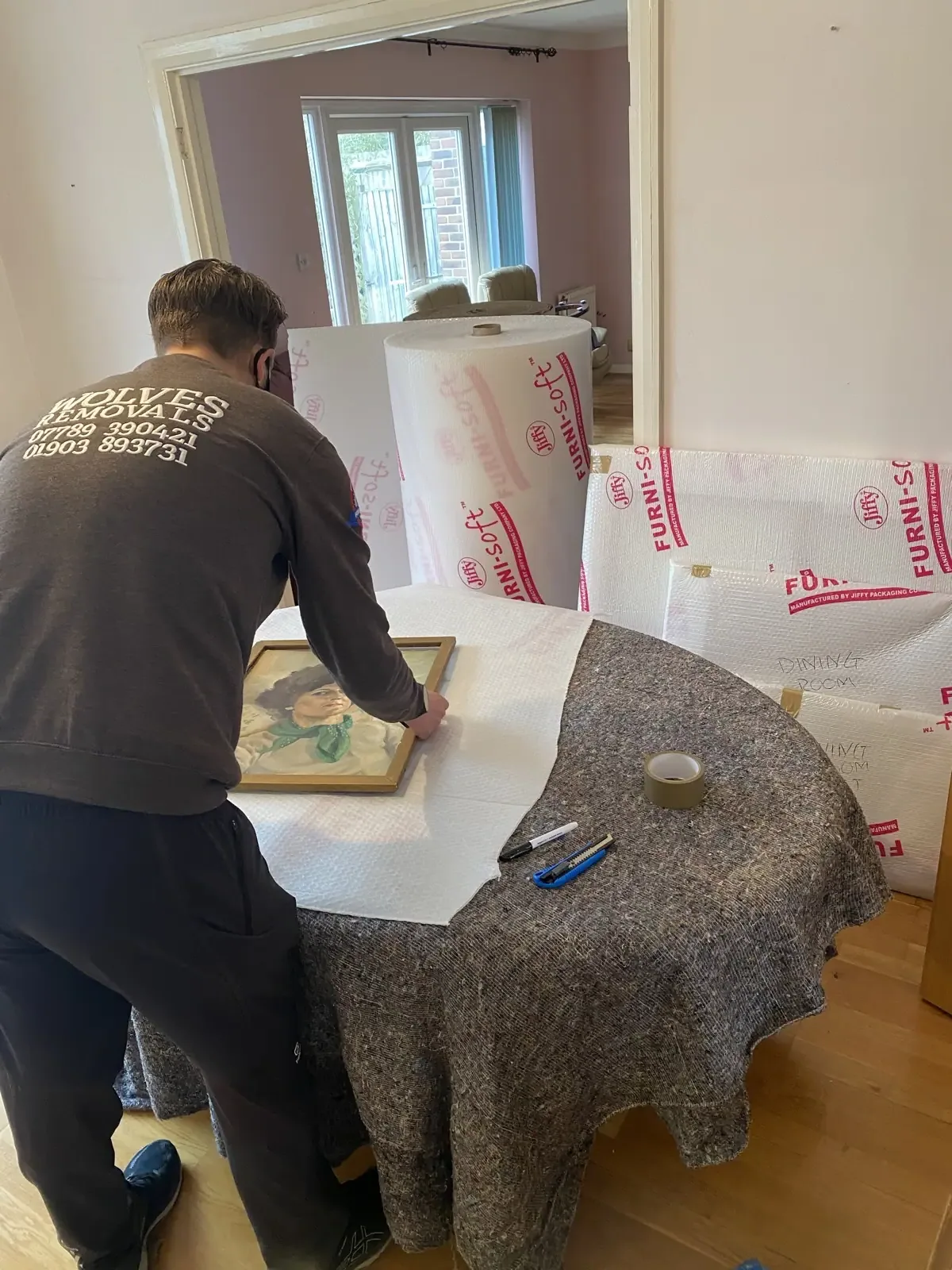
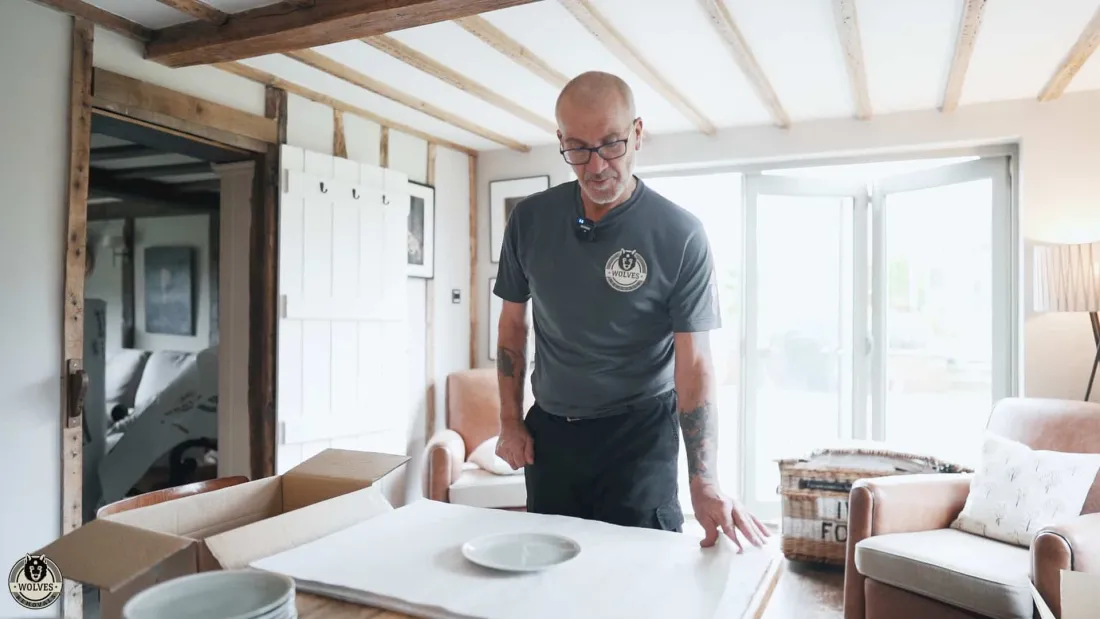
The quote was written in May for a house the owner intended to pack themselves — the estimate says so in as many words, a pre-packed property packed and dismantled by the owner. Before the move they added our full packing service on top: crew arriving a day early, all materials included. That is what turned a one-day job into a two-day one.
Worth being precise about what it changed, because it is narrower than you might assume. It changed the cartons: a crew packing a house is building boxes it will personally be carrying up that staircase tomorrow, which is a powerful argument for filling them evenly and keeping them liftable. It changed nothing whatsoever about the furniture. A wardrobe is the size it is no matter who packed the house around it.
Collections in Chichester Are Not All the Same Job
Worth saying, because people ask for a Chichester price as though the city were one thing. It is at least two. Inside the Roman walls there is a compact grid of four principal streets meeting at the Grade I listed Chichester Cross, and terraces built long before anyone needed somewhere to leave a lorry. Out on the estates and in the villages around the city, most houses have a drive and the lorry simply goes on it.
Those produce genuinely different days. A job inside the walls — the kind covered on our Chichester page — is planned around where a vehicle can legally stand and how far the carry is from it. An edge-of-city job usually is not planned around that at all. The same contents can be a comfortable day or a long one depending purely on which side of the walls they sit.
This collection was the straightforward kind. That is precisely why the interesting half of the job was at the other end.
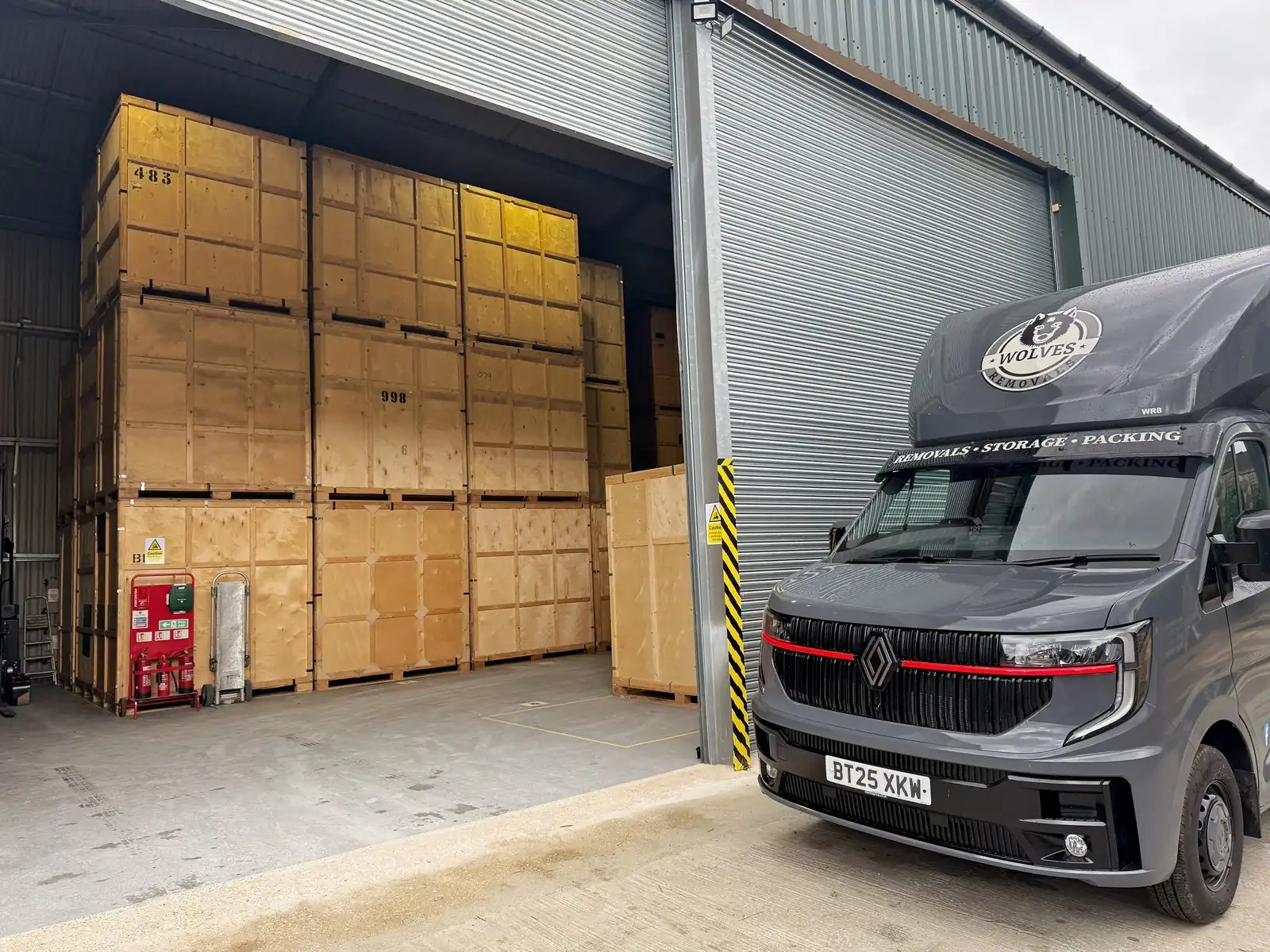
The Lane, and Where the Lorry Stops
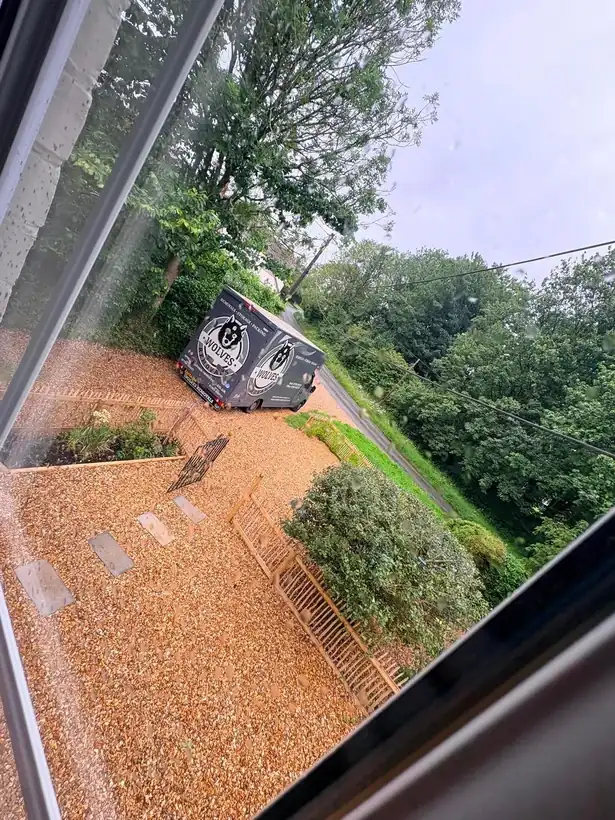
Village lanes do not offer alternatives. In a town you can reposition, take the far side of the road for ten minutes, or split the carry between two stopping points.
On a lane like this one the vehicle goes where it fits, once, and every item then travels the distance between that spot and the door however many times it takes. Wolves Removals
That is why the carry gets planned as carefully as the lift. It is also why the order things come off matters more here than it would on a suburban drive: there is no room to set something down and think about it.
Protecting the Building as Well as the Load
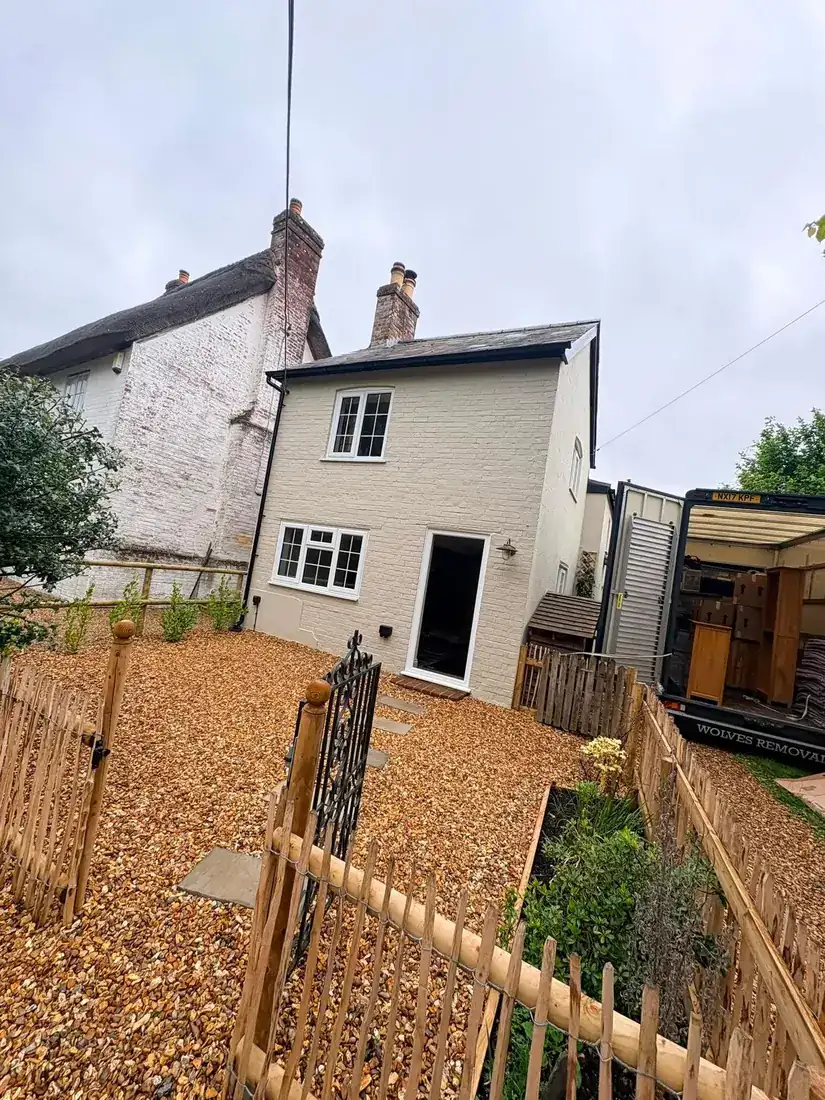
An old cottage is not a building you touch up with a tester pot. Original joinery and old plaster mark in ways modern surfaces do not, and a door frame that has outlasted every previous occupant is not one to be the first to chip.
So on a building of this kind the frames matter as much as the floors. Where head height is tight, the contact you are guarding against is at shoulder and knuckle height rather than underfoot — which means padding the edges of an opening, not just laying a runner through it.
What It Cost
Wolves Removals charged £795 plus VAT for the removals — £954 including VAT. The full house packing added £450 plus VAT, which is £540 including VAT. Together the two days came to £1,245 plus VAT, or £1,494 including VAT.
The split is the useful bit: packing was a little over a third of the total, and it bought a crew for a day plus every carton, roll and reel. Whether that is worth it depends on what a fortnight of your own evenings is worth to you, which is not a question anyone can answer on your behalf.
Those are the numbers for one job, not a price list. What actually sets a price is volume, distance, access at both ends, packing, and any dismantling or reassembly — and this job's mix of those five will not match yours. On a property with a staircase like this one, the honest answer is that nobody can tell you what it costs — or what will fit — without seeing both ends. That is what a survey is for.
The Wolves Removals Team
Family-run removals · Ashington, West Sussex
We have moved families and businesses across West and East Sussex, Surrey, Hampshire and Kent since 2016, from our Ashington base. We are fully insured, Checkatrade-verified and a LAPADA Approved Service Provider for antiques and fine art. More about us, or read our reviews.
The Cottage Decided How We Loaded in Chichester — FAQs
Yes. Wolves Removals offers full packing, and added it to this Chichester job partway through booking. The move ran from a house in Chichester to a period cottage at Martin, a village near Fordingbridge, eight miles south of Salisbury — 1,070 cubic feet over two days. The quote was written in May for a house the owner intended to pack themselves, described in the estimate as a pre-packed property, packed and dismantled by the owner. Before the move the owner changed their mind and added the full packing service on top. That put a crew into the Chichester house a full day before the move, packing every room with all materials included, so loading happened the following day. Wolves Removals charged £450 plus VAT for the packing day, which is £540 including VAT, separate from £795 plus VAT, £954 including VAT, for the removals — figures for this one job, not a price list.
On this job, Wolves Removals charged £1,245 plus VAT for the two days together, which is £1,494 including VAT: £795 plus VAT, £954 including VAT, for the removals, and £450 plus VAT, £540 including VAT, for full house packing — packing came to a little over a third of the total. The move covered 1,070 cubic feet from a house in Chichester to a period cottage at Martin, a village near Fordingbridge, eight miles south of Salisbury, 61 miles by road. The packing charge bought a crew in the house for a full day ahead of the move, plus every carton, roll and reel of material needed to wrap and box the contents. Because that charge is built around how much there is to box up rather than how far it then travels, it scales with the size of the house rather than the length of the journey. Those figures are for one job, not a general price list.
It depends on the diagonal across the item, not its height. Wolves Removals faced exactly this at a period cottage at Martin, a village near Fordingbridge, on a move from Chichester: a low doorway with a head beam that cannot be adjusted, removed or negotiated with. A modern doorway lets you walk through without thinking; this kind does not. Once a tall item has to be tilted to clear it, the measurement that decides whether it fits stops being its height and becomes the diagonal across it — and a diagonal is always longer than the side it spans, so tilting something under a beam can make it too long for the space beyond. On this job, anything that would not clear standing was checked against whether it could be turned or tipped, then whether it came apart, then whether it would go through an opening such as a window. If every answer was no, it did not go in.
Rotation is what makes a turning staircase harder, because getting a long item round a corner means turning it on the way up, and turning needs vertical room that a straight stair does not require. Wolves Removals met exactly this at a period cottage at Martin, a village near Fordingbridge eight miles south of Salisbury, reached from Chichester on a 1,070 cubic foot move. A narrow straight staircase is workable, because a long item can be carried up at an angle without needing to rotate. A staircase with a turn in it is a different problem: rotating an item to get it round the corner needs vertical room, and in a cottage with low ceilings that room is already the thing in shortest supply. The two constraints do not sit side by side, they compound each other — a low ceiling makes the turn harder, and the turn makes the low ceiling matter more than it otherwise would.
Yes, Wolves Removals moves between Chichester and Salisbury or Hampshire, and has already covered the route: a two-day job carrying 1,070 cubic feet from a house in Chichester to a period cottage at Martin, a village near Fordingbridge, eight miles south of Salisbury. The distance by road was 61 miles. Delivery happened in a single day, after a separate day spent packing the Chichester house, and distances of this order are normally completed as a one-day move rather than needing an overnight stop. The Chichester collection itself was the straightforward kind — a house outside the Roman city walls, with a drive the lorry could simply use, rather than the kind of job planned around where a vehicle can legally stand in the compact streets inside the walls. Wolves Removals charged £795 plus VAT for the removals on this job, which is £954 including VAT, though that figure belongs to this one job rather than a general price for the route.
Packing yourself is meaningfully cheaper but usually costs you about a fortnight of your own evenings; paying for it costs one day and one price, and the boxes are built by the people who will then carry them up the stairs. Wolves Removals saw this decision play out on a two-day, 1,070 cubic foot move from a house in Chichester to a period cottage at Martin, a village near Fordingbridge, eight miles south of Salisbury. The original quote, written in May, was for an owner-packed house — the estimate described a pre-packed property, packed and dismantled by the owner. The client changed their mind before the move, and Wolves Removals charged £450 plus VAT for a full packing day instead, £540 including VAT, on top of £795 plus VAT, £954 including VAT, for the removals — one job’s figures, not a general price list. Changing your mind before the move, rather than partway through, is what makes adding packing straightforward.