Three Lorries, 220 Miles, and a Night on the Road
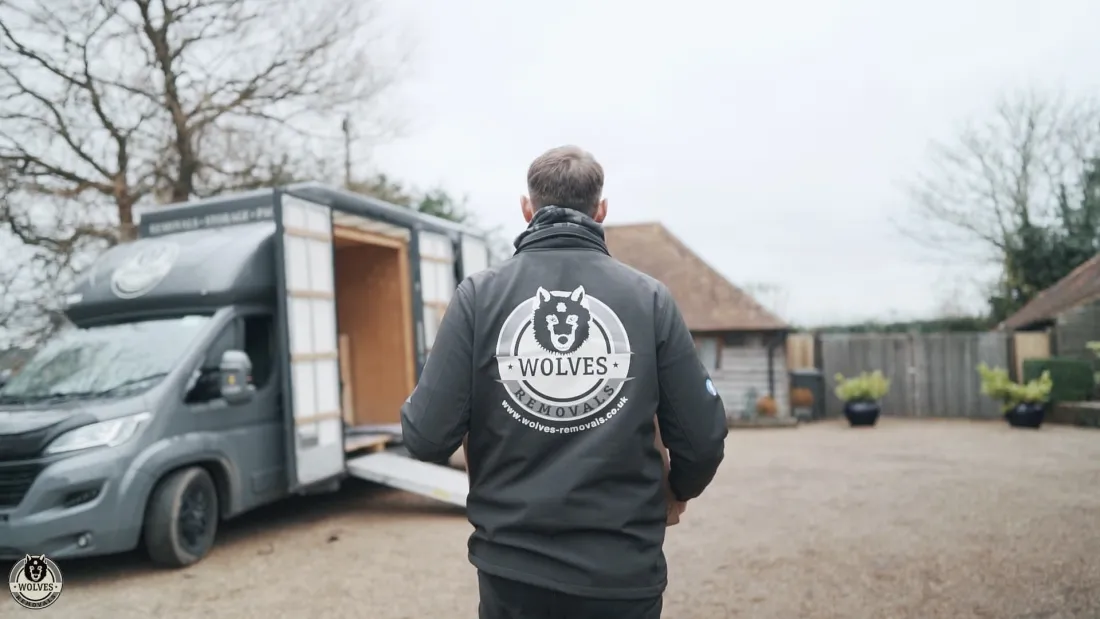
Wolves Removals spent a July morning with three lorries nose to tail on a lane outside Midhurst, loading a house for a long distance removal to Cheshire.

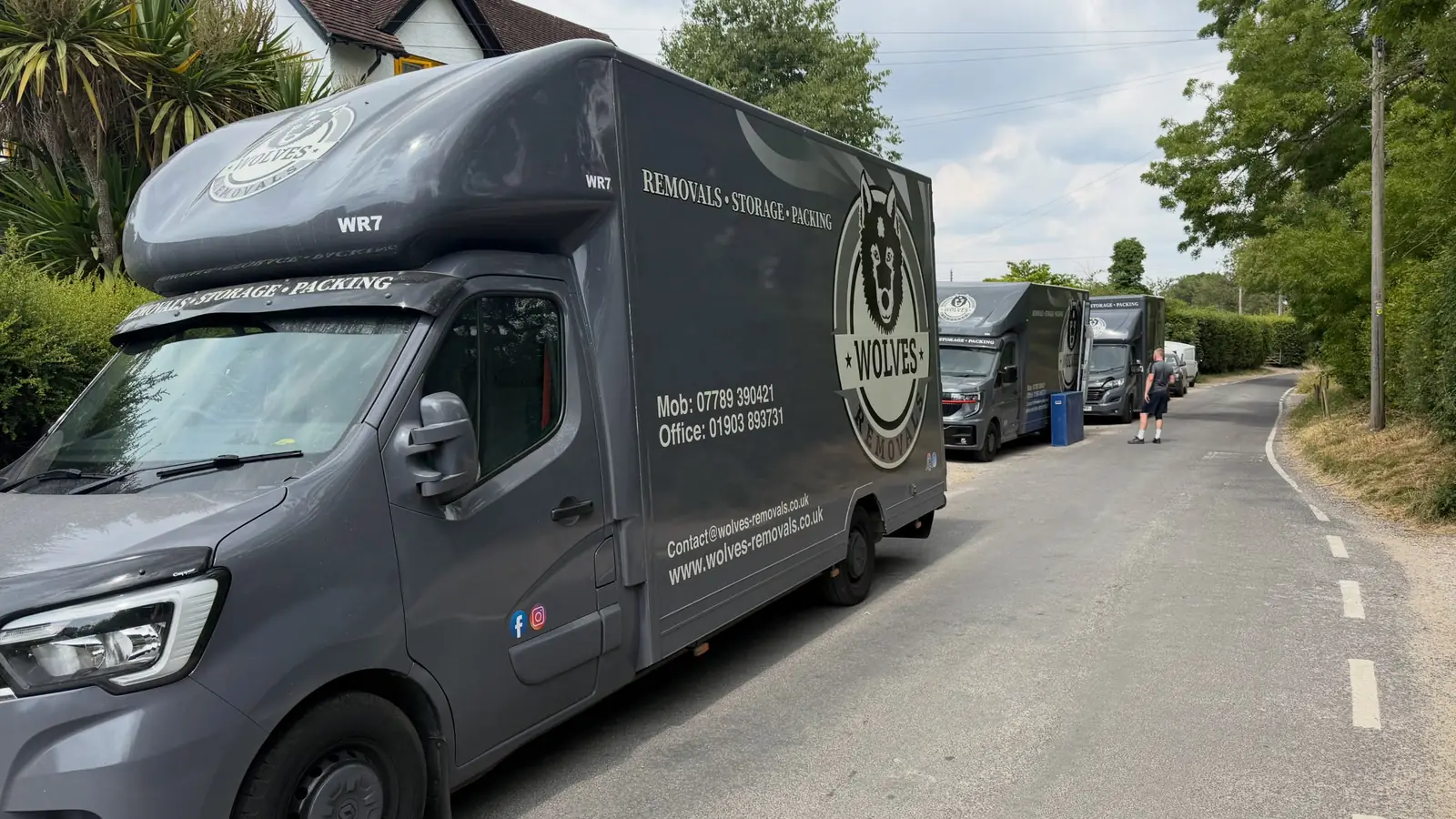
Seventeen hundred and thirty-five cubic feet, about 220 miles, and three days from the first carton on the tailgate to the last bed rebuilt at the other end.
Three Lorries on a Lane Built for One
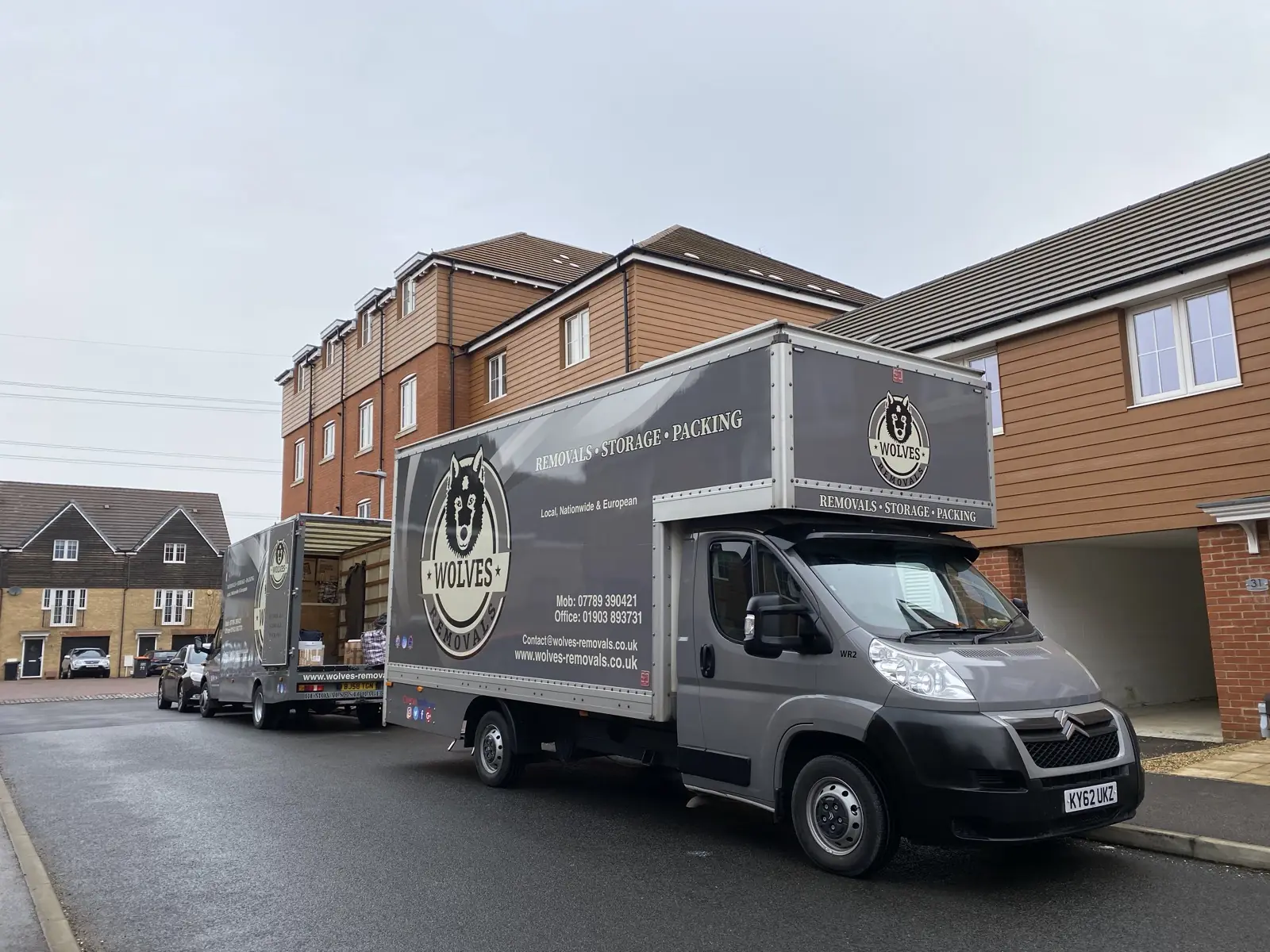
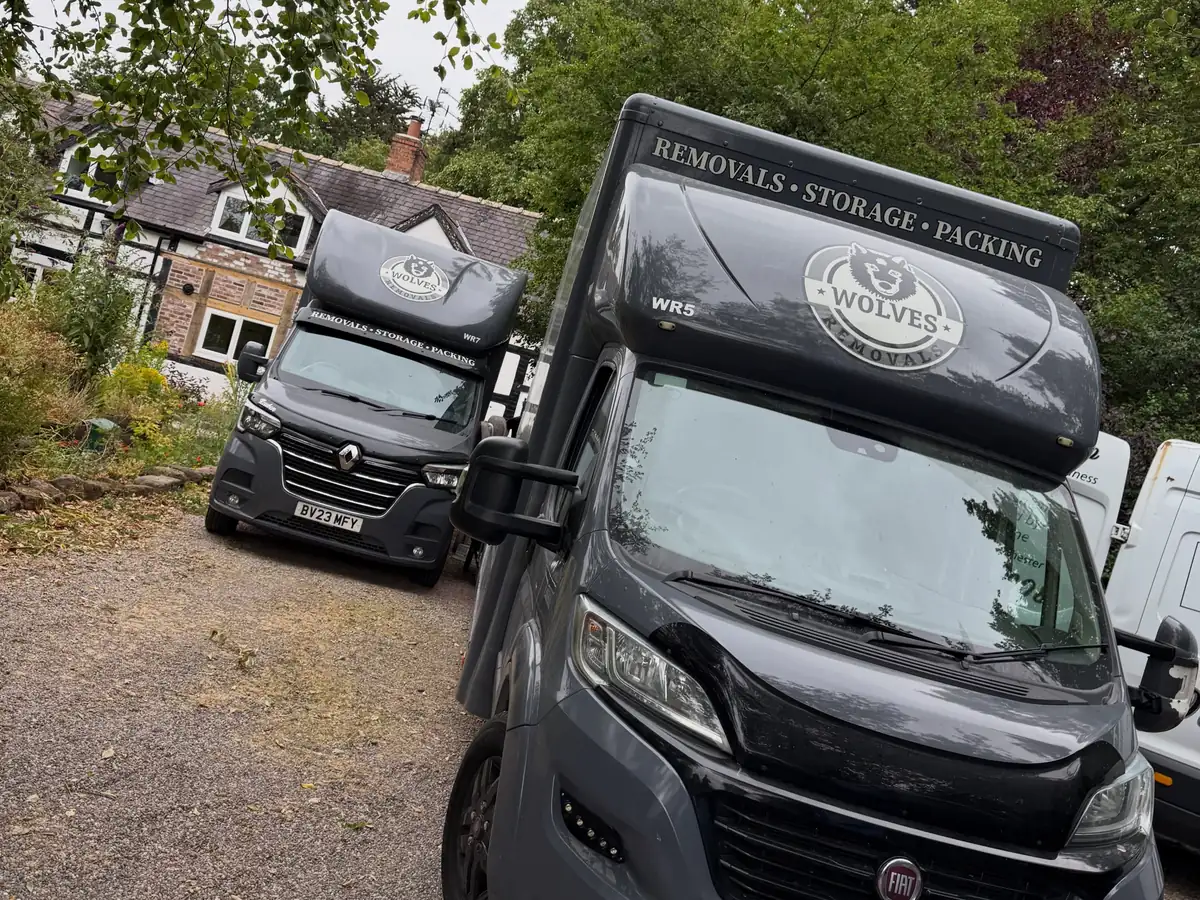
The first thing you notice in the photograph is that there is no room. Three of our lorries nose to tail on a Sussex lane with a hedge on one side and a white line on the other, and a crew walking between them because there is nowhere else to walk. That is how a big load leaves a village.
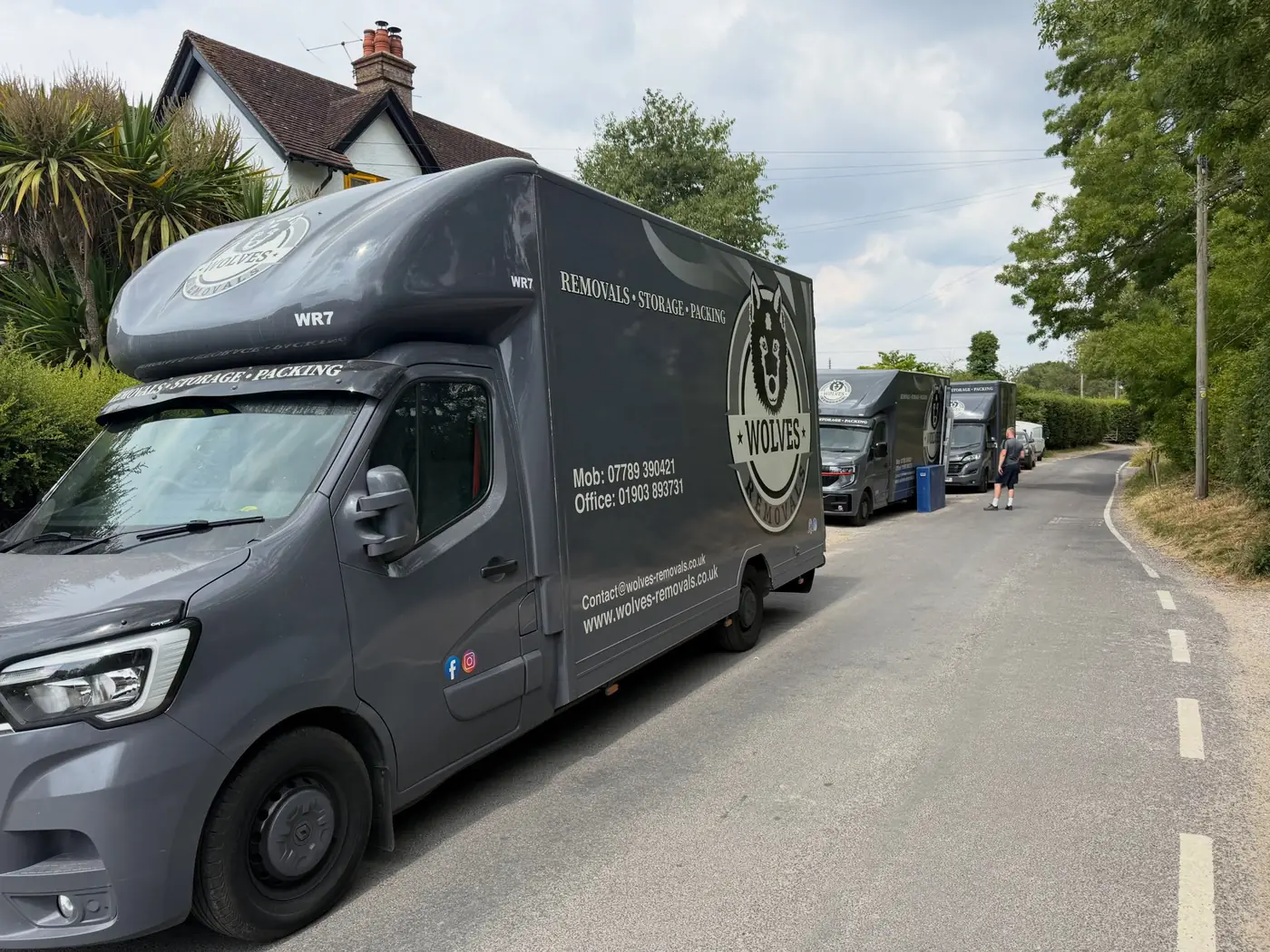
Seventeen hundred and thirty-five cubic feet is a lot of house. Splitting it across three vehicles is not about capacity so much as access: a single artic would not have got down there, and even if it had, there would have been nowhere to turn it round. Smaller lorries mean more trips past the hedge and more coordination, and they mean the road stays passable for whoever lives at the far end of it.
What We Packed, and What the Family Packed
This was not a full pack. The family had done the bulk of the house themselves — books, clothes, kitchen, the ordinary contents of ordinary cupboards — and they had done it properly, which is less common than you would hope and makes a genuine difference on loading day.
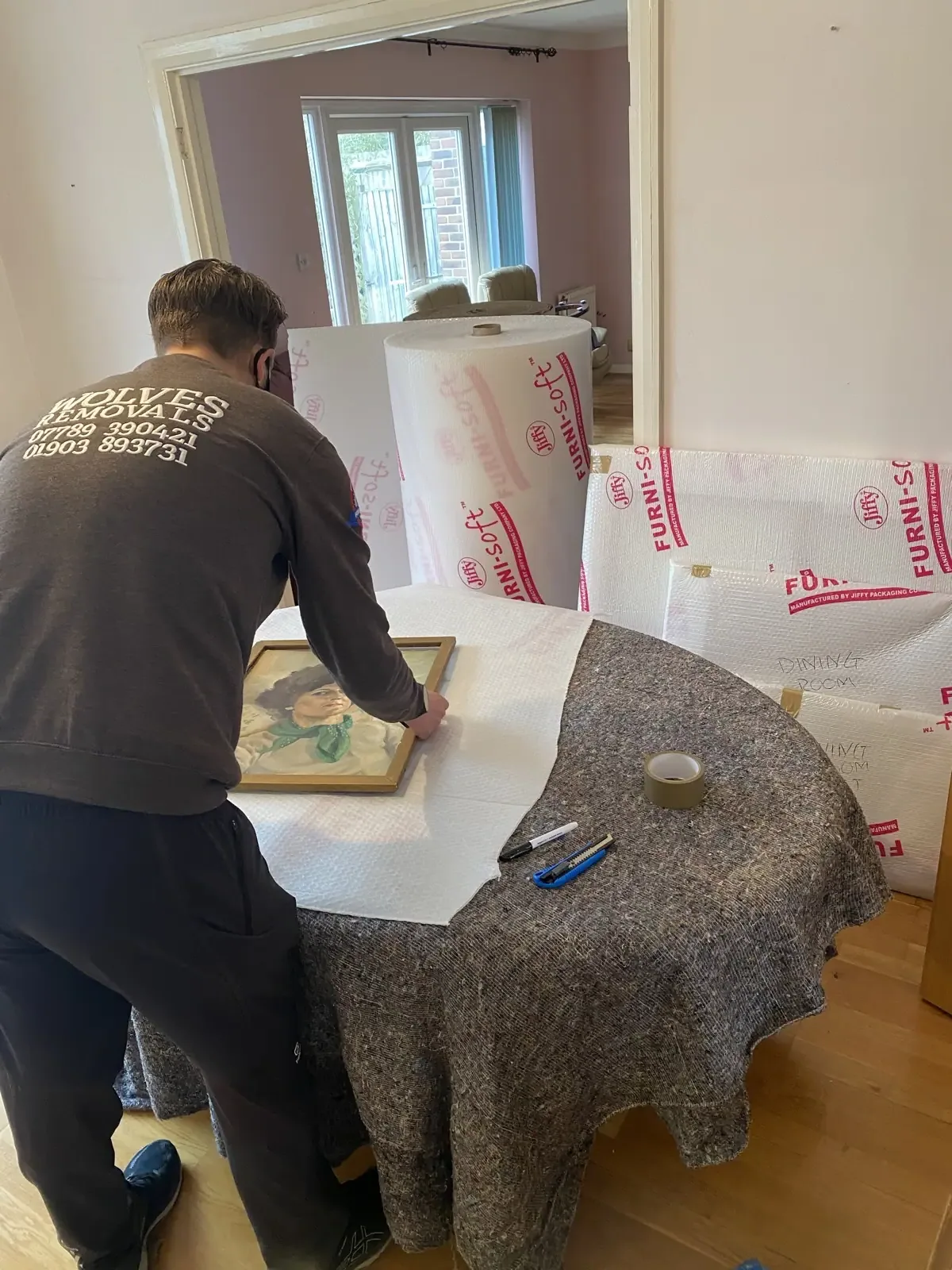
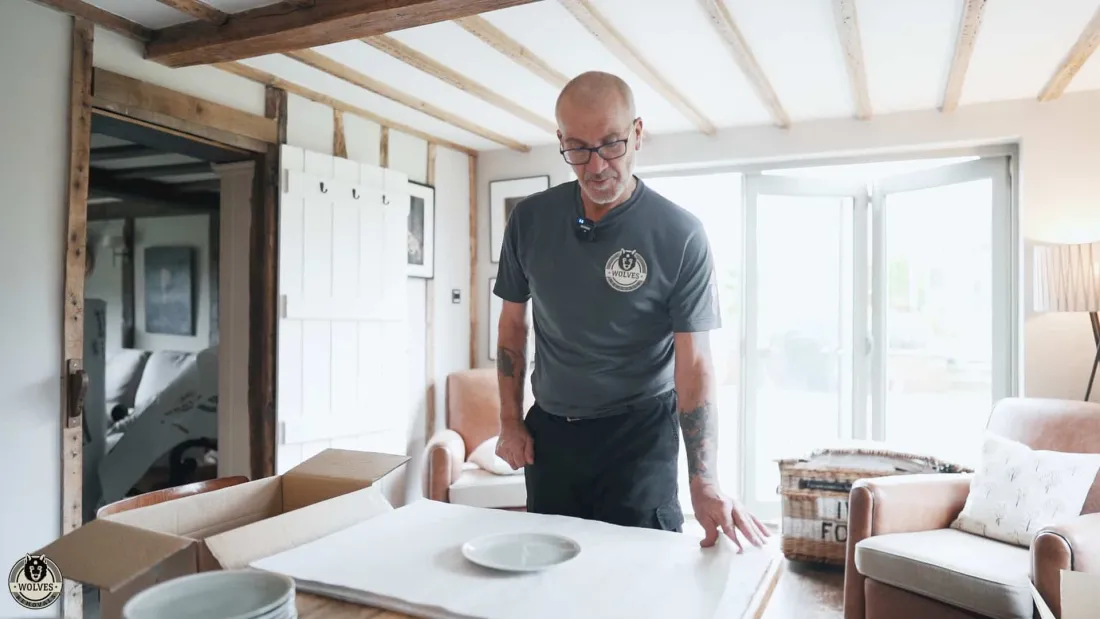
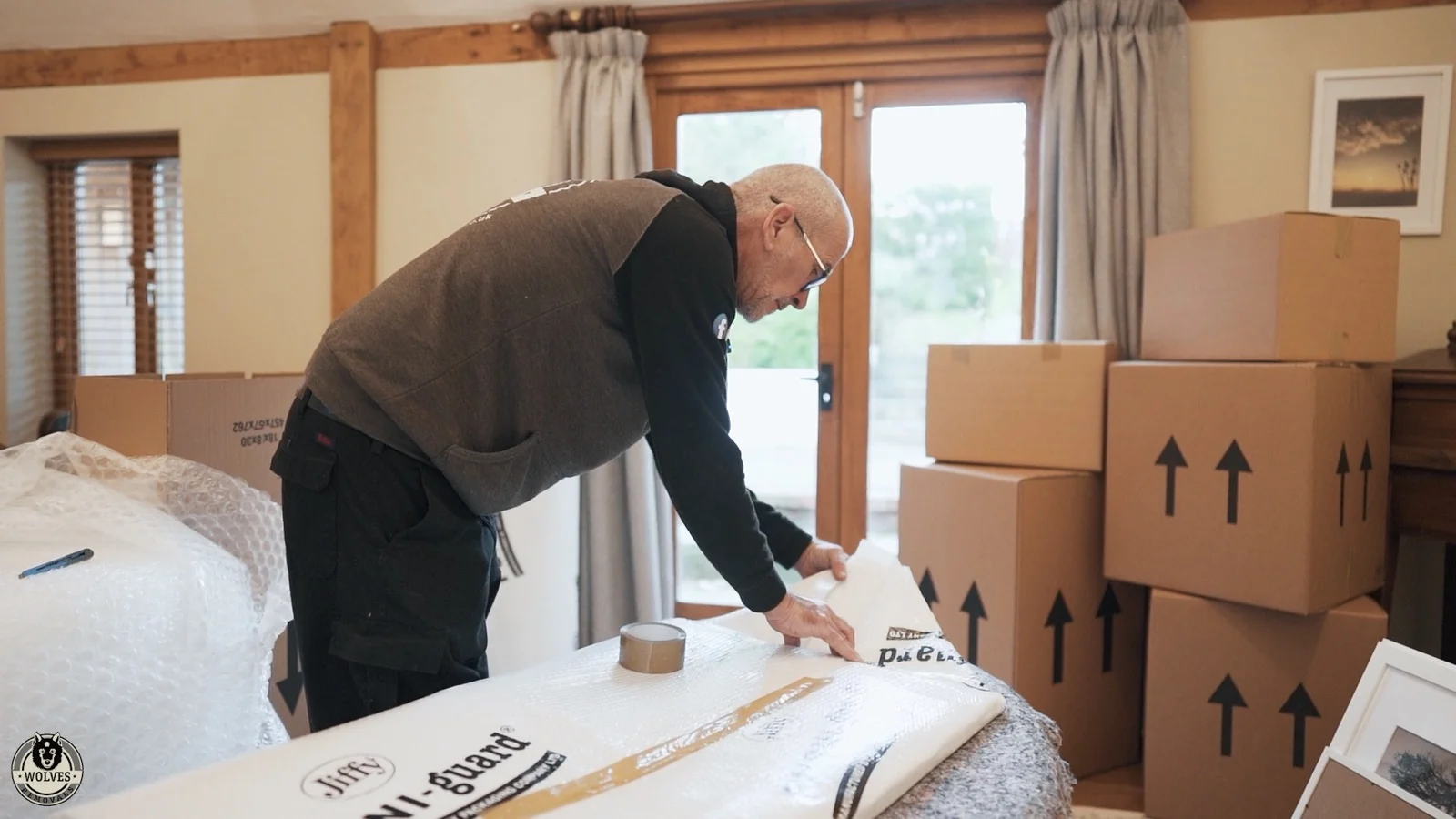
What we packed was the part people are right to be nervous about: the fragile items and the pictures. Glass and framed work are the two things that punish a good intention, because both fail from pressure and movement rather than from being dropped, and neither shows you it has gone wrong until you open the carton. If you want the detail, how a picture is packed for a move is written up separately.
That split — you do the straightforward boxes, we do the things that break — is one of the more sensible ways to buy a move, and it is a real service rather than a favour: the inverse arrangement, where we take on the everyday packing and leave you the sorting, exists for the same reason. The rest of what went on was protection: sofas into quilted covers, mattresses into protectors, and sheeting down on floors and carpets at both ends.
Bepton to Carden: the Two Ends of It
Bepton is a village of a couple of hundred people three miles south-west of Midhurst, under the chalk of the South Downs. It is the kind of address where removals around Midhurst means a lane, a verge and a judgement call about where to put a lorry — the same is true a few miles east around Petworth.
The far end was Carden, in Cheshire: farmland on the sandstone that runs through the south of the county, close enough to the Welsh border that the postcode is a Shrewsbury one.
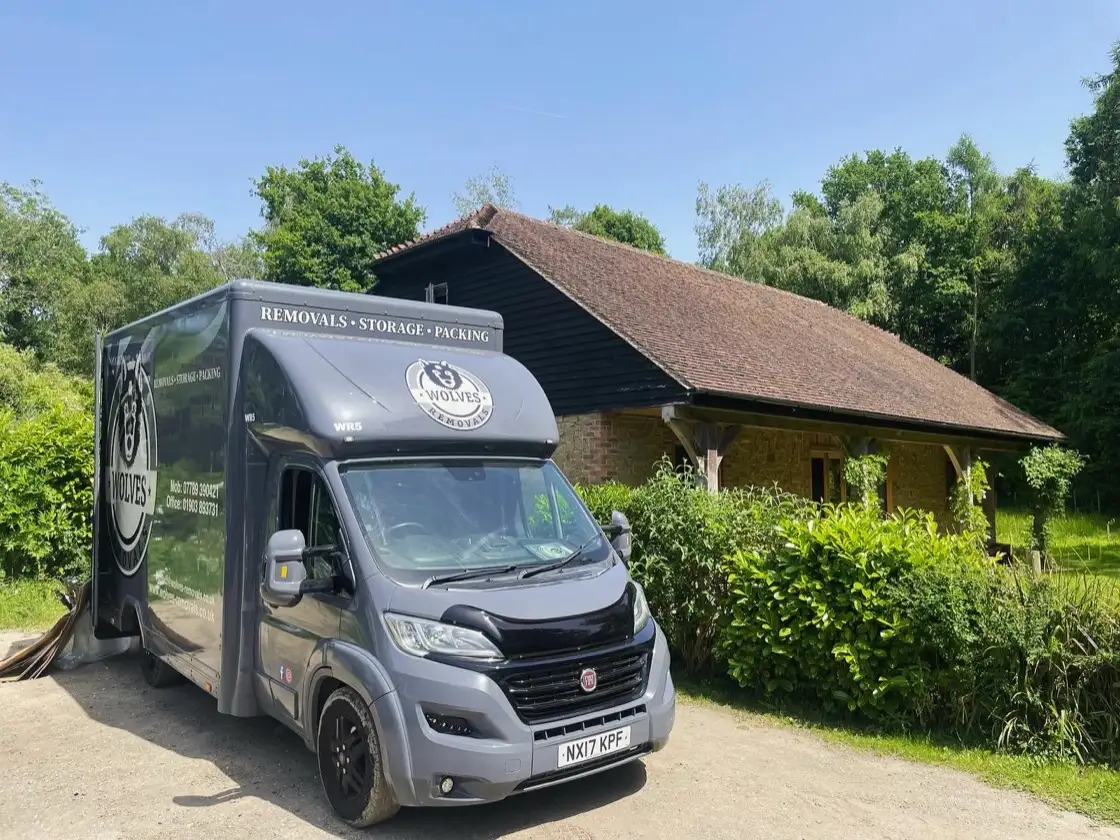
The house is timber-framed and red brick, which is exactly the local vernacular, and it sits on a gravel drive rather than a road — a better standing position than Bepton, and a longer carry. Wolves Removals
It is not a well-worn route, either. Most people leaving the South East do not go north at all — they go to London or the West Country, and only about one in fifteen heads for the North West.
This one was booked properly in advance, too: the estimate went out on 3 June and the lorries came on the 22nd. Seven weeks is not over-cautious for a job needing three vehicles and a crew held for three consecutive days.
Loaded at Bepton, three miles outside Midhurst in West Sussex, and delivered to Carden in Cheshire, close to the Welsh border. Seventeen hundred and thirty-five cubic feet, about 220 miles, moved over 22 to 24 July 2026.
Booked as a Professional Removals Service: the family packed the bulk of the house themselves, we packed the fragile things, and the crew loaded, dismantled, drove, unloaded and rebuilt. Total £4,140 including VAT.
220 Miles Is Not the Reason It Took Three Days
It is tempting to assume the distance drives the schedule. It does not. About 220 miles is roughly four and a half hours behind the wheel, which is not a long day by itself.
What fills a day is everything that is not driving. A driver’s working day is capped however you measure it, and the cap is not just time at the wheel: loading seventeen hundred cubic feet counts towards it, and so does unloading and rebuilding at the other end, even while the vehicle stands still. We hold a goods vehicle operator’s licence — the lorry runs on a tachograph, the vans to van rules — so those hours are recorded rather than estimated. Add the two ends to the middle and a single day stops being a tight plan and starts being an unrealistic one.
So it ran as three. Day one was the load, with the furniture dismantled as it came apart and the essentials deliberately left out so the family had a last night in their own beds. Day two collected those essentials, took the road north — out to the A3, round the M25 and then the long haul up the M40 — and got the first of it into the house before the crew stopped for the night at a hotel. Day three finished the unload. If you want what changes on a long distance move in general, rather than one job’s worth, that is set out elsewhere.
Putting the House Back Together
Dismantling furniture is the easy half. Anyone can take a bed apart. The part that earns the money is doing it so that it goes back together three days and two hundred miles later, with nothing missing and nothing forced — which means the fittings travel with the piece they came out of and not in a communal tub at the front of the lorry.
So day three was reassembly as much as unloading: beds rebuilt, tables back on their legs, the wardrobes standing where they were going before anything went inside them. Anyone can carry furniture into a house. The test of the last day is whether it all goes back together with nothing missing and nothing forced.
What It Came To
Wolves Removals loaded the seventeen-hundred-cubic-foot house off a narrow lane into three vehicles, packed the fragile items and the pictures, dismantled the furniture, protected the floors at both ends, ran 220 miles to Cheshire with an overnight stop, unloaded across two days and rebuilt the furniture, for £3,450 plus VAT — £4,140 including VAT.
We do not publish a rate card, because distance is only one input and usually not the decisive one: volume, access at both ends, how much packing falls to us and whether furniture needs dismantling and reassembling move the number far more than mileage does. A job like this is costed the same way a house removal across town is costed, on what the work actually involves — which is why we price by scope. A different house on a different lane going the same distance would come out somewhere else entirely, which is why it starts with a quote for your own move, worked out from the property rather than the postcode. What people say afterwards is in our reviews.
The Wolves Removals Team
Family-run removals · Ashington, West Sussex
We have moved families and businesses across West and East Sussex, Surrey, Hampshire and Kent since 2016, from our Ashington base. We are fully insured, Checkatrade-verified and a LAPADA Approved Service Provider for antiques and fine art. More about us, or read our reviews.
Three Lorries, 220 Miles, and a Night on the Road — FAQs
Cost depends far more on volume and access than on distance alone. Wolves Removals carried a job of 1,735 cubic feet from Bepton, a village near Midhurst in West Sussex, to Carden in Cheshire, about 220 miles away, over three days from 22 to 24 July 2026, and charged £3,450 plus VAT — £4,140 including VAT. That figure belongs to this one job, not a price list: it covered fragile packing, furniture dismantling, protection of floors and carpets at both ends, and reassembly on arrival. A smaller house moving the same distance, or a larger one moving a shorter distance, would come out at a different figure. What actually sets a removal price is volume, distance, access at both the loading and delivery addresses, how much packing falls to the removal firm, and whether furniture needs dismantling and reassembling.
Because driving is the short part of a long distance move. Wolves Removals moved 1,735 cubic feet from Bepton, near Midhurst in West Sussex, to Carden in Cheshire, about 220 miles away, and driving that distance takes roughly four and a half hours — not a long day on its own. What fills the schedule is loading, unloading and rebuilding furniture, all of which count against a driver’s working day under the tachograph rules tied to a goods vehicle operator’s licence. On this job the work ran to three days: day one loaded the house into three lorries, essentials held back for a last night at home; day two collected those essentials, drove north to Cheshire and unloaded part of the load before the crew stopped overnight; day three finished unloading and rebuilding the furniture.
Yes — dismantling and reassembling furniture is standard on a long distance move, and often essential rather than optional. On the Bepton to Carden job, 1,735 cubic feet travelling about 220 miles from West Sussex to Cheshire over three days, Wolves Removals dismantled beds, tables and wardrobes on day one as the furniture came apart, keeping each item’s fittings with the piece it came out of rather than in a shared tub at the front of the lorry. That matters because the test is not taking a bed apart, which is straightforward, but getting it back together three days and two hundred miles later with nothing missing and nothing forced. On day three, at the delivery address in Carden, Wolves Removals rebuilt the beds, stood the tables back on their legs and put the wardrobes in place before loading anything inside them.
Yes — splitting the packing this way is a sensible way to buy a move, and Wolves Removals offers it as a standard option rather than a favour. On the Bepton to Carden job, a house of 1,735 cubic feet moved about 220 miles from West Sussex to Cheshire over three days in July 2026, the family packed the everyday contents themselves — books, clothes, kitchen items — while Wolves Removals packed the fragile items and the pictures. Glass and framed work are the two things that punish good intentions, because both usually fail from pressure and movement rather than from being dropped, and neither shows the damage until the carton is opened. The reverse arrangement also exists: Wolves Removals can take on the everyday packing and leave the sorting to the household instead.
Yes, on a job of this length. Moving 1,735 cubic feet from Bepton, near Midhurst in West Sussex, to Carden in Cheshire, about 220 miles away, Wolves Removals ran the job over three days: the crew loaded the house on day one, drove north and began unloading in Cheshire on day two, then stayed locally overnight before finishing the unload and rebuilding the furniture on day three. Wolves Removals charged £3,450 plus VAT — £4,140 including VAT — for this particular job, and the overnight stay was a large part of the reason why: three days away from Sussex means three days of wages, fuel and a bed for the crew, not just miles on the road.
Yes — Wolves Removals regularly moves households out of West Sussex to the North West, the South West, the Midlands and Scotland. The Bepton to Carden job is one example: 1,735 cubic feet carried about 220 miles from a village outside Midhurst, West Sussex, to Carden in Cheshire, close to the Welsh border, over three days from 22 to 24 July 2026. Long distance moves like this are booked well ahead — this one was estimated on 3 June and loaded on 22 July, seven weeks later, to secure three lorries and a crew held for three consecutive days. The planning changes with distance: routes, overnight stops and driver hours all have to be worked out in advance. What does not change is how the furniture is wrapped, protected and loaded, wherever the destination is.