Two and a Half Days, Two Counties, One Crew
Wolves Removals moved a household from Burpham, just outside Arundel in West Sussex, to a new home near Taunton in Somerset, over two and a half days, with the same crew loading in Sussex and carrying it back in at the other end.

Almost all of the difficulty sat at the two ends rather than on the road between them.
The distance is the part people ask about first. It is rarely the part that decides how the job goes.
What decides it is whether the load comes off in the order the new house needs it, whether anything has moved in transit, and whether the crew who packed the boxes are the same crew who carry them back in. On a two-county move there is no going back for the thing you forgot. It is also what decides the price, which turns on volume and on access at both ends far more than on the miles in between.
Why the First Mile Was Harder Than All the Rest
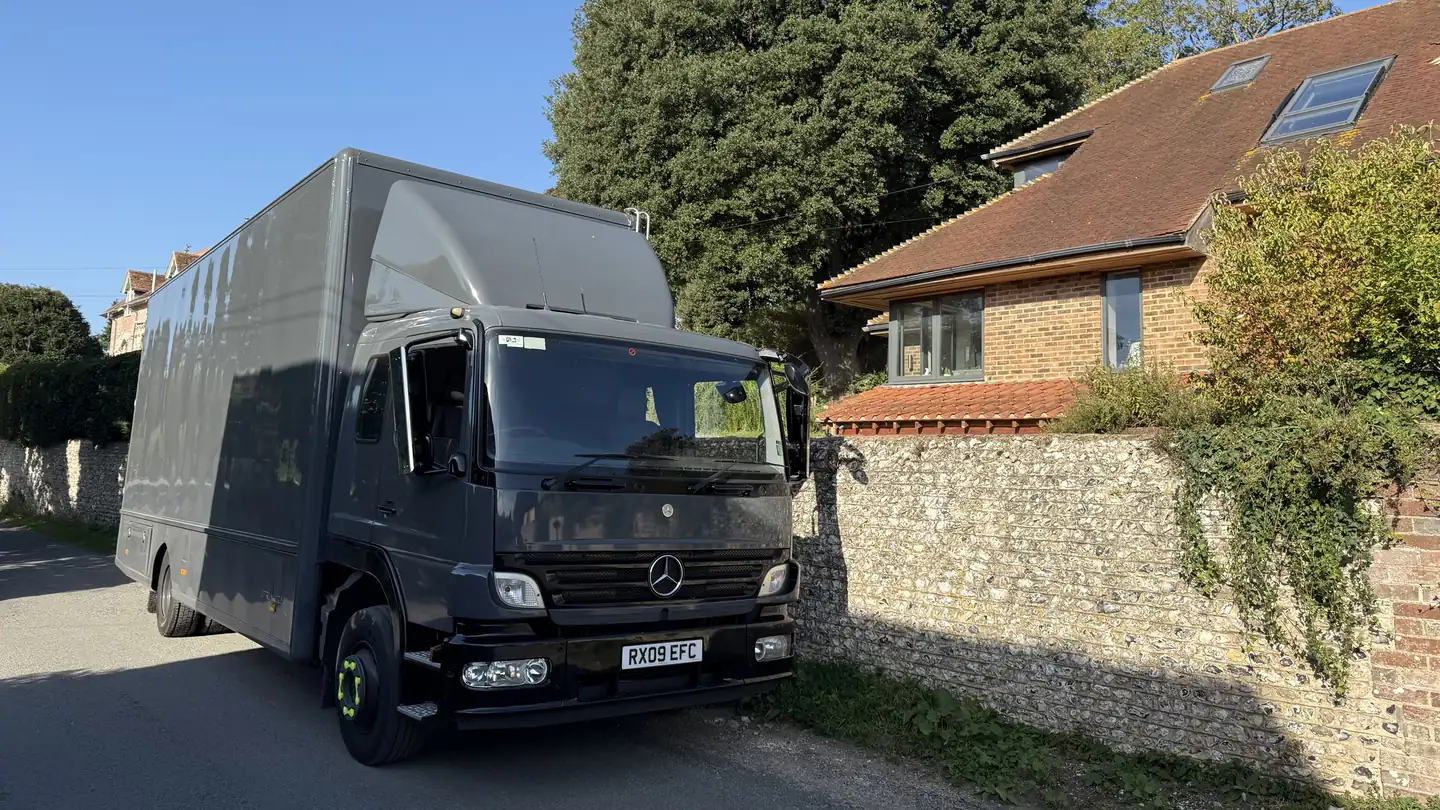
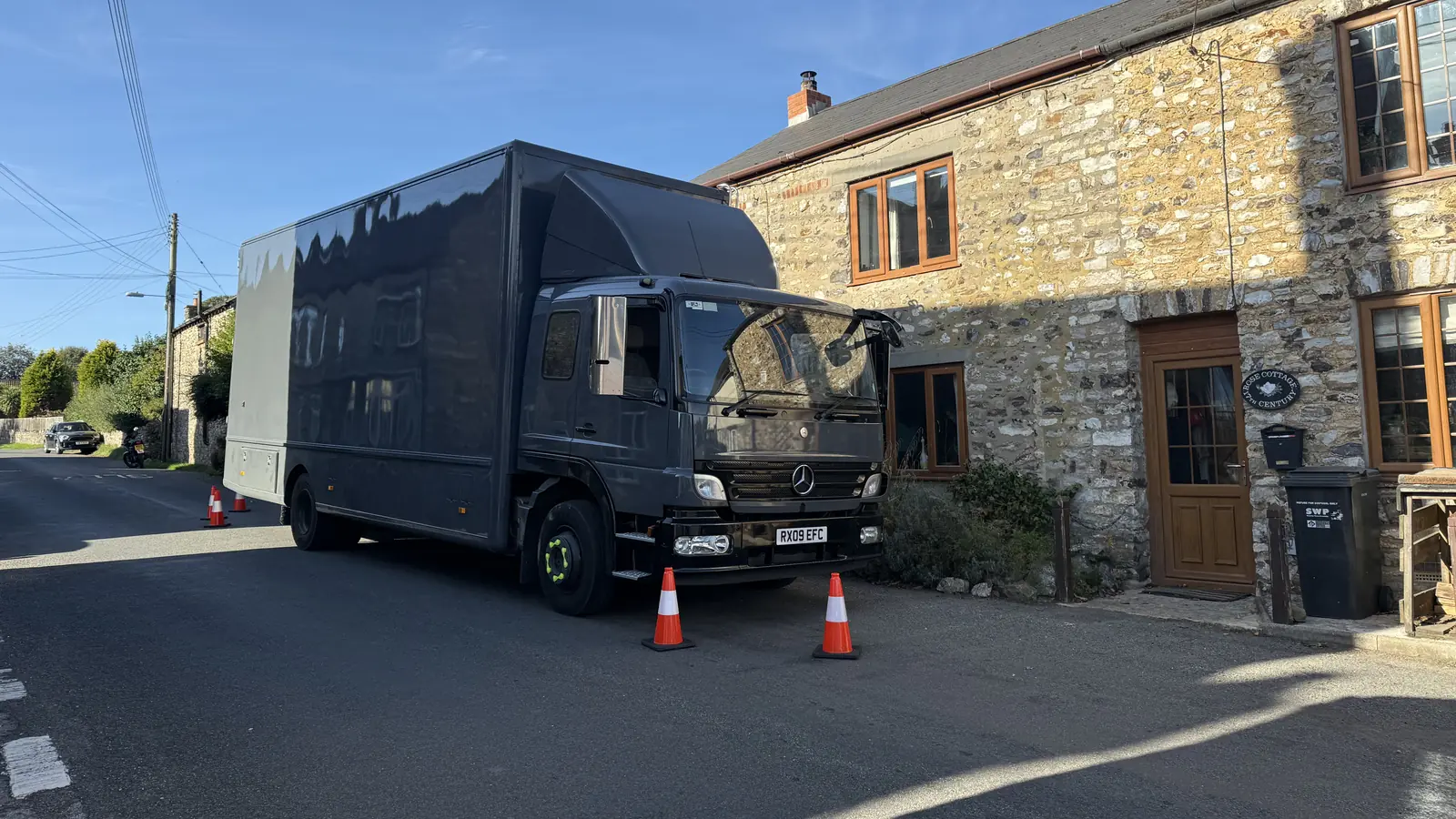
Burpham sits off the Arundel to Chichester roads, at the end of a lane that goes nowhere else. That is what makes it a lovely place to live and an awkward place to load. There is no through route to turn on, no second approach if the first one is blocked, and nowhere to put a lorry while you decide.
Then there is the A27. It narrowly avoids Arundel town centre on a short single-carriageway bypass, and it is a known pinch-point for anything long. A loaded removals lorry leaving Burpham has to get through that before it reaches anything resembling a fast road, which is why the departure time mattered more than the driving time.
We look at both ends before we quote. On a removals job in Arundel the access question is usually the lane, the turning space and the time of day. In Somerset it was a different set of unknowns, checked before the lorry left Sussex rather than discovered on arrival.
On a local move, a problem at the far end costs you an hour. On a long distance move it costs you a day, because there is no second van and no going back.
What Two and a Half Days Actually Buys
The phrase "two and a half days" sounds like a scheduling detail. It is really a description of how the work was split.
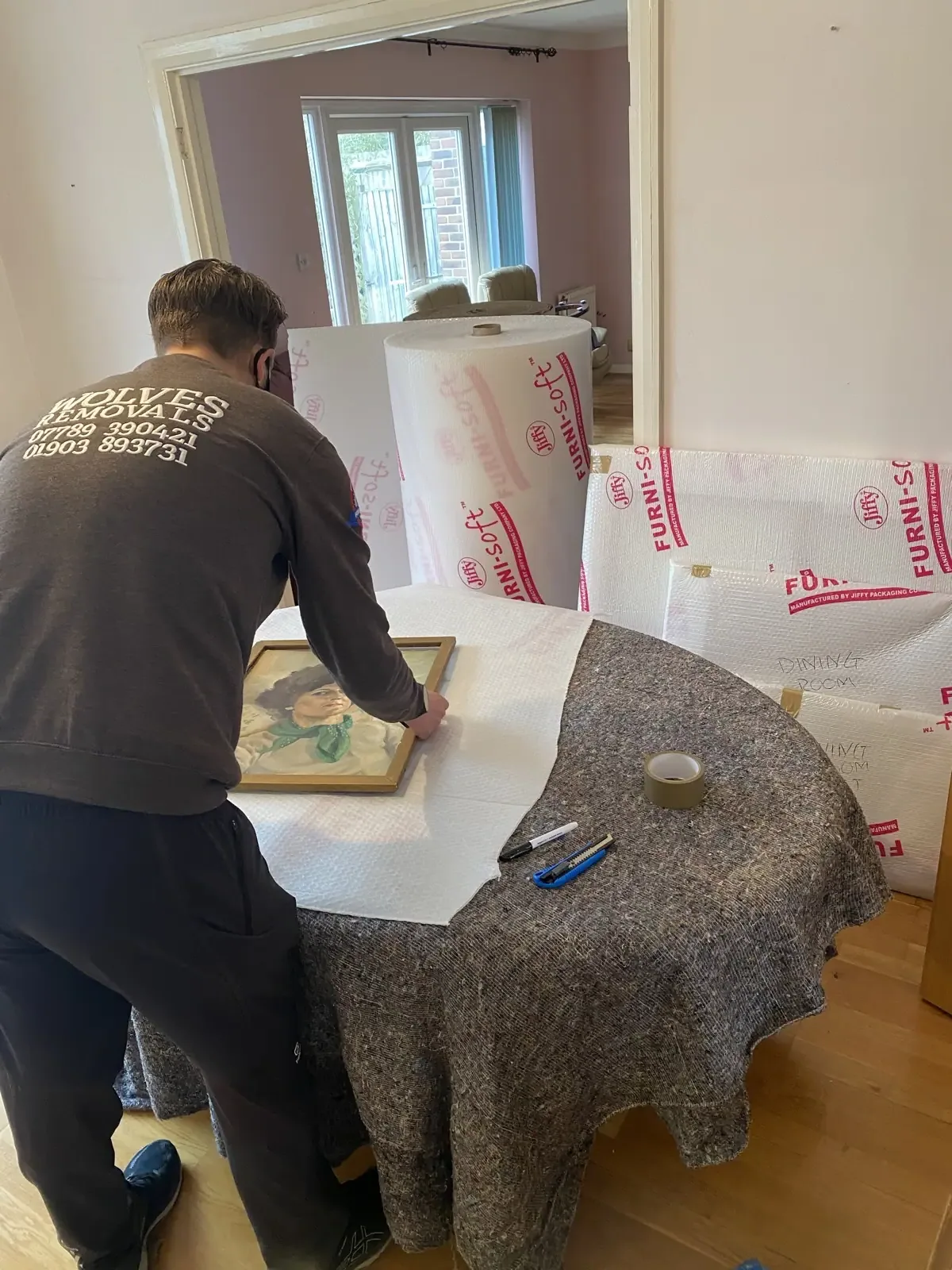
Packing came first, as its own phase, with everything wrapped and labelled for the room it was going to rather than the room it came from. That distinction matters more the further you travel: a box labelled "spare bedroom" is useless if the new house has three of them and the crew unloading are guessing.
The drive followed, and then the unload, unhurried, into a house nobody had stood in before that week. Splitting it this way is the difference between a move that finishes and a move that merely stops.
What We Check Before a Long Distance Removal
The survey does more work on a long distance job than on any other kind. These are the things that change the plan:
- Access at both ends, including the last hundred yards, which is where lorries actually get stuck.
- Whether the lorry can be left safely overnight, or whether the load stays sealed and moves in one run.
- Parking restrictions and timed access at the destination, which are rarely the same as at home.
- What has to be dismantled, and whether it can be rebuilt by the same crew at the other end.
- Which items the family will want on the first evening, so they come off the lorry first.
- Whether anything needs to go into storage rather than travel, because the dates do not always line up.
None of that is exotic. It is simply the work that has to happen before the keys turn, and it is the reason a planned house removal to the other side of the country can be uneventful.
Sussex to Somerset, and Everywhere Else
We are based near Ashington in West Sussex and we move households across the country from here. A move to Somerset is not a special case; it is the same method with more miles in the middle and more planning at the front.
If you are weighing up a move out of the county, the long distance moving guide covers what changes and what does not. And if the dates do not meet in the middle, containerised storage bridges the gap without the load being handled twice.
Well Done to the Crew
Two and a half days, two counties, one crew from the first box to the last. Everything wrapped, loaded, driven and unloaded with care, and a family settling into a new home at the end of it.
Thank you to our customer for trusting us with the move, and every happiness in Somerset.
Planning a Long Distance Move?
Whether it is the next village or the next county but three, the survey is free and the written quote is fixed. Tell us where you are going and what is coming with you, and we will tell you honestly how we would run it.
The Wolves Removals Team
Family-run removals · Ashington, West Sussex
We have moved families and businesses across West and East Sussex, Surrey, Hampshire and Kent since 2016, from our Ashington base. We are fully insured, Checkatrade-verified and a LAPADA Approved Service Provider for antiques and fine art. More about us, or read our reviews.
Two and a Half Days, Two Counties, One Crew — FAQs
There is no useful average, because distance is rarely what decides the price. A long distance move is quoted on volume, on access at both ends, and on how many days of crew and lorry the job needs — a full load out of a house on a difficult lane costs more than a half load off a driveway, whatever the mileage between them. The only honest way to price one is to look at it, which is why the survey is free and the quote that follows it is fixed rather than an estimate that moves on the day. Our pricing page explains how we work out a figure.
There is no fixed cut-off in miles. In practice it is any move that cannot be done there and back in a day: the crew, the lorry and the load are committed overnight, and there is no second van to send back for anything left behind. That is what changes the planning, far more than the number on the map. If that sounds like your move, the long distance moving guide covers what changes next.
As early as you can, and certainly once you have a likely completion date. A long distance removal ties up a crew and a lorry for more than one day, so the dates that go first are the ones everybody wants. Booking early also leaves room for a proper survey rather than a rushed one.
Yes. The crew who pack and load in Sussex are the crew who unload at the other end. On a long distance move that continuity is the whole point: they know what is in which box, what was dismantled and why, and where it is meant to go. Nothing is handed over to a third party mid-journey.
Sometimes, and often it should not be. It depends on volume, access at both ends and how far the load is travelling. Compressing a two-day job into one is how things get broken and how crews arrive too tired to place furniture properly. This Arundel to Taunton move was planned as two and a half days for that reason.
On a long distance removal that runs over more than one day, the load either stays sealed on the lorry or goes into containerised storage, and which one it is gets decided at the survey rather than on the day. What does not happen is the load being split across vehicles or handed to another firm part-way. The crew who loaded it stay with it, and it is unloaded by the same people who packed it.
The load goes into containerised storage rather than sitting on a lorry. Everything is sealed into its own container, and it stays sealed until you are ready. That is usually cheaper and safer than trying to force two chains to complete on the same morning.
Yes. We are based near Ashington in West Sussex and cover the whole country for long distance removals, as well as European moves. Distance is rarely the deciding factor in a quote; volume and access at both ends usually are.