The Garden Made the 164 Miles As Well
A full house from Billingshurst to a village outside Dereham in Norfolk, two and a half days, 164 miles — and a garden of large clipped evergreens that came too.

They could only come because they were already in pots, and that one fact changes everything about how Wolves Removals plans a job like this.
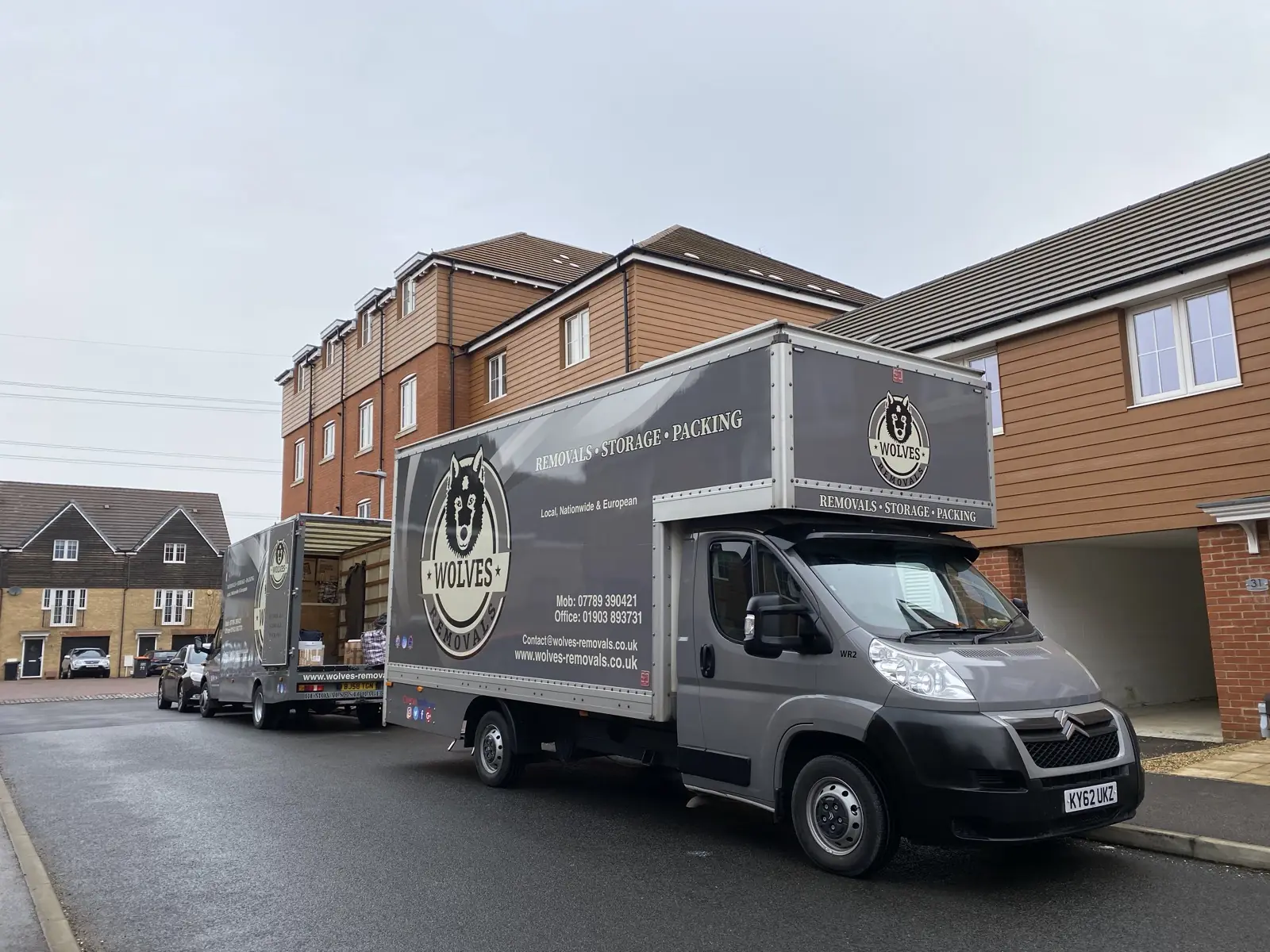
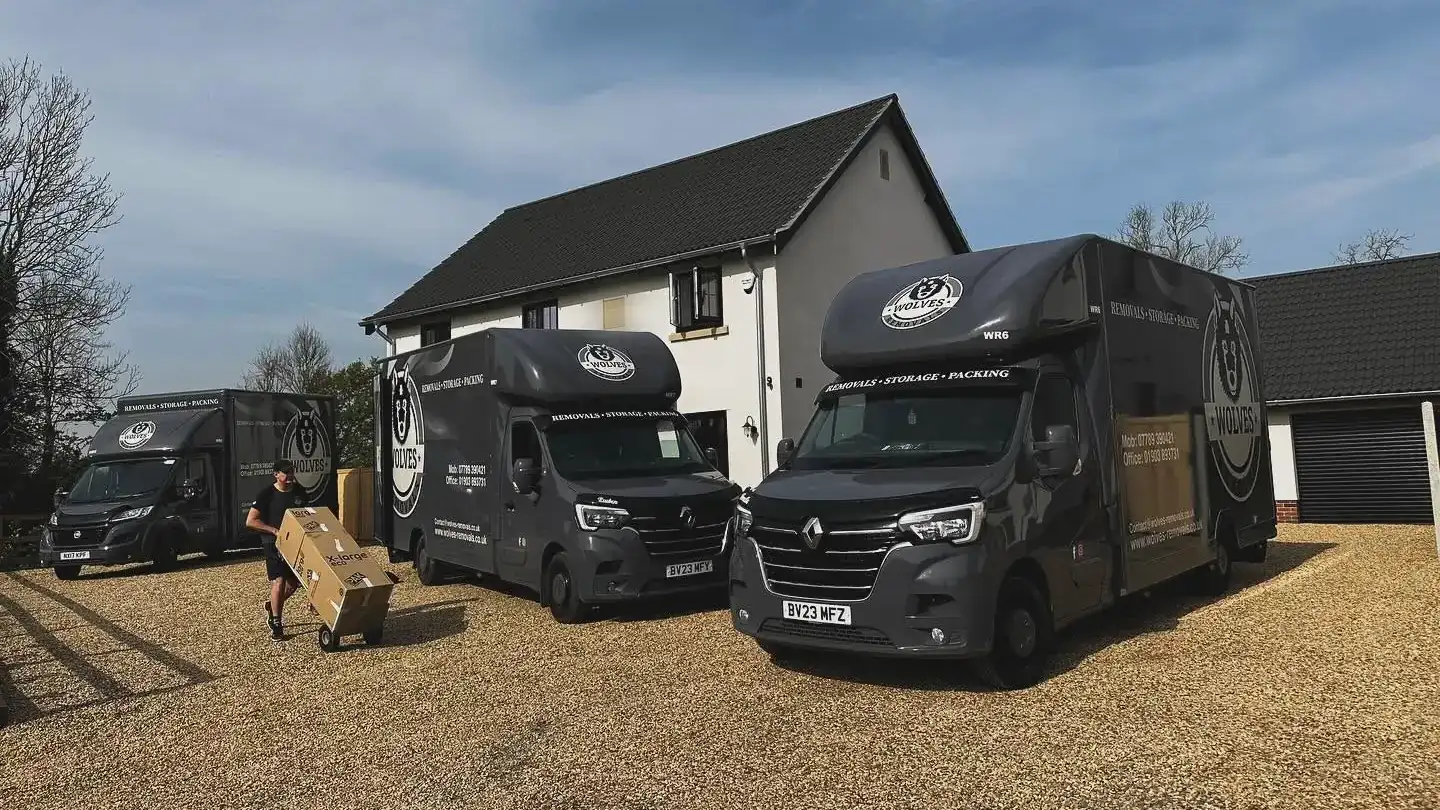
Three Vans on a Billingshurst Driveway
Most of what leaves a house is indoors. This job from Billingshurst was unusual because a good deal of it was standing outside on the block paving, in pots, and had been growing there for years.
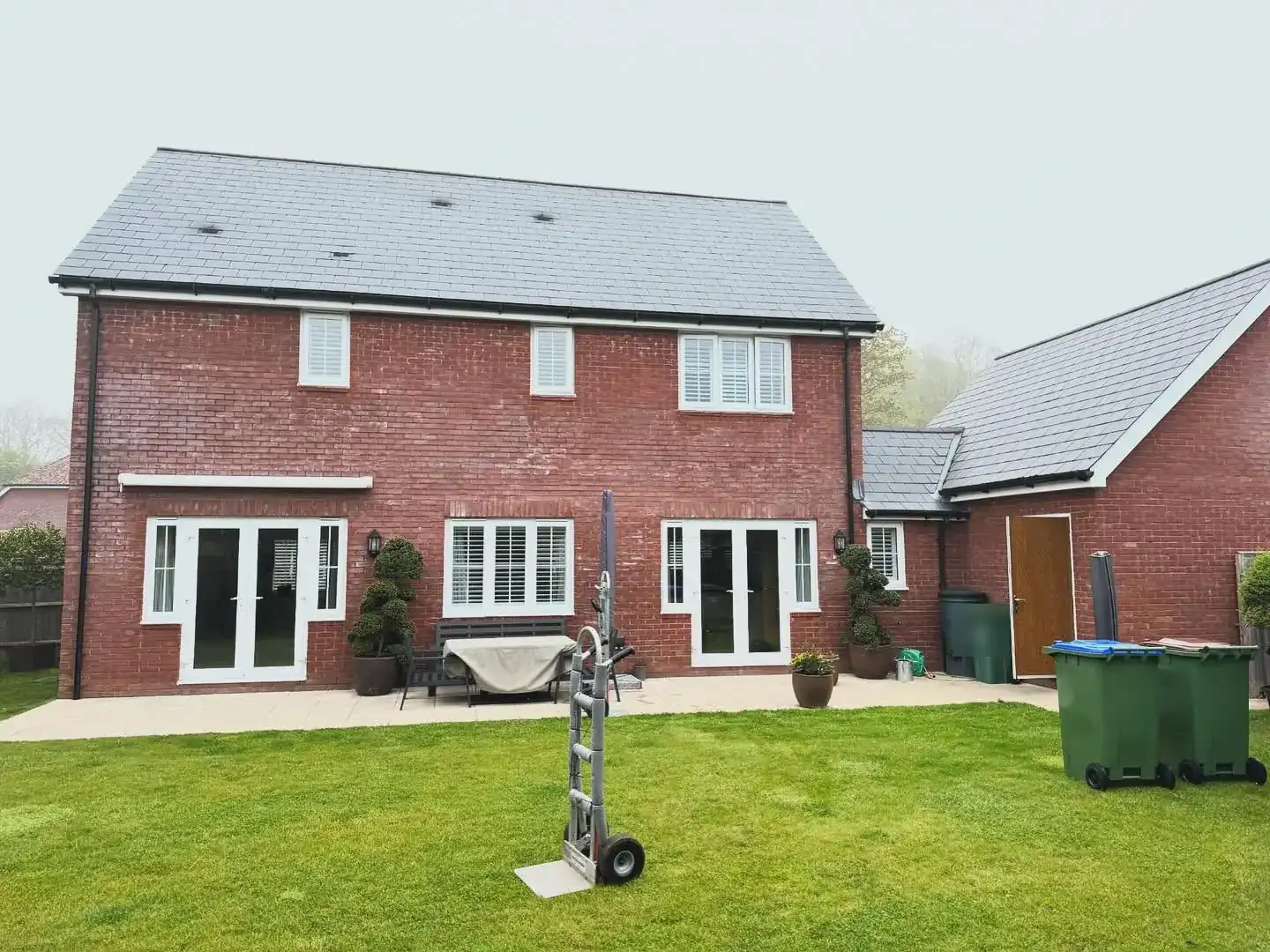
The destination was Bushy Common, a scatter of houses in the parish of Gressenhall in the Breckland district of Norfolk, a couple of miles outside Dereham. By road it is 164 miles from Billingshurst — a shade over three hours with an empty vehicle and a clear run, which is never the condition a loaded removal van is in.
Three vans went. The whole job ran two and a half days.
Why the Garden Could Come At All
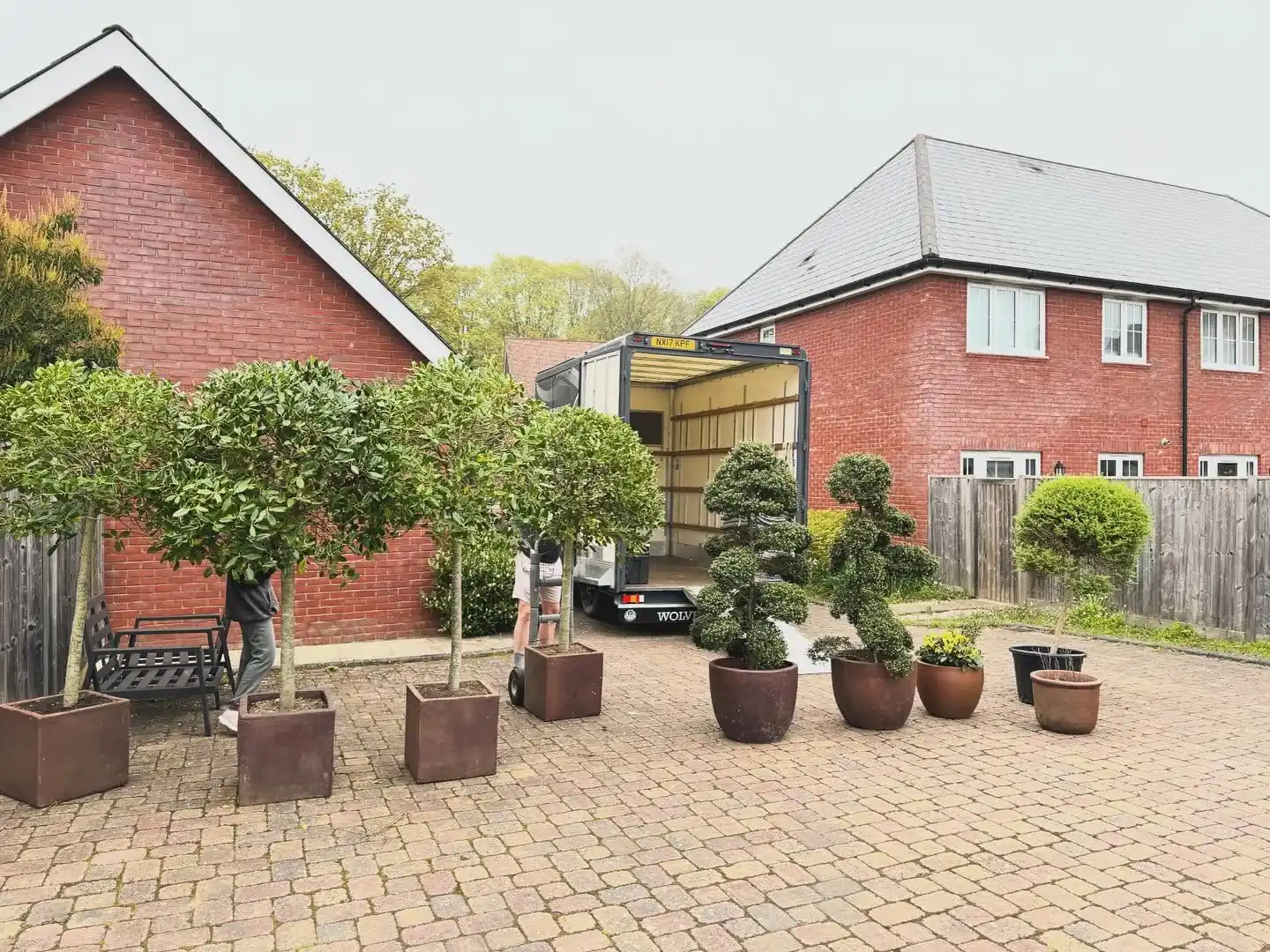
People assume the garden stays. Usually it does — partly because what goes and what stays is settled in the fixtures and contents paperwork, and partly for a good horticultural reason.
The Royal Horticultural Society is clear about lifting an established plant out of the ground. Deciduous trees and shrubs move during the dormant season, late October to mid-March. Evergreens are fussier still: October, or late March when the soil is beginning to warm, so the roots can get going again quickly. On a larger specimen you are digging a root mass ninety centimetres to a metre and a bit across and getting on for half a metre deep. Then the plant spends its first year recovering.
None of which applied here, because none of these plants were in the ground.
That is the whole difference. A containerised plant carries its entire root system around with it in its own soil. It is not being transplanted; it is being transported. The calendar stops mattering and the plant stops being a horticultural problem.
It becomes, instead, a piece of freight that is heavy, top-heavy, irregularly shaped, impossible to stack and, unlike a wardrobe, alive.
What a Potted Garden Costs You Inside the Van
Furniture is co-operative. A wardrobe has flat faces, a predictable centre of gravity, and a top you can put boxes on. Almost everything a removal van is good at depends on those three things being true.
A planted pot is the opposite on all three. The weight is concentrated low in a rigid container that will not deform, so it cannot be eased through a gap. The bulk is high and soft, so it cannot be gripped where the weight is.
And nothing whatsoever can be placed on top of it, which means every one of these plants occupies not just its own footprint but the entire column of van above it, all the way to the roof. Wolves Removals
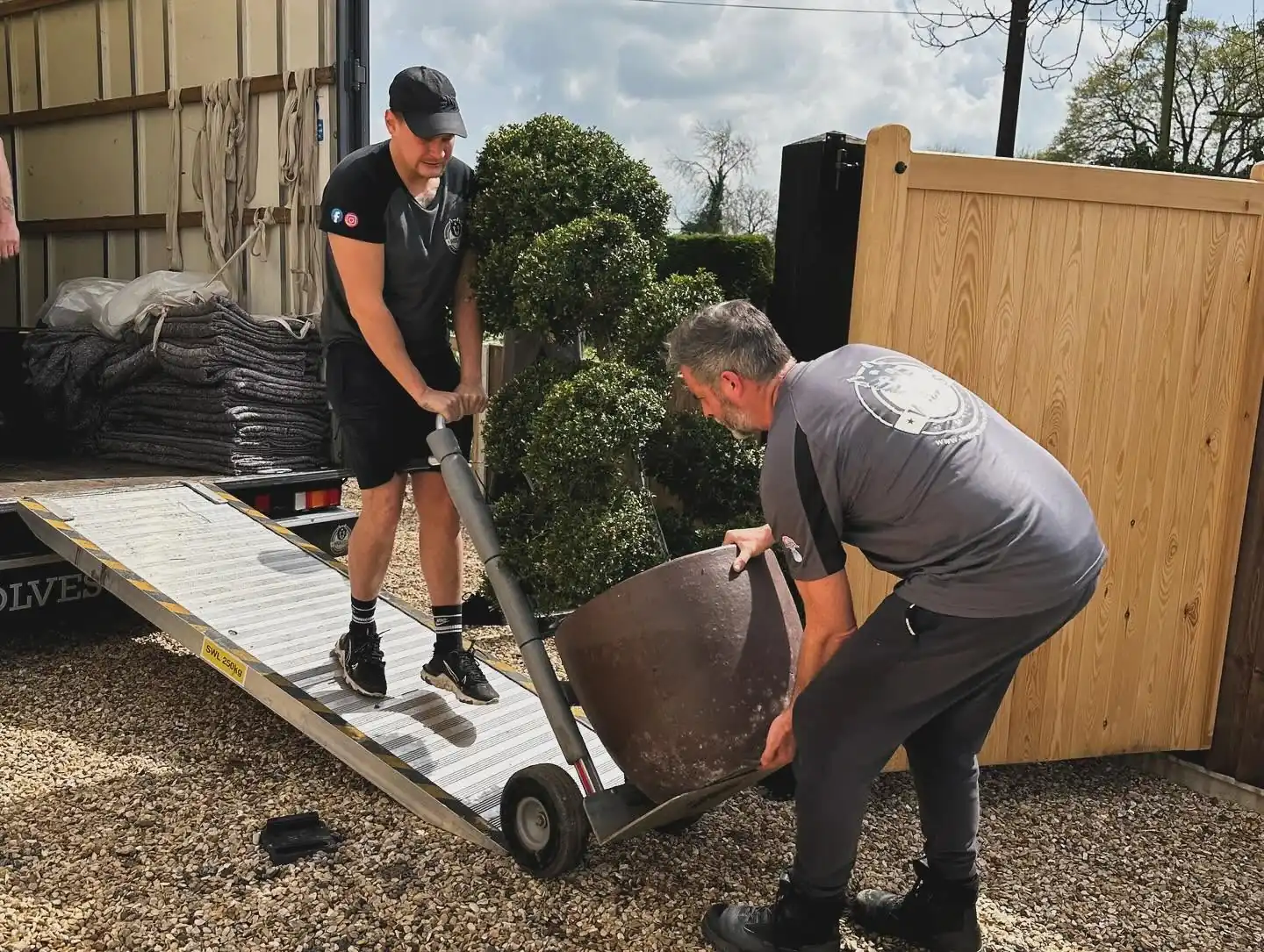
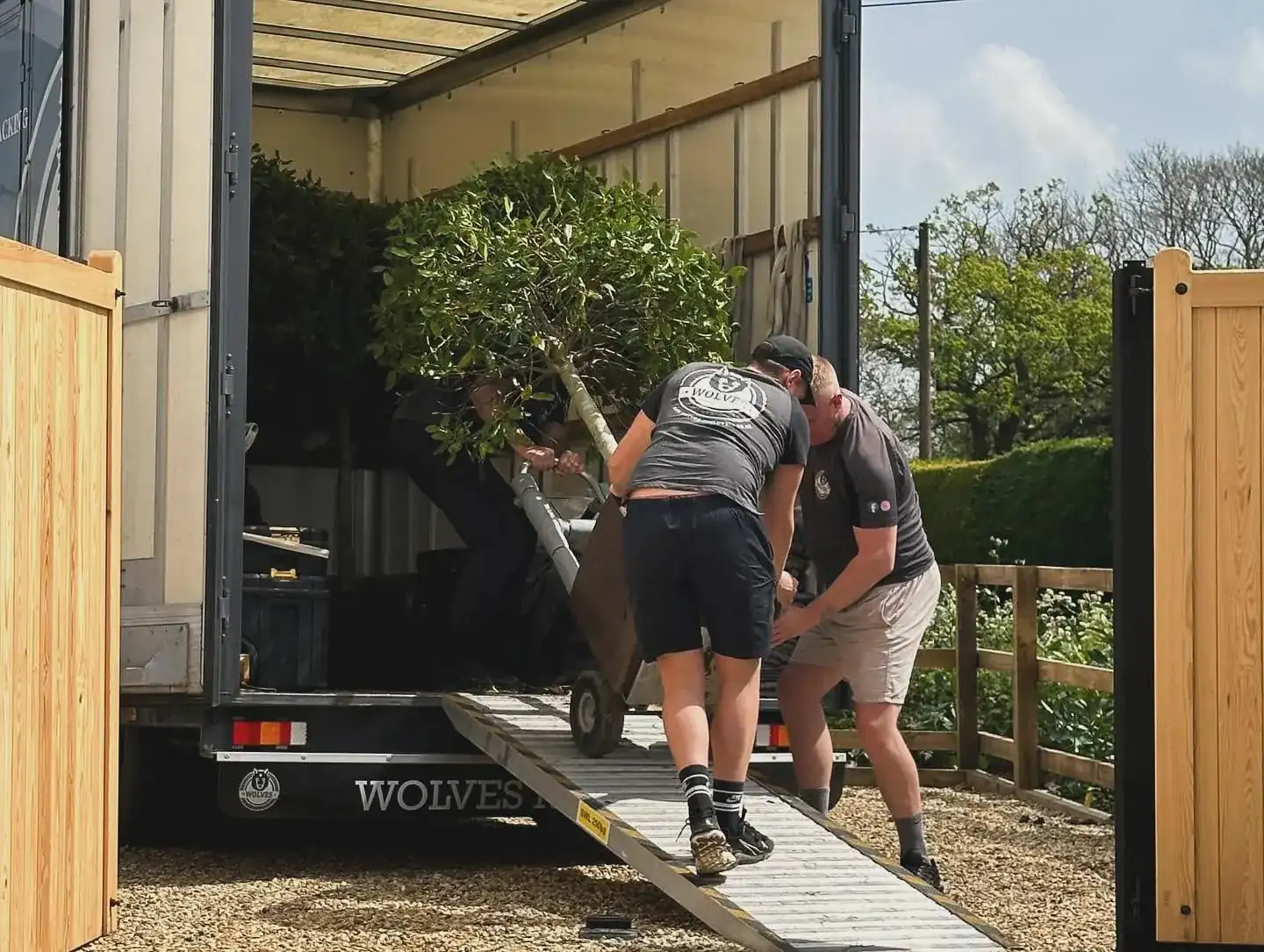
Look at the ramp in that photograph and you will see it stencilled SWL 250kg, its safe working load. Furniture rarely brings that figure into the conversation. Wet soil in a large container is one of the few household items that makes you check it, and it is why these went one at a time, on the truck, with a second pair of hands at the bottom rather than a shout of encouragement.
Two and a Half Days, and a Night on the Vehicle
A move of this length cannot be done inside a day, and that is a fact about arithmetic rather than effort. Once a job runs to two and a half days, some of the load is standing in a vehicle overnight. For furniture that is ordinary and nobody thinks about it.
For a plant it is worth thinking about, because a closed box body overnight is dark, still and unventilated. That is survivable and entirely routine — nurseries move stock across the country this way constantly — but it is a reason to load the living part of a garden last and unload it first, rather than burying it behind the boxes.
The chart is the part worth taking away if you are moving out of the area. When people ring about a long-distance move, the distance is almost always the first thing they mention and almost never the thing that governs the quote. Three hours of driving sits inside a job measured in days. What actually decides the shape of it is how much there is, how awkward the awkward items are, and what the access is like at both ends.
There is more on how that works in our guide to moving long distance from Sussex.
Arriving at Bushy Common
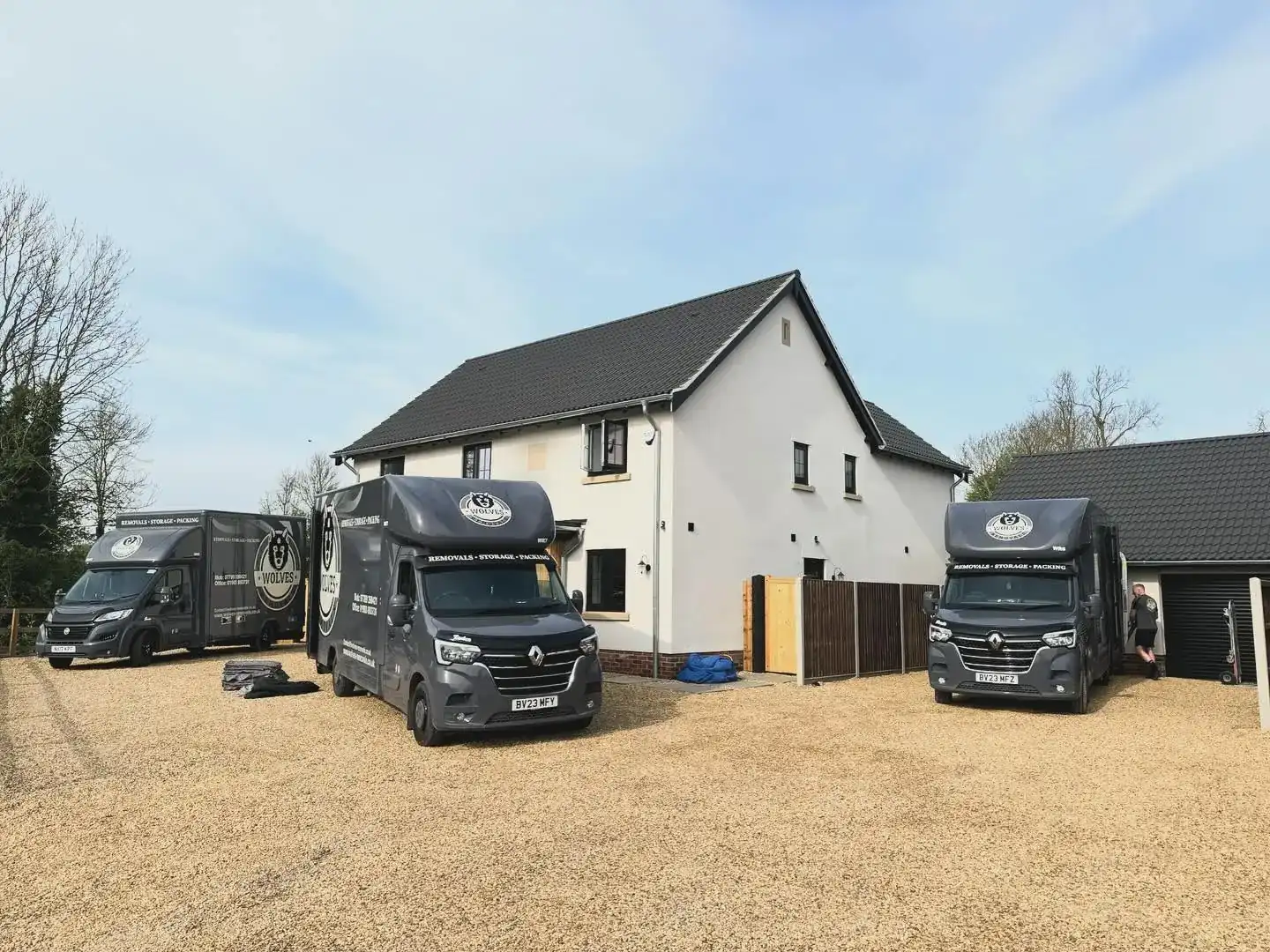
The delivery end was a newly finished house with gravel up to the threshold, fresh timber gates and enough hardstanding to put all three vans where they needed to be. After 164 miles that matters more than it sounds. Access at the far end is the one variable you cannot fix once you have set off, and it is the reason Wolves Removals asks about it before quoting rather than discovering it on the day.
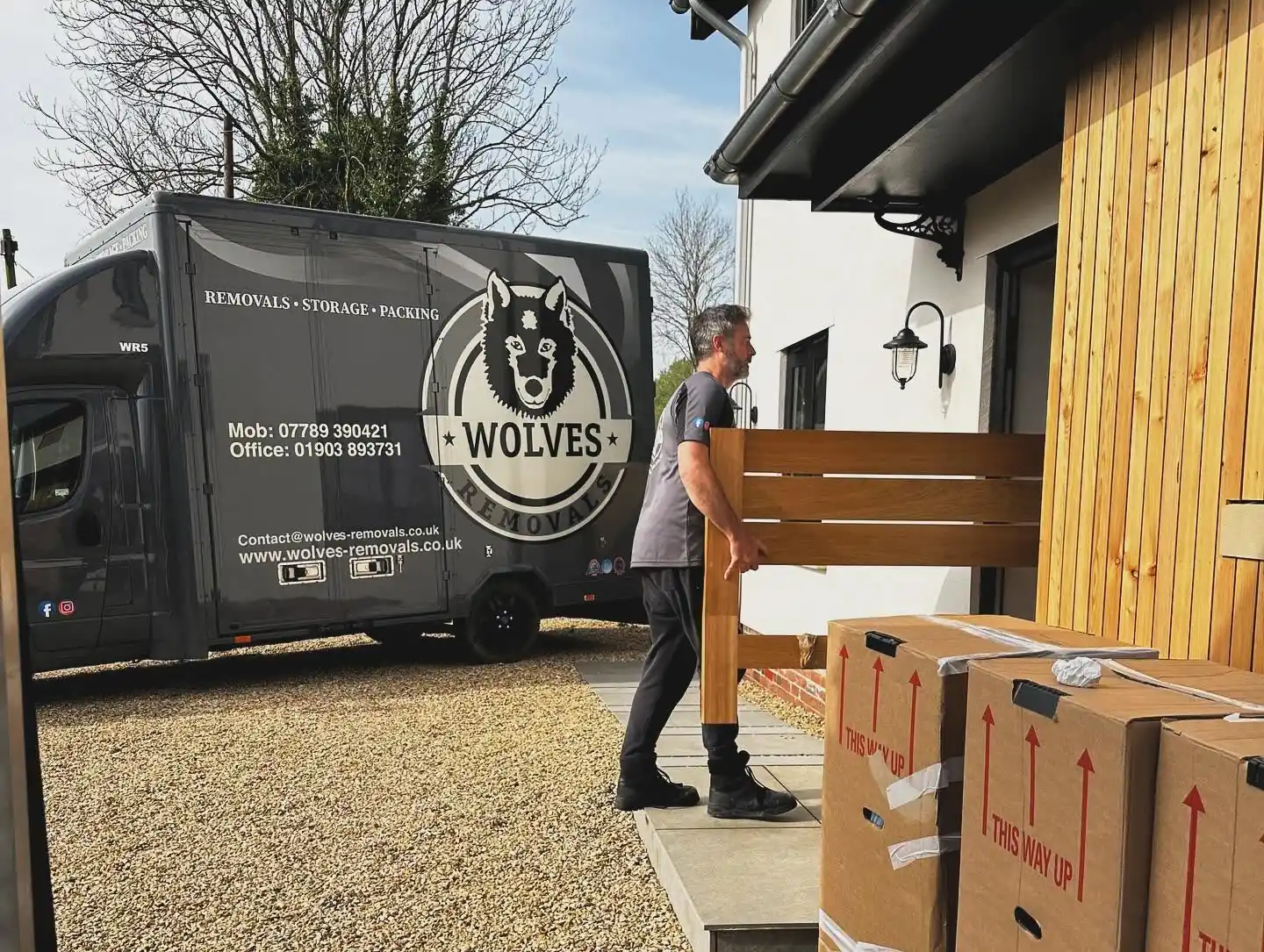
Order matters at this end in a way it does not on a short move. On a local job an item that is in the way can go back on the van and come off again in ten minutes. At 164 miles the van is not coming back, so anything set down in the wrong place has to be carried twice by the same tired people.
Putting a Garden Back Down
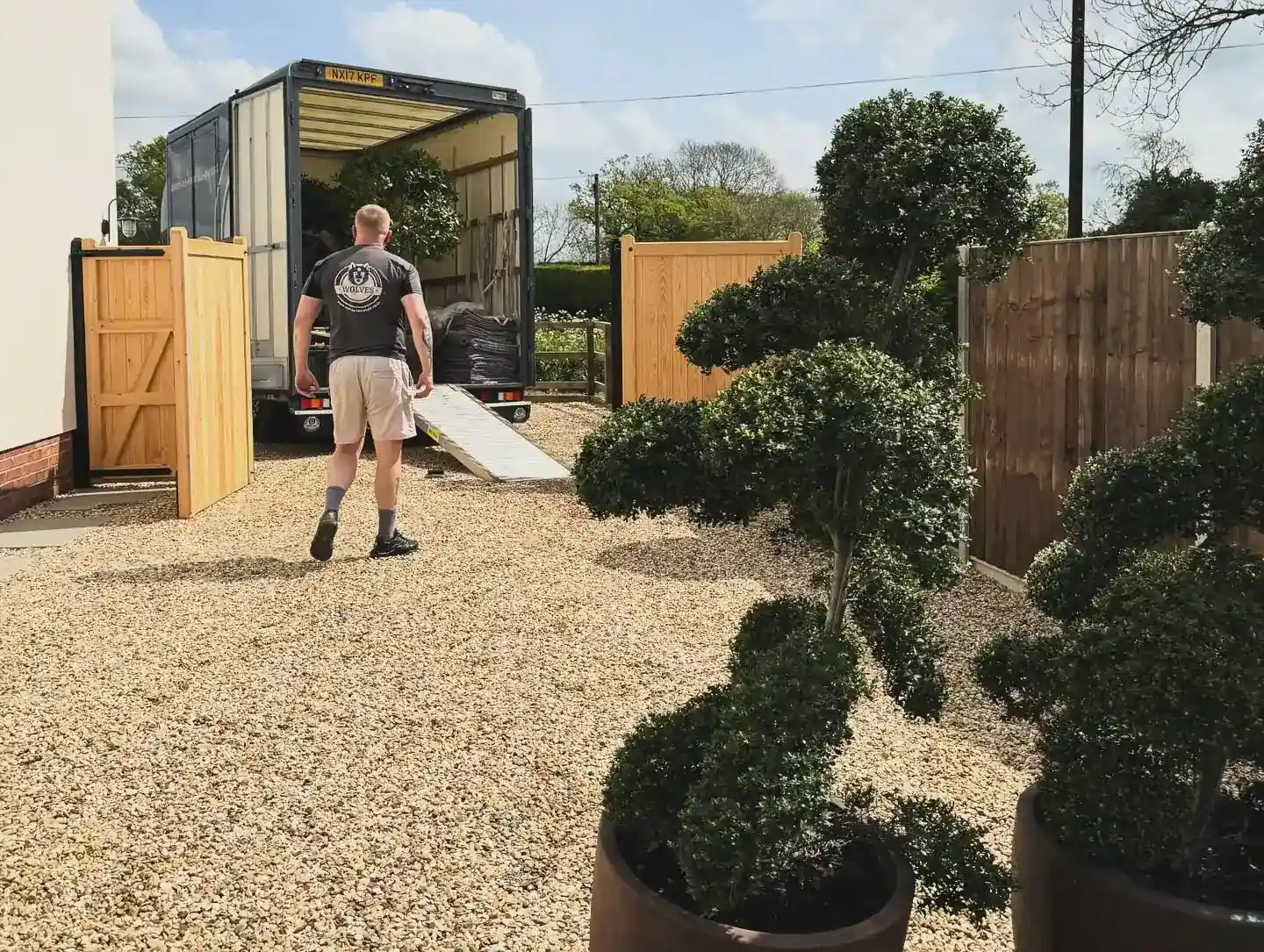
The last thing worth doing on a job like this costs nothing and gets forgotten constantly: put the pots down approximately where they are meant to live, while there is still a crew and a sack truck on site.
A large planted container is a two-person lift with equipment.
Once the vans have gone it becomes an item that stays exactly where it was left until somebody hires help, and we have come back to houses where a row of pots has spent a year standing in a line on the drive because nobody could face moving them again. Wolves Removals
On aftercare the RHS advice is short and worth following. Water thoroughly once things are in place, and keep watering through dry spells. Newly settled evergreens may want water even in winter, though not while there is frost about. Mulch holds the moisture in. Both too little and too much water will hinder a plant through its first year, and a plant that has just been driven the length of the country is entitled to a careful one.
Moving Out of Billingshurst
The village sits on the A29 in the Horsham district, and a good share of the moves we run out of Billingshurst are long ones — people leaving West Sussex for somewhere with more space and a slower postcode. Norfolk, the West Country — Taunton included — and Scotland come up repeatedly.
Three things are worth settling early on a move like that, and none of them is the mileage.
Decide about the garden before you get a quote, not after. Pots, statuary, furniture and equipment can add a surprising amount of volume, and they are almost always the items people forget to mention. A dozen large containers is not a footnote on the van plan.
Say what the access is like at both ends. Especially the far end, which you may only have seen once. Gravel, a turning space and a wide gate are worth more to the day than anything else you can tell us.
Expect the job to be measured in days, not miles. The driving is a few hours of it. Everything else is handling, and handling is what you are actually buying.
If you want the local detail, there is a Billingshurst removals page covering the village and the lanes around it, and our house removals and full packing service pages set out what is included either way.
The Wolves Removals Team
Family-run removals · Ashington, West Sussex
We have moved families and businesses across West and East Sussex, Surrey, Hampshire and Kent since 2016, from our Ashington base. We are fully insured, Checkatrade-verified and a LAPADA Approved Service Provider for antiques and fine art. More about us, or read our reviews.
The Garden Made the 164 Miles As Well — FAQs
Yes. Potted plants travel far more easily than planted ones because the roots never leave their own soil, so there is no dormant season to work around. The limits are weight and shape rather than horticulture. A large soil-filled pot is a two-person lift with a sack truck: its weight sits low in a rigid container that will not deform, and nothing can be stacked on top of it, so it takes up the full height of the van above its footprint. On a Billingshurst to Norfolk removal, ten large potted evergreens were loaded this way, one at a time, using a ramp rated to a 250kg safe working load. Because a closed van overnight is dark and unventilated, plants travel best loaded last and unloaded first. Mention pots when you ask for a quote so the volume is planned for properly.
The Royal Horticultural Society advises moving deciduous trees and shrubs during the dormant season, from late October to mid-March, and evergreens in October or late March once the soil begins to warm so the roots can get going again quickly. On a larger specimen that means digging a root mass roughly 90cm to 1.2 metres across and 40 to 45cm deep, or more, and the plant then spends its first year recovering from the disturbance. That timing rarely lines up with a house completion date, which is why an established garden is normally left behind and settled in the fixtures and contents paperwork rather than dug up. A potted garden avoids the problem entirely: on a Billingshurst to Norfolk removal, ten large evergreens travelled because they were already in containers, with roots that never left their own soil.
A full-house removal from Billingshurst to Bushy Common, a village near Dereham in Norfolk, ran two and a half days using three vans. The road distance is 164 miles, which is a little over three hours of driving with an empty vehicle and no traffic, so the drive itself is a small share of a job measured in days rather than hours. Because the job ran over two and a half days, some of the load spent a night in the vehicle, which is routine for furniture. The rest of the time went on packing, loading, unloading and placing, plus the extra handling that a garden of large potted plants brought with it. On any long-distance move, the mileage is what people ask about first and almost never what decides how long the job actually takes; volume and access at both ends do that.
That is agreed between you and the buyer in the fixtures and contents paperwork, not decided by a removal company, so settle it in writing before completion. As a rule of thumb, plants growing in the ground are treated as part of the property and stay with it, while anything standing in a pot is treated as yours to take, because it was never part of the garden’s fixed planting in the first place. Do not rely on that assumption alone: put the pots on the fixtures and contents list so there is no dispute later. On a Billingshurst to Norfolk removal, a garden of ten large potted evergreens travelled with the rest of the house precisely because they were already in containers rather than planted in the borders, which is the same distinction that decides what a buyer can reasonably expect to be left.
Yes. Billingshurst sits on the A29 in the Horsham district, and long-distance moves out of the village and the surrounding area are a regular part of the work, with Norfolk, the South West and Scotland coming up repeatedly. One recent example ran from Billingshurst to Bushy Common, a village near Dereham in Norfolk, 164 miles away: a full house plus a garden of ten large potted evergreens, using three vans over two and a half days. Long moves like that are quoted on volume, access and handling rather than on mileage alone, and they are normally surveyed before a price is given, because how much there is and what the access is like at both ends decide the shape of the job far more than the distance between the two addresses does.