How to Organise a Storage Unit and Keep Track of What's in It
Finding one thing in a full storage unit is quick if every box has a number, a label you can read in a stack and a line on one inventory list.

An inventory list matters because most people go weeks or months without seeing their things. In the Self Storage Association UK’s 2025 report, 76% of personal-use customers went to their unit monthly or less.
How do you organise a storage unit?
To organise a storage unit, number every box and label it on two sides and the top. Keep one master list of what each box holds and where it sits, and leave a walkway with the least-needed things at the back.
Organised, numbered, listed
The four habits
What should you do before anything goes into storage?
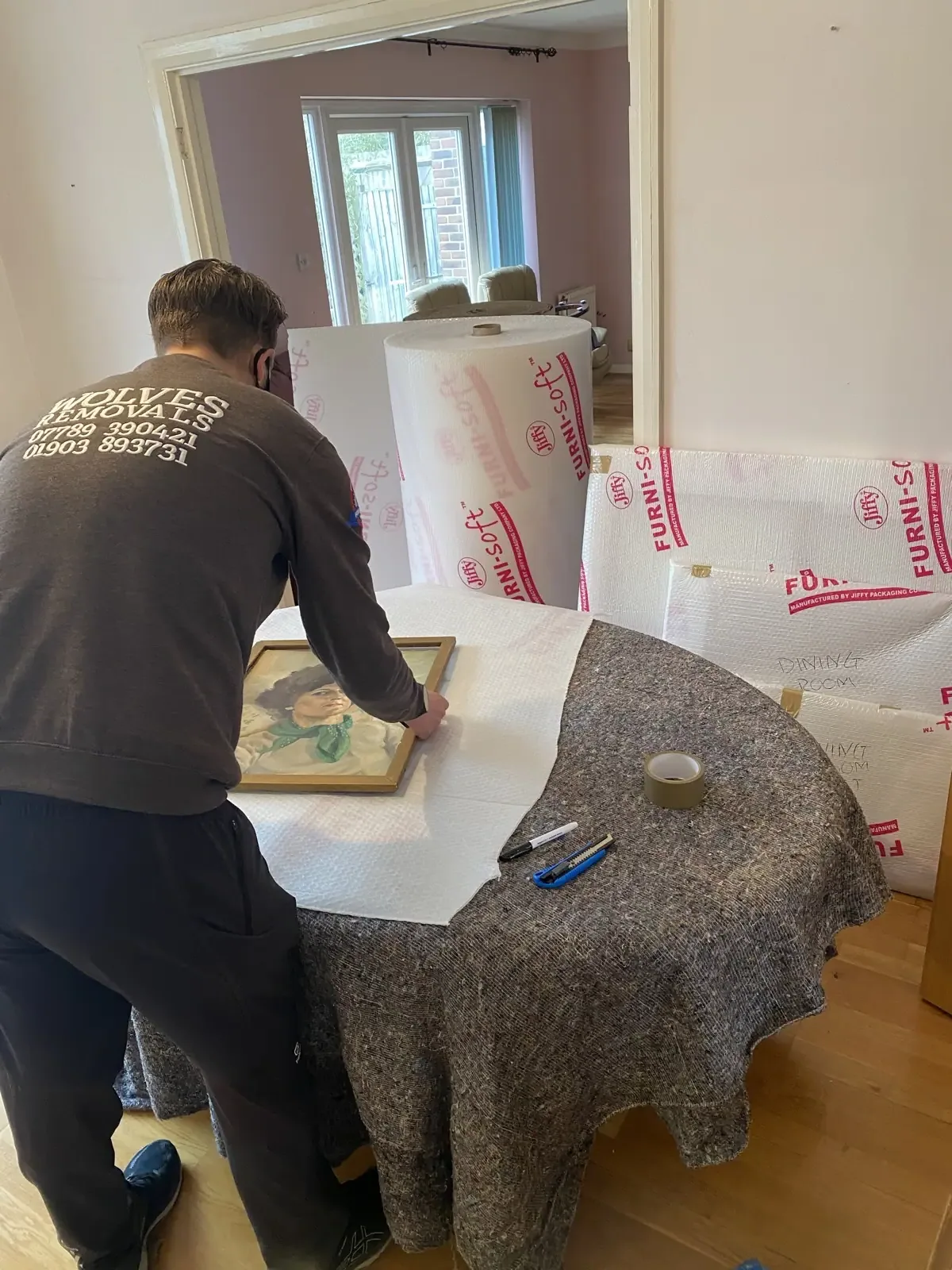
Sort, clean and dry everything before it is stored, because storage keeps things the way they went in. The Canadian Conservation Institute warns that anything boxed or bagged while damp can go mouldy inside its container. English Heritage notes that moths attack soiled fabric first.
Before storage: defrost, empty drawers, photograph valuables
Before anything goes in
- Sort: Decide what goes, and put aside a small pile you will want back first.
- Clean: Wash or dry-clean fabrics, then let everything dry, including the inside of fridges and freezers after defrosting.
- Empty: Empty drawers and take out loose shelves. Take furniture apart where you can, with the fixings bagged and taped to the piece.
- Record: Photograph anything valuable and keep receipts or valuations with your list.
- Insure: Check your cover. The Self Storage Association UK says home contents insurance normally does not cover goods in storage.
What is the best way to label boxes for storage?
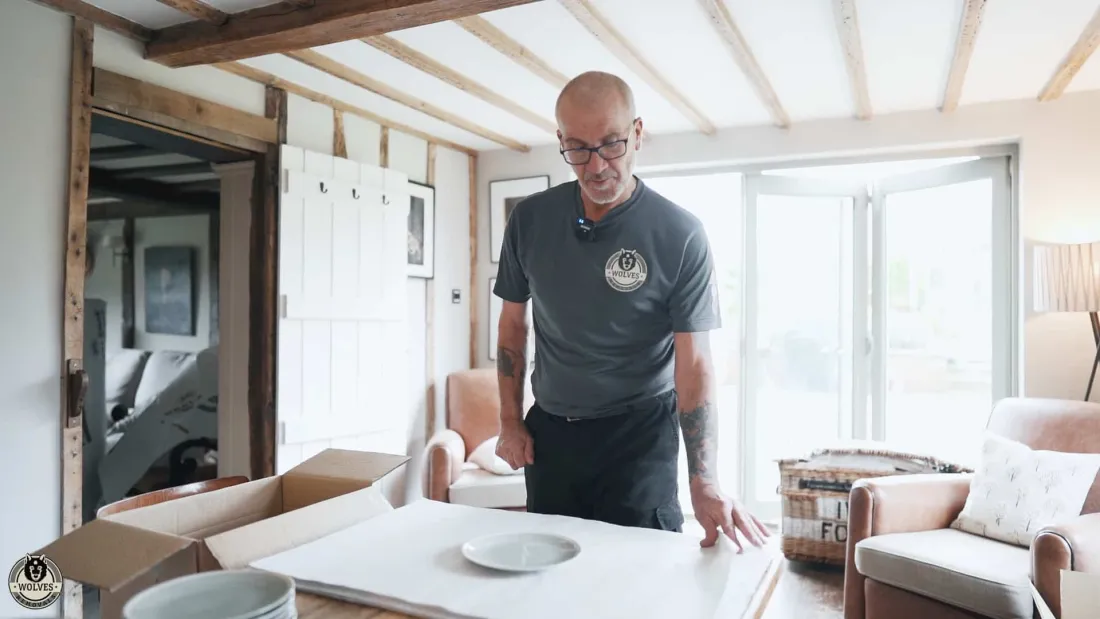
Give every box a number, write it large on two sides and the top, and write the main contents underneath. The Museum of Liverpool’s archive guidelines number boxes in a running sequence, mark the lid and the base, and put a matching label inside each box.
What a good box label shows
Labels that last
- Use a room letter and a running number: K-07 is the seventh kitchen box. List the items as well as the room, as the Self Storage Association UK advises. Coloured tape per room helps in a big stack, but write on the box as well, because tape can come off.
- Write on the box itself, not only the lid. Lids get swapped, and a label on the lid can end up on the wrong box.
- Use a black waterproof marker on the cardboard. Collections Trust guidance warns that self-adhesive labels and tapes always deteriorate: they drop off, refuse to come off or stain.
- Cross out old writing on re-used boxes, and number every part of anything you take apart.
- Storing a student’s things for the summer? Labels matter even more, because months can pass between collection and redelivery. See our student storage.
How do you keep track of what’s in storage?
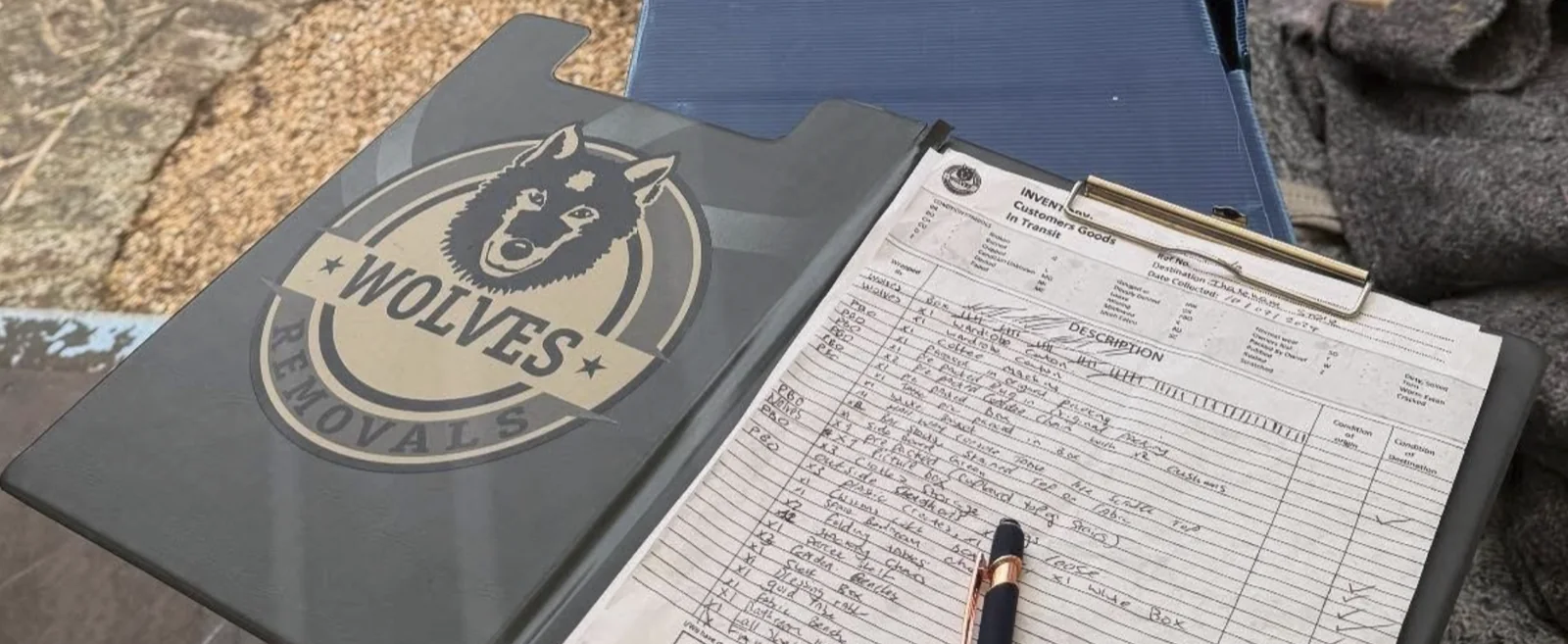
Keep one master list with a line for every box: its number, what is in it, how many items, roughly what it is worth and where it sits. That is close to Collections Trust’s Spectrum, the UK museum standard for an inventory. Spectrum asks for a unique number, a name, a count, a brief description or image, and the current location. That way, anything can be found and listed for an insurance claim.
Ticked off against the list
A storage unit inventory list you can copy
| Box | Room | What is inside | Items | Value | Photo | Where it sits |
|---|---|---|---|---|---|---|
| K-07 | Kitchen | Saucepans, lids, colander | 9 | £60 | Yes | Back row, left, bottom |
| L-02 | Living room | Mantel clock, framed prints | 4 | £350 | Yes | By the door, top |
| B2-04 | Bedroom 2 | Winter coats, boots | 6 | £400 | Yes | Left wall, middle |
Example rows. Swipe the table to see all seven columns. Use one line per box, and add a column for the container number if your things go into containerised storage.
Update the location every time a box moves, and keep a copy away from the unit, on your phone and on paper at home. Photos help an insurer, but in one decision the Financial Ombudsman accepted that photos alone may not prove ownership. Keep receipts, valuations or bank statements with the list. Our storage calculator builds a quick inventory and estimates how many containers it will fill.
Storing business stock or records? Records
Log the date and quantity each time a box goes in or out, so the list doubles as a stock count. HMRC expects records to be kept for at least five years after the 31 January deadline if you are self-employed. A limited company must keep them for at least six years from the end of the financial year they relate to. See our business storage.
Should you use plastic boxes or cardboard for storage?
Plastic and cardboard both work if everything inside is completely dry. Lidded plastic boxes keep moths out and do not soften in damp, but they trap any moisture inside, so we avoid sealing wood or fabric in plastic for long periods. Strong double-walled cardboard is fine in dry, stable storage.
Lidded plastic or cardboard
Plastic, with lids Dry contents only
English Heritage’s moth advice is to keep little-used things in boxes with tight lids. For a wedding dress, the V&A advises breathable wrapping, not plastic, because plastic covers risk condensation and mould. Vacuum bags keep pests out, but Germany’s down and feather trade body advises against squashing duvets for long.
Cardboard Dry, stable storage
Corrugated board weakens in damp. In a 1993 packaging study at Victoria University of Technology, boxes lost 44% to 50% of their strength at 91% relative humidity. Older tests cited in the same study found that a box under a long-term load keeps only about 55% of its short-term strength. Use new double-walled boxes for the bottom layer.
How should you stack boxes in a storage unit?
Stack boxes of the same size squarely in columns, corner on corner, with the heaviest at the bottom. A box carries most of its load through its corners and edges, so stacking corner on corner keeps more of its strength. In research for the Fibre Box Association, aligned columns lost 12% to 20% of their compression strength, against 49% to 54% for brick-pattern stacks.
Columns, not bricks
Keep each box light enough to lift from where it will sit. HSE’s guideline weights for a load held close to the body are 25 kg for men and 16 kg for women at waist height. Near the floor or above shoulder height, they fall to 10 kg and 7 kg. HSE stresses these are not safe limits. Keep the top of each stack below shoulder height: HSE’s warehouse guidance lists stacking above it as a handling risk. Pack heavy things such as books in small boxes; our guide to packing boxes covers the rest.
How do you lay out a storage unit for easy access?
Put what you need least at the back of the unit, keep a walkway down the middle, and leave what you will want first by the door.
A unit laid out for access
- 1. Heavy furniture and boxes you will not need for a while at the back.
- 2. Boxes in columns on pallets or sturdy shelves, heaviest low, with the labels facing the walkway.
- 3. Mattresses flat on boards; we store them flat in our containers too. Never fold or roll one to make it fit: our mattress guide explains why.
- 4. The boxes you will need first, by the door.
- 5. A gap between your things and the walls, so air can circulate.
Sources: Self Storage Association UK customer advice; Canadian Conservation Institute storage notes; mattresses: our own practice.
How do you stop things getting damp or damaged in storage?
Keep humidity steady and below about 60%, keep things off the floor, and only store what is clean and dry. The National Archives recommends 35% to 60% relative humidity for paper. Above about 65%, mould becomes a risk. The Canadian Conservation Institute says it can grow on paper in about 100 days at 70%, 10 days at 80% and 2 days at 90%. The Institute’s mould bulletin also advises keeping stored things 35 to 45 cm from cold outside walls, where condensation can form. In a walk-in unit, ask how the building is kept dry.
Off the floor, clear of cold walls
Days until mould grows on paper
At 70% humidity about 100 days
At 80% humidity about 10 days
At 90% humidity about 2 days
Source: Canadian Conservation Institute, Caring for paper objects.
How to store the awkward things
Mattresses: Flat, in a cover, how we store them
Fridges, freezers: Defrosted, dry, before they go in
Wooden furniture: Steady conditions, not a garage or loft
Sofas, chairs: In breathable covers, clean and dry first
Clothes, textiles: Clean, lidded boxes, moths go for soiled fabric
Books: Upright or flat, never spine facing up
Photographs: Acid-free boxes, not in a loft or cellar
Framed pictures: Off the floor, not leaning on a wall
Sources: CCI furniture care; University of Illinois book care; The National Archives photographs leaflet; CCI paintings storage; English Heritage; our own storage rules.
What should you not put in storage?
Do not store anything flammable or explosive, such as petrol, paint, solvents, gas bottles or aerosols. Food, anything that will rot, plants, living things and anything illegal stay out too. Our storage service page sets out what we cannot store; ask us if you are not sure. Never store a swollen or damaged e-bike or e-scooter battery: the Department for Transport says such packs “pose an extremely high fire risk”.
What stays out
Keep these out of storage
Petrol, paint, solvents
Gas bottles
Aerosols
Food
Plants
Pets, anything living
Damaged e-bike batteries
Anything illegal
Sources: our own storage rules; Self Storage Association UK; Department for Transport.
How is containerised storage different from a self storage unit?
In a walk-in unit you pack, stack and visit your things yourself. In containerised storage like ours at Wolves Removals, your things are packed into a container when we collect them, sealed, and kept in a warehouse until you ask for them.
Walk-in room or sealed container
Our timber containers each hold about 250 cubic feet: roughly a sofa, a fridge-freezer, a wardrobe, a coffee table and a good stack of boxes. Each is labelled with your name and reference and kept in our own alarmed, staff-controlled Sussex warehouse. We are a family-run firm, founded in 2016, and in 2025 we moved into a larger warehouse. A container is opened only when you ask, under supervision, and resealed afterwards. We offer both short-term storage and long-term storage.
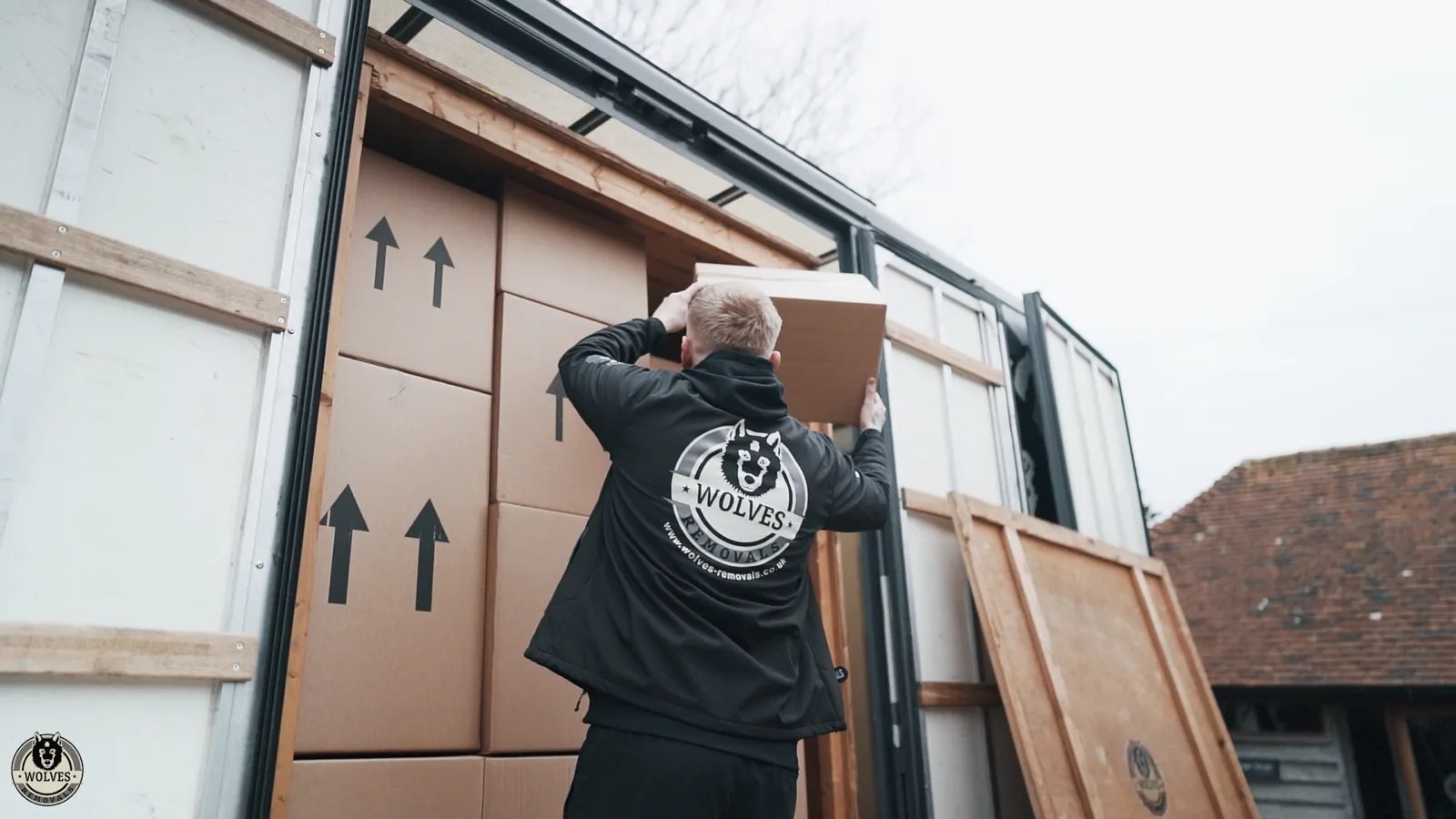
Containerised storage makes the list even more important. You will not see your boxes until the container is opened, so finish the list before it is sealed and note which container each box went into. We are fully insured, with goods-in-transit and public liability cover in place, and optional full damage insurance is available for an extra 10% of your invoice total.
Storing a home’s contents between moves, or for a long stay? Tell us what you need to store and for roughly how long, and we will send a written quote.
Ask about storage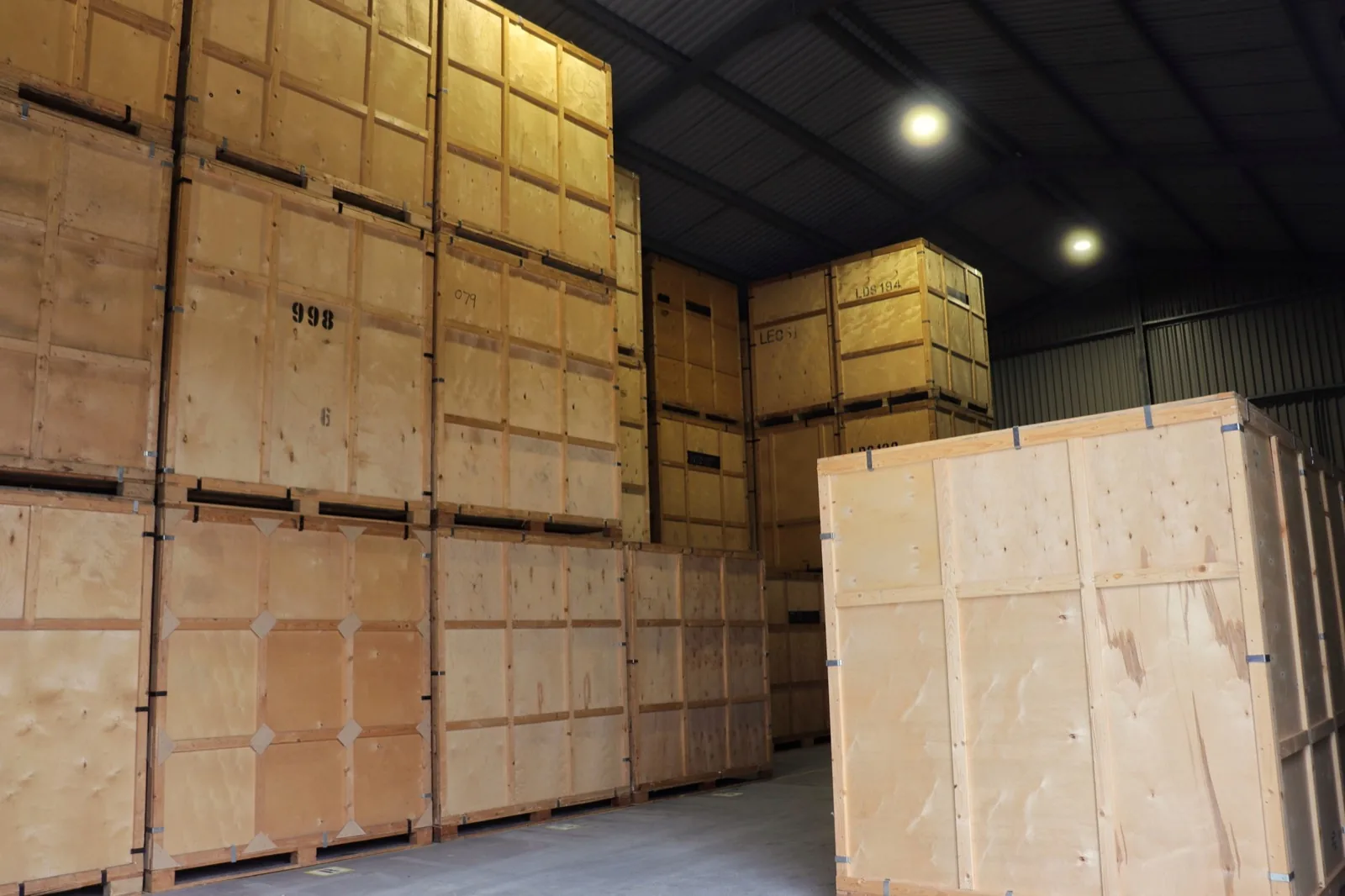
How often should you check your storage and update the list?
Update the list whenever a box goes in or out. For a walk-in unit, the Self Storage Association UK suggests visiting once a month to open the door, let air circulate and check your belongings.
On each visit
Keeping the list and the store in order
- Every move: Update the box’s location and the date. If larger items go in or out, check your insurance still covers the total.
- Every visit: Look for damp, musty smells and crushed boxes, and for pest signs: droppings like grains of sand and small irregular holes in fabric.
- Before it comes out: List what you need first, and give us a little notice if your things are in one of our containers.
Sources: Self Storage Association UK; Collections Trust Spectrum; American Institute for Conservation.
Jack Wolfe
Director, Wolves Removals · Ashington, West Sussex
Jack runs Wolves Removals, which has moved families and businesses across West and East Sussex, Surrey, Hampshire and Kent since 2016 from its Ashington base. The firm is fully insured, Checkatrade-verified and a LAPADA Approved Service Provider for antiques and fine art. More about us, or read our reviews.
Frequently Asked Questions
Yes, you still need an inventory list even when every box is labelled. Labels tell you which box is which. The list tells you what is in each box, what it is worth and where it sits, without opening anything. Insurers can ask for proof of ownership and value, so keep the list with your photos and receipts.
Label two sides and the top, so a box can usually be read wherever it ends up in a stack. Write a number, the room and the main contents in black waterproof marker, because tape-on labels tend to drop off over time. Put a copy of the contents list inside too.
Yes, any spreadsheet or a notes app that holds photos works for a storage inventory. Give each box one line with its number, contents, value and location, and photograph the open box before you seal it.
Most things keep for years in storage if they go in clean and dry and the space stays stable. Damp is the main risk, and wooden furniture suffers most where conditions swing, such as garages and lofts.
Your things should not get damp in storage if the space is dry and stable and nothing goes in damp. Wolves Removals’ containers are sealed and kept in a dry, ventilated warehouse.
Yes, you can reach your things in containerised storage with a little notice. At Wolves Removals we bring your container out, open it under supervision and reseal it afterwards. If you expect to need things often, tell us when you book and we will position your container for easier handling.