Moving Antique Furniture: What Really Causes the Damage
Antique furniture rarely gets damaged in a move the way people expect.

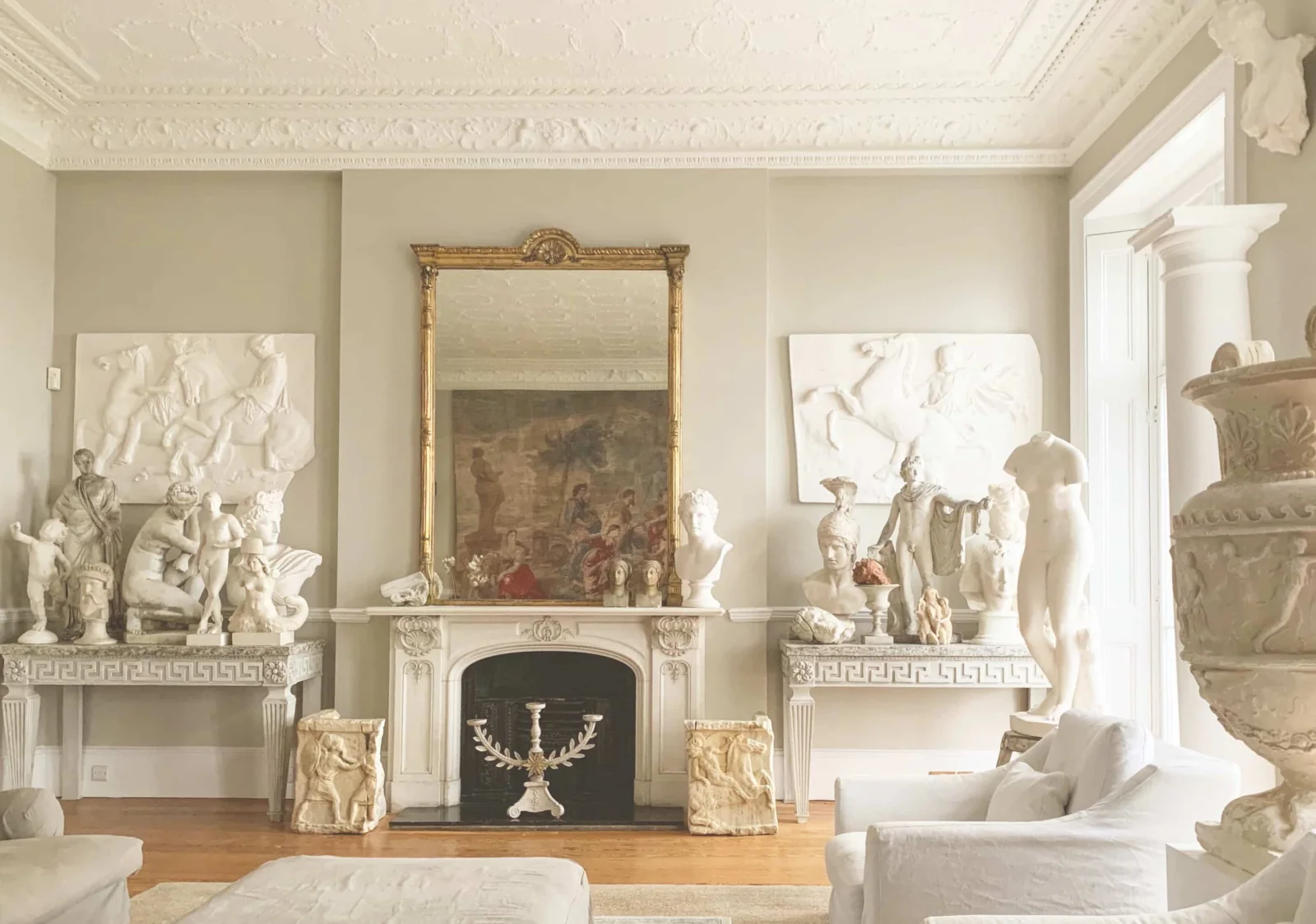
It is not usually dropped. It is wrapped in the wrong material, lifted from a part that was never structural, or moved from a damp old house into a dry warm one and left to split quietly over the following month. This is what actually goes wrong when antiques are moved, why it happens, and what a specialist does differently.
Most antiques are not damaged by being dropped. They are damaged by being wrapped in plastic, lifted from a part that was never structural, or moved from a damp old house into a dry warm one and left to split over the following weeks.
The three decisions that matter are what touches the polish, where the load is taken, and how fast the humidity changes at the other end.
Why Antiques Break in Ways Modern Furniture Does Not
A flat-pack wardrobe and a Georgian chest of drawers are not the same problem. The wardrobe is engineered board held together with steel fixings. An antique is a set of materials that have been quietly moving against each other for two hundred years and have reached a truce. A house move breaks that truce.
Three things make older furniture behave differently. The glue is usually animal glue, which softens with heat and moisture. The joints are cut rather than screwed, so they rely on friction and on the timber staying exactly the size it is. And the surface is often shellac or wax rather than modern lacquer, so it marks from things that would not touch a modern finish.
This is the whole reason antique removals is treated as a separate discipline rather than ordinary removals done slowly. Almost every piece of damage we are called about traces back to one of five causes, and none of them is dropping it.
The Five Things That Actually Cause the Damage
1. Moisture Trapped Against a Polished Surface
The most common cause, and almost always well intentioned. Bubble wrap feels protective, so people wrap a polished table in it and tape it down. Plastic does not breathe, so any moisture in the room, or in the timber itself, is sealed against a shellac finish for the length of the move. The result is bloom, a milky clouding in the polish that on a French-polished surface can take a professional to reverse.
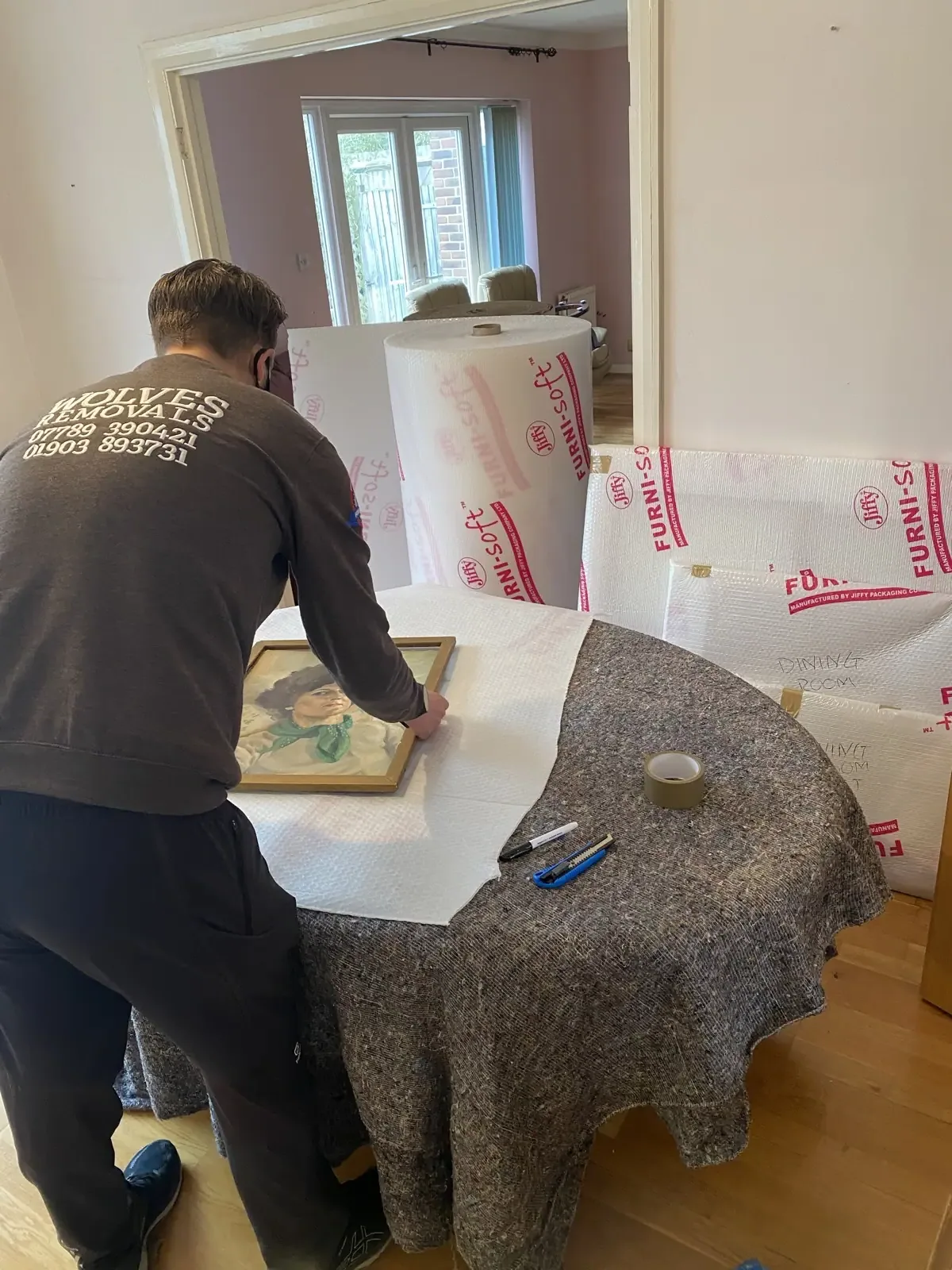
Antiques travel in clean, dry blankets, not plastic. Where a barrier is needed, acid-free tissue goes against the surface first. Plastic belongs on the outside of the packing, never against the finish.
2. Sudden Changes in Heat and Humidity
Timber takes on and gives up moisture from the air, swelling and shrinking as it does, and over two centuries a piece settles into the rooms it has lived in. Move it from a damp cottage into a dry, heated new build in January and it loses moisture quickly. Panels shrink, joints that relied on friction let go, and veneer lifts.
Nothing about the drive causes that. It happens over the following weeks, which is why the damage often appears long after the movers have gone and gets blamed on something else entirely. If a piece is going somewhere significantly warmer or drier, it wants a slow introduction rather than a spot beside a radiator.
3. Lifting From a Part That Was Never Structural
Cabinetmakers built for standing still, not for being carried. A chest of drawers picked up by its top can leave the top behind, because on many pieces the top is held by glue blocks and a few pins rather than the carcass. Chairs lifted by the arms put load through the weakest joints in the frame, and tables carried by the top put all the weight on the fixing blocks.
The rule is dull and it works: lift from the lowest solid structural point, and never by anything that was designed to be looked at.
4. Loose Components Left In Place
Drawers slide, doors swing, keys snap off in locks, and marble tops walk. Every loose element wants to travel separately, or be secured without tape touching the finish, because masking tape on old polish can lift it when it comes off.
Anything with a mechanism needs more than that. A longcase clock must have its pendulum, weights and movement removed before it goes anywhere. The same principle applies to anything with glass, a mirror plate, or working parts.
5. Pressure on Veneer, Marquetry and Inlay
Veneer is thin, and on a period piece it may be laid over a ground that has been moving for generations. A strap tightened across it, or a heavy item resting on an inlaid top, presses on a layer with no strength of its own. Cracks in marquetry usually come from point loading rather than impact.
This is where crating earns its cost. A piece that will not survive being stacked against needs a box built around its actual shape, which is what a bespoke timber crate is for.
| Material | Damaged by | Travels in | Position |
|---|---|---|---|
| Shellac / French polish | Trapped moisture, alcohol, heat, grit dragged across it | Acid-free tissue, then clean dry blankets | Upright, nothing resting on the top |
| Veneer and marquetry | Point loading, straps across the face, humidity swings | Edge protection, then blankets; crate if irregular | Flat only if fully supported |
| Marble and stone tops | Its own weight when carried flat; oils and solvents | Non-oily barrier layer, then padding | On edge, supported full length |
| Gilding and gesso | Any surface contact, fingers, tape | Loose tissue tent, never touched directly | Boxed or crated, not stacked |
| Old glass and mirror plate | Flexing, point pressure, temperature shock | Corner protection and interleaving | On edge, never flat |
| Clock movements | Vibration with parts left free to swing | Removed and packed separately | Case and movement travel apart |
Marble, Stone and Glass
Marble tops are the single most misunderstood item in an antique house move. Marble is strong in compression and weak in tension, which means it will take enormous weight pressing down on it and snap under its own weight if it is carried flat. It travels on edge, supported along its full length, padded, and never laid down in the van.
It is also porous: oil, grease and some cleaning products stain into the stone rather than sitting on the surface, so it wants a barrier layer that carries no oils, then padding.
Mirror plate and glazed doors travel on edge for the same reason, and old glass is thinner and less even than modern float glass. If you are moving framed pictures alongside the furniture, our guide to packing a picture for a house move covers frames and glazing in more detail.
Clocks, Mirrors and Anything With a Mechanism
A longcase clock is really three objects standing together: a case, a movement, and weights on lines. Moved assembled, the movement swings against everything around it for the whole journey. Pendulum and weights come off first, the movement comes out, the case travels padded and upright, and it is reassembled and set in beat at the other end.
Bracket and mantel clocks are the same problem in miniature, and barometers need the mercury column considered before they are tilted at all. None of it is difficult, but all of it happens before the item is carried, not after it is loaded.
What Specialist Antique Removals Actually Involves
The phrase specialist removals gets used loosely, so it is worth being concrete about what an antique moving company should be doing differently on the day.
It is surveyed before it is quoted. Someone looks at the pieces and decides what needs crating, what needs dismantling by hand, and what needs two people rather than one, before anything is priced or promised. A quote given blind for a house with antiques in it is a guess, and the guess gets corrected on the day.
Materials are chosen per item, not per van. Blankets and tissue for polished surfaces, edge protection for veneer, purpose-built cases for anything that cannot be stacked against. This is the practical difference between antique furniture removals and ordinary furniture removals.
Loading is planned around the fragile items. Antiques go where they will not be leaned on, strapped to the vehicle rather than to each other. Antique transport is mostly a loading problem, not a driving one.
Mechanisms come apart before they travel and go back together at the other end, rather than being trusted to survive intact.
Wolves Removals holds LAPADA Approved Service Provider status, and a good deal of our work is moving antiques and fine art for private clients and for the trade. Our specialised antiques moving service sets out how that runs, fragile packing covers the wrapping side, and our white glove service covers the placed-and-unpacked end of it.
| Ask | A good answer | A warning sign |
|---|---|---|
| Will you survey the pieces first? | Someone comes and looks, or asks for photographs and dimensions of the specific items | A firm price over the phone for a house with antiques in it |
| What goes against the polished surfaces? | Blankets, with acid-free tissue where a barrier is needed | Bubble wrap, shrink wrap, or anything taped to the finish |
| Which pieces need crating, and why those? | Named items, with a reason tied to the material or shape | Everything, or nothing, without distinguishing |
| Who is on the job on the day? | Named crew who do specialist work regularly | Whoever is available, or unspecified subcontractors |
Why Coastal Sussex Pieces React Badly to Moving Inland
Sussex has an unusually high concentration of period property and of the antiques trade, so much of our specialist work is local.
The West Sussex villages are full of houses whose contents have never been moved, and the coastal strip brings its own problem: salt air and damp, followed by a move inland to somewhere drier. Wolves Removals
That matters more than it sounds. A piece that has lived in a humid coastal cottage for fifty years carries a different moisture content from one that has sat in a heated town house, and the two react very differently to the same new home. It is one reason we would rather see the pieces before quoting.
We work as an antique specialist removal company across West Sussex, East Sussex, Surrey and Hampshire, and for trade clients further afield where a piece needs proper handling rather than a courier. Our antiques work in West Sussex covers the local side of that.
Moving Antiques Long Distance or Into Storage
Distance changes the packing rather than the principles. More vibration and more temperature variation mean anything fine strapped and blanketed for ten miles may want a crate for four hundred. A ferry or a container changes it again, which is where export packing comes in.
Storage is worth thinking about separately. Antiques do not mind being stored; they mind a building that swings between damp and dry. If pieces are going into storage between homes, ask about the conditions rather than the price.
When You Do Not Need a Specialist
Plenty of antique furniture can be moved by its owner without drama, and we would rather say so. A solid oak coffer, a Victorian chest with the drawers out, a plain country chair: these are heavy rather than delicate, and care plus enough hands is enough.
The pieces that reward professional handling are those where the value sits in something fragile: veneer, marquetry, gilding, marble, glass, or a mechanism. If the surface is what makes it worth something, that is where the economics change.
For advice from the conservation side rather than the moving side, the Institute of Conservation is the professional body for conservators in the UK and a sensible starting point if a piece has already been damaged.
The Wolves Removals Team
Family-run removals · Ashington, West Sussex
We have moved families and businesses across West and East Sussex, Surrey, Hampshire and Kent since 2016, from our Ashington base. We are fully insured, Checkatrade-verified and a LAPADA Approved Service Provider for antiques and fine art. More about us, or read our reviews.
Moving Antique Furniture: What Really Causes the Damage — FAQs
Not against the finish. Plastic does not breathe, so it traps moisture against the surface for the whole move, and on shellac or French-polished furniture that causes bloom, a milky clouding in the polish. Use clean, dry blankets against the piece, with acid-free tissue where a barrier is needed. Plastic can go on the outside of the packing, never touching the polish.
On edge, supported along its full length, never laid flat. Marble is strong under compression but weak in tension, so a slab carried flat can crack under its own weight. It is also porous, so oils and some cleaning products stain into the stone rather than sitting on it, and it needs a barrier layer before padding.
Yes. The pendulum, weights and movement all come out before a longcase clock is moved, and go back in at the other end. Moving one assembled is the most reliable way to damage the movement, because the parts designed to swing freely are left swinging against everything around them.
Because the cause is usually humidity, not handling. Timber gives up moisture in a drier, warmer room, and as it shrinks, panels split and glued joints that relied on friction let go. A piece coming out of a damp period property into a heated new build is the classic case. Give it a few weeks away from direct heat to adjust.
The survey, the materials and the loading order. Antique moving services price the job after looking at the individual pieces rather than the volume, choose wrapping per item rather than per van, and load so fragile pieces are never leaned on. Mechanisms are dismantled before travel rather than trusted to survive intact.
Yes, provided the conditions are stable. What antiques do not tolerate is a building that swings between damp and dry, because the repeated movement opens joints and lifts veneer. Ask about the conditions of the store rather than only the price and the access hours.
Yes. Much specialist work is trade movement between dealers, fairs and buyers, which usually means single valuable items rather than whole houses, and often crating rather than blanket wrapping. Wolves Removals holds LAPADA Approved Service Provider status and works with the trade across Sussex.
Tell us straight away, ideally with photographs taken before anything is moved again, and we deal with it directly. We are fully insured, with goods-in-transit and public liability cover in place, and optional full damage insurance is available for an extra 10% of your invoice total. The detail sits in your written quote and terms.
Earlier than for an ordinary house move, particularly if anything needs crating. A crate is measured and built around the piece before moving day, so a few weeks of notice gives time to survey, plan materials and have everything ready. A straightforward move with no crating needs less warning.
Usually, but it changes the plan rather than the outcome. Narrow stairs, tight turns and low ceilings are exactly why a piece is surveyed before it is quoted. The answer might be partial dismantling, a different route through the house, or simply the order things move in.
Four things. The pieces are surveyed and priced individually rather than quoted blind. Materials are chosen per item rather than per van. Loading is planned around what is fragile instead of what fits. And mechanisms are dismantled before they travel. Ask any firm those four questions before you book.