How We Wrapped Seven Van Loads of Antique Furniture
An antique dealer’s entire stock, moved into a new warehouse in seven van loads.

Here is how we wrap antique furniture for a journey, why the wrapping that protects it in a van is the wrong wrapping to leave on in store, and why the distance travelled is the least interesting number on the job.
Seven Van Loads Is Not One Big Move
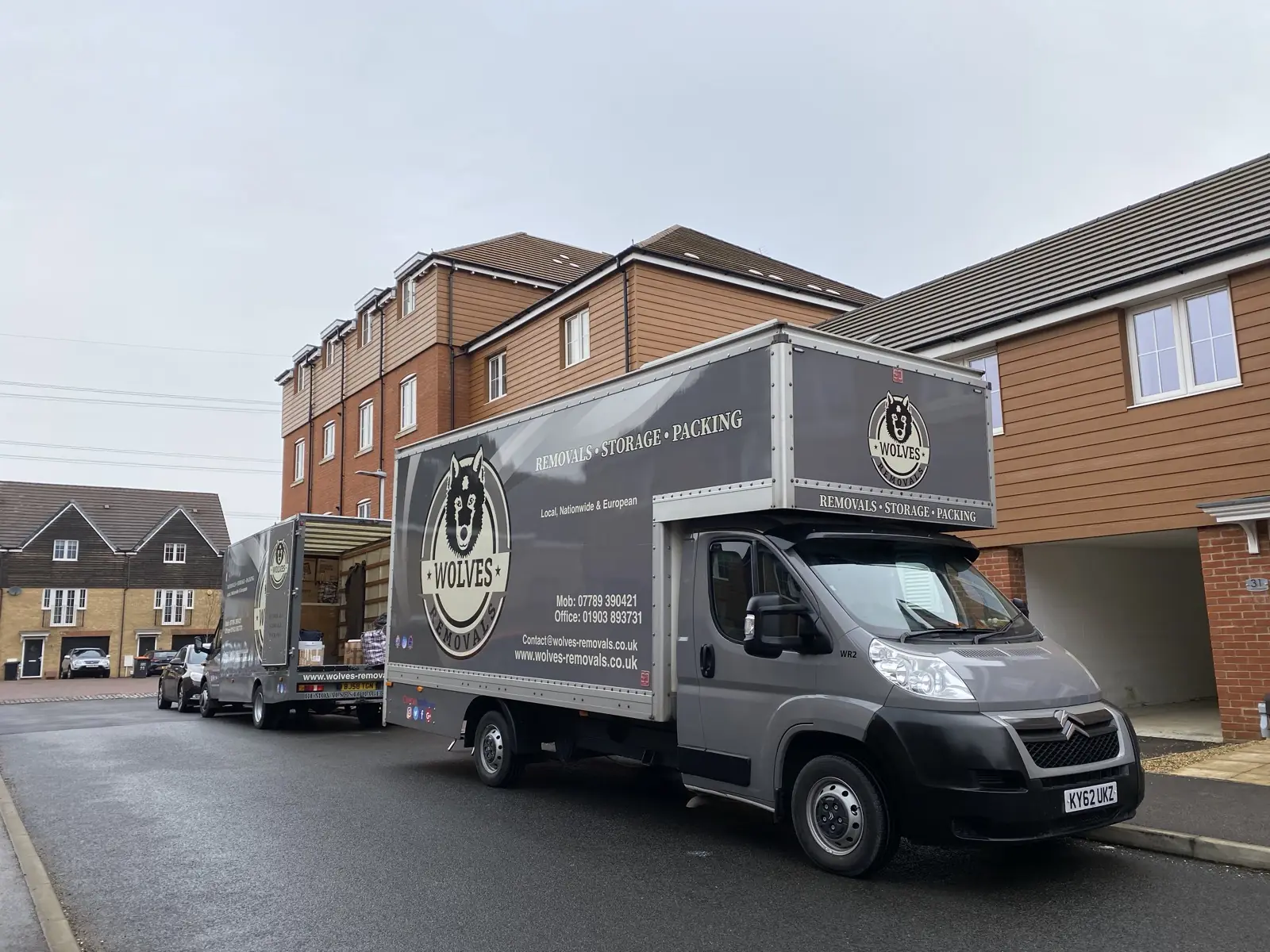
An antique dealer moved their entire stock into a new warehouse, and it took seven van loads to do it.
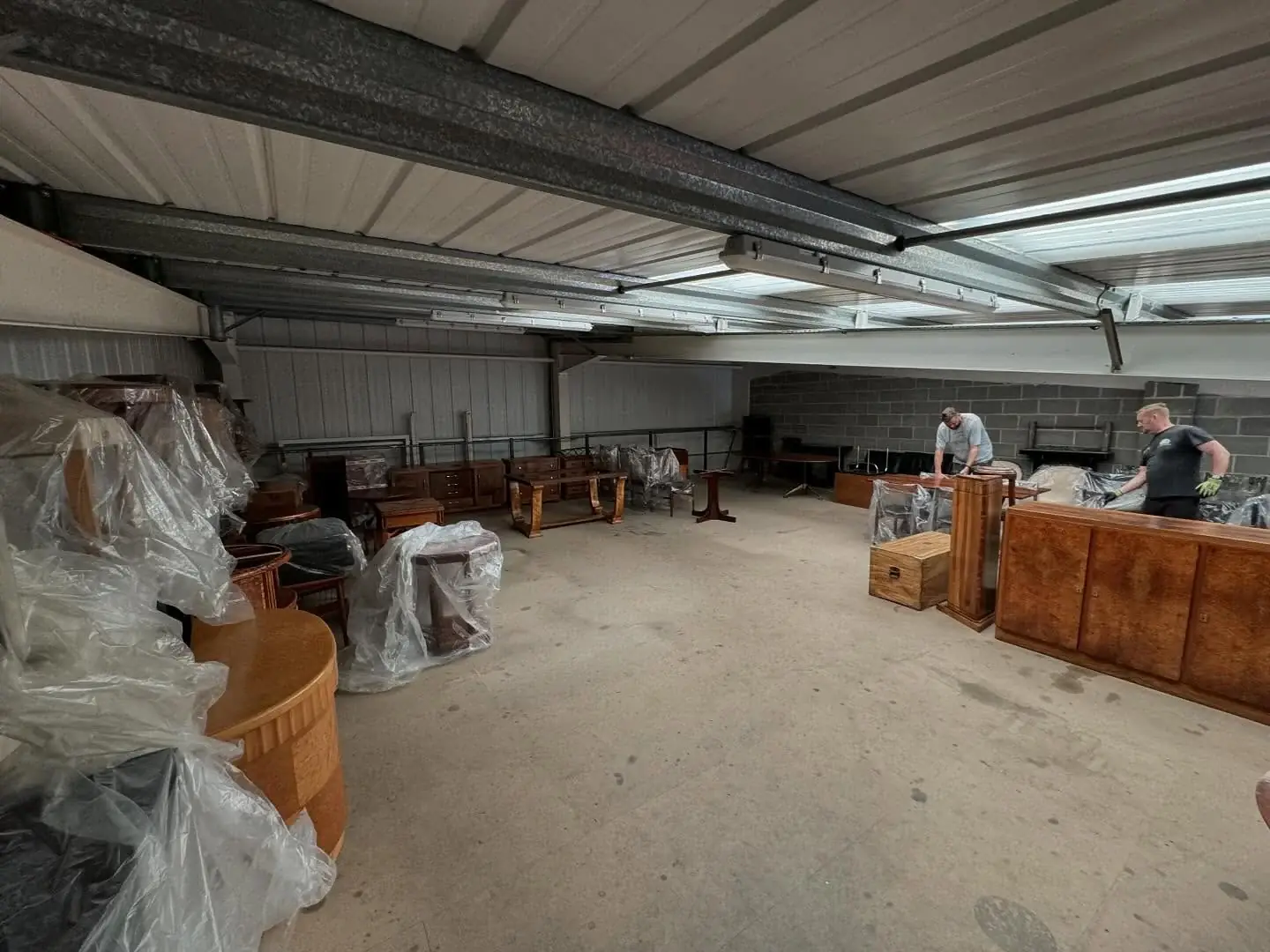
That number is worth sitting with, because it is not the same thing as a large house move. A house goes on the vehicles once. Seven loads is seven complete cycles — load, drive, unload, return, and start again — and each one repeats the entire handling sequence for everything inside it.
Which is why, on a job like this, the mileage is close to irrelevant and the count of items is close to everything.
A Dealer’s Stock Is Not a House
Moving a household means moving one of most things. Moving a dealer means moving a roomful of them, and every single one is for sale.

That changes the arithmetic in a way people outside the trade rarely think about. In a house, a scratch on the sideboard is a nuisance and a story. In a dealer’s warehouse, a scratch on the sideboard comes off the price, and the dealer knows exactly how much. They have priced that damage on other people’s stock many times over.
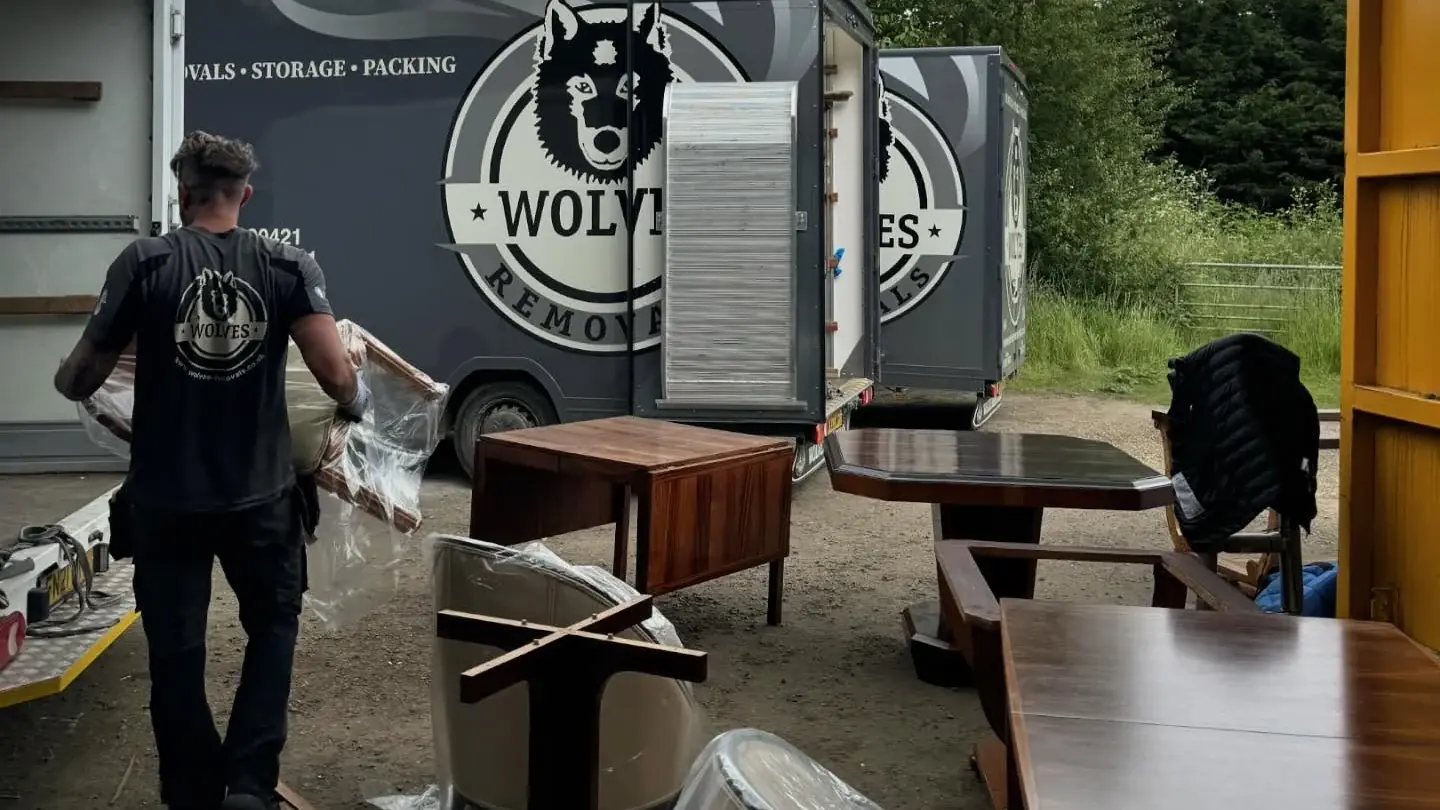
The stock on this job was largely of one period, and a demanding one to handle: figured veneers in walnut and rosewood, curved fronts, pedestal and U-shaped bases, cocktail cabinets, and a games table with an inlaid board. Veneer is the operative word. A solid timber knock bruises; a veneered edge chips, and a chipped veneer is a restorer’s job rather than a wax stick.
How to Wrap Antique Furniture for Moving
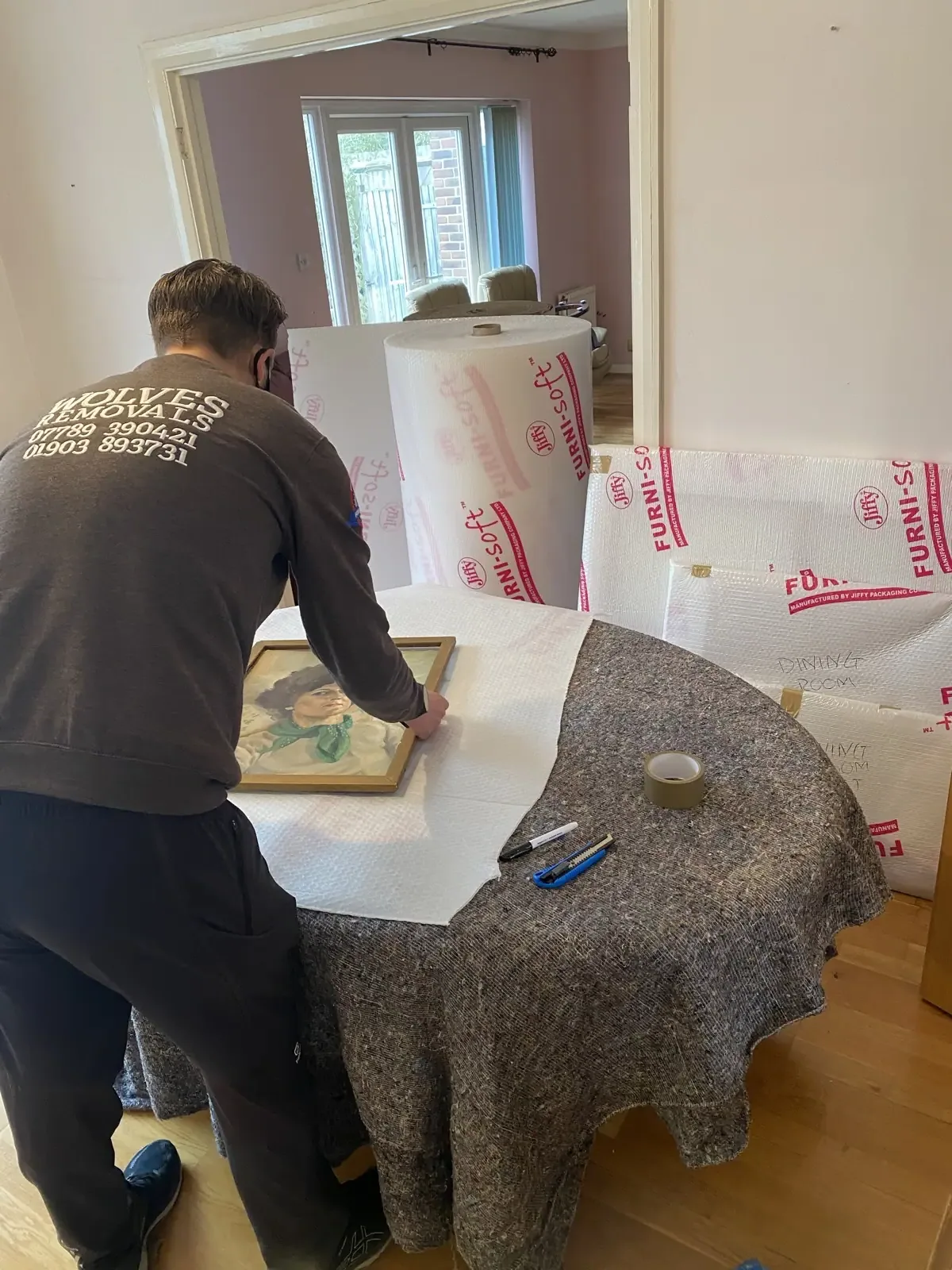
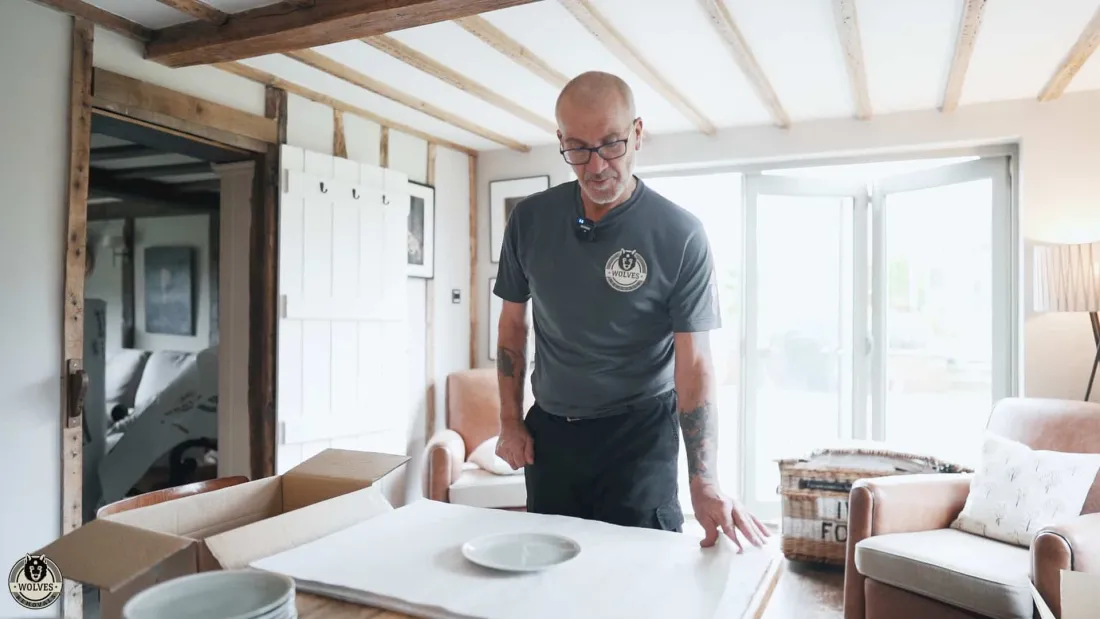
The order matters more than the material. This is how we do it, working outwards from the piece:
Bare surfaces first, always. Nothing adhesive touches a finish.
Tape goes on to the wrapping, never on to the wood, the leather or the polish — and that holds even for low-tack tape, because the finish underneath may be a century old and nobody knows what it has been treated with since. Wolves Removals
A soft layer against the piece. Blankets or padded covers take the friction and the knocks. This is the layer doing the actual protecting; everything outside it is doing a different job.
Corners and extremities separately. Feet, cornices, handles and any projecting moulding get their own padding, because those are the parts that meet door frames and van walls first.
An outer layer to keep the weather and dust off. This is the clear sheeting you can see in the photographs. It is there to stop rain between the tailgate and the door, and grit off a warehouse floor, and it goes over the soft layer rather than against the piece.
Glass, marble and mirrors travel apart from the carcass. Anything that lifts out, lifts out. A loose glass shelf inside a moving cabinet is a chipped shelf and a scored interior.
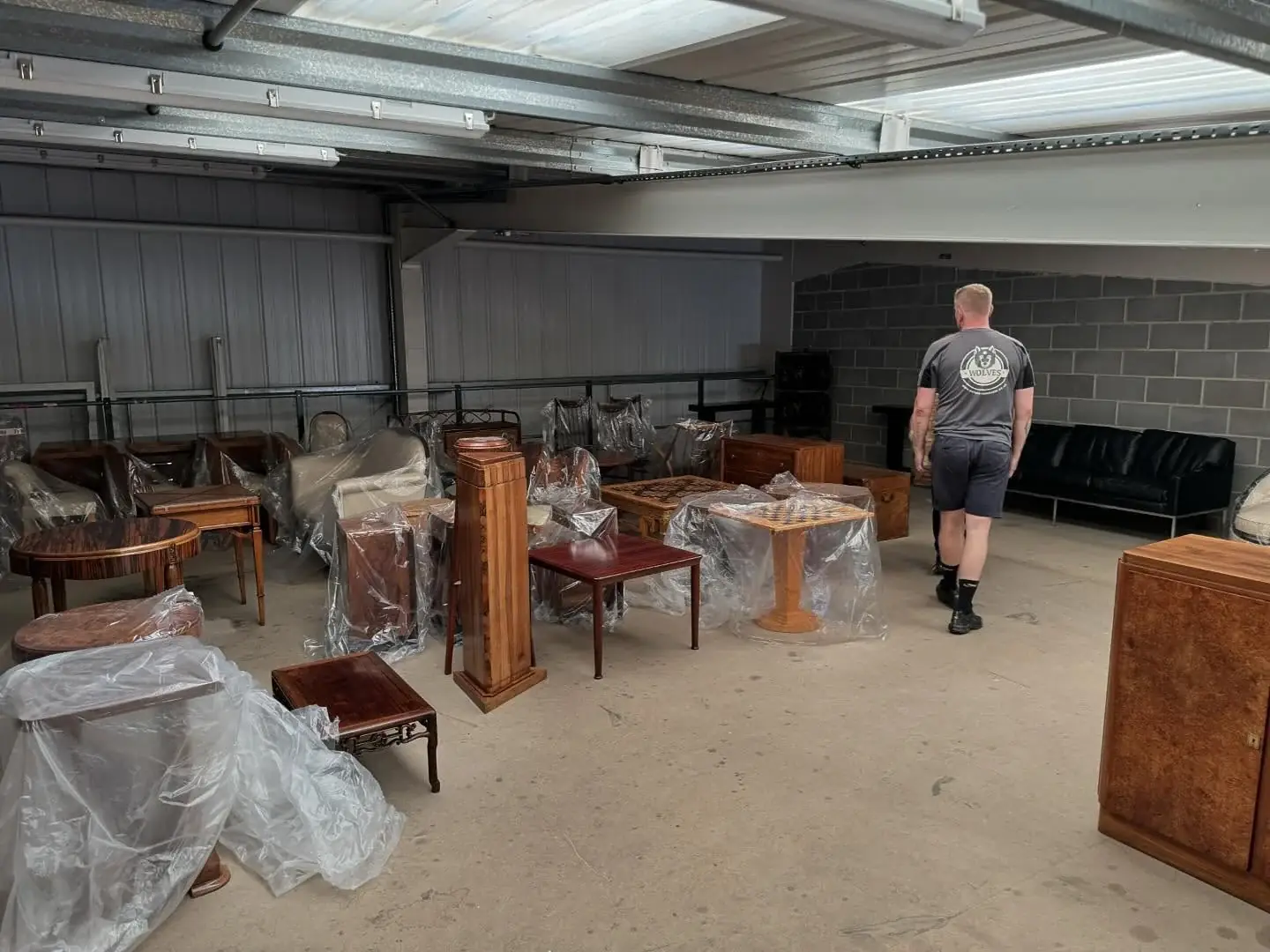
Wrapping for a Journey and Wrapping for Storage Are Different Jobs
This is the distinction most people miss, and it is the one worth taking away from this page.
Transit wrap is designed to come off. Storage wrap is designed to stay on. They are not interchangeable, and the mistake runs in one direction: transit materials left on for months.
A journey is measured in hours. Over that span the priority is impact and weather, so a soft layer with a sealed outer skin is exactly right. Storage is measured in weeks or seasons, and over that span the priorities change: a warehouse is not a heated house, temperature swings, and anything sealed tight around a piece of furniture becomes a consideration rather than a convenience.
The practical difference is what the outer layer is made of. For a journey you want something that keeps water out. For storage you want something that lets the piece breathe with the room around it — a cotton dust sheet or a purpose-made breathable cover does that, and still keeps the dust off. The soft padding layer underneath can stay either way.
So our habit on a delivery like this is simple. The outer sheeting comes off once the piece is standing where it is going to live, and if anything is going to sit for a while before it is sold or shipped on, it gets covered in something breathable instead. If you are storing your own furniture rather than moving it, that swap is the single most useful thing on this page.
Damage Tracks Handling, Not Distance
People ask how far the job is. It is almost never the right question.
Read down that list and you can see where the risk actually sits. Every stage with a filled dot is a moment when a person, a doorway, a ramp edge or another piece of furniture can meet a veneered corner. The drive is the only line on the chart where the item is strapped, padded and untouched.
This is why a short move with a lot of items can be a bigger job than a long move with few, and why we quote on volume, access and item count rather than on the map. It is also why seven loads is worth stating plainly rather than rounding up into “a big day”.
What Dealers Ask For That Householders Do Not
Private clients ask when we will arrive and what it will cost. Dealers ask three different questions, and they are the reason trade work is quoted differently.
Which load is it on? A dealer often has a piece that is sold, or promised, or being photographed on a particular afternoon. That item cannot be somewhere in the middle of load four. It goes on a specific vehicle at a specific point, and everything else arranges itself around that.
What condition was it in when you picked it up? Existing marks matter more to a dealer than to anybody else, because they already knew about them and they need it on the record that they were there first. Noting damage before it travels is not defensiveness, it is ordinary courtesy on stock that is priced to the pound.
Can it come apart? Householders tend to want their furniture kept whole. Dealers usually know exactly which of their pieces were built to be dismantled, which are later marriages that should not be touched, and which have a hidden fixing that will shear if you guess. On this stock that knowledge lived with the client, and asking was faster and safer than working it out ourselves.
None of that is difficult. It just has to be settled before the first item is lifted, because once seven loads are in motion there is no good moment to stop and ask.
Into an Empty Warehouse

Delivering into an empty commercial space sounds easier than delivering into a house, and in the obvious ways it is: wide doors, level floors, no staircase, no carpet to protect.
What it takes away is the thing that normally organises a move. In a house every item has an obvious destination, because rooms have names and functions. An empty warehouse has none of that. Every piece has to be put somewhere deliberately, and if the first two loads land in the wrong part of the floor, the remaining five have nowhere sensible to go.
So the first load is the one that matters. It sets the aisles, the walkways and the order of the rest, and it is worth ten minutes of standing still before anything comes off the ramp.
What a Move Like This Costs a Dealer in Time
The invoice is the visible cost. The one dealers feel is the shutdown: for as long as the stock is in transit, none of it is on a shop floor and none of it is photographed, listed or sold.
That is the real argument for doing a stock move in loads that arrive somewhere usable, rather than into a heap that has to be re-sorted afterwards. A piece that is unwrapped, standing in its final position and ready to be photographed is trading again. A piece under sheeting in the middle of a floor is not, however safely it travelled.
We move furniture for private clients and for the trade, and the trade jobs are the ones that keep us honest, because dealers notice everything and say so. If you want the detail on how we handle valuable and fragile pieces, there is a specialised antiques moving page, and a longer account of a private collection going into a period house in our Brighton seafront move. For pieces that need more than wrapping, we also build bespoke crates.
The Wolves Removals Team
Family-run removals · Ashington, West Sussex
We have moved families and businesses across West and East Sussex, Surrey, Hampshire and Kent since 2016, from our Ashington base. We are fully insured, Checkatrade-verified and a LAPADA Approved Service Provider for antiques and fine art. More about us, or read our reviews.
How We Wrapped Seven Van Loads of Antique Furniture — FAQs
Work outwards from the piece. A soft layer — blankets or padded covers — goes against the furniture to take knocks and friction; corners, feet and any projecting moulding get padded separately; and a clear outer sheet goes over the top to keep rain and dust off. Tape only ever touches the wrapping, never the finish. Glass, marble and mirrors come out and travel separately.
As an outer layer over padding, for a journey measured in hours, it does a useful job: it keeps weather and grit off and holds the soft layer in place. What we avoid is putting plastic straight on to a polished or veneered surface, and leaving a sealed wrap on for weeks after the move. For anything sitting in store we swap to a breathable cover instead.
Yes. For storage, keep the soft padding layer against the piece but swap the sealed outer sheet for a breathable one — a cotton dust sheet or a purpose-made cover — once it is standing where it will stay. Transit wrap is built to come off in hours and prioritises impact and weather. Storage runs for weeks or seasons in a space that is not heated like a house, so a breathable cover is the better choice once the piece is standing where it will stay.
Yes. This job was a dealer’s entire stock into a new warehouse, in seven van loads. Trade moves are quoted on item count, access and handling rather than mileage, because on a multi-load job the driving is the smallest part of the risk and the cost.
Mostly veneer and age. A solid timber knock leaves a bruise that can often be worked out; a veneered edge chips, and that is a restorer’s job. Older pieces also come apart and go back together in ways modern flat-pack does not. And because nobody knows what a hundred-year-old finish has been treated with since, our rule is that nothing sticky touches the piece itself.