How to Move a Mattress
Three things decide whether a mattress survives a move: whether it can be bent (almost always no), whether it will pass through the door (not lying flat, at any UK size), and whether the stairs will let it turn.

Get the measuring done the week before and the rest is straightforward.
Can You Fold or Bend a Mattress to Move It?
Assume not. The only mattresses that tolerate being rolled are foam ones, and even those were compressed by a machine in a factory, not by two people in a hallway.
It depends entirely on what is inside, and the four common constructions behave very differently:
- Open coil, sometimes called cage sprung. Silentnight describe their Miracoil unit as one large open spring, which is the point: the springs are a single connected structure, so a fold is not bending one spring, it is bending the whole frame. Do not.
- Pocket sprung. Hundreds or thousands of individual springs, each in its own fabric pocket, built to sit flat. A fold crushes the pockets along the crease and they do not recover.
- Memory foam and reflex foam. The most forgiving, and many arrive vacuum rolled from new. That is not permission to re-roll one at home. The factory removes the air first; you cannot, so you are bending foam rather than compressing it.
- Latex. Dense, heavy and not flexible in a useful way. Treat it like sprung.
Two practical notes. Manufacturers commonly exclude folding damage from a warranty, so it is worth reading yours before anyone bends anything. And a mattress that has been folded rarely shows the damage on the day. It shows up weeks later as a ridge you can feel through the sheet.
Will It Fit? Do the Doorway Arithmetic First
This is the step that gets skipped, and it is the reason mattresses end up bent. UK mattress sizes are standard, and every one of them is wider than a standard door.
| Size | Width | Length |
|---|---|---|
| Single | 90cm | 190cm |
| Small double | 120cm | 190cm |
| Double | 135cm | 190cm |
| King | 150cm | 200cm |
| Super king | 180cm | 200cm |
Now the opening. The most common internal door in England and Wales is 1981mm by 762mm, and Scotland more often uses 2040mm by 726mm. The clear opening is narrower still once the frame and any stop beading are accounted for.
So even a single mattress, at 900mm, is wider than the door it has to pass through. A super king is more than twice the width of the opening. No mattress goes through a standard doorway lying flat. It goes through on edge, and what actually passes between the frames is the depth of the mattress, which is the one dimension nobody measures. Measure yours before moving day, because depth is the figure that varies most between mattresses.
Once you accept that it travels on edge, the job becomes simple. Once you try to take it through flat, somebody starts bending it.
The Stairs Are Where Mattresses Actually Get Bent
A mattress on edge is effectively a rigid panel around two metres long. The doorway is rarely the problem. The turn is.
Three things to look at before you lift anything. The half landing, where a ninety degree turn needs diagonal clearance that a two metre panel may not have. The ceiling height over the first flight, because on a straight run you often need to tilt the mattress up and there has to be room above. And the newel post at the bottom, which is usually the thing that stops the turn completing.
If the stairs genuinely will not take it, the answer is not to fold it.
On an older property the answer is sometimes that the mattress goes out through a window, which is a different job but a far better outcome than a permanent crease. Wolves Removals
How to Wrap a Mattress for Moving
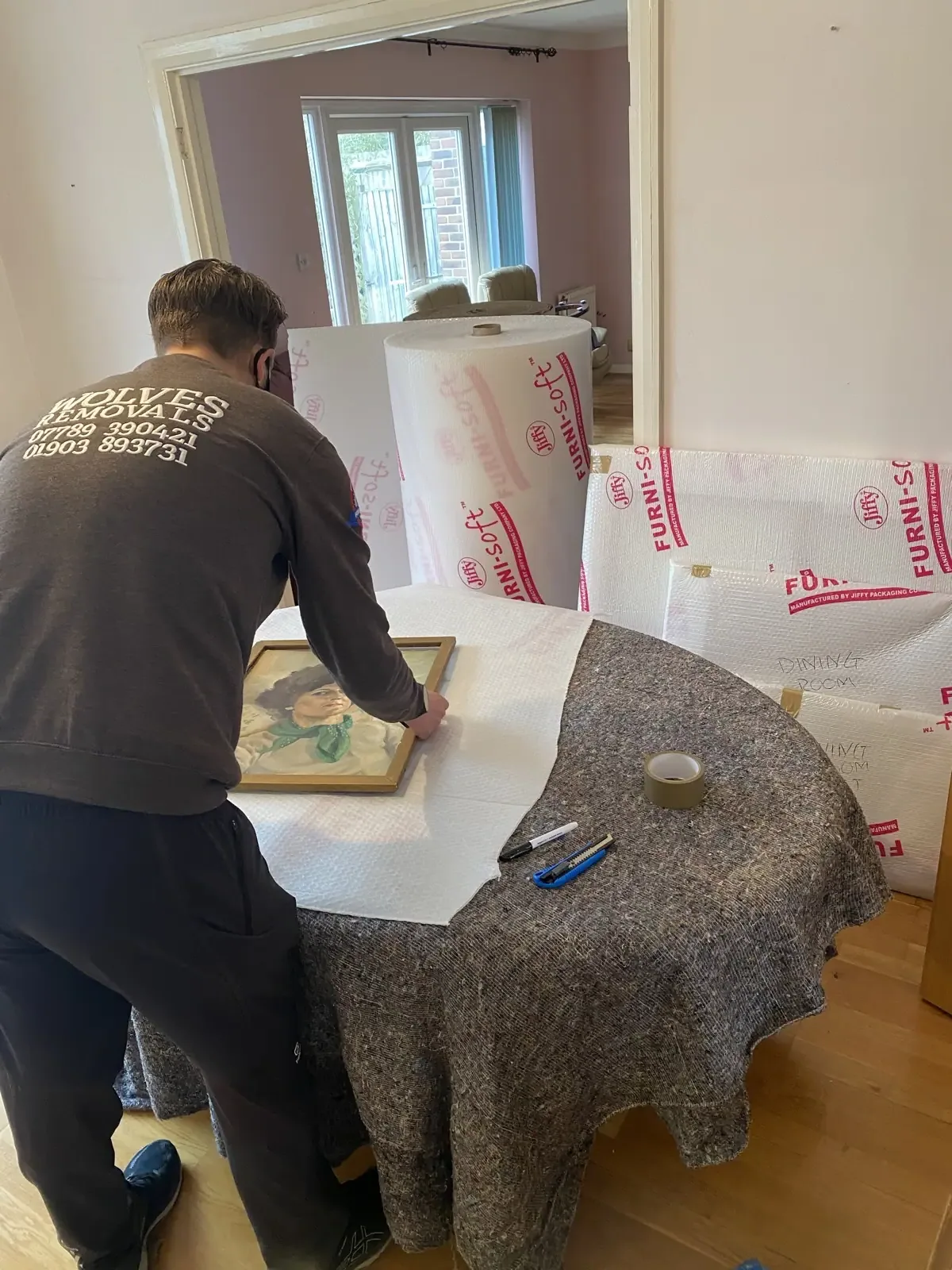
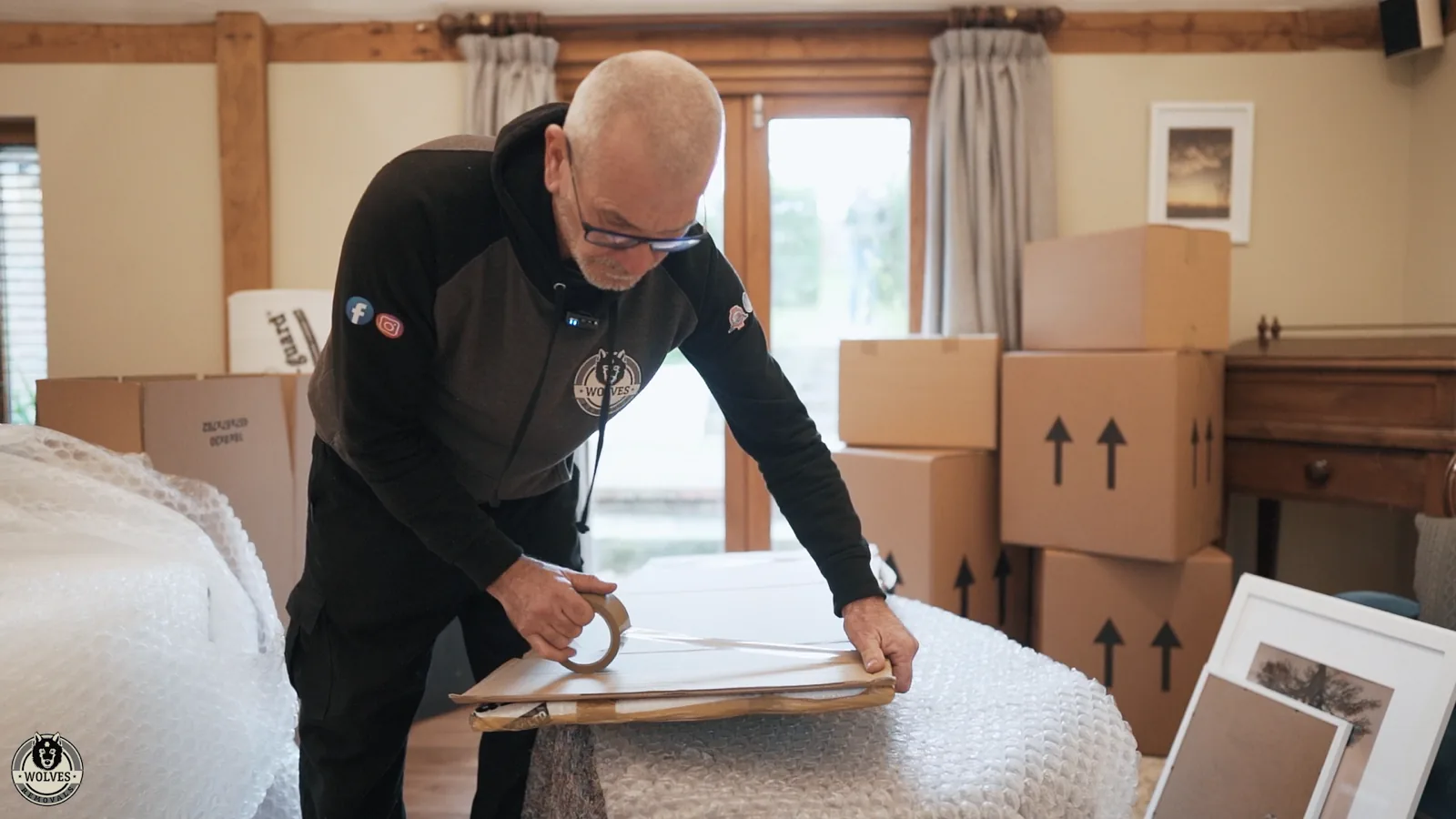
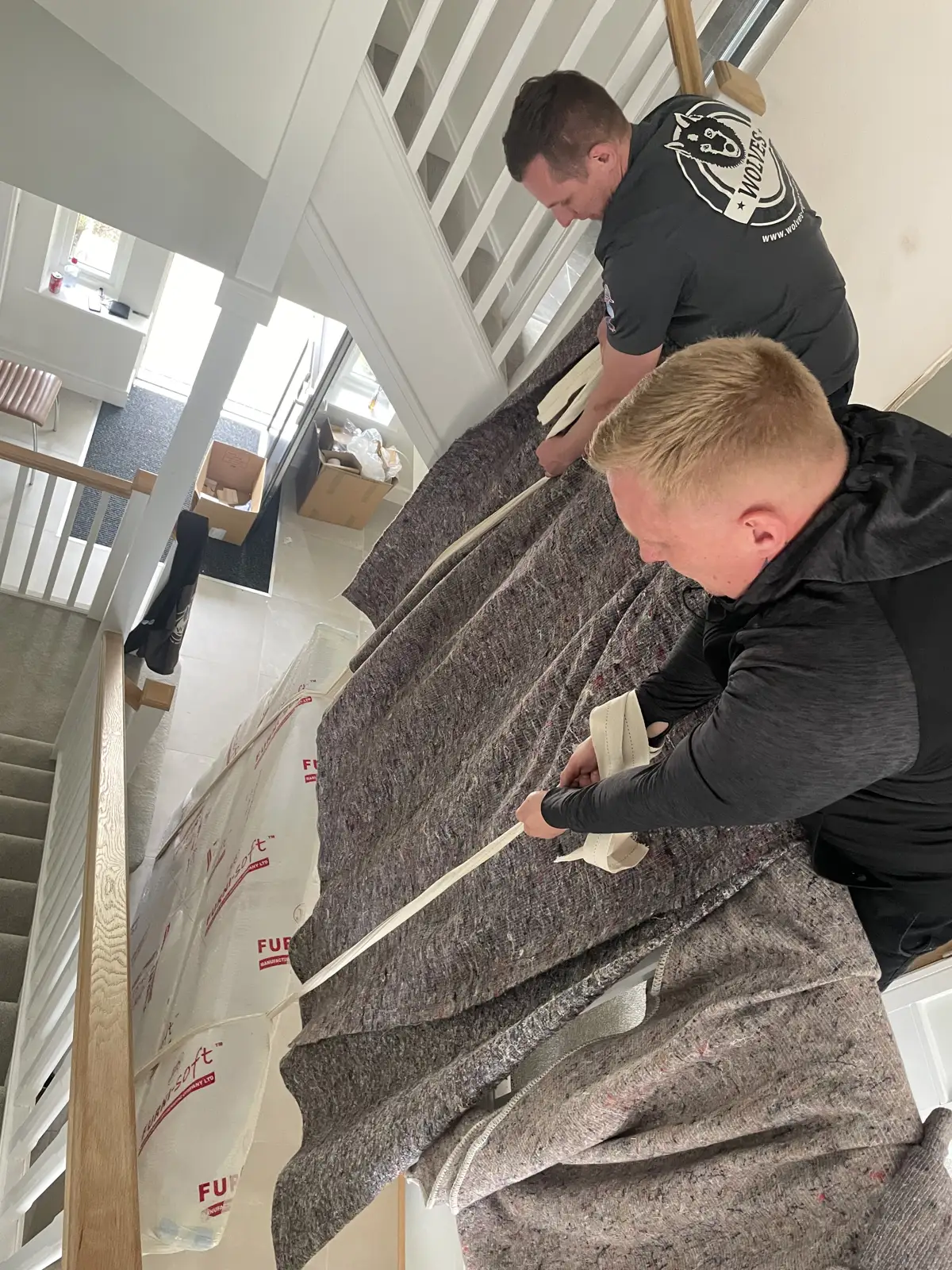
Use a proper mattress bag and tape it closed rather than tucking it. A mattress is a large soft surface that will be carried past door frames, down a path and across a vehicle floor, and it picks up every mark on the way. Unwrapped, it arrives grubby. Worse, the fabric snags on a latch or a bannister bracket and the seam goes.

Strip the bedding and take the protector off first, so the bag goes onto the mattress itself. Skip bin bags: they split on corners at exactly the moment you need them not to. If the mattress is one sided, mark which way up it goes while you can still tell.
Carrying It Without Tearing the Seams
Two people, one at each end, carried on edge. That is the whole method, and the part people get wrong is the grip.
Hands go underneath, supporting the weight. They should not be gripping a handful of fabric, because mattress side handles are for shifting it on the bed, not for carrying it down a flight of stairs, and they tear out. If it has no useful hold at all, that is a sign it needs the bag on first so you have something to hold.
Never drag it. A mattress dragged across a threshold picks up the dirt of the whole route and snags on the strip.
In the Van: Flat or on Edge?
Flat is kindest to the mattress, because it is the position it was designed to sit in, but it uses the whole floor of the vehicle and most moves cannot spare that.
On edge is fine, provided it is supported along its full length against a flat side and strapped so it cannot slump. What damages a mattress in transit is not being upright, it is being unsupported: left to bow in the middle over a wheel arch, or used as padding with heavier things leaning into it. A mattress is not packing material, however tempting it looks.
Divan Bases and Ottoman Beds Are the Harder Half
The mattress is usually the easy part. The base is what causes the delay.
Most divan bases are two halves clipped together, and they are meant to come apart. Unclip them before you try the stairs, because a full width divan will not make the turn a mattress just managed. Take the drawers out, and keep the clips somewhere you will find them.
An ottoman base has a gas strut lift and a heavy hinged top. It wants the lid secured shut before it moves, and it wants two people, because the weight shifts as it tips. For a bed frame, photograph the joints before you undo anything, then bag the fixings and tape the bag to the largest part of the frame. Fixings that travel loose in a box are the reason a bed cannot be rebuilt on the first night.
What Goes Wrong
Four things, and we see them in this order.
The mattress was taken at the doorway flat, would not go, and got bent to make the turn. It was dragged rather than carried, and the cover snagged. It travelled unbagged and arrived marked. And the divan base went up the stairs as one piece, jammed on the half landing, and had to come back down to be unclipped.
None of that needs skill to avoid. It needs the tape measure used the week before, not the van already loaded.

Do Removal Companies Move Mattresses and Beds?
Yes, and on a household move a bed is an ordinary item rather than a separate booking, so there is no mattress charge sitting alongside your move.
What a crew brings to it is the boring part: the route measured before anything is lifted, floor protection down, a proper bag rather than whatever was in the cupboard, and two people carrying on edge so the thing never has to be persuaded round a corner. Bed frames and divans are dismantled and rebuilt as part of the job, with the fixings kept together.
If you are moving a super king, or the stairs have a half landing, say so when you ask for a quote. It changes the access plan rather than the price of the job, and it is much easier to solve on paper than on the day. Our house removals page covers what a survey looks at, and if there is a fridge freezer going the same day, how to move a fridge or fridge freezer covers the one appliance with rules of its own.
The Wolves Removals Team
Family-run removals · Ashington, West Sussex
We have moved families and businesses across West and East Sussex, Surrey, Hampshire and Kent since 2016, from our Ashington base. We are fully insured, Checkatrade-verified and a LAPADA Approved Service Provider for antiques and fine art. More about us, or read our reviews.
How to Move a Mattress — FAQs
Not unless it is foam, and even then only with care. A pocket sprung mattress has individual springs in fabric pockets that crush along the crease and do not recover. An open coil mattress is worse: Silentnight describe their Miracoil unit as one large open spring, so folding bends the whole structure rather than one part of it. Memory foam and reflex foam tolerate a roll far better, which is why many arrive vacuum rolled from new, but a factory removes the air before compressing and you cannot. Folding damage is also commonly excluded from a manufacturer's warranty, so check yours before you bend anything.
Yes, and on most moves you have to. Flat is the kindest position but it uses the entire floor of the vehicle. On edge is fine as long as the mattress is supported along its full length against a flat side and strapped so it cannot slump. What causes damage is not being upright, it is being unsupported: bowing across a wheel arch, or being leaned on by heavier items. Note that on edge in the van is a different question from on edge through a doorway, where you have no choice at all.
Not lying flat. A double mattress is 135cm wide and the most common internal door in England and Wales is 762mm, so the mattress is close to twice the width of the opening. Every UK size has this problem, including a single at 90cm. The mattress goes through on edge, and the dimension that actually has to clear the frame is its depth. Depth varies more between mattresses than any other measurement, so measure your own rather than assuming.
Ideally you do not, particularly with a king or super king. If you have no choice, bag it first so you have something to hold other than the cover, then stand it on edge and walk it rather than lifting it, keeping it vertical and letting the floor take the weight. Clear the whole route first, including anything on the stairs, because you will not be able to see past it. The two real risks alone are your back and the seams, since the side handles on a mattress are designed for shifting it on the bed frame and tear out under a full carry.
A proper mattress bag, taped closed rather than tucked, fitted after the bedding and the protector have come off. It is doing two jobs: keeping the mattress clean as it passes door frames, paths and a vehicle floor, and stopping the cover snagging on a latch or bannister bracket. Avoid bin bags, which split on the corners. If the mattress is one sided, mark the top while you can still tell which side is which.
Yes. On a household move the bed is a standard item: the frame is dismantled, the divan base unclipped into its halves, the mattress bagged and carried on edge, and everything rebuilt at the other end with the fixings kept together. It is part of the move rather than a separate charge. Mention a super king, an ottoman base or a staircase with a half landing when you ask for a quote, because those change how the access is planned rather than what the job costs.