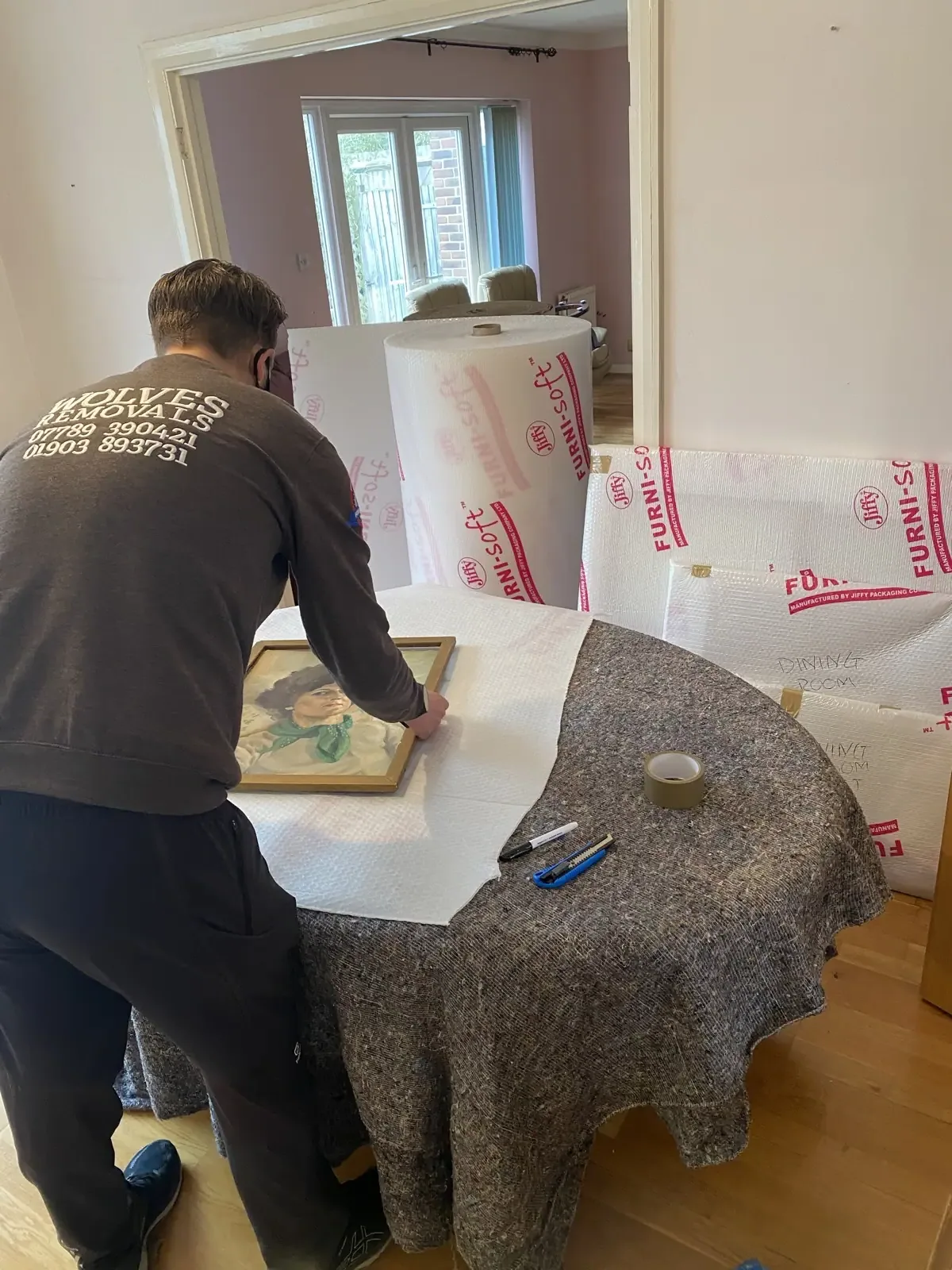
How to Pack Up a Utility Room for a Move or a Refit
Clear out what can’t travel first, pack the shelves and cupboards by job, and leave the machines until last.

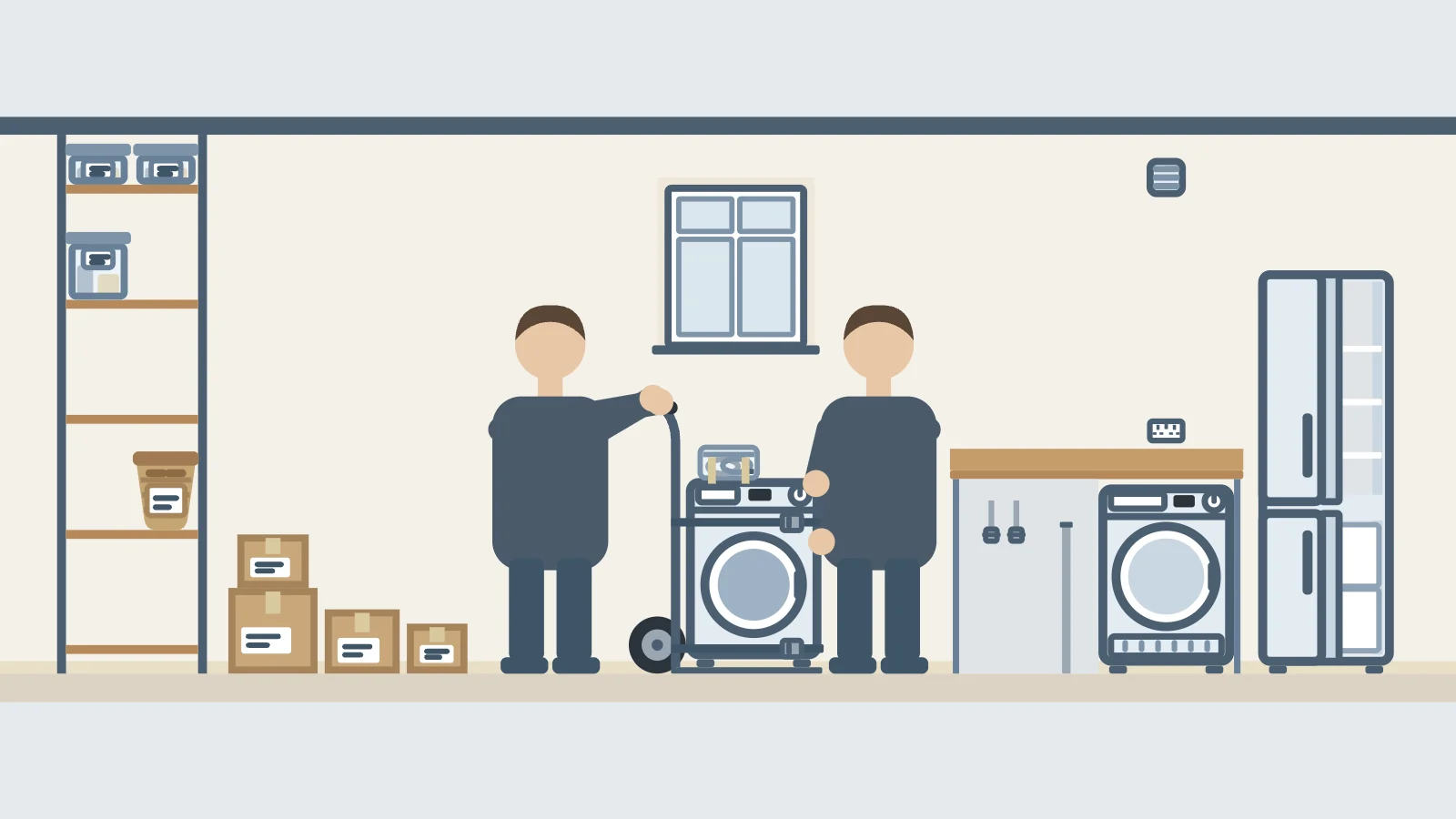
Empty and defrost the fridge freezer at least 24 hours ahead, and disconnect and drain the washing machine the day before. Refitting rather than moving? Clearing the room and the route the trades use is often enough.
We are Wolves Removals, a family-run Sussex firm, founded in 2016, that moves and stores households. Our crews carry, protect and place the machines, tumble dryer included, but they don’t disconnect, drain or plumb anything in, so each step below says who does it.
In short
Can’t travel: Paint, aerosols, gas, fuel, use them up or recycle them.
Machines: Disconnected the day before, we carry, a plumber connects.
Refit: Room and route cleared, store when the work spreads.
Storage: Drained, defrosted, dry, and kept upright.
Who does what
- You: empty and defrost the freezer, then disconnect and drain the washer.
- Our crew: carry, protect and place each machine.
- A plumber or installer: reconnect it at the new house.
Drawing not to scale.
When should you start packing a utility room?
Start decluttering a utility room about eight weeks before the move, one cupboard at a time. Whatever you won’t use at the new house is one less thing to pack, carry or store, as our house move timeline explains.
Clearing it, week by week
- Declutter, a cupboard at a time.
- Use up what can’t travel; book the installer.
- Empty and defrost the freezer.
- Disconnect and drain the machines.
Drawing not to scale.
In the last few weeks, clear whatever can’t travel, and line up a plumber or competent installer to reconnect the machines at the new house. Give the fridge freezer at least 24 hours to be emptied, defrosted and dried before the move, and disconnect and drain the washing machine the day before.
What in a utility room can’t go on the lorry?
Paint, aerosols, gas bottles and fuel can’t travel with us, and oil stays off the lorry too, because a single leak can spoil everything packed around it. In a utility room that means the paint shelf and any barbecue gas bottle, but also aerosol spray starch, polish and air freshener.
What stays behind
From our packing hacks and West Sussex County Council’s recycling pages.
Use them up, pass them on or drop them at a recycling centre. West Sussex County Council says gas bottles never go in a home bin, and most of its recycling centres take paint in good condition for reuse. Empty aerosol cans go in your recycling bin.
Never pack a swollen or damaged battery, such as an e-bike’s: take it to a recycling point. Storage turns away the same things, plus perishable food and plants, and our packing hacks and containerised storage pages list the rest.
How do you pack bleach, laundry capsules and cleaning products?
Finish or give away open cleaning products, and keep anything you hold on to in its original container, upright with the lid shut. The NHS advises keeping liquid cleaning products in their original containers so they can’t be mistaken for drinks. Don’t decant them into jars to save space.
Packing the cleaning cupboard
- Original bottles, upright, lids shut.
- Capsules stay in their tub.
- Bleach apart from acid cleaners.
Drawing not to scale.
Laundry capsules stay in their tub, which chemical-labelling law says must be opaque, with a lid that takes both hands to open. Keep bleach well away from acid cleaners such as descaler: UKHSA warns that bleach mixed with an acid gives off chlorine gas. Our storage turns away hazardous chemicals, so ask us at the survey before any cleaning products go into a container.
How do you pack the rest of a utility room?
Pack by job rather than by shelf: one box for laundry things, one for the cleaning kit, one for tools and one for the pet’s things, so each opens in the right room. Label every box on its side with the room, what is inside and a number, and keep a numbered list.
Boxes by job, fixings in a bag
- A box for each job, labelled on the side.
- Photograph it before it comes down.
- Screws bagged and taped to the largest piece.
Drawing not to scale.
Heavy bottles go in small boxes, as our box packing guide explains. Wrap breakables in packing paper, empty the drawers of any unit that is coming, and keep one small box of cleaning things back for the final wipe-down.
Before anything comes off the wall, check your fittings and contents form, which lists what is included in the sale. If a wall airer, a rail or shelving is coming with you, photograph it before it comes down, bag its screws and tape the bag to the largest piece.
Or let our full packing service pack the room, with every material brought on the day.
What happens to the washing machine and freezer on moving day?
Our crew carries the machines, and a plumber or competent installer reconnects the washing machine at the new house. Before the day, disconnect and drain the washing machine and refit its transit bolts, then empty and defrost the fridge freezer.
Moving day, measured
- Route measured, floor protected.
- Upright on a sack truck, two people.
- Strapped upright in the lorry.
Drawing not to scale. Door sizes from our fridge guide.
On the day we measure the route before anything moves, protect the floor, and take each machine out upright on a strapped sack truck with two people. The washing machines our guide checked weigh 55 to 95kg. A standard 826mm door leaves only about 775mm of clear space, so measure older doorways too. Our guides to moving a washing machine and moving a fridge freezer cover every step.
How do you move a tumble dryer?
To move a tumble dryer, empty any water container, clean the fluff filter, take a vented dryer’s hose off the wall vent and unplug it. Our crew then carries it upright on a sack truck with two people, just like the washing machine.
Three dryers, three jobs
- Vented: hose off the wall vent.
- Condenser: water container emptied.
- Heat pump: emptied, upright, then a wait.
Drawing not to scale.
The dryers we checked weigh about 45 to 62kg, and one maker warns against lifting one on your own. Unlike a washing machine, a dryer has no transit bolts, though a washer dryer does.
A heat-pump dryer contains refrigerant, so it needs time standing upright after the move before it goes back on. Makers differ on how long: one says at least an hour, another two hours, and a third asks for 12 hours before a new one is first started. Check your manual and leave the first load until the next day.
Refitting the utility room: does everything need to go into storage?
A utility room refit rarely means storing everything: emptying that room and keeping a clear path to it for the trades is often enough.
Clear the room and the route
- Clear the room being refitted.
- Clear the trades’ route to it.
- Store the lot if the work spreads.
Drawing not to scale.
Storage helps when the work spreads, as our short-term storage guide explains. A new kitchen, new floors, rewiring or replastering through the house all go quicker and cleaner with the furniture out.
Plan the booking around the builder’s timetable with a margin for delays. Our short-term storage containers work on rolling terms, so if the work overruns, your things stay put, and anything you need comes out with a little notice.
Adding a utility room where there wasn’t one is building work in itself. It needs extract ventilation to the outside under Approved Document F, and a new circuit is notifiable electrical work under Approved Document P, so agree both with your builder.
How do you store a washing machine or tumble dryer?
Store a washing machine or tumble dryer drained, dry and upright.
Ready to wait
- Drained as fully as you can.
- Transit bolts back in.
- Hoses bagged and taped on.
- Door and drawer open at home.
Drawing not to scale.
Water left in a washing machine’s hoses or pump can freeze in a cold garage or van. Makers warn that it can split the hoses and damage the pump, so drain it as fully as you can.
Empty a tumble dryer’s water container before it goes into store. If a washing machine waits at home or in a garage, one maker’s manual says to leave its door and detergent drawer open so the last of the water can dry out.
Everything that holds water is drained, defrosted and dried before it goes into one of our containers, because trapped moisture does the damage in a sealed space.
How do you store a fridge freezer or chest freezer?
Run a freezer’s food down first, because perishable food can’t go into storage.
A freezer ready to wait
- Empty, defrosted and dry.
- Upright, in the lorry and in store.
- Let it stand before switching on.
Drawing not to scale. Standing times from our fridge guide.
Then switch it off, empty it, and defrost, clean and dry it at least 24 hours before it moves, so no moisture or smell builds up while it waits.
If it waits at home or in a garage, leave the door ajar. Two makers warn that a switched-off fridge kept shut can grow mould, and one that it can smell. When it comes home, let it stand before you switch it on. UK makers ask for up to 6 hours after an upright journey, or up to 24 after one lying down.
From our jobs: Lay a fridge freezer down for the journey and its weight rests on the hinges and the edge of a door, so it can arrive cold but no longer sealing. Ours stay upright, strapped to the side of the lorry.
How much storage space does a utility room take?
A utility room’s machines and kit, two freezers included, fill roughly a third of one of our containers. On our storage calculator, a washing machine and a tumble dryer take 8 cubic feet each, a tall fridge freezer 22, a chest freezer 15, a vacuum cleaner 5, an ironing board 4 and a mop and bucket 3.
One utility room in one container
Volumes from our storage calculator.
That is 65 cubic feet, or about 78 once the calculator adds its extra fifth for packing and awkward shapes, against about 250 cubic feet in each container. Boxes from the shelves fill more, and the exact count is only known once everything is in.
What should you check before the machines go back in?
Check that each machine has its own wall socket, a servicing valve and room to breathe. Electrical Safety First advises plugging these machines into a wall socket rather than an extension lead, because they draw a lot of power.
Back in, done safely
- Each machine on its own wall socket.
- A servicing valve on each supply.
- Space around the dryer.
Drawing not to scale.
The water fittings regulations need enough servicing valves to shut the water off when a machine is changed, and fitting one is a plumber’s job. Several makers advise against refitting old inlet hoses, so new ones go on.
A dryer goes back on a washing machine only on the stacking kit its manual specifies. Put the tumble dryer by an outside wall or window if you can, with space around it, not shut in a cupboard, and keep any extractor fan clear.
Moving house with a full utility room? Mention the machines when we survey your home, and we will plan the time for them in your written quote.
Get a free quoteJack Wolfe
Director, Wolves Removals · Ashington, West Sussex
Jack runs Wolves Removals, which has moved families and businesses across West and East Sussex, Surrey, Hampshire and Kent since 2016 from its Ashington base. The firm is fully insured, Checkatrade-verified and a LAPADA Approved Service Provider for antiques and fine art. More about us, or read our reviews.
Frequently Asked Questions
Upright is safest for a tumble dryer, because makers disagree. One warns that water left inside can leak if a dryer tilts past 40 degrees, while another allows its heat-pump dryer on its left or right side. After any move, stand a heat-pump dryer upright and wait as long as its manual says before switching it on.
Yes, if it is a condenser or heat-pump dryer: empty the water container. If your manual says so, run a short programme to pump out what is left and empty it again. A vented dryer has no container, but its hose has to come off the wall vent.
Only once the washing machine is drained as fully as you can manage, because water left in the hoses and pump can freeze, crack the hoses and damage the pump. Store it upright, and don’t run it in a frosty garage: one maker warns against using a washing machine anywhere that freezes.
Yes, once the machine has been disconnected, drained, defrosted and dried. Our crew carries it, and it waits, sealed in one of our timber containers, in our warehouse in Sussex, opened only when you ask. We don’t disconnect, drain or plumb it ourselves.
A new utility room does. When one is added, Approved Document F asks for extract ventilation to the outside. A fan that runs when needed should extract at least 30 litres a second, and a continuous system 8 litres a second on boost. With no outside wall, the fan should give four air changes an hour. In a refit, keep or replace any fan already there.
One maker’s washing machine manual sets no storage time limit: what matters is how the machine was prepared. Drain it as fully as you can, refit the transit bolts and keep it upright and frost-free. Before it is used again, the transit bolts come out, and that maker says to run an empty wash first.