Eight Sustainable Packing Ideas Worth Trying
Eight ways to cut packing waste on a move: move less, pack in what you own, reuse sound boxes, give boxes back, wrap and fill with paper, use less tape, and recycle the rest properly.

The quick answer
First: Move less, every item you don’t move needs no box
Pack: In what you own, suitcases, baskets and holdalls
Wrap: In packing paper, it goes in your recycling bin
After: Recycle it right, flattened, dry, tape off
Each idea below cuts what you buy new or what ends up in general waste. For the packing method itself, see our guide to packing boxes for moving.
Use Less, Reuse, Then Recycle
A house move gets through a lot of packaging in a short time: boxes, paper, tape and wrap, much of it bought new and finished with in days. Government guidance on the waste hierarchy ranks five steps for dealing with waste by their environmental impact, and the same order works for a move: use less first, reuse what you can, and recycle the rest properly.
The waste hierarchy
Most preferred at the top, least at the bottom: prevention, preparing for reuse, recycling, other recovery, disposal.
The eight ideas below follow that order.
1. Move Less
The greenest box is the one you never fill. Which? suggests a thorough sort-out at least two weeks before the move, because “the last thing you want to do is pay to transport items that you end up throwing away”.
Keep, donate, recycle
-
Work room by room into three piles before you buy a single box.
-
Furniture, books and toys in good condition can go to charity or to a council reuse shop at a West Sussex recycling centre, with no booking needed for the shop.
-
Anything else goes to a recycling centre; you must book a slot to visit any of them except the mobile sites.
Large pieces you can’t carry yourself can go on your council’s bulky waste collection, and Adur & Worthing suggest giving good-condition items to charity rather than throwing them away.
2. Pack in What You Already Own
Before you buy boxes, use the containers you have to move anyway. A suitcase or holdall goes on the van whether it’s full or empty, so fill it.
Containers you’re moving anyway
-
Suitcases: clothes and shoes.
-
Holdalls: bedding and towels.
-
Laundry baskets: cushions and soft things.
-
Drawers: tip their contents into the suitcases and baskets above, because drawers travel empty, never full.
Keep the heavy things in small boxes rather than big suitcases, so every load can still be lifted safely. Our guide to packing hacks covers the essentials box, labelling and taking furniture apart.
3. Reuse Boxes That Are Still Sound
A second-hand box can do another move if it’s double-walled and still sound. Give it the bedding and the garage things, and keep new boxes for china, because a used box is weakest at the corners. After the move, the county council suggests you reuse sturdy boxes for storage.
Check a reused box before you trust it: if the base sags, the corners are crushed, or it has been damp, recycle it instead. Offices can skip cardboard altogether, because on office moves we supply secure, stackable plastic crates that protect contents better and stack cleanly on trolleys.
Office moves: crates, not cardboard
Stackable plastic crates on a trolley, loaded and unloaded without cardboard.
4. Give the Boxes Back
Boxes from our box shop are the same double-walled cartons our own crews load, and they don’t have to end up in your bin. Flatten them as you unpack, keep them somewhere dry, and we’ll take them back.
A box’s second life
-
You pack and move with it.
-
You unpack, flatten it and keep it dry.
-
From our box shop? We pick up the flattened boxes when a van is next nearby.
-
It’s used again, or recycled.
5. Wrap in Packing Paper
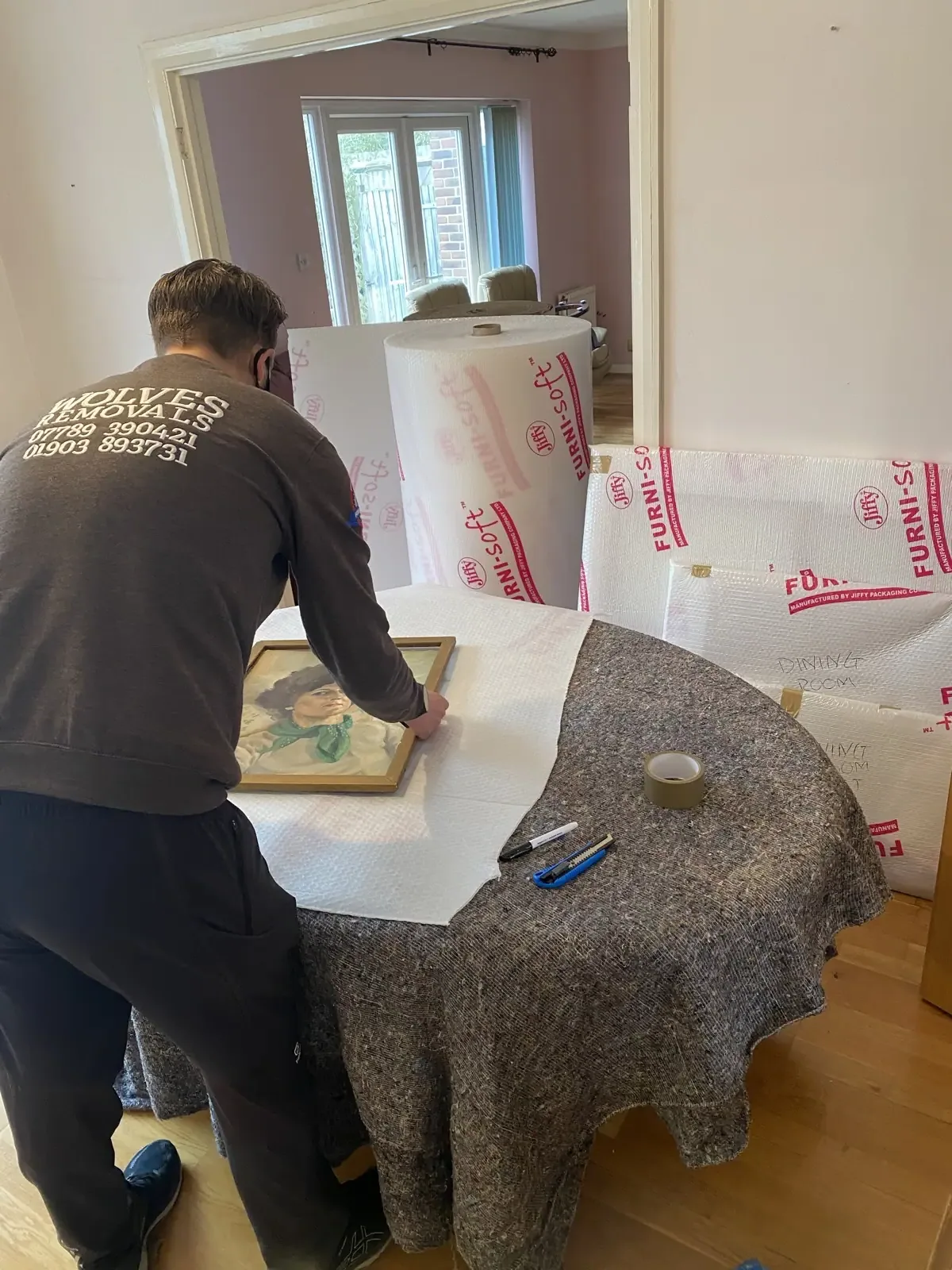
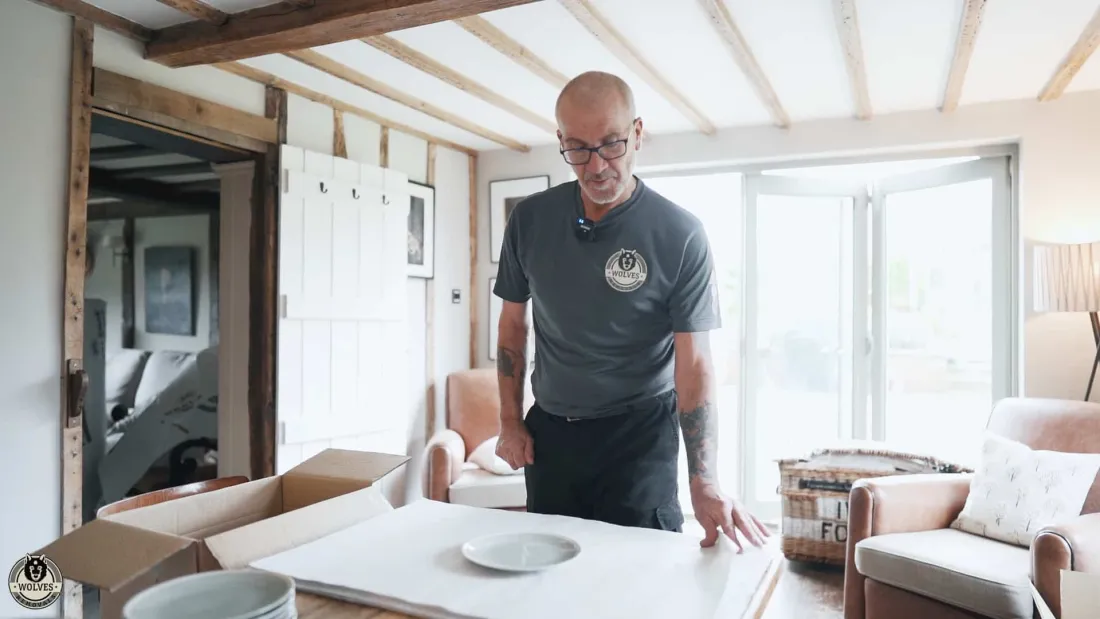
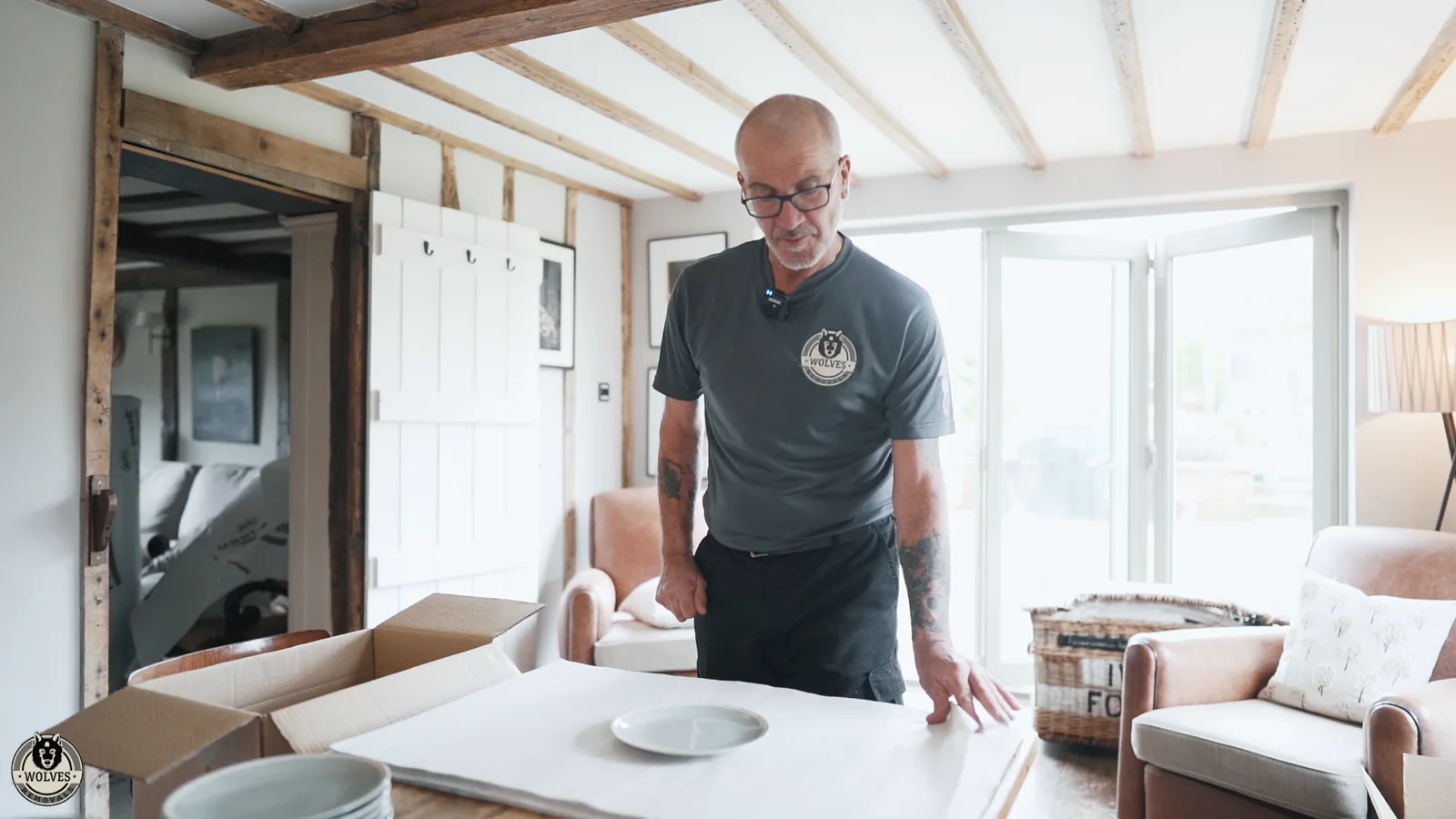
Plain packing paper does the wrapping, and most paper can go in your recycling bin at home (West Sussex County Council). Bubble wrap can’t, because West Sussex doesn’t take soft plastics in home recycling. If you already have bubble wrap from a delivery, use it again rather than buying more. Our guide to packing glasses and plates shows how to wrap in paper.
Wrap in paper
Glass and china in plain packing paper, never towels or clothes.
6. Fill the Gaps With Paper, Not Polystyrene
Crumpled packing paper is plastic-free void fill: it stops contents moving and recycles afterwards. West Sussex doesn’t recycle expanded polystyrene chips, and shredded paper can’t go in your home recycling bin either (West Sussex County Council). “Compostable” chips go in the rubbish bin, not the garden waste bin.
Fill the gaps with paper
Crumpled paper round the piece, polystyrene chips nowhere.
7. Use Only the Tape You Need
Tape the base and the top of each box properly, adding extra strips only under heavy loads. Paper tape and tape labelled biodegradable both still need peeling off before the box goes in the recycling, as West Sussex County Council asks for tape to be removed from cardboard. A box packed full and taped well needs no extra wrapping round the outside.
Tape off before it’s recycled
Peel every strip off the flattened box first.
8. Recycle What’s Left Properly
Most of what’s left after a move can go in your home recycling bin. If you live in Crawley and have too much for one collection, Crawley Borough Council says extra recycling can go in a cardboard box next to your bin, kept dry; elsewhere, check your own council’s rules.
Into the bin, and what stays out
Flattened cardboard in; bubble wrap and plastic film out.
What West Sussex says
- Cardboard and paperBoth go in your recycling bin at home. Adur & Worthing ask for big moving boxes to be cut or torn to fit the bin.
- Tape offThe county council says tape should be removed from cardboard before it goes in.
- Keep it dry and looseSoggy paper and cardboard can’t be recycled, and recycling goes in loose, not in bags.
- Plastic filmBubble wrap and film can’t be recycled at home yet; some supermarkets collect soft plastics, and kerbside film collections are due by 31 March 2027.
- PolystyreneExpanded polystyrene can’t be recycled; it goes in general waste.
- “Compostable” packagingBioplastics go in your rubbish bin, not your garden waste or recycling.
Sources: West Sussex County Council on cardboard, preparing your recycling, polystyrene and compostable packaging; Adur & Worthing Councils; Crawley Borough Council; and Defra on plastic film.
Wooden packaging can be recycled at a recycling centre, and unwanted textiles go there too, not in your home bins (West Sussex County Council).
If You’d Rather We Packed
Our full packing service packs the whole house, and our fragile packing service packs just the breakables while you pack the rest.
Planning a move?
Book a free video survey and you’ll have a fixed, itemised price within 24 hours of the survey.
We’re fully insured, and a LAPADA Approved Service Provider for antiques and fine art.
Jack Wolfe
Director, Wolves Removals · Ashington, West Sussex
Jack runs Wolves Removals, which has moved families and businesses across West and East Sussex, Surrey, Hampshire and Kent since 2016 from its Ashington base. The firm is fully insured, Checkatrade-verified and a LAPADA Approved Service Provider for antiques and fine art. More about us, or read our reviews.
Frequently Asked Questions
Move less first, then pack in containers you already own, reuse boxes that are still sound, wrap in packing paper, and recycle the boxes properly afterwards: flattened, dry and with the tape removed.
Yes, in West Sussex cardboard goes in your recycling bin at home. Flatten the boxes, remove the tape and keep them dry (Adur & Worthing also ask for big boxes to be cut or torn to fit the bin), because soggy cardboard can’t be recycled.
Not in your home recycling bin. West Sussex County Council says soft plastics such as bubble wrap and plastic film can’t be recycled at home; some supermarkets collect them, and kerbside film collections are due by 31 March 2027.
No. Wrap glass and china in plain packing paper, which also goes in your recycling afterwards. Pack the towels and clothes in suitcases and holdalls instead.
Flatten boxes from our box shop and we’ll take them back when a van is next nearby. Keep any other sturdy ones for storage, and recycle the rest flattened, dry and with the tape off.