The Wardrobe That Took Three Hours to Put Back Together
Three hours is a long time to spend on one piece of furniture.

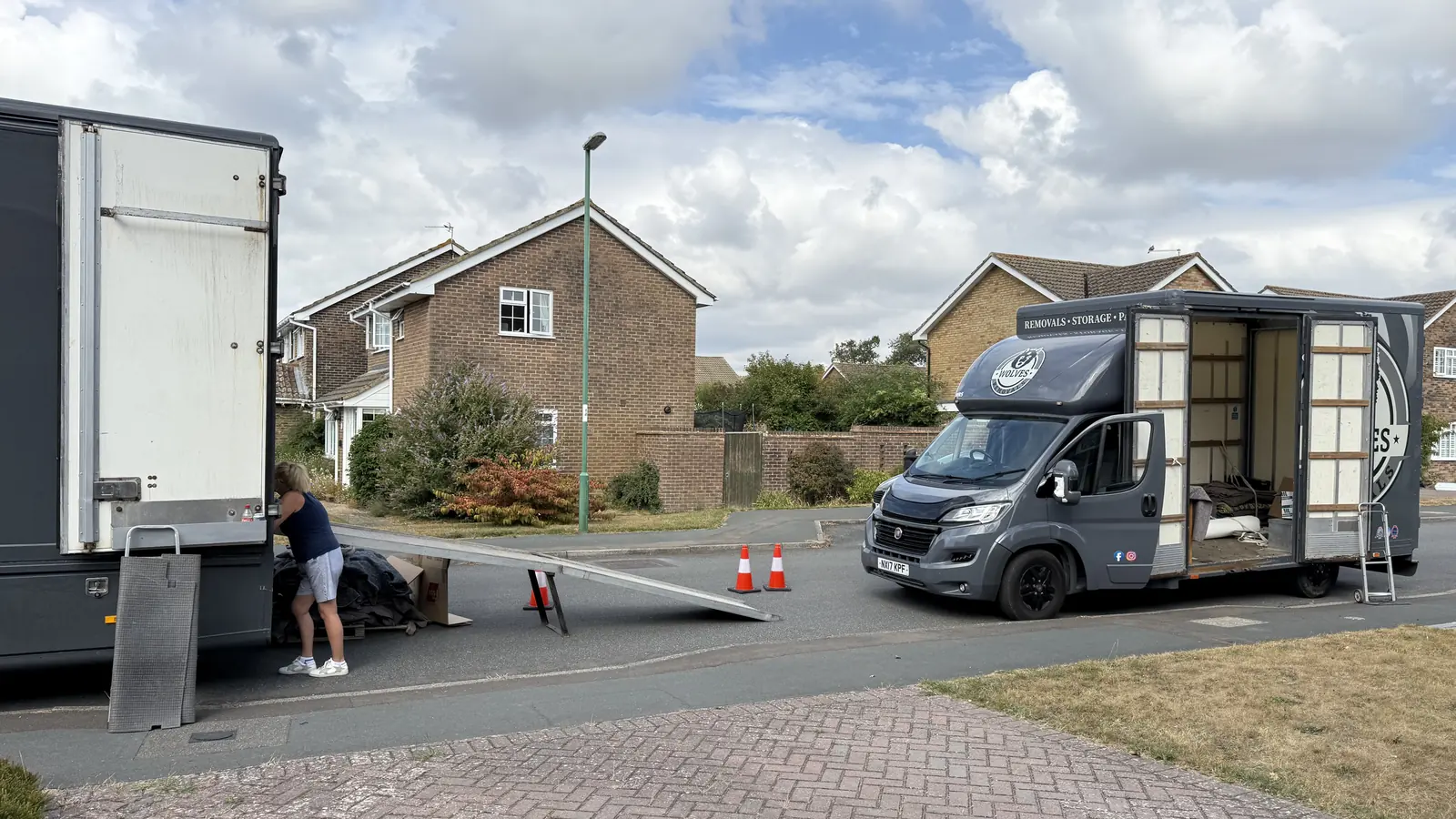
It is most of a morning, on a job that already had four days in it. Wolves Removals moved this household from Ashington to Storrington — the wardrobe came apart in our own village and went back together a few miles away, and putting it back was the single longest task of the week.
Nobody books a removal firm because they want a wardrobe rebuilt slowly. They book one so the week ends with the house working. This is what four days looks like when a household of 3,200 cubic feet is packed, dismantled, carried, driven and then put back together properly at the other end — what it involved, what the crew hit, and what it cost.
The job in one box
Collection was in Ashington, which is where we are based — the rarest kind of job we do, because the lorry did not have to go anywhere to start. Delivery was Storrington, a few miles west. On a map it is nothing. On a calendar it was four days.
The booking was for a full service: our crew packed the house, took the furniture apart, moved it, and rebuilt it at the far end. The customer packed nothing and rebuilt nothing. That is the whole point of the service, and it is why the days add up the way they do.
- We packed it: every carton built, filled and labelled by our crew.
- We took it apart: beds, wardrobes and the awkward pieces dismantled, fixings bagged and taped to the piece they came off.
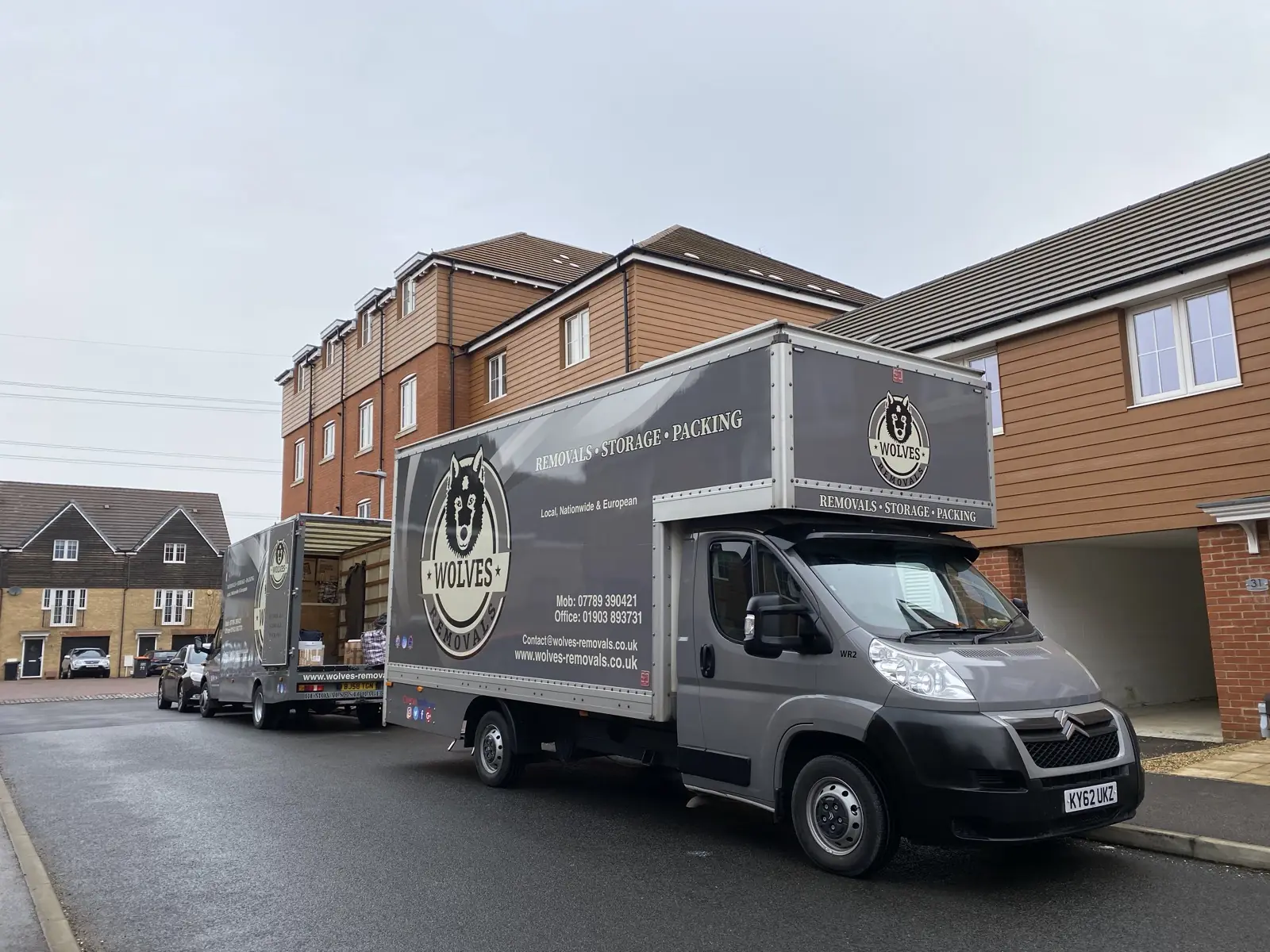
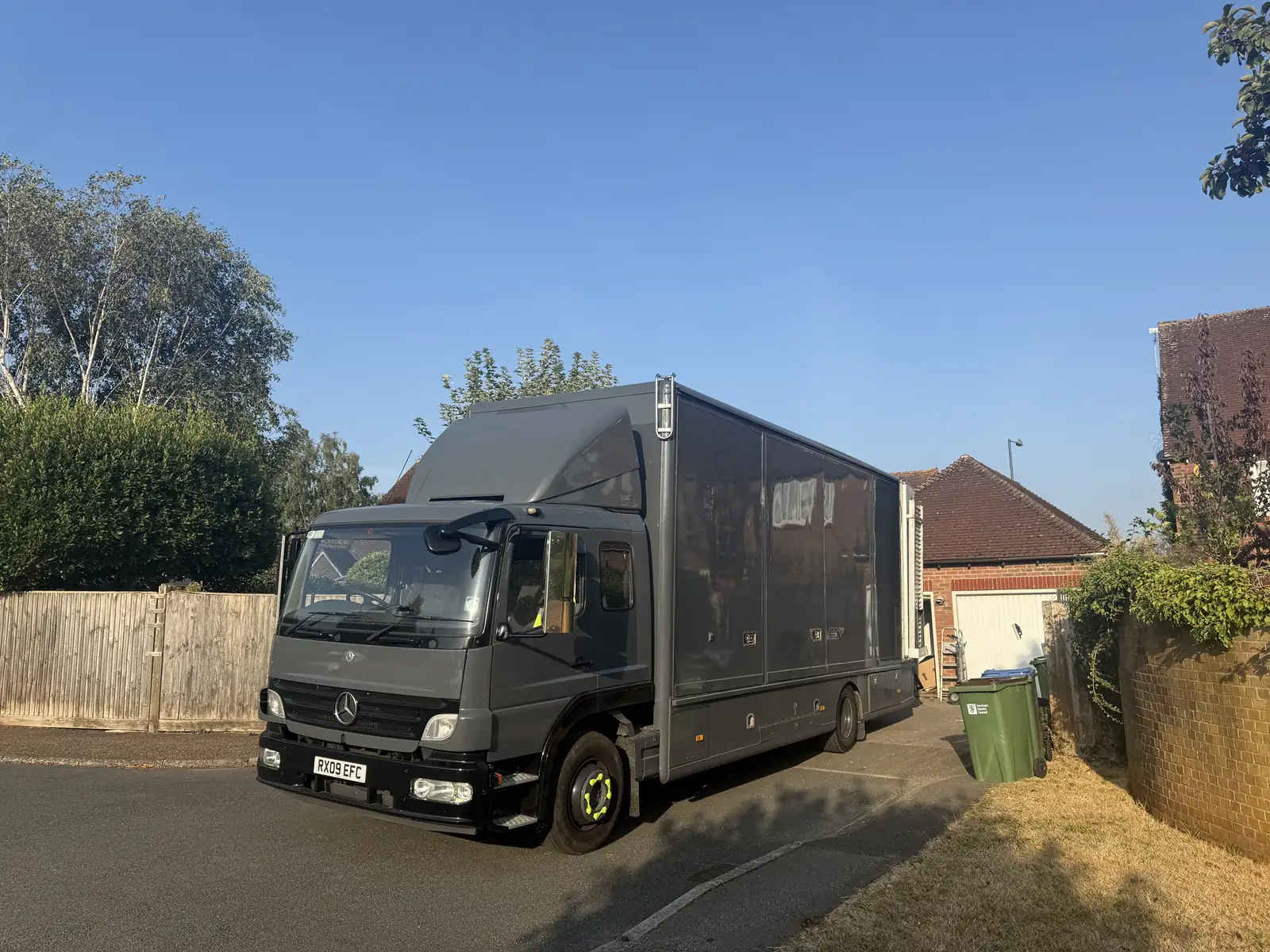
- We moved it: a lorry and a van, a few miles west, loaded in unpacking order.
- We put it back: rebuilt in the rooms the customer wanted, not the rooms it happened to land in.
Why four days, when it is only a few miles?
Distance is the part of a move that costs the least time, which is why this one still took four days. Ours was a short hop up the road. Everything else — the wrapping, the carrying, the dismantling, the rebuilding — takes exactly as long whether the new house is three miles away or three hundred.
People are often surprised by that. A move across the county and a move across the village can sit within a day of each other on the calendar, because the driving was never the expensive bit. What fills the days is handling: every plate, every drawer, every screw.
Day one and two: the packing
A full pack on a house this size is not a morning's work. Two days of it looked like this:
- Cartons built and labelled by room, so nothing has to be opened twice.
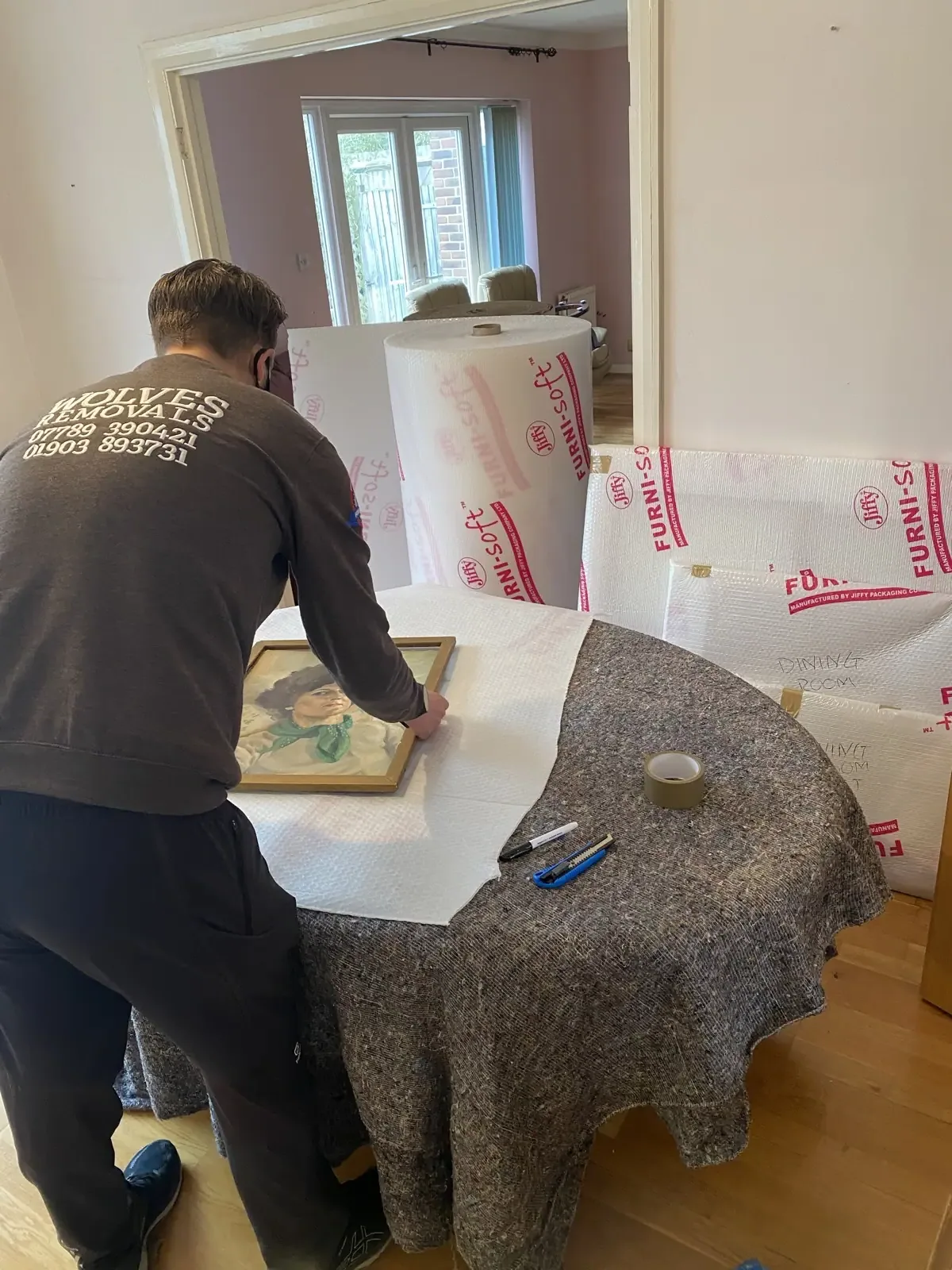
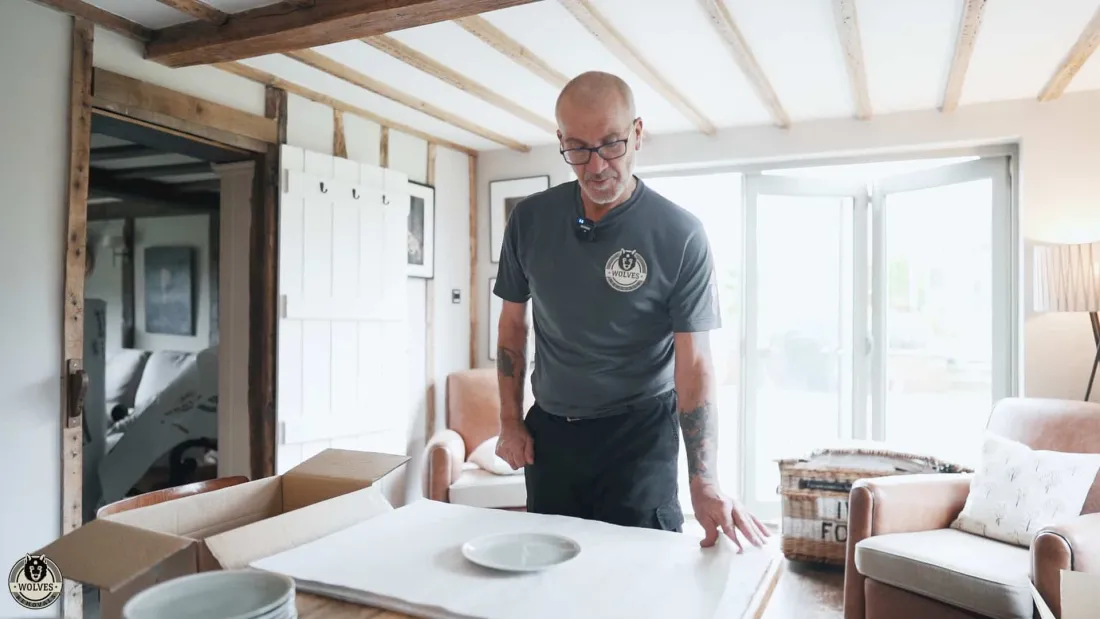
- Glass and china wrapped individually rather than bulked into a box and hoped for.
- Pictures and mirrors protected, and wardrobes emptied into hanging boxes.
- The whole of it stacked so that it comes off the lorry in an order that makes sense at the other end.
Day three: the load and the run
Furniture came apart on the same day it went on the lorry, which is deliberate. A bed frame left in pieces overnight is a bed frame with a missing bolt by morning. Fixings went into labelled bags taped to the piece they came from, which sounds obvious until you have watched someone hunt for a cam lock in a bin bag.
Day four: putting it all back
The last day is the one people underestimate. Carrying a house in is quick. Making it work again is not. Beds have to be usable that night, wardrobes have to take clothes, and the furniture has to end up in the room the customer actually wants it in rather than the room it happened to be carried into.
The wardrobe that took three hours
Most furniture is a known quantity. A flat-pack wardrobe is forty minutes and a hex key. A decent solid one is two people, a strap and a bit of care on the stairs. You learn the shapes.
This one was not one of those. It came apart slowly and it went back together slower — the sort of piece where the panels only meet if they meet in the right order, where a fixing that looks identical to its neighbour is not, and where getting it wrong means undoing three steps to fix one. Three hours, on a single item, at the end of a four-day job.
The crew could have rushed it. A wardrobe that is nearly square still stands up, and it would have looked finished from the bedroom door. It would also have been carrying its own weight through the wrong joints, and the doors would have stopped closing properly within a month.
So it took three hours and it was right. That is the version of the job that does not show up in a photograph and does not shorten the invoice.
What dismantling and reassembly actually buys you
Dismantling and reassembly is the part of a quote people most often decline, and the part they most often ring back about. Taking furniture apart is the easy half — anyone with a screwdriver and an afternoon can empty a bedroom. Putting it back is where the time goes, and it is the half that has to happen on the day you move in, not the following weekend.
What you are buying is the difference between a house full of boxes and furniture that works before the crew leaves. On this job, that meant:
- Every bed built and usable that night.
- Every wardrobe standing, square and ready to take clothes.
- Nothing left flat-packed against a wall as somebody else's problem.
If you want the detail of how the packing half works, our full packing service page covers the materials and the method. The dismantling and rebuilding is part of the same booking rather than an extra you add on.
What it came to: the price of a four-day, 3,200 cubic foot move
For this one job, Wolves Removals charged £4,150 plus VAT — £4,980 including it: four days, a full pack of a 3,200 cubic foot household, everything dismantled and rebuilt, and the short run from Ashington to Storrington — one job’s figure, and not a price list. A move the same size with the customer packing their own boxes is a different number entirely, and so is the same house going two hundred miles instead of a few.
The five things that set this price
What sets the price is the same short list every time, and on this job it read like this:
- Volume: 3,200 cubic feet, measured at survey rather than guessed from the bedroom count.
- Distance: a few miles, Ashington to Storrington — the cheapest part of the job.
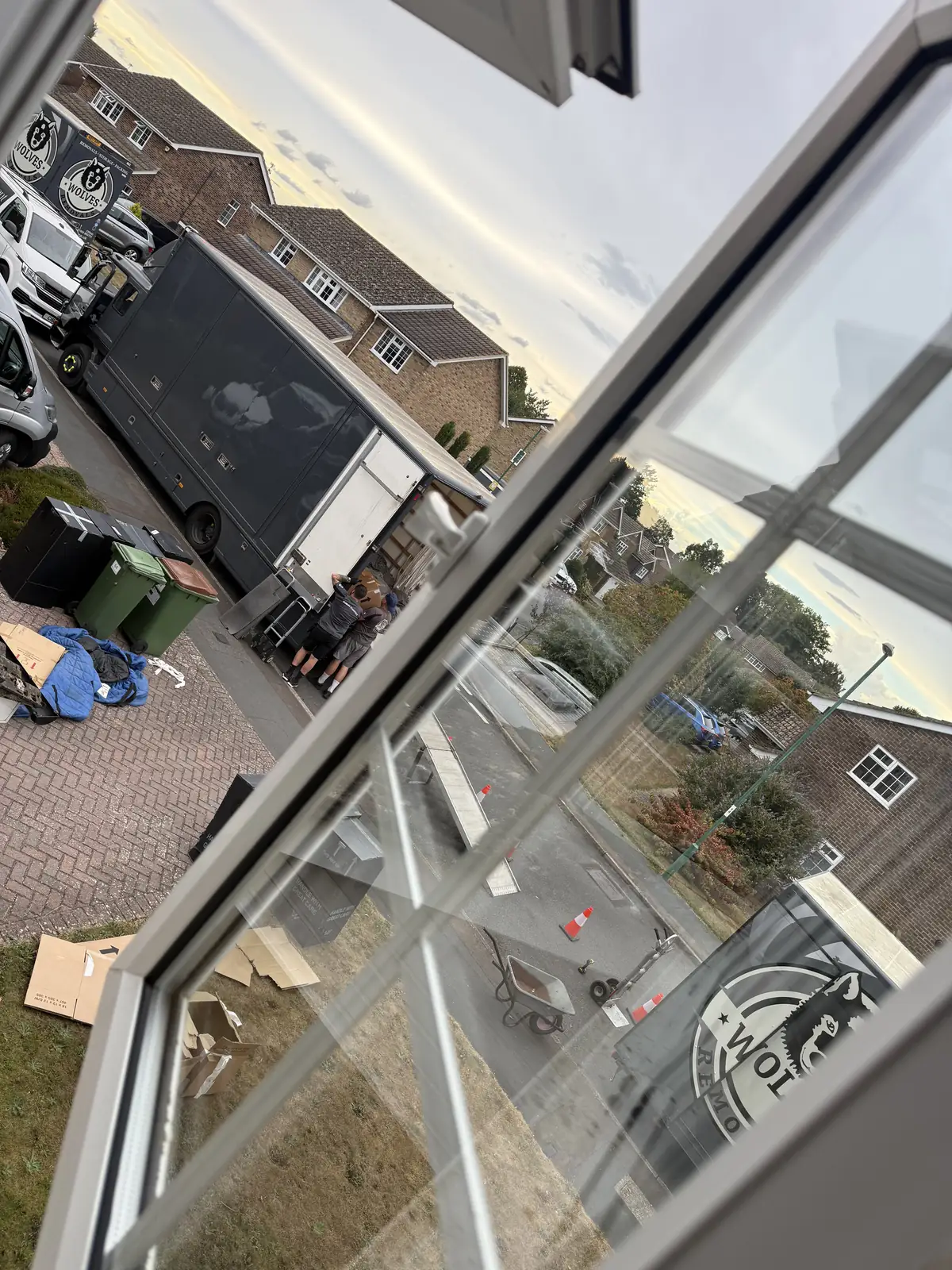
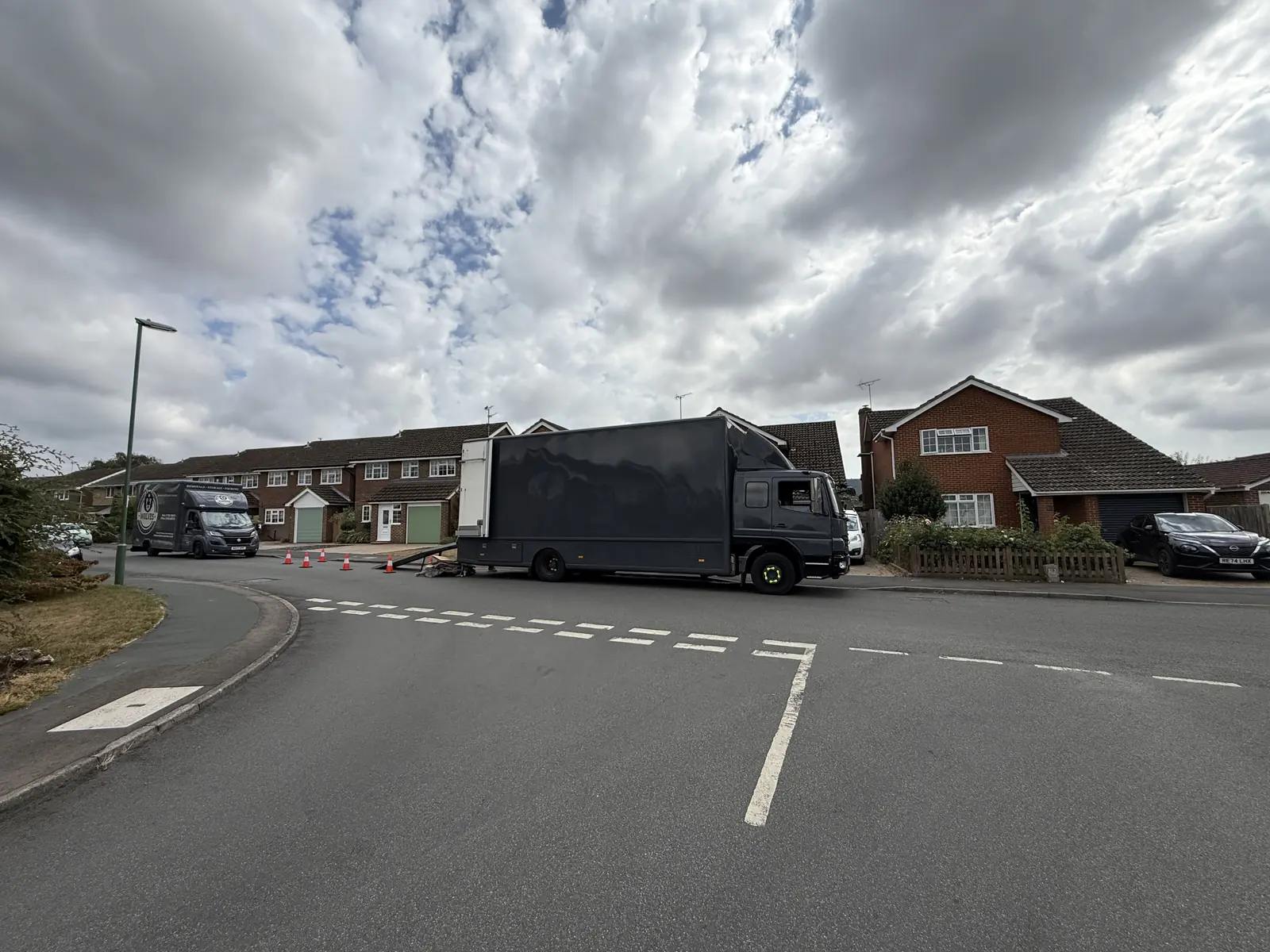
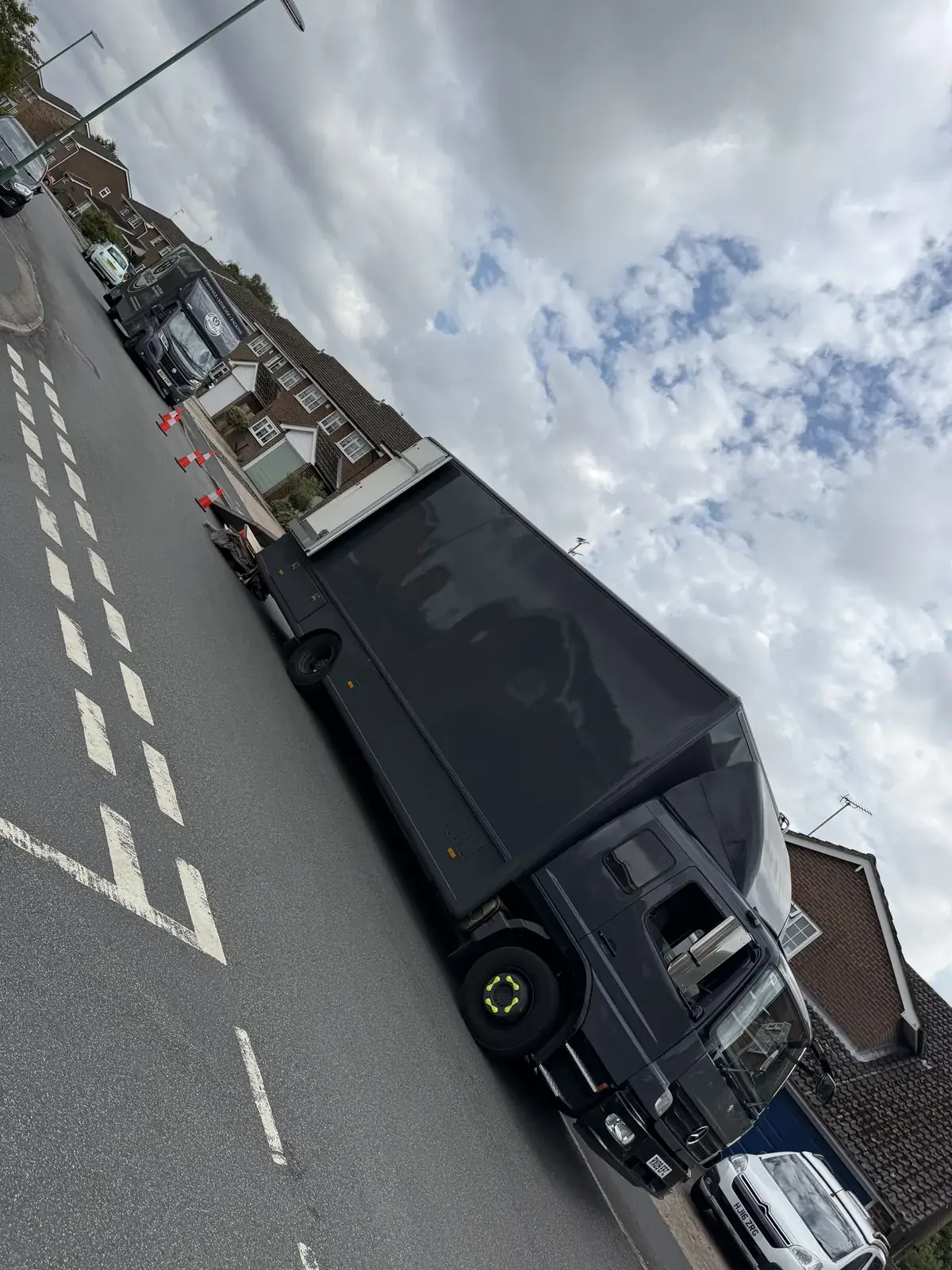
- Access: workable at both ends, with the van shuttling what the lorry could not get close enough to deliver.
- Packing: a full pack by our crew — the customer packed nothing.
- Dismantling and reassembly: included, which is what filled the fourth day.
If you want to see how that plays out across several real jobs, we have published seven of them with the figures attached.
The customer left this review on Google the day the job finished.
“Jack and his team were professional, kind, nothing was too much trouble, and they worked their socks off. Fun, helpful banter made a difficult process into a happy experience. I would highly recommend.”
Three hours on a wardrobe, and the word that came back was “happy”. We will take that over a shorter wardrobe.
Moving in or out of Storrington
Storrington sits under the north scarp of the South Downs, and the housing runs from village cottages near the centre out to post-war and modern estates on the edges.
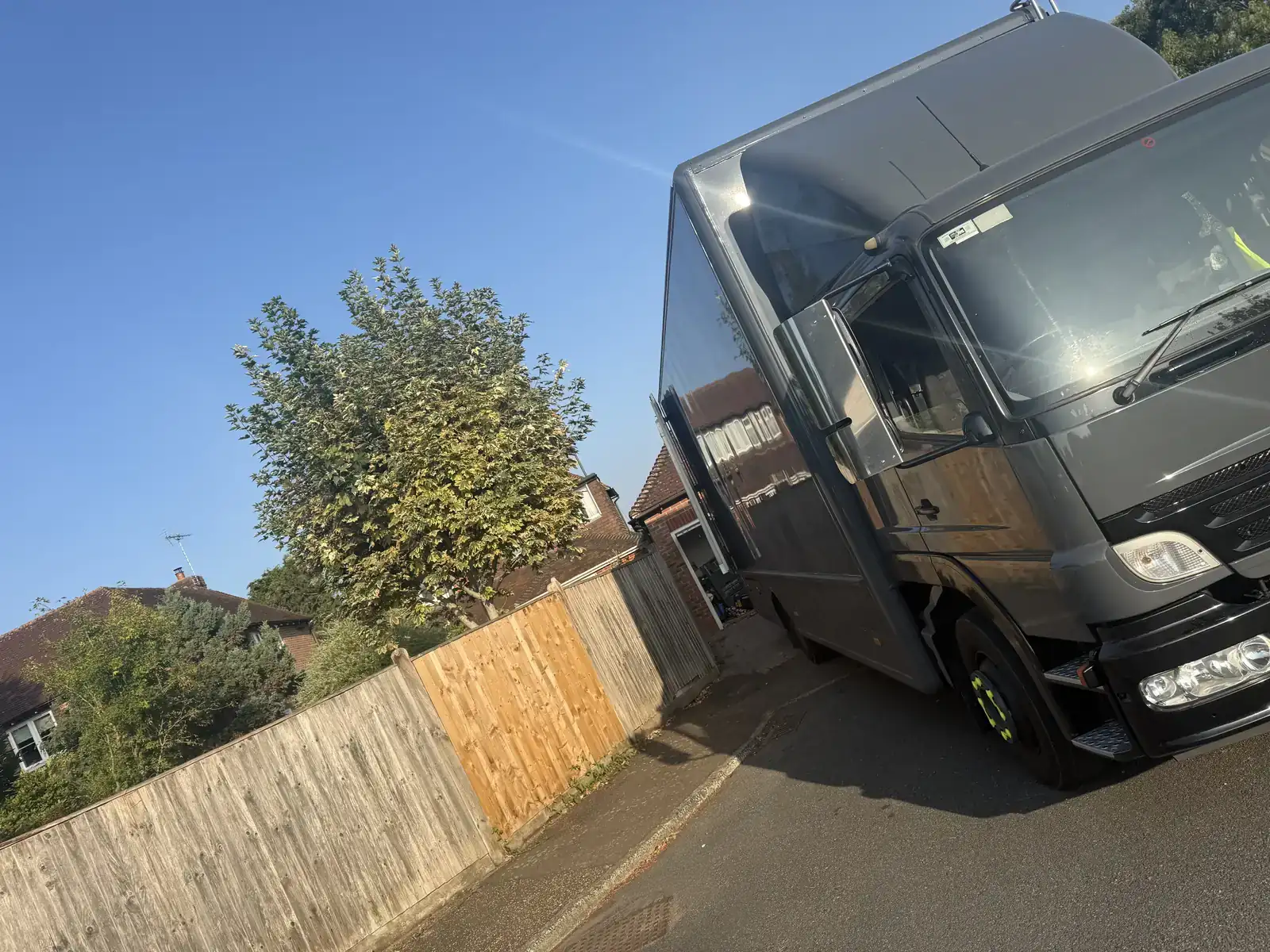
Access varies more than people expect between the two — a crescent with a wide kerb and a driveway is a different morning from a lane where the lorry has to stop short and everything shuttles. Wolves Removals
Our Storrington removals page has the practical detail for the area. If your own move involves furniture that worries you, say so at the survey rather than on the day — it is the difference between three hours planned for and three hours found.
The Wolves Removals Team
Family-run removals · Ashington, West Sussex
We have moved families and businesses across West and East Sussex, Surrey, Hampshire and Kent since 2016, from our Ashington base. We are fully insured, Checkatrade-verified and a LAPADA Approved Service Provider for antiques and fine art. More about us, or read our reviews.
The Wardrobe That Took Three Hours to Put Back Together — FAQs
Wolves Removals split the four days into two days of packing, one day of dismantling and loading, and one day of delivering and rebuilding. Days one and two are full packing: every carton built, filled and labelled, glass and china wrapped individually, wardrobes emptied into hanging boxes. Day three is the load and the run — furniture dismantled on the same day it goes on the lorry, fixings bagged and taped to the piece they came from, then the drive itself. Day four is delivery and reassembly, which is the day people most underestimate, because putting a house back together properly takes longer than carrying it in. That shape is typical for a full-service move of around 3,200 cubic feet, though the balance shifts with the house — more glass and pictures pushes packing longer, more built-in or complicated furniture pushes the final day longer. The survey is where that balance gets worked out, before day one rather than during it.
On this Wolves Removals job, one wardrobe took three hours to reassemble because it was not a standard piece. Most furniture is a known quantity — a flat-pack wardrobe is forty minutes and a hex key, a solid one is two people, a strap and some care on the stairs. This one only went back together in one order: the panels met correctly only in the right sequence, fixings that looked identical to their neighbours were not, and getting a step wrong meant undoing three more to fix it. The wardrobe came apart on day three and went back together on day four, at the end of a four-day, 3,200 cubic foot move from Ashington to Storrington. The crew could have rushed it — a wardrobe that is nearly square still stands up and looks finished from the doorway. It would also have been carrying its own weight through the wrong joints, and the doors would have stopped closing properly within a month. Three hours once is cheaper than a rebuild later.
Wolves Removals quotes dismantling and reassembly as part of the service rather than assuming it, so it appears as a stated line on the estimate rather than something added later. On this job it was included: the crew took the furniture apart, packed it, moved it and rebuilt it, and the customer packed nothing and rebuilt nothing. For a four-day, 3,200 cubic foot move from Ashington to Storrington that included full packing and full reassembly, Wolves Removals charged £4,150 plus VAT — £4,980 including it, one job’s figure rather than a price list. Most people who decline the service are thinking of the taking-apart, which is the easy half; the reassembly is where the hours go, and it has to happen on moving day itself if beds are to be usable that night. Ask for it as a separate line at survey stage, so the figure is in front of you before the day arrives rather than discovered on it.
A short-distance move costs less than a long one, but not as much less as people expect, because distance is the cheapest part of the job. This move ran a few miles, from Ashington to Storrington, and still took four days: two days of packing, one day of dismantling and loading, one day of delivering and rebuilding. For that job, Wolves Removals charged £4,150 plus VAT — £4,980 including it, a single job’s figure rather than a price list, because the driving was never the expensive part. Wrapping, carrying, dismantling and rebuilding take the same time whether the new house is three miles away or three hundred, so a move across the village and a move across the county can land close together on a quote. Distance starts to matter properly once the crew can no longer get home the same day, and an overnight stop, a second vehicle or a two-day unload enters the picture — none of which applied here.
3,200 cubic feet is a large household — the biggest move Wolves Removals has published a full account of, and around 40% bigger than the next largest, a 2,285 cubic foot job in Petworth. Volume, not bedroom count, is what actually gets measured, because two houses described the same way on paper can differ enormously once the loft, the garage and the shed are counted. This job was measured at survey rather than estimated from the number of bedrooms, which is why the vehicle and the crew that turn up are sized to what is genuinely there rather than to a rough guess. For comparison, other published Wolves Removals jobs have run from 1,070 cubic feet in Chichester up to 2,285 cubic feet in Petworth, with this Ashington to Storrington move sitting well above all of them. A household this size is also why the job took four full days rather than one or two: more volume means more to pack, dismantle, carry and rebuild, regardless of distance.
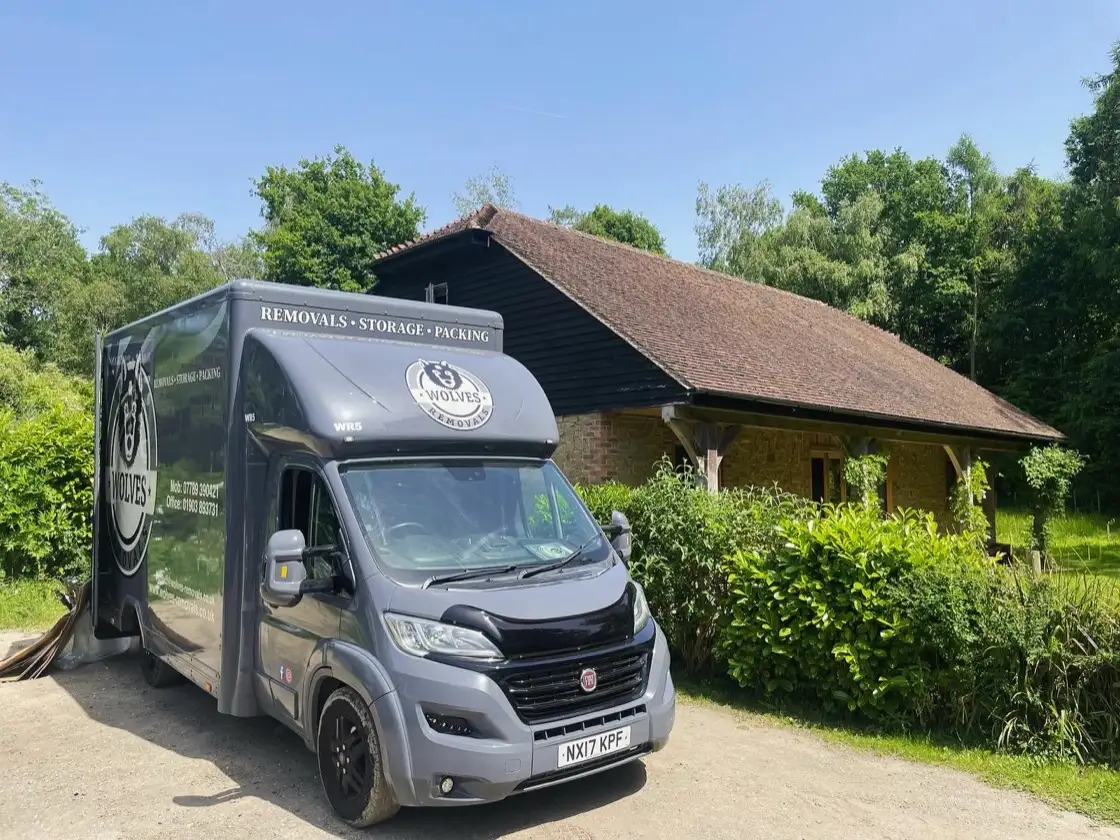
Yes — this move started in Wolves Removals’ own village. The firm is based in Ashington, so the collection address for this job was a few minutes from its own yard and the lorry did not have to travel to start work; delivery was in Storrington, a few miles away. Short local moves get the same survey, the same protective materials and the same crew as a job crossing the county — packing method, dismantling and reassembly do not change because the distance is short. If anything, a move inside the village is where local knowledge shows up most, because the crew already knows which lanes take a full-size lorry and which need the van instead. On this job that meant pulling the lorry in tight at the collection end and using the van to shuttle what it could not get close enough to deliver at the other.