How to Pack Glasses and Plates
Plates go in standing on their edge, glasses are stuffed before they are wrapped, and the box should be a good deal lighter than you would fill it.

Here is the reasoning behind each, including two things most guides on this subject skip.
The short version
- Plates go in standing on edge, never stacked flat.
- Wrap in plain paper, not bubble wrap and not newspaper.
- 5cm of crumpled paper in the base of the box first.
- Keep a box of crockery under about 15kg, which is far less than it holds.
- Shake the box before taping. If you hear movement, add paper.
Why Plates Go in on Their Edge
Plates go in standing on their edge, like records in a rack, because a plate is strong at its rim and weak across its face. Standing them spreads the load instead of resting it all on the bottom plate. It is the single most important step in packing crockery, and the one most guides skip.
Stack plates flat and two things go wrong at once: the bottom plate carries the weight of the whole column, and any knock to the base travels straight up through it, each plate loading the one beneath. Stand them on edge and the load runs down through the rim instead, so every plate is supported on its own.
Orientation is doing more work here than padding. A well-wrapped stack packed flat will still lose the bottom plate; a lightly wrapped set packed on edge usually arrives intact.
Paper or Bubble Wrap?
Paper for wrapping, bubble wrap for cushioning. They are not interchangeable and using the wrong one causes problems.
Packing paper moulds to a plate, sits flat against the next one and takes up almost no room, so a bundle stays tight. Bubble wrap is bulky and slightly slippery, so plates wrapped in it sit loose in the box and slide against each other, which is the thing you are trying to prevent.
Where bubble wrap earns its place is around awkward shapes that paper cannot follow: a teapot spout, a handled jug, a lidded tureen. And use plain newsprint rather than printed newspaper. They look identical on the roll, but newspaper ink transfers onto glazes and takes real scrubbing to shift, which is a grim discovery when you are unpacking.
How to Pack Plates, Step by Step
Start with the box, not the plates.
- Tape the base properly. One strip along the seam, then two more across it at right angles, so the load is not resting on a single line of tape. A crockery box that fails, fails at the base.
- Line the bottom. A good 5cm of crumpled paper across the whole base. That layer absorbs the moment the box is set down, which is when most breakages actually happen.
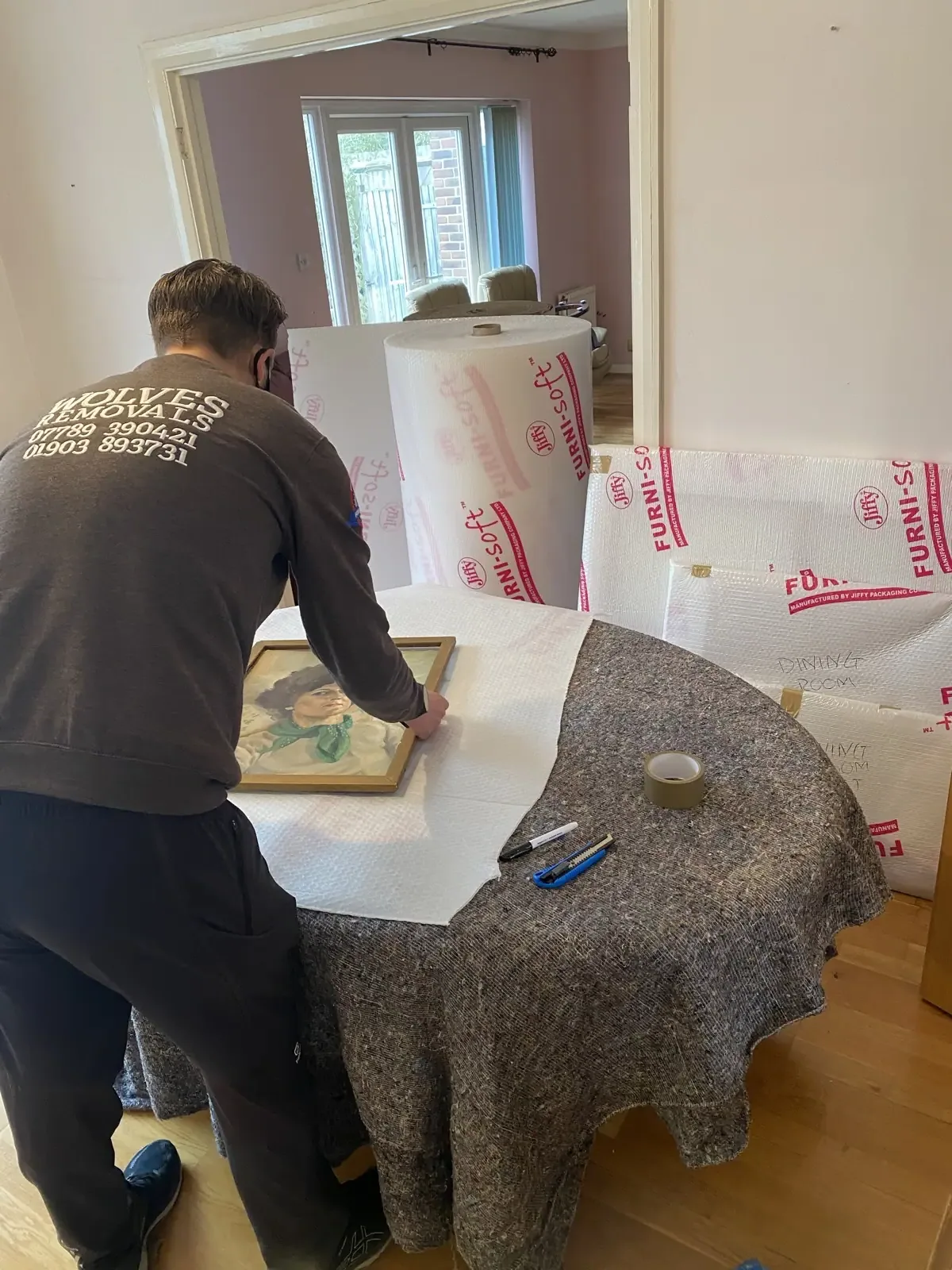
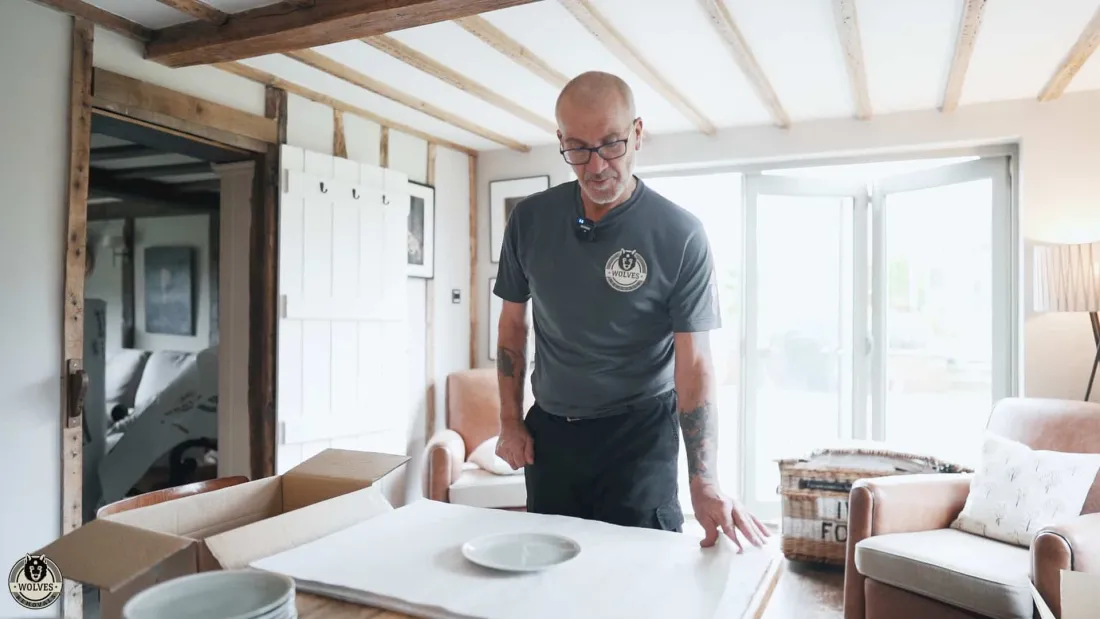
- Wrap each plate individually. Lay it in the middle of a sheet, fold the corners in over it, and give anything thin or valuable a second sheet.
- Bundle three or four together and wrap the bundle as a unit. A bundle is far more robust than four loose plates, and much quicker to load.
- Load, fill and check. Bundles go in standing on edge, side by side, snug. Fill every remaining gap with crumpled paper, then lift the box and give it a gentle shake before taping. If you can hear movement, add more paper.
How Do You Pack Bowls, Mugs and Crockery?
Bowls are not plates and should not be packed like them. Wrap each one, then nest two or three together with a sheet of paper between each, and stand the nested set on edge in the same way. Nesting without paper between is how bowls chip, because the rim of one sits directly on the glaze of the next.
Fine or bone china wants the same steps done more carefully: it is thinner than everyday crockery, so give it two sheets rather than one. If a piece has a gilt or platinum rim, plain newsprint matters even more, because printed ink can dull metallic trim as well as glaze.
Mugs fail at the handle. Wrap the handle on its own first, then wrap the whole mug, and stuff the inside with a twist of paper so it is supported from within. Mugs travel upright, never on their sides, and never stacked inside each other unwrapped.
Teapots, jugs and anything with a lid want the lid removed and wrapped separately, with the cavity stuffed. A lid left in place rattles against the rim for the whole journey.
How to Pack Glasses and Stemware
Stuff the bowl of the glass first with a small piece of crumpled paper, so it is supported from the inside rather than relying on the wrapping alone. Then lay the glass on its side at the corner of a sheet and roll it up, tucking the ends in as you go so the parcel is closed at both ends. Paper is enough on its own for straight-sided glasses. Keep bubble wrap for stemware and anything with a foot or handle that paper cannot cup snugly.
With stemware the stem is where it fails, not the bowl. Give the stem its own wrap before the main roll. Stand the finished glasses upright in the box rather than laying them down, so nothing is resting on a stem, and keep heavier tumblers in the bottom layer with delicate stemware above, a sheet of crumpled paper between the layers.
If you have a box with cardboard dividers, use it. Glass against glass is the commonest breakage of the lot, and dividers solve it outright.
How Heavy Should the Box Be, and How Many Plates Fit?

Aim to keep a crockery box under about 15kg. That target comes from Health and Safety Executive guideline weights for manual handling, cut back because moving day rarely meets the conditions those figures assume.
The HSE guidelines are 25kg for men and 16kg for women. Those apply only to a load held close to the body at about waist height, in good conditions, with a stable posture. Outside that zone they fall sharply, and at or above shoulder height the guideline drops to roughly 10kg for men and 7kg for women. There is no single legal limit in the UK; these are the figures used to flag when a lift needs closer thought.
Now picture moving day. The box is lifted off a floor rather than a bench, carried through a house, down a step, and then pushed onto a stack in the vehicle that is often above shoulder height. Almost none of that is the ideal condition the 25kg figure assumes.
You can work out what that means for your own plates in thirty seconds. Put one plate on the kitchen scales, then divide 13kg by its weight, leaving roughly two kilos for the box, the paper and a margin. A 650g dinner plate gives you about twenty. A heavy stoneware plate at 1kg gives you about thirteen.
That is why a part-filled dish box topped up with crumpled paper is correct rather than wasteful.
Labelling, and What Not to Pack Alongside
Write FRAGILE on at least two sides and the top, because whichever face you wrote on will be the one turned to the wall. Add the room, and add an arrow for which way is up: a box of glasses stacked upside down loses the benefit of everything you did inside it.
Keep fragile boxes to fragile contents. Books, tins, tools and bottles do not belong in with crockery, because they are dense, they have corners, and they will find the one plate you wrapped in a single sheet.
One habit that saves an evening: mark the box you will want first. A kettle, four mugs, a tea towel and enough crockery for one meal is worth more on the first night than anything else in the van.
What Actually Breaks, and When
Breakages rarely happen in transit, because a well-packed, strapped box travels fine. They cluster at two moments instead: when the box is set down, and when the contents shift inside a box that is under-filled or over-filled.
The first is when it is set down, which is the impact the base cushion exists to absorb. The second is movement inside the box: an under-filled box lets contents shift, and a plate that can move will eventually strike another. An over-filled box fails the other way, giving out at the base while someone is carrying it.
If you have run out of packing paper, clean tea towels, linen and jumpers all work as cushioning, though not as a substitute for wrapping items individually. What does not work is leaving gaps and hoping.
Do Removal Companies Pack Kitchens?
Yes, and the kitchen is the room most often handed over even by people who pack everything else themselves.
It is the slowest room in the house, it holds most of the breakables, and it is where the difference between a practised packer and a careful amateur shows up most clearly. Wolves Removals
One thing worth checking before you decide: many removals policies treat boxes the crew packed differently from boxes you packed yourself. Ask your mover what your cover includes if you are doing your own packing.
What a crew brings is materials and pace: double-walled dish packs, plain newsprint by the ream, dividers for glassware, and the habit of the shake test on every box before it is taped. Our full packing service covers the whole house or just the rooms you would rather not do, and the packing materials shop sells dish packs and paper if you would rather do it yourself.
For the rest of the house, how to pack boxes for moving covers materials, weight and the order to work in.
The Wolves Removals Team
Family-run removals · Ashington, West Sussex
We have moved families and businesses across West and East Sussex, Surrey, Hampshire and Kent since 2016, from our Ashington base. We are fully insured, Checkatrade-verified and a LAPADA Approved Service Provider for antiques and fine art. More about us, or read our reviews.
How to Pack Glasses and Plates — FAQs
On their edge, standing like records in a rack. A plate is strong at the rim and weak across its face, so stacking flat puts the weight of the whole column onto the bottom plate and lets any knock travel up through the stack. Standing them on edge runs the load through the rim and supports each plate independently. Wrap each plate first, bundle three or four together, then stand the bundles side by side. It matters more than how much padding you use.
Fewer than the box holds. Work it out rather than guessing: weigh one plate on the kitchen scales and divide 13kg by that figure, which leaves roughly two kilos for the box, the paper and a margin against a 15kg target. A 650g dinner plate gives you about twenty; heavy stoneware at 1kg gives you about thirteen. The reason for the low target is that HSE manual handling guidelines of 25kg for men and 16kg for women assume a lift close to the body at about waist height in good conditions, and moving day is nothing like that.
A small or medium box, never a large one. Plates and glasses are dense enough that a large box passes the 15kg target before it is even a third full. Dish packs are deliberately among the smallest boxes in a standard range for exactly this reason, and double walled to carry that density rather than to hold volume. If large boxes are all you have, part-fill with crockery and top the rest up with lighter items or crumpled paper, never with more plates.
Paper for wrapping, bubble wrap for cushioning awkward shapes. Packing paper moulds to the plate, sits flat against the next one and takes up almost no room, so the bundle stays tight. Bubble wrap is bulky and slightly slippery, so bubble-wrapped plates sit loose and slide against each other, which is the problem you are trying to avoid. Save the bubble wrap for spouts, handles and lids that paper cannot follow.
At a push. Clean tea towels, linen and jumpers all cushion well and have the advantage of needing to be moved anyway. What they cannot do as neatly is wrap each plate individually, and individual wrapping is what stops glaze rubbing on glaze. Avoid printed newspaper: the ink transfers onto glazes and takes real scrubbing to remove. Plain newsprint costs very little by the ream and is the right material.
Stuff the bowl with a small piece of crumpled paper first so the glass is supported from the inside, then wrap the stem on its own, because the stem is where stemware fails. Lay the glass at the corner of a sheet and roll it, tucking the ends in so the parcel closes at both ends. Stand the finished glasses upright in the box rather than laying them down, keep heavier tumblers in the bottom layer, and use a box with cardboard dividers if you have one, since glass touching glass is the commonest breakage.
A double-walled carton made for crockery and glassware, usually supplied with cardboard dividers sized for glasses. The double wall is a real difference rather than a marketing one: a single-wall carton flexes, and flex is what lets contents move against each other. The dividers do the other half of the job. If you buy only one specialist box for the whole move, this is the one worth having, and it is the box professional packers reach for by default.