Household Storage in Horsham: A Practical Family Guide
Our crew packs up your Horsham home, keeps it in sealed timber containers in our warehouse in Sussex and brings everything back when you are ready.

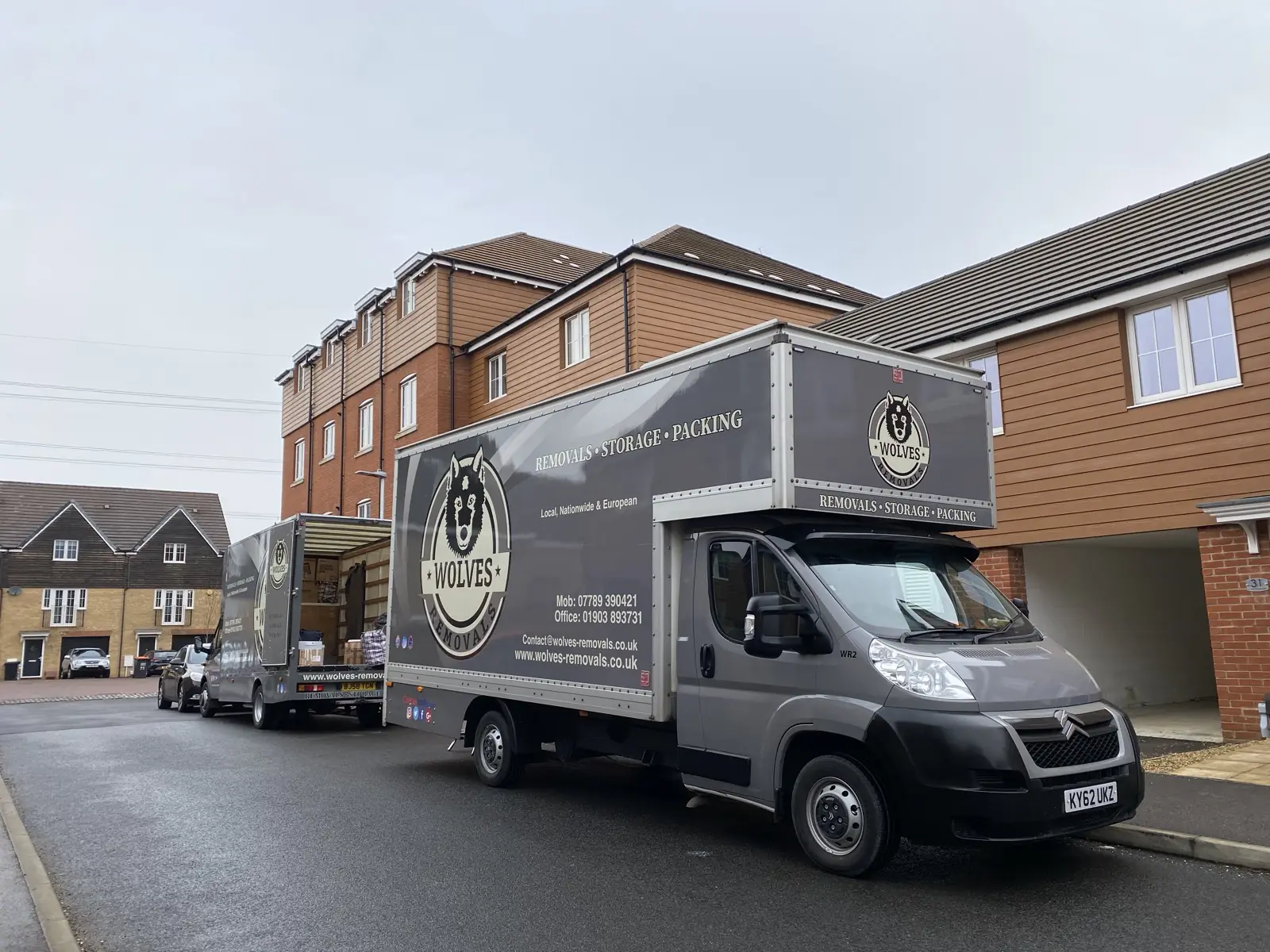
We are Wolves Removals, a family-run removals and storage firm about 10 miles from Horsham, with no depot in the town itself. You never need to find a unit or hire a van. We collect from any address in RH12 or RH13, from a flat off the Carfax to a new house at Kilnwood Vale.
In short
New-build delays: Hours on the lorry, days in our warehouse.
Selling first: Store just the overflow, or the whole house.
Loft conversion: Empty the loft first, before the builders start.
Town-centre flats: You apply for the bay, we plan the carry.
Where can you store furniture in Horsham without driving it to a unit?
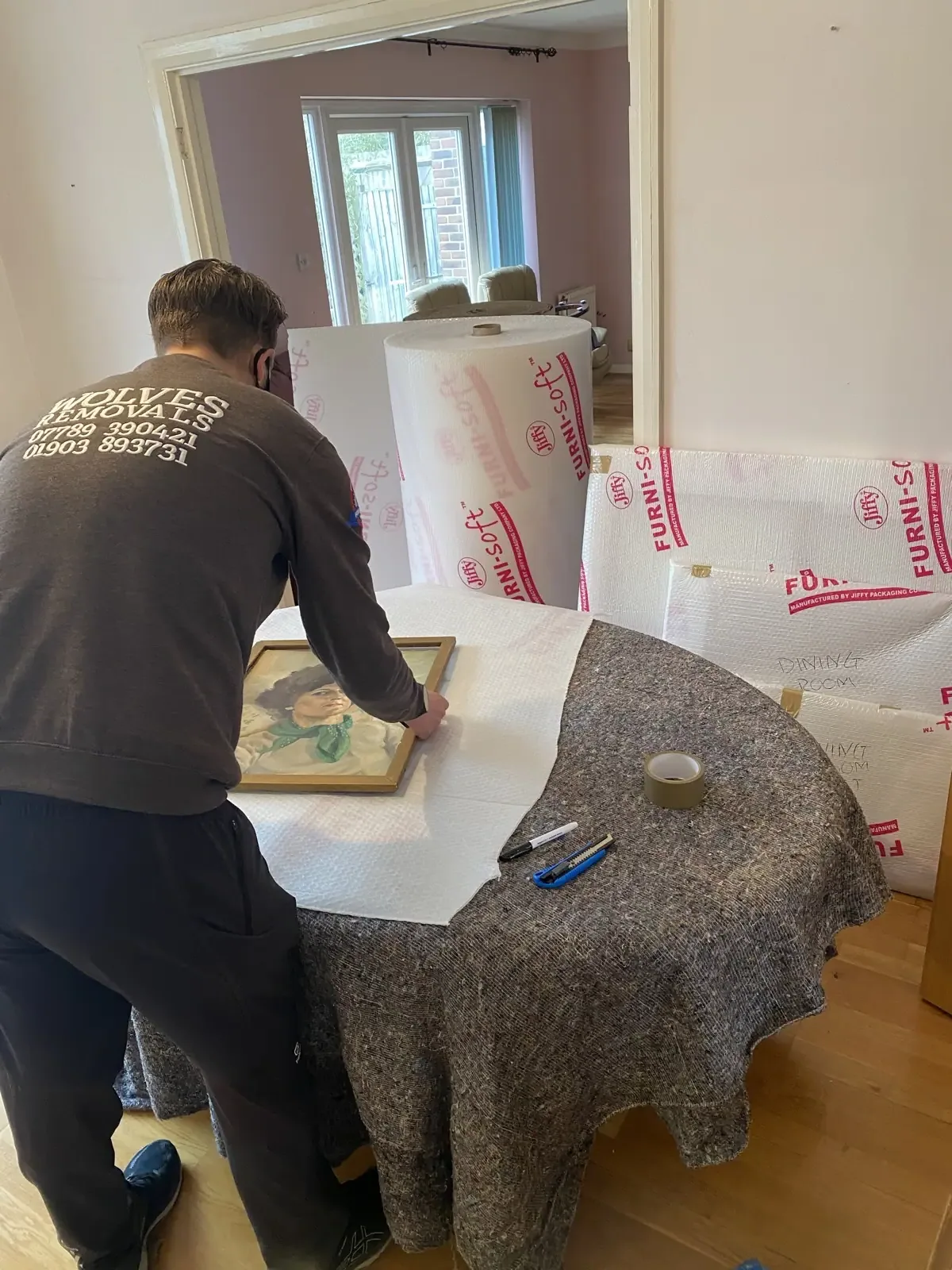
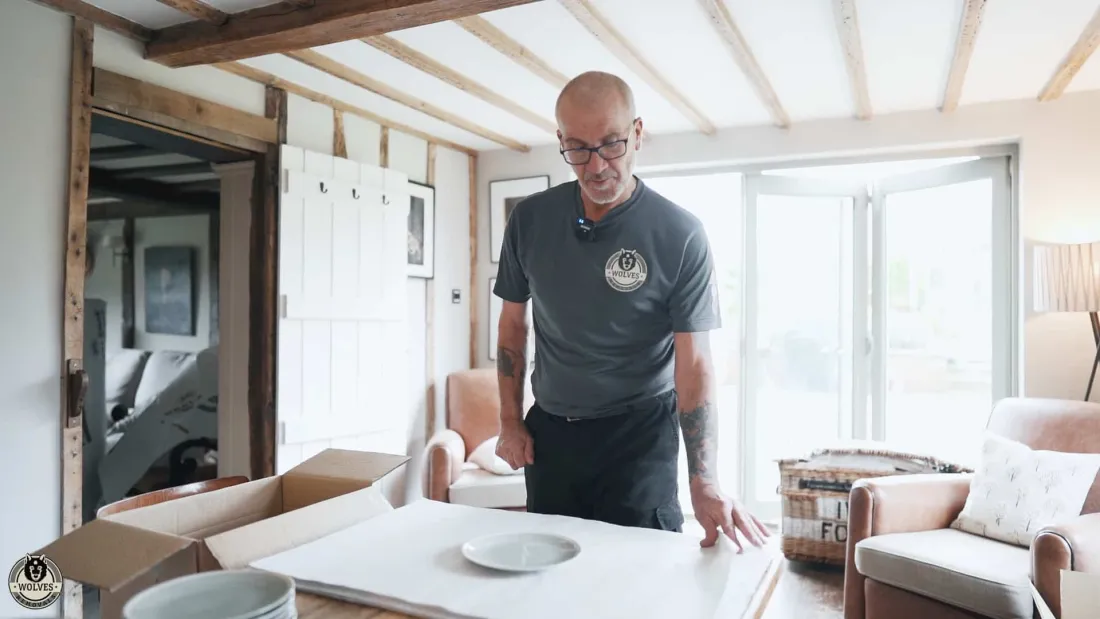
Your furniture is kept in a sealed timber container in our warehouse, about 10 miles away. We wrap and pack at your door, load it ourselves and keep the container closed until you ask for it, so there are no trips to a unit and no lifting on your part.
From your door to our warehouse
- We wrap furniture and pack at your door.
- Our own lorry and crew make the journey.
- Your container stays sealed in our warehouse in Sussex.
Drawing not to scale.
Your container, in store
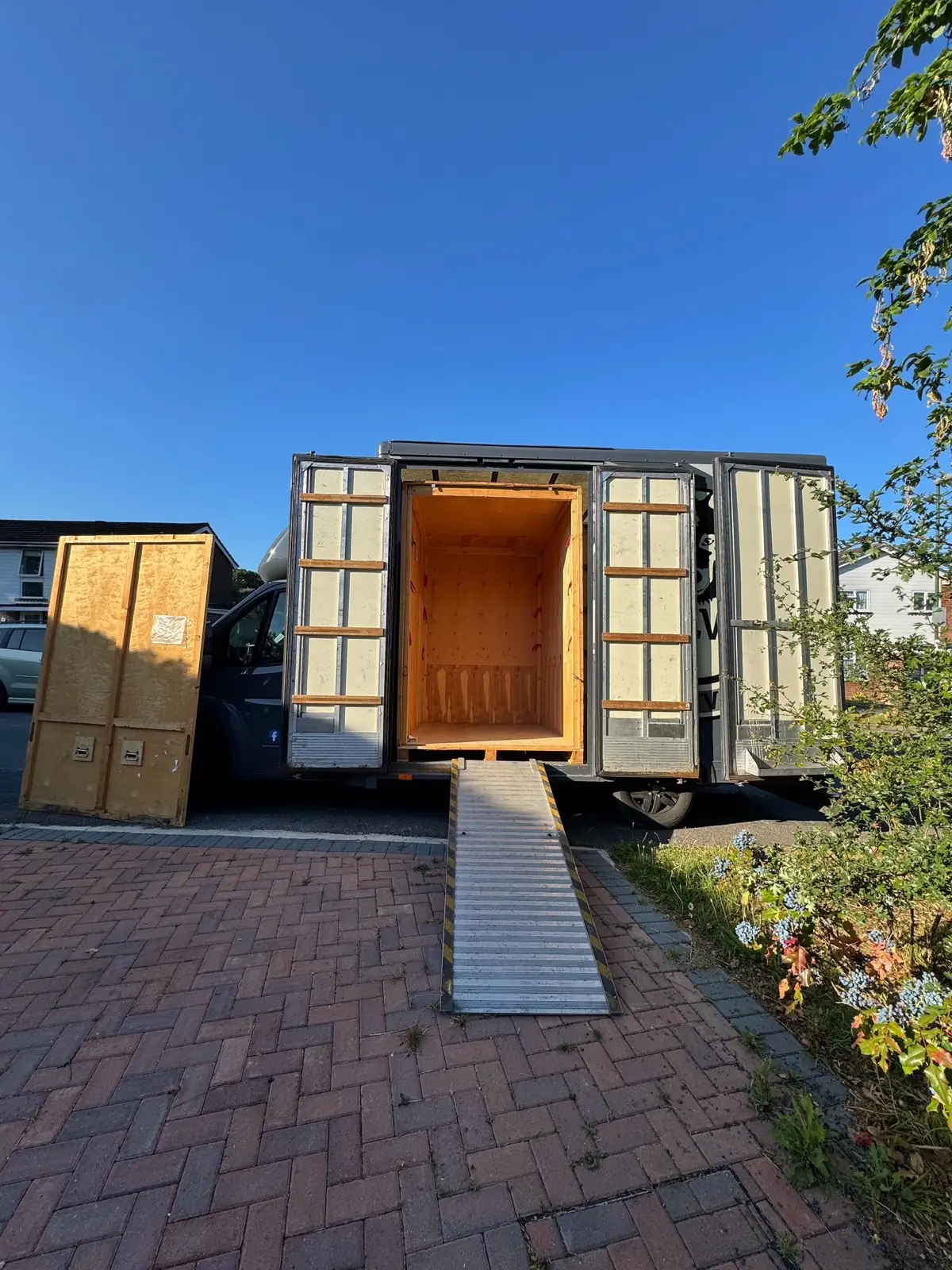
- Each container holds about 250 cubic feet, is sealed with only your things inside and is kept indoors, not on an open yard.
- Give us a little notice and we bring your container out; it is opened at your request, under supervision, then sealed again.
- The building is alarmed and monitored, and access is controlled by our staff.
Wolves Storage Sussex, our sister business, also has a page on storage in Horsham.
Buying a new build around Horsham: what if the handover date slips?
When a handover slips, your furniture waits with us. If the keys come a few hours late, it stays on our lorry; if they come days late, it goes into our warehouse and comes to the new house once the keys are released.
Hours on the lorry, days in our warehouse
Drawing not to scale.
New-build completions run to the developer’s timetable: the date is often fixed late and keys tend to be handed over around the middle of the day. Three large estates around the town are still being built.
Still being built
Land North of Horsham: 2,750 homes, 211 built by March 2025
Kilnwood Vale: 2,500 homes, 1,335 still to build in April 2025
Highwood: 344 more homes, on its southern site, forecast by 2032
Sources: Horsham District Council’s monitoring report 2024/25 (PDF), housing supply paper (PDF, March 2026) and Local Plan main modifications (PDF, June 2026).
Is water neutrality still holding up new homes?
Not as a rule any more: Natural England withdrew the water neutrality requirement on 31 October 2025, but its legacy is still holding back house building. From September 2021 new homes in the Sussex North water supply area had to prove they would not add to water use, and the district council says this had a significant impact on homes coming forward.
Water neutrality, 2021 to 2026
- September 2021: new homes in the area had to show water neutrality.
- 31 October 2025: Natural England withdrew the requirement.
- 9 October 2026: the Environment Agency agreed a licence to reduce water abstraction at Hardham.
Sources: Horsham District Council’s monitoring report 2024/25 (PDF), housing supply paper (PDF, March 2026) and water neutrality page.
Net additional homes in the district averaged about 975 a year in the five years to March 2021 and about 467 a year in the four years after. The council expects the shortfall to persist, because developments of ten or more homes take about three and a half years on average from full permission to their first completed home.
New homes a year, Horsham district
Source: MHCLG Live Table 122, net additional homes in years to 31 March; 2025 provisional. Homes added each year, 2017 to 2025: 762, 1,098, 1,358, 921, 737, 664, 414, 457 and 331.
A handover date on a new estate can still move, so book storage that can roll on rather than end on a fixed day.
Selling before your next home is ready: where do your things go?
Your things can go into storage: the whole house, or just what will not fit where you are staying in between. GOV.UK puts the average sale at about five months, longer in a chain, so the two dates often do not line up.
Essentials one way, the rest into store
- The house you have sold is packed.
- Essentials go to where you are staying; the rest is sealed in our warehouse.
- Both loads arrive at your new home.
Drawing not to scale.
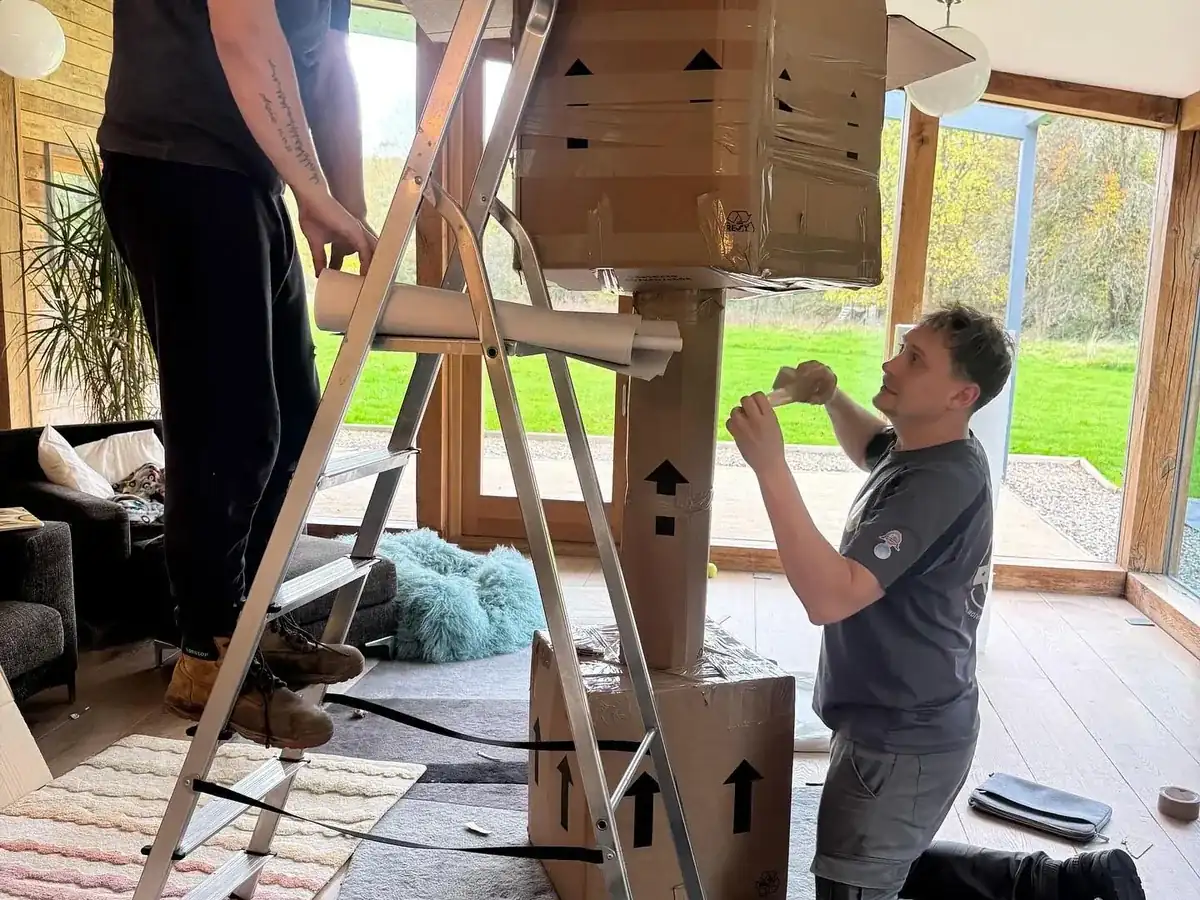
From our jobs: On a six-day job from the edge of the town, the crew took the non-essential half of the house to our store. The new home got its furniture, beds and kitchen first, and the rest came on the last day.
Renting in Horsham after leaving London: can your furniture wait in storage?
Yes. Collecting from a home inside the M25 is one day’s work for us, and the furniture can wait in our warehouse while you rent and look for the right house. Many of the families we move to the town come from London for its schools, keeping a train line back to work. Ask for a quote with your London address and the date your tenancy starts.
Leaving London, renting first
- Moving day: We collect in London in a single day, and pack what you will not need while renting.
- While you rent: Your things wait sealed in our warehouse; give us a little notice to fetch a box.
- When you buy: We deliver to the new house with the rest of the move, from the store or straight from the rental.
Drawing not to scale.
Converting the loft of a semi or terrace: what has to come out first?
Everything kept in the loft has to come out before the builders start. A loft is a poor place for furniture anyway: the Canadian Conservation Institute says attics, basements and garages are not good places to store it, because conditions there keep changing. Book the loft collection before the builders’ start date.
The loft empties first
- Boxes, cases and anything else kept in the loft come down before work starts.
- They wait sealed in a container in our warehouse while the builders are in.
- Everything comes back once the new room is finished.
Drawing not to scale.
Semis and terraces house nearly half the town’s households: at the 2021 Census (table TS044), 27.8% lived in a semi-detached house and 18.2% in a terrace. Storage helps with other building work too, because a new kitchen, replastering or new floors are all quicker and cleaner with the furniture out of the house.
Moving from a larger home to a flat: what is worth storing?
Store the good pieces you cannot place yet, and decide about them once you have lived in the flat for a while. Measure the rooms first: a table that seated the family may be longer than the new living room is wide.
Measure the room before the table goes
Drawing not to scale.
Spare rooms in later life
Older households in the town: 56.7%, where everyone is 66 or over had two or more spare bedrooms in 2021
Aged 65 or over, England: 58%, under-occupying their home in 2024/25
Sources: ONS, Census 2021 (table RM098, the seven town wards); English Housing Survey 2024 to 2025.
The same applies when a parent moves into care and the house is to be sold: the furniture can wait in storage until the family decides. For the sale, see our guide to selling a parent’s house after a move into care.
How much storage does a Horsham house need?
Count the furniture rather than the bedrooms. Each of our containers holds about 250 cubic feet, and our storage calculator works from a list of what you are storing, then adds a fifth for packing space.
One town-centre flat, measured in containers
From our jobs: One move we did into a town-centre flat, a small job, came to about 980 cubic feet. In store, that would be four containers on volume alone, or five once the calculator adds a fifth for packing.
Container sizes and the packing fifth are from our storage calculator.
What can go into storage from the house, the shed and the garden?
Almost anything clean and dry can go in, from beds and boxes to bikes and garden furniture. Petrol, gas bottles, paint, aerosols and anything flammable cannot, and nor can perishable food, plants or anything alive, so ask us at the survey about a petrol lawnmower.
Clean and dry before it goes in
Drawing not to scale.
What goes in and what stays out
Goes into storage
- Boxes and furniture
- Bikes
- Garden furniture
- Garden tools
Stays out
- Petrol
- Gas bottles
- Paint and aerosols
- Plants and food
From the lists on our storage page and storage calculator.
Wipe down anything from the shed or garden and let it dry before collection, and keep an inventory of what goes in, so you know what you have stored without opening the container.
Town-centre flats and the Causeway: who arranges parking for the collection?
You do: you apply online to Horsham District Council for a bay suspension at least five working days ahead, and at the survey we will say whether one is needed. The council has to approve it and its signs go up about a week before, so applying early is safer.
A suspended bay, in three moments
- About a week before: the council puts up signs by the bay, which is about 10 metres long.
- The day before: for some suspensions, the council supplies cones for you to use.
- On the day: our lorry loads in the bay you booked.
Drawing not to scale. Sources: the council’s pages on booking a bay suspension and what a bay suspension is.
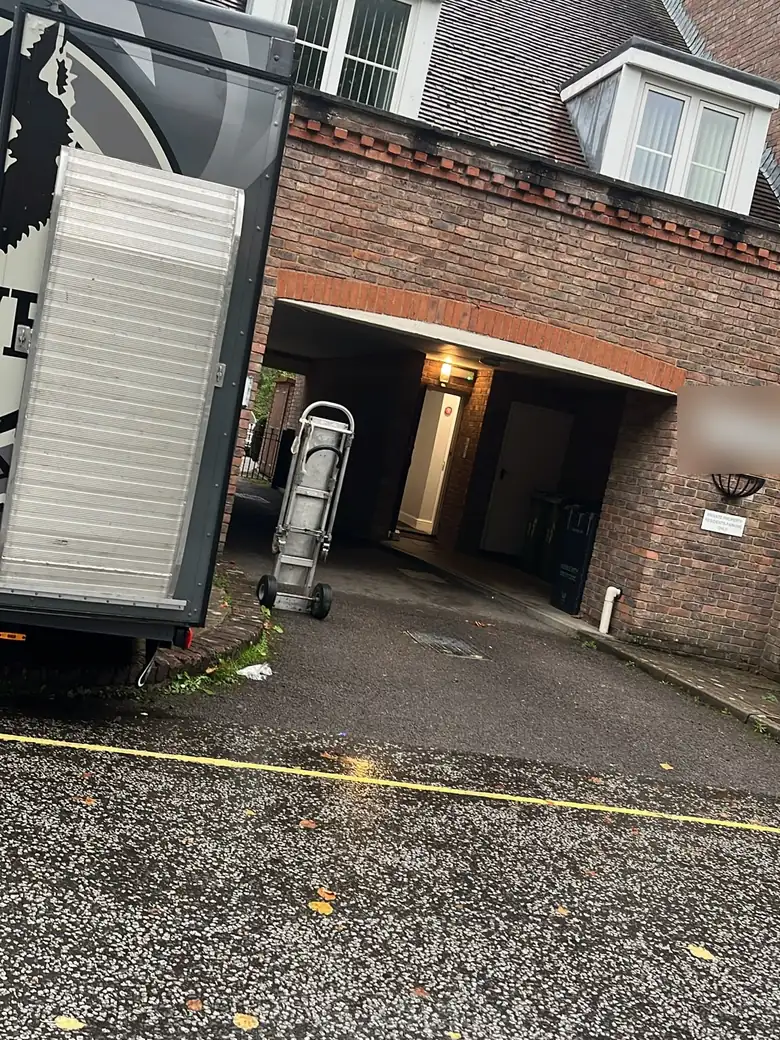
Where there is no bay to suspend, the lorry can stop on a yellow line to load if no loading ban is marked, as long as the loading carries on and nothing is blocked. The lime trees on the Causeway leave no room for a lorry to stand, so the crew carries from the closest legal stopping place.
How does our storage work, from your door and back?
At Wolves Removals one team handles your storage from the first survey to the day your things come home, and the person who surveys your home comes on the lorry too.
From survey to return
- Survey: By video or in person, about a quarter of an hour, with a written quote to follow.
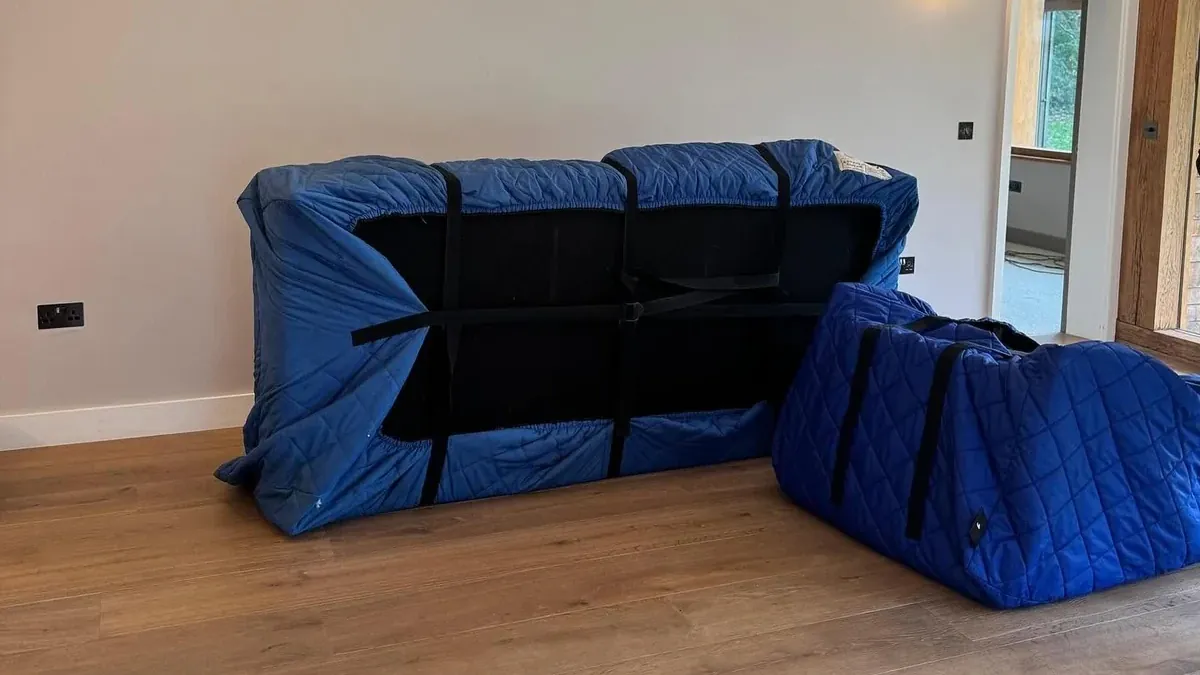
- Packing: Quilted covers and straps, and on a full pack we empty, box and label every drawer ourselves.
- Loading: Into our timber containers, with nobody else’s things in yours.
- In store: Sealed in our warehouse in Sussex, and opened only when you ask.
- Return: Delivered to any address, all at once or a few pieces at a time.
Full pack: a chest of drawers
- Every drawer emptied.
- Boxed and labelled.
- A quilted cover and straps.
Drawing not to scale.
We are fully insured, with goods-in-transit and public liability cover in place, and optional full damage insurance is available for an extra 10% of your invoice total. Anything kept for three months or more counts as long-term storage, with no long tie-ins.
Putting a home into storage? Tell us which rooms are going and roughly for how long. The survey is free and the quote comes in writing.
Get a storage quoteJack Wolfe
Director, Wolves Removals · Ashington, West Sussex
Jack runs Wolves Removals, which has moved families and businesses across West and East Sussex, Surrey, Hampshire and Kent since 2016 from its Ashington base. The firm is fully insured, Checkatrade-verified and a LAPADA Approved Service Provider for antiques and fine art. More about us, or read our reviews.
Frequently Asked Questions
You can store furniture from Horsham in our warehouse in Sussex, about 10 miles from the town. We collect from your door anywhere in RH12 and RH13, keep everything in a sealed timber container and bring it back when you are ready, so you never drive to a unit.
Yes. If the handover on a new estate slips by hours, your furniture waits on our lorry; if it slips by days, it waits in our warehouse until the keys are released, and we deliver on the day. Kilnwood Vale and Land North of Horsham are both still being built.
Everything stored in the loft has to come out before a loft conversion starts: boxes, cases and anything else kept up there. We can collect it, keep it in a sealed container while the builders work and bring it back when the room is finished.
Yes. Collecting from a London home inside the M25 is one day’s work for us. Your things wait sealed in our warehouse in Sussex while you rent, and we deliver them to the house you buy.
Garden furniture and garden tools can go into storage once they are clean and dry. Petrol cannot be stored, so ask us at the survey about a petrol lawnmower; gas bottles, paint, aerosols, perishable food and plants cannot go in either.
No. On a new estate the date is often fixed late and can still move, so let the storage run past it. Three months or more counts as long-term storage, with no long tie-ins.