Moving From One Care Home to Another: How the Day Works
Moving from one care home to another is a one-room move, and Wolves Removals does it in a day: packed in the morning, set up by mid-afternoon, with the person out for lunch in between.

Moving care homes is a smaller job than a house move and a less forgiving one, because two homes, two sets of staff and a parent who never asked to move all have to agree on one day. Here is how we run it across Sussex, and the two mistakes we see most: booking the van before the homes have agreed a date, and assuming the new room is the old one.
How does a move between care homes work?
Get the new home’s room and admission day in writing, give the current home notice for the same date, and book the move last. On the day we photograph the room before a drawer is opened, pack it in the morning and rebuild it in the new home from those photographs by mid-afternoon; anything that will not fit waits in storage. The hour-by-hour plan is below.
Why families move a parent between care homes
The reasons for changing care homes are rarely dramatic. A daughter has moved and wants her mother twenty minutes away rather than two hours. A parent’s needs have changed, the first home cannot offer nursing care, and a nursing home transfer follows. The first home was chosen in a week, under pressure, and a better room has come up somewhere calmer. If that first move still has boxes in storage nobody quite decided on, helping a parent downsize before a care home move covers that earlier sort. Occasionally a home is closing or changing hands. Which home to choose is not our question; Age UK’s guides cover it. The day itself is our part, and the part families are least ready for.
Before the date is set
Four things usually have to be settled before a date is picked, and none of them is ours to arrange:
- The current home’s contract — its notice period, and what it charges to the end of it
- A needs assessment, if care needs have changed — usually arranged through the GP or the social worker
- The council’s agreement, if it funds the place; a move into another council’s area also raises who carries on paying, which the two councils settle
- Any concern about the current home, raised with the home itself or the local authority before the move is decided
Two homes, two dates
The current home needs notice, often a few weeks. The new home has an admission day; moving into a nursing home is no different, and its pre-admission assessment often fixes that day. Every day the two overlap is paid twice, so families try to make them the same day, and that is the day we plan for.
Book the van first, and the two homes will spend a fortnight negotiating around it.
Not booked yet? If the date is not fixed, that is the right moment to ring: we talk the timing through before anything is arranged, and nothing is quoted or committed.01903 893731
One room to one room
Everything in the current room already fits a care home room, which makes this move simpler than the move into care was. What catches families out is that the two rooms are not the same room. The new one may be smaller, a different shape, have its own bed and wardrobe, or use different fixings for pictures. Get the new room’s measurements and fixed furniture in writing before the date is set, and check the current room against them piece by piece.
The home’s own bed, wardrobe and curtains usually stay; they are the home’s. Whatever came from the family home goes. Anything that will not fit the new room goes to a family member or into long-term storage for a while, and the week before is the time to decide it. The list of what goes is the same as for any care home room, and what to take to a care home sets it out in full.

A set of photographs taken at nine o’clock is the plan for three o’clock
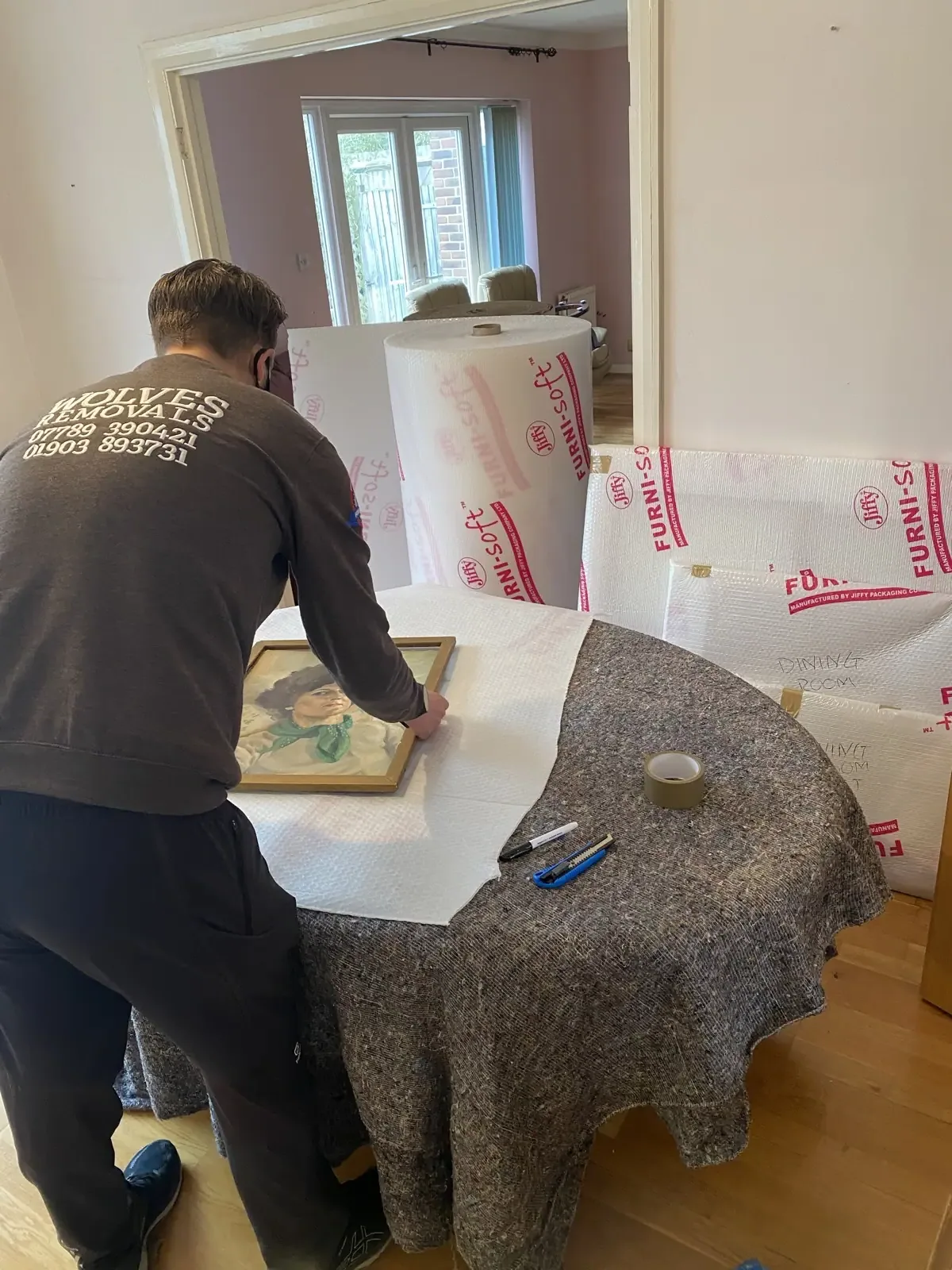
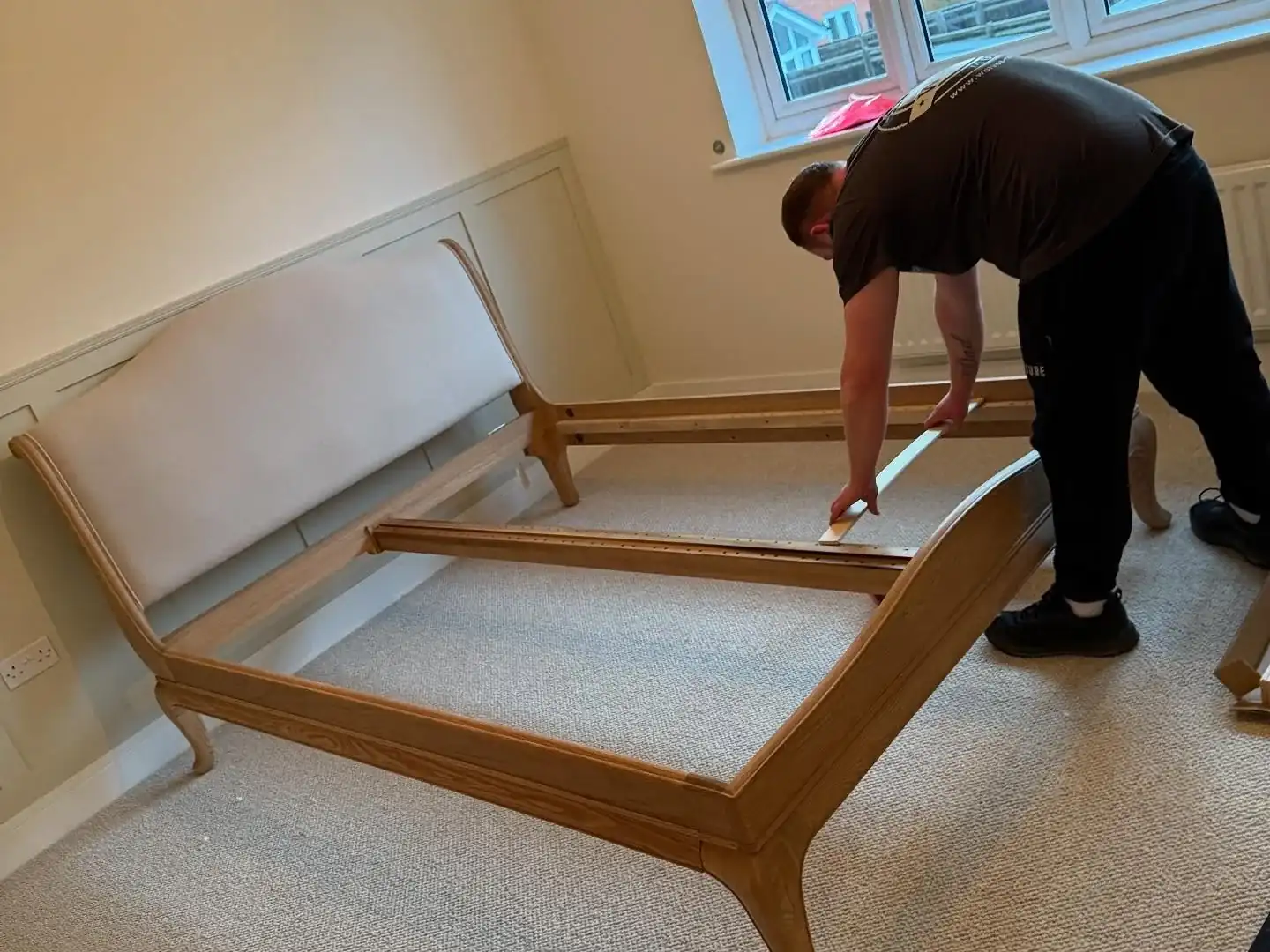
Before a drawer is opened we photograph the room from the door, from the bed and from the chair, close enough to read which frame stands in front of which. In a same-day move those pictures are the afternoon’s only plan. The new room is set up to match them as far as its shape allows, and where it will not, we ring the family before we improvise.
The day itself
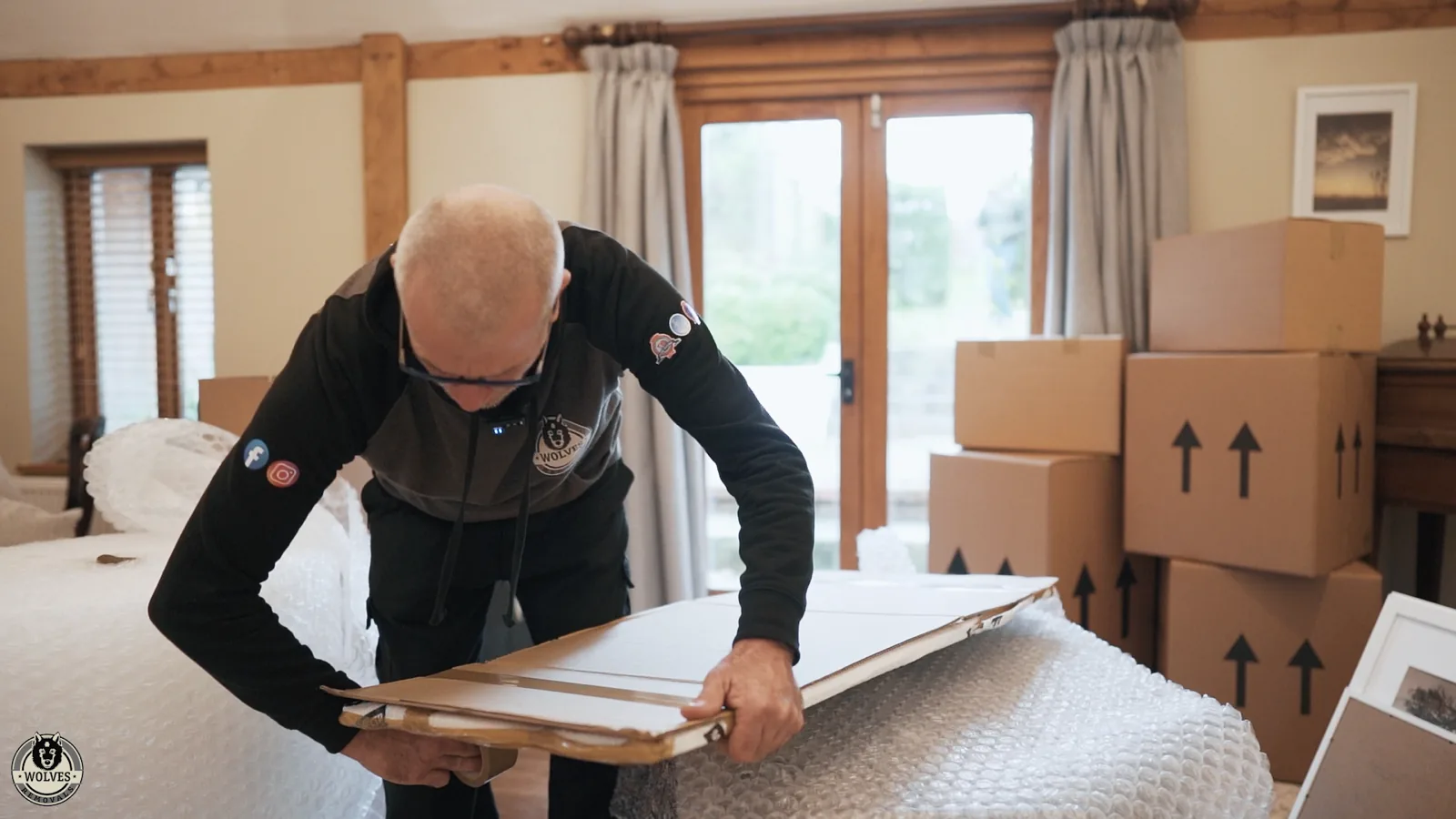
Most families take the person out for the morning: a long lunch, a drive, a visit to the new home’s lounge to sit with a coffee. Some would rather stay and watch; we pack around them, and nothing goes into a box before they have been told where it is going. One room takes an hour or two to pack, and every box is marked for the new home and its place in the new room.
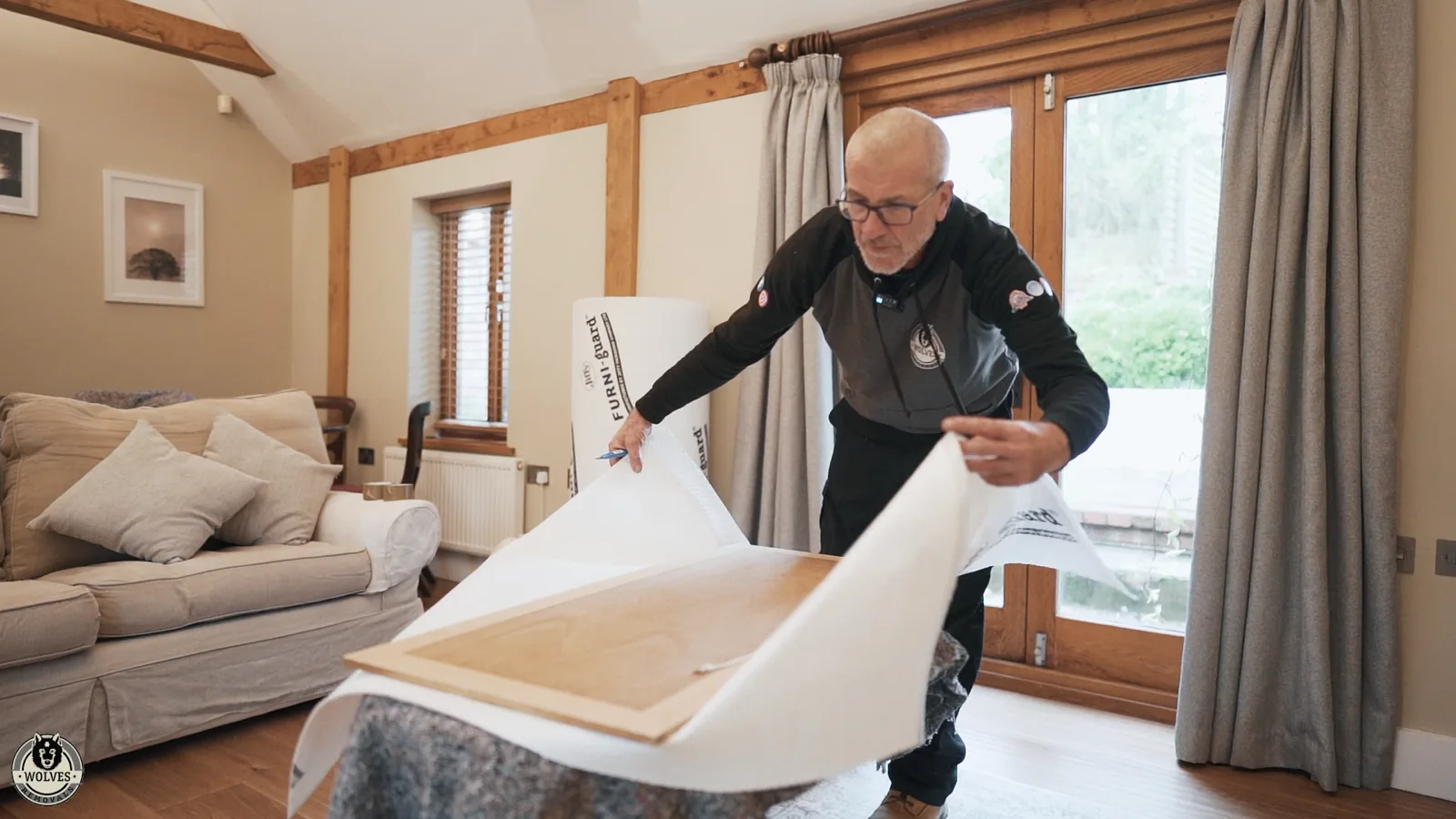
At the new home the photographs come out before the boxes do: the wall, the bedside and the chair go back as they stood, and the clothes and books follow. Medication, care records and the care plan pass from one home’s staff to the other’s; we never carry them. Glasses, hearing aids and whatever they reach for every hour stay with them all day. The family arrives with them mid-afternoon to a room with their own things on the walls.
A typical day, hour by hour
- The week before — both homes confirm the date; the new home describes the room; we survey by phone or in person; the family redirects the post and tells the GP and anyone else who holds the address
- 9.00 — the room is photographed; the family takes the person out or settles in with us
- 9.30 to 11.30 — the room goes into boxes marked for the new one; the home’s own furniture stays put
- Midday — the drive, whatever the distance
- Early afternoon — the new room goes back together from the morning’s photographs
- Mid-afternoon — the family arrives with the person to a finished room
- Before we leave — a walk round with the family, the packaging taken away, the old room reported clear
The room is the move. Get the room right by three o’clock and the day has gone well.What we tell families the week before
Working with both homes
Once the family has told both homes to expect us, we ring each manager. From the current home: when the room can be cleared, where the van can park, whether there is a lift, and when they want the room back for cleaning. From the new home we need the same in reverse, plus one thing families rarely think to ask: whether the home wants the room set up before the parent walks in, or would rather they see it happen. Most want it finished first. Some homes, and some people, prefer to be there.
We also ask what the current home wants handed back — the room key, fob or lanyard — and what the new home issues on the day, so nothing is mislaid between the two. Wolves Removals
Can I move to a care home in a different area?
A parent can usually move to a home in another part of the country, and being near the child who visits most is one of the usual reasons. If a council pays, the two councils have to agree who carries on paying, and that needs settling before a date is fixed. The move itself is no harder over a hundred miles than over ten, provided both homes have agreed the same day. We collect from care homes across Sussex, Surrey, Hampshire and Kent and further afield by arrangement, and a long drive means an earlier start.
When there is a gap between the two homes
Sometimes the dates will not meet. The new room is not ready, the notice period runs past the admission date, or a parent goes to family or to a respite place for a few weeks in between. Their belongings do not have to sit in a spare room or a garage while that happens. We pack the room, the load goes under seal into our Ashington store, and it comes out on admission day to be set up from the same photographs. A gap of a fortnight or a season makes no difference to the day at the other end.
If this is a family’s second care home move, they have usually learned what the first one teaches: a late van is forgiven by evening and a wrong room is not. Everything above is one job for us, from the call to the old home to the last picture hung in the new one, and our moving into a care home page sets out how the full service runs.
The Wolves Removals Team
Family-run removals · Ashington, West Sussex
We have moved families and businesses across West and East Sussex, Surrey, Hampshire and Kent since 2016, from our Ashington base. We are fully insured, Checkatrade-verified and a LAPADA Approved Service Provider for antiques and fine art. More about us, or read our reviews.
Moving From One Care Home to Another: How the Day Works — FAQs
Agree the date with both homes first: the new home confirms the room and the admission day in writing, then the current home is given notice for the same date, and the move is booked last. Wolves Removals photographs, packs and sets up the room in the new home the same day, finished by mid-afternoon, with the family arriving to a room already made.
Usually, yes; being near the child who visits most is one of the usual reasons. Settle the funding first: a council-funded place usually needs the council’s agreement, and a different area can change which council pays. The move itself is no harder over a hundred miles than over ten; we collect from care homes across the South East and beyond.
One day, for one room. Packing takes an hour or two, the drive depends on distance, and the new room is set up from the morning’s photographs by early afternoon. The family usually arrives with the person mid-afternoon to a finished room. If the two homes cannot agree a date, the belongings wait in storage until admission day.
Almost always, and the length is set by the contract, often a few weeks. Every day the notice overlaps the new admission is paid twice, so most families line the two dates up and move as the notice ends. Read the contract before fixing a date, and ask what the current home needs when the room is handed back.
It goes to a family member or into storage, decided the week before from the new home’s measurements. The current home’s own furniture stays behind. Anything of theirs that will not fit is packed separately, kept under seal at our own warehouse, and delivered to family or back to them whenever it is wanted.
Yes, if they would like to be. Many families take the person out for the morning and bring them to the new home mid-afternoon, so they walk straight into a finished room. Others would rather watch, and we work round them, naming each box as it is filled. Either way their glasses and hearing aids never leave them.
Yes. A parent’s next of kin or attorney can usually ask for the move, and if a council funds the place its agreement comes first. The new home confirms a date in writing, the current home is given notice, and Wolves Removals books around that date, so nothing is arranged until both homes and the family agree.