Helping a Parent Downsize Before a Care Home Move
Helping a parent downsize before a care home move is a different job from moving to a smaller house, and Wolves Removals plans it as one.

A lifetime of belongings has to come down to one room’s worth, sorted by the person who owns them, in the weeks before an admission date that will not move. Done well it is unhurried and theirs; done badly, a skip on the drive and a parent who was not asked. This is how we help Sussex families do it well.
How this downsize is different
When a couple downsizing in retirement moves from a house to a bungalow, half the furniture goes with them and the rest is sold at leisure. When a parent moves into care, the new room takes a chair, a chest of drawers and the pictures, and everything else needs a home elsewhere, and there is a date. The two jobs share a word and almost nothing else. The care home version goes object by object, with the owner in the chair, and the question for each one is not whether it fits but who it is for now.
Start with the room, not the boxes
The first step in preparing to downsize a parent’s home is to get the new room’s measurements and a note of what the home provides, because they close most questions before they are asked. If the home supplies the bed and the wardrobe, the bed and the wardrobe are not a decision. If the room takes one armchair, the only question left is which one. Families who start in the loft end up with a garage of boxes and no plan. Families who start with the room know by the first evening what it can hold, and sort the rest of the house against that.
Our guide to what to take to a care home has the room list itself. This page is about everything that is not on it.
Sorting with them, not for them
Every decision is the parent’s; the family’s job is to make each one small enough to take. In practice: short sessions, one surface or one drawer at a time, a stop before anyone is tired, and everything called by its name. Then three questions for each thing: is it going with you, is it going to someone in the family, or shall we put it away for now. There is no fourth question in the room, because “shall we get rid of it” is the one that ends the session.
Put away for now means storage. It is what lets a daughter and her mother get through the dining room in an afternoon without a single item being lost. What is not kept is decided later, once the room is set up and the house is quiet, and the parent is still asked. Where each pile ends up is covered below.
Letters, photographs and the desk drawer
What stalls a sort is small enough to hold: the shoebox of letters, the albums, the desk drawer that has not been opened since a husband died, the collection nobody else understands. None of these belongs in a sorting session. They go into a box marked with the parent’s name, unopened, and into storage with the rest, to be gone through in a year by whoever wants to, or never. A sort that stops to read letters takes a month; a sort that boxes them takes an afternoon and loses nothing.
The one exception is the paperwork that has to be found: any property deeds, the will, pension letters, insurance documents. We ask families to pull those in the first session, before anything is packed, and to keep them out of every box.
Sorting at a distance
Many of the sons and daughters who ring us for downsizing help are an hour or more away, and some are abroad. The sort still happens with the parent, but the family joins by phone. We photograph each room before the first session and send the pictures, so the person at a distance can see what is there. Decisions come back by message, item by item, and a numbered list keeps track of who has said what. Nothing leaves the house on a decision that has not been written down.
What cannot be done from a distance is the afternoon in the house itself, and that is the part worth travelling for. One visit, sitting beside the parent while the rooms are worked through, does more than a month of calls.
What goes into storage, and for how long
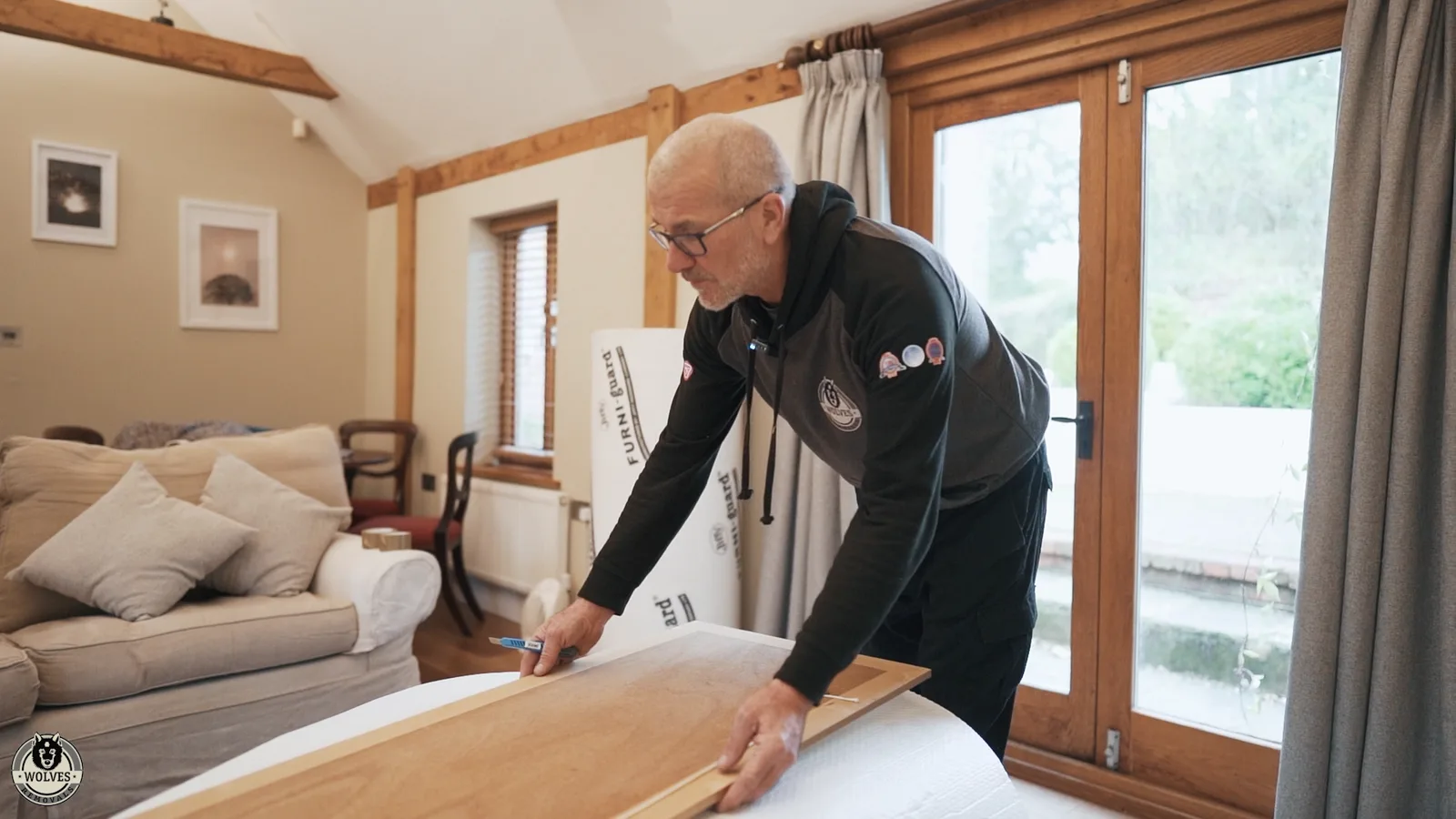
The undecided, the pieces promised to family with nowhere to put them yet, and whatever the parent wants kept but has no room for. We pack it, enter each box on a list, and keep it in containerised storage at our Ashington warehouse for as long as the family wants. Some come back within the year; some hold a garden bench until a nephew has a garden. There is no fixed point at which a decision has to be made.
What we clear, and what we do not
Once the room is set up and the family has been through what is left, the house can be cleared, and that is a separate job with its own visit. Our house clearance service deals with the whole of what is left and pays for anything saleable, which is why it comes last: the good pieces should already be with family or in storage, and the offer covers only what remains. We do not clear a house on the day of the care home move.
A realistic timeline
- Six weeks out — the room’s measurements and the home’s list; the survey; the paperwork found and set aside
- Four weeks out — two or three sorting sessions, one room each; family pieces promised and labelled
- Two weeks out — the room list agreed; the storage load packed and taken; the house thins
- The week before — clothes, bedding and the things by the bed; the family decides who is where on the day
- Admission day — the room goes, set up by evening; nothing else leaves the house
- Afterwards — deliveries to family; the house cleared once the family has chosen; the letters box waits
Where the admission date arrives in a fortnight rather than six weeks, the same steps happen in the same order with fewer sessions, and more goes into storage to be decided later.
What not to do when downsizing a parent’s home
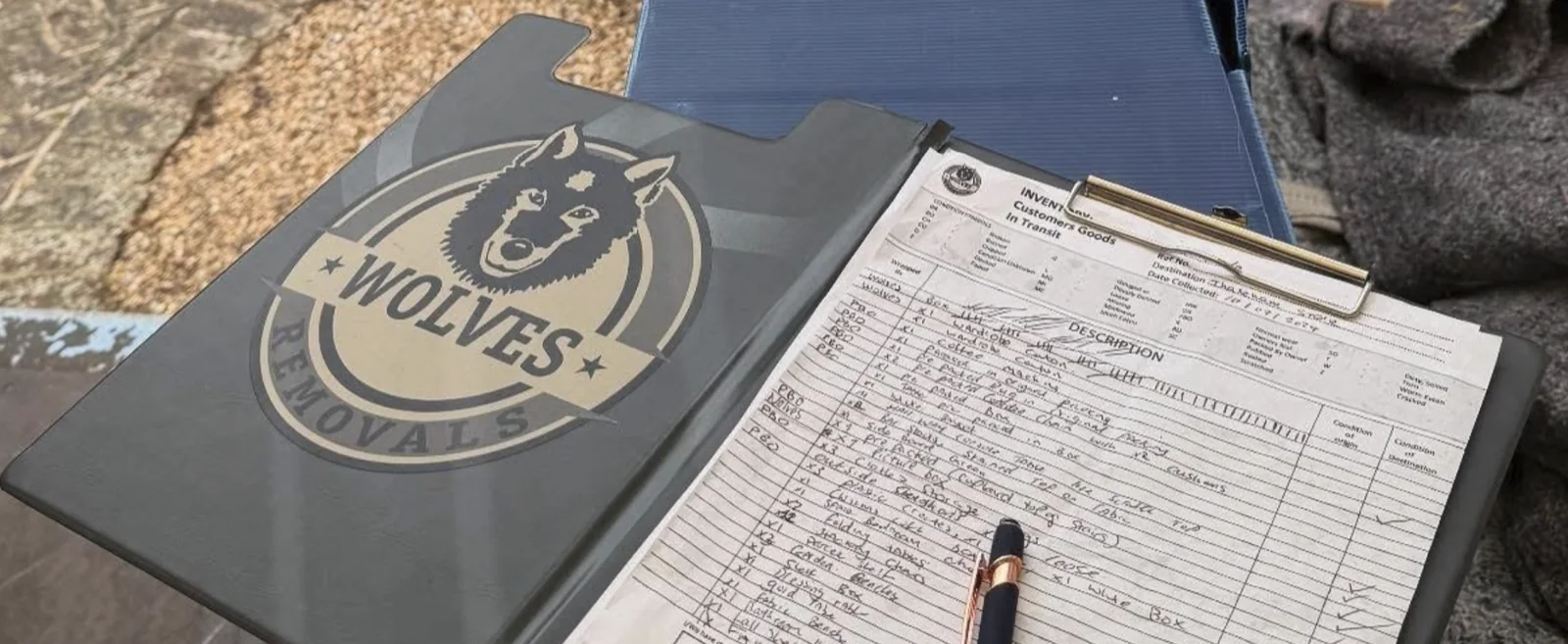
Do not order a skip before the sort. Sorting while the parent is out, however kind the motive, is sorting for them. Weight is a bad judge: the good heavy pieces go and the poor light ones stay. The best pieces should not be sold in the first week, before anyone has asked who wanted them. One weekend is not enough. And the house is not cleared on moving day. We have met each of these in a house afterwards. None survives a list, a plan for the room, and somewhere to put the things nobody has decided about yet.
Three questions for every object: with you, to family, or put away for now. The fourth question can wait a year.How we sort a house before a care home move
We carry the whole of it, from the first afternoon in the house to the day the last container is opened. What the downsizing service includes is on our page on moving into a care home; if the house is being sold as well, selling the family home when a parent moves into care gives the order to do that in.
The Wolves Removals Team
Family-run removals · Ashington, West Sussex
We have moved families and businesses across West and East Sussex, Surrey, Hampshire and Kent since 2016, from our Ashington base. We are fully insured, Checkatrade-verified and a LAPADA Approved Service Provider for antiques and fine art. More about us, or read our reviews.
Helping a Parent Downsize Before a Care Home Move — FAQs
Yes. Wolves Removals runs the sort with the family: a survey that measures the new room against the house, sorting sessions with the parent, packing for the room, storage for everything undecided, and a separate clearance once the family has chosen. The practical side, from the first session to the last delivery, is ours.
Start from the room. Get its measurements and what the home provides, then ask three questions of each piece: with them, to family, or put away for now. Anything that needs thinking about goes into storage and waits. The decisions are the parent’s, and the family’s job is to make each one small enough to take.
Slowly, in short sessions, one surface at a time, with the owner in the room. Photograph each room so family at a distance can see it, keep a written list of decisions, and box letters and albums unopened for later. The furniture is the easy part; the drawers take the time.
Order the skip last, keep the parent in the room for the sort, ask who wanted the best pieces before selling any, and give it more than a weekend. The commonest regret Wolves Removals hears is a house cleared in a hurry on moving day, with things gone that someone would have kept.
With six weeks’ notice, two or three sorting sessions and one storage load are usually enough, with the room packed and set up on admission day. With a fortnight, the order holds, the sessions are fewer and the storage load is bigger. The house is cleared after the move.
Yes. Before the first session we photograph every room and send you the pictures; you answer object by object in writing, and the list of who said what stays with the job, so nothing leaves the house undecided. One visit, sitting with your parent while the rooms are sorted, is still worth making; the rest can be done by phone.