How to Move a Piano: What Actually Goes Wrong
More pianos are damaged before the movers arrive than during the journey, and almost always in the same way: somebody rolls it across the room on its own casters.

This is what actually goes wrong when a piano is moved, how uprights and grands differ, what your movers need to know before the day, and why you should wait a few weeks before booking the tuner.
A piano is not simply heavy furniture. The combined tension of its strings is measured in tonnes, the frame carrying that load is cast iron, and the case around it is cabinet work that was never designed to take the weight of the whole instrument.
Uprights travel upright. Grands come apart, travel on their side on a padded board, and go back together at the other end. Neither should ever be moved on its casters.
Why a Piano Is Not Just Heavy Furniture
Most things in a house move are a weight problem. A piano is a weight problem wrapped around a tension problem. The strings pull against a cast iron frame with a combined force measured in tonnes, and the wooden case is cabinet work built to hold that assembly in one position, not to be lifted, tipped or dragged.
That is why piano removals are quoted and crewed differently from the rest of a move. The instrument does not care about the distance. It cares about how it was lifted, what it rested on, and what the room it arrived in is like.
The Casters Are Not for Moving
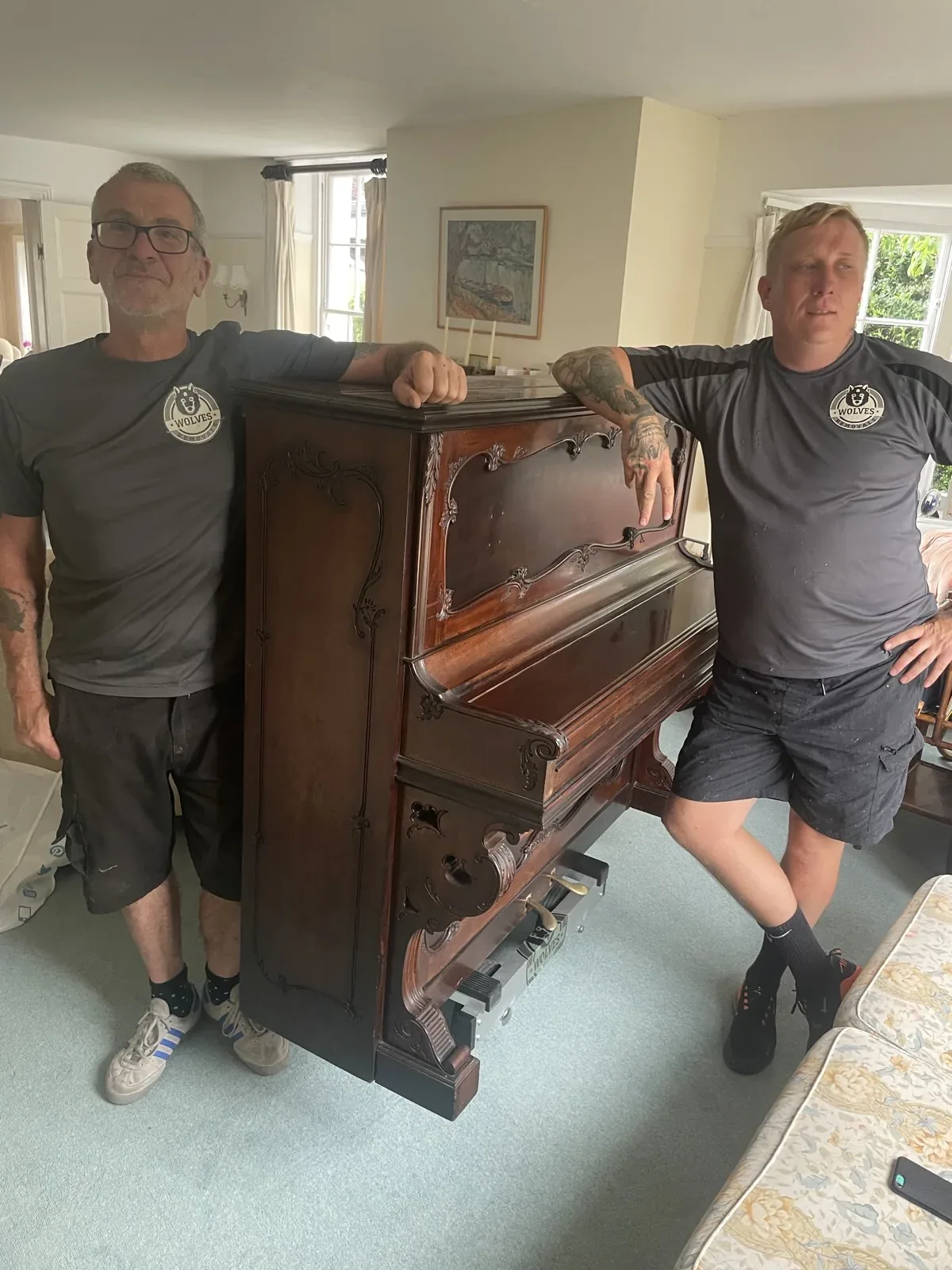
This is the single most common cause of damage, and it happens before the movers arrive. The casters on a piano exist to let it be shifted a few inches to clean behind it. They are not transport wheels. Rolled across a room, they catch on a carpet edge or a floorboard lip, the leg takes a sideways load it was never designed for, and the leg breaks or the case splits at the joint.
On a grand, the legs are structural in one direction only. They hold the instrument up. They will not survive being shoved sideways with several hundred kilograms above them.

Uprights and Grands Move Completely Differently
An upright travels upright. It is padded, strapped to a specialist trolley or skid, and kept vertical throughout.
Laying an upright on its back puts the whole weight of the frame onto the case and the action, and it is not something a piano moving company should ever be doing. Wolves Removals
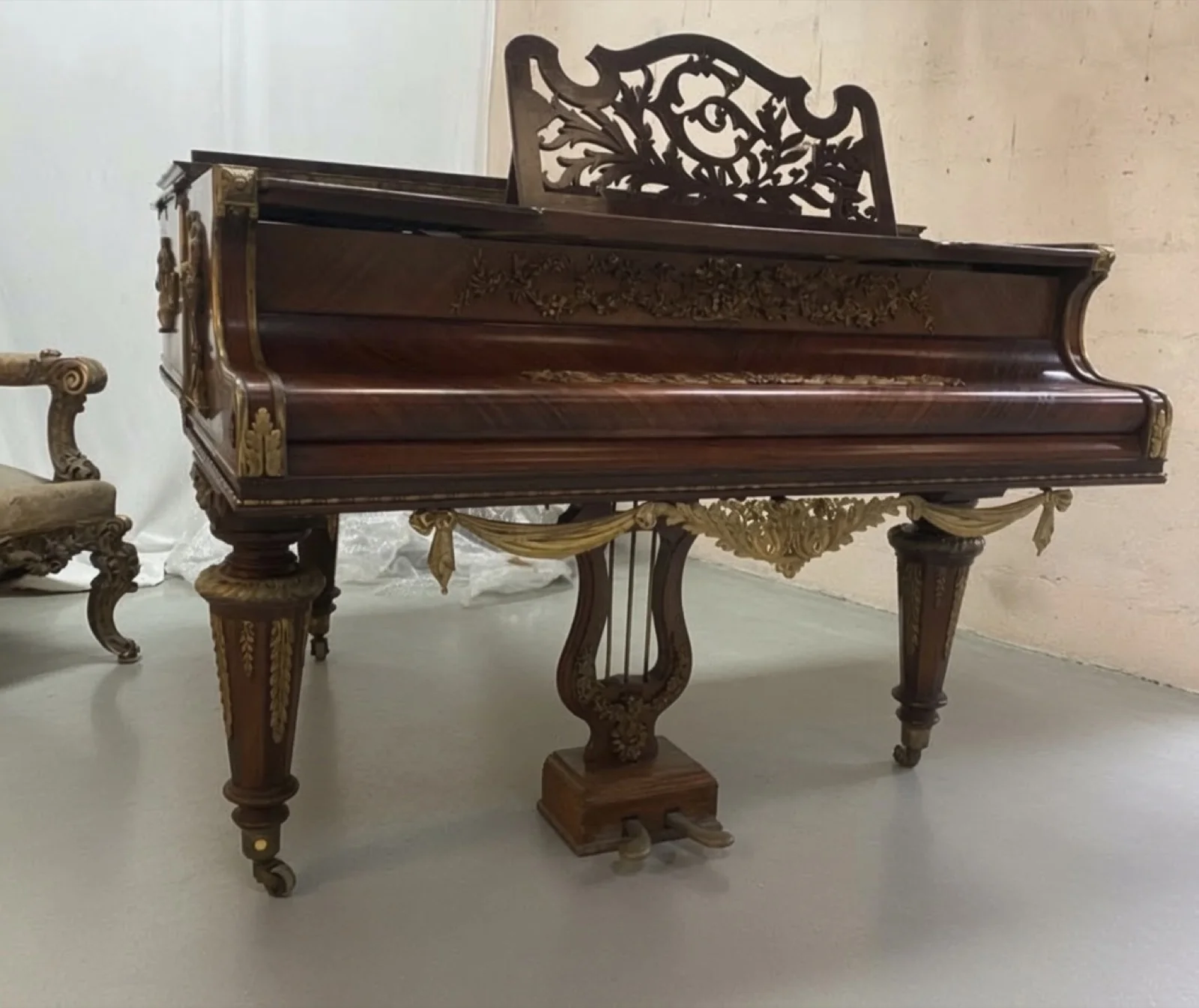
A grand is dismantled. The lyre and pedals come off, the legs come off, and the instrument is lowered onto its straight side onto a padded piano board, then strapped to it. It travels on that board, on its side, and is rebuilt at the other end. This is normal and correct, and it is the only sensible way to get a grand through a domestic doorway.
| Type | Travels | Comes apart | Main risk |
|---|---|---|---|
| Upright | Vertical, strapped to a skid | Usually not | Tipping, and damage to the action if laid down |
| Baby grand | On its straight side on a board | Legs, lyre and pedals | Leg sockets, and the lid if not secured |
| Full grand | On its side on a board | Legs, lyre, pedals, sometimes the lid | Weight distribution on stairs and turns |
| Digital | Upright, boxed or blanketed | Stand separates | Screen and key bed, far less fragile overall |
What the Crew Needs to Know Before the Day
Almost every piano job that goes wrong goes wrong because something was not mentioned. Piano movers need to know the type and rough age, and then the route: how many steps at each end, whether there is a turn on the staircase, the width of the narrowest doorway, and what the floor is at both ends.
Steps matter more than distance. Three awkward steps with a tight turn need more crew than a hundred metres of level ground, and that decision has to be made when the job is quoted rather than discovered on the morning.
What Happens After It Arrives
A piano will need tuning after a move, and it is worth understanding why so the timing is right. It is not the journey that puts it out. It is the change in humidity and temperature between the old room and the new one. The soundboard takes up or gives off moisture, moves fractionally, and the tension across the strings changes with it.
Because of that, tuning immediately on arrival is usually wasted. Give the instrument a few weeks to settle into the new room, then have it tuned. Keep it away from radiators, external walls that run cold, and direct sunlight through glass.
When a Piano Move Needs More Than Two People
Weight is only half of it. The number of people needed is decided by the route rather than the instrument, because the real question is how many hands can physically get onto it at the tightest point. A straight ground floor move needs fewer than a first floor flat with a turn on the stairs, whatever the piano weighs.
Our piano moving service covers uprights, grands and digital instruments across Sussex and Surrey, and it is surveyed before it is quoted for exactly this reason. We are fully insured, with goods-in-transit and public liability cover in place, and optional full damage insurance is available for an extra 10% of your invoice total. Where a piano is part of a wider house move, it is planned into the day rather than treated as an afterthought, and where the instrument is old or valuable it sits alongside our specialised antiques moving work.
Should You Move It Yourself?
A digital piano on a separate stand is a two-person job with a bit of care. An acoustic upright is not, and a grand certainly is not. The reason is not stubbornness about hiring professionals: it is that the failure mode is sudden, the instrument is between you and the floor, and the injuries from a piano going over are serious.
If you take one thing from this, take the casters. Do not roll it. Whatever else is decided, that single habit causes more broken legs and split cases than the actual moving does.
The Wolves Removals Team
Family-run removals · Ashington, West Sussex
We have moved families and businesses across West and East Sussex, Surrey, Hampshire and Kent since 2016, from our Ashington base. We are fully insured, Checkatrade-verified and a LAPADA Approved Service Provider for antiques and fine art. More about us, or read our reviews.
How to Move a Piano: What Actually Goes Wrong — FAQs
No. Casters exist so a piano can be shifted a few inches for cleaning, not for transport. Rolled across a room they catch on carpet edges and floorboard lips, which puts a sideways load through legs that were only ever designed to hold weight downwards. Broken legs and split cases usually start here.
Yes, in almost all cases. The lyre and pedals come off, the legs come off, and the instrument is lowered onto its straight side onto a padded board and strapped to it. It travels on the board and is rebuilt at the other end. This is standard practice, not a sign of rough handling.
It should not be. An upright travels vertically, strapped to a skid or specialist trolley. Laying one on its back puts the full weight of the cast iron frame onto the case and the action, which is exactly what the case was not built to carry.
Yes, but not because of the journey. The change in humidity and temperature between the old room and the new one moves the soundboard slightly, which changes the tension across the strings. Wait a few weeks for the instrument to settle into the new room before booking a tuner, otherwise the tuning is likely to drift again.
The type and rough age of the instrument, then the route at both ends: how many steps, whether the staircase turns, the narrowest doorway, and the floor surfaces. Steps and turns decide how many people are needed far more than the weight does, and that has to be worked out before the day rather than on it.
Yes, and they are a much simpler job. The stand usually separates from the instrument, and the fragile parts are the screen and the key bed rather than a tensioned frame. They still travel padded and secured rather than loose in a van.